Saturday, May 28, 2011
Until recently, Israel chose to ignore the genocide in the Ottoman empire.
Armenians, the Jews and Israel
By S. H. ROLEF The Jerusalem Post
Until recently, Israel chose to ignore the genocide in the Ottoman empire.
In 1915-16, during World War I, the Turks were responsible for the massacre of as many as 1.5 million Armenian inhabitants of the Ottoman Empire. Among the first to warn about the nature and scope of the atrocity was Aaron Aaronsohn – the renowned agronomist from Zichron Ya’acov who established the Nili spy ring, which in the course of the war collected information about Ottoman military movements and other strategic issues and passed it on to the British authorities.
Several of Aaronsohn’s relatives and colleagues actually witnessed the bloody manifestations of the massacre. In November 1916, Aaronsohn sent the British authorities a memorandum entitled “Pro Armenia,” in which he described the atrocities.
The previous month, he had sent a long letter to Judge Julian Mack – a leading American Zionist – in which he tried to convince him to adopt a pro-British position, inter alia describing the massacre of the Armenians and claiming that the Ottoman policy against both the Armenians and the Jews (who he feared might suffer a similar plight) had “made in Germany” written all over it. The Ottoman Empire, it may be recalled, was an ally of Germany in the war, and at the time Aaronsohn was writing, many Jews held pro-German or neutral positions. The Jewish yishuv in Palestine, the Zionist Organization and the State of Israel since 1948 could not claim ignorance of what happened to the Armenians.
And yet until recently, Israel has chosen to ignore the event, with numerous excuses, each of which is shameful in its own right.
The first is that since Turkey denies that a systematic massacre of Armenians ever took place, as well as minimizing the numbers involved (a number that justifies the term genocide), and since for years Israel regarded Turkey as a strategic ally – one of the few Muslim states it could regard as such – Israel would do well not to “let sleeping dogs lie.”
The fact that other states, including the US, adopted a similar policy seemed to justify Israel’s position.
The second excuse was that referring to the massacre of the Armenians as genocide might belittle the enormity of the Holocaust – an Israeli attitude that applies to other cases of genocide as well (and is, in my opinion, not just unjustified, but disgraceful). The Jewish Holocaust – in terms of both its circumstances and its manifestations – is without doubt unique. Nevertheless, this does not justify our belittling or ignoring the horrors that have occurred to other peoples.
The third excuse is that since we do not like others criticizing our treatment of the Palestinians, we should avoid criticizing other states for the way they treat their minorities. This excuse is simply foolish, and may easily boomerang, because no matter how problematic our record of treating our Arab citizens (and the Palestinians in general) might be, it bears no resemblance to the sorts of acts we are talking about. On the contrary, given the nature of the Arab-Israeli conflict, our record – though certainly not free of blemish – cannot be described as involving massacres or acts of genocide at all, as some, including the Turks, can. The Turks are the first who should be confronted with the difference, and it is a shame that only now, when Israel’s relations with Turkey have deteriorated to unprecedented levels due to unbridled Turkish attacks, Israel has finally decided to have its public say on the Armenian genocide.
For years, various MKs from Meretz have tried to get the Knesset to hold a public debate on the subject. Until last week, the only sort of debate to which the Foreign Ministry, speaking in the name of the government, would consent was one in the Knesset Foreign Affairs and Defense Committee, whose proceedings are confidential and whose minutes are not published.
On May 18, the plenum finally decided, following a motion brought forth by MK Zehava Gal-On, to hold an open debate on the subject in the Education, Culture and Sports Committee – the proceedings of which are public, with full minutes published on the Knesset website.
No one opposed the subject’s being referred to the committee, and all the speakers, from Right and Left, religious and secular, spoke in its favor. All one can say is: “better late than never,” but what a shame it took so long.
The writer is a former Knesset employee.=

Postal Stamp for Genocide Cenntenial
With the 100th anniversary of the Armenian Genocide coming up in the year 2015, I thought it would be appropriate for all Armenian organizations and church groups to unite in getting the US Postal Service to issue a US commemorative stamp on the Armenian Genocide of 1915-1923.
The US Postal Service usually requires at least two to three years notice to issue a commemorative stamp.
The United Nations Postal System should also be notified and possibly do a joint issue with the Republic of Armenia. An appropriate design should be forwarded with possibly a picture of Mt. Ararat in the background with the inscription: “The First Genocide of the 20th Century—1915 Genocide of the Armenian Nation.”
It also could be suggested to have it in a form of a souvenir sheet instead of a stamp.
Stephen T. DulgarianChelmsford, Mass.
The US Postal Service usually requires at least two to three years notice to issue a commemorative stamp.
The United Nations Postal System should also be notified and possibly do a joint issue with the Republic of Armenia. An appropriate design should be forwarded with possibly a picture of Mt. Ararat in the background with the inscription: “The First Genocide of the 20th Century—1915 Genocide of the Armenian Nation.”
It also could be suggested to have it in a form of a souvenir sheet instead of a stamp.
Stephen T. DulgarianChelmsford, Mass.
Friday, May 27, 2011
Woodrow Wilson’s Complete Arbitral Award to be Released Monday
YEREVAN—President Woodrow Wilson’s Arbitral Award, which defined the borders between Armenia and Turkey, has been published in full and will be released on Monday, announced Ara Papian, the director of the Modus Vivendi Center, which has been compiling the more than 240-page document.
“On November 22, 1920, Woodrow Wilson signed the Arbitral Award, which defined the border between Armenia and Turkey. However, that important document was kept secret for a long time,” added Papian during a press conference to announce the unveiling.
Papian has managed to restore the 245-page document and the attached maps, which clearly depict that not only Nagorno Karabakh, but also Lower Karabakh belongs to Armenia as delineated by President Wilson.
The never-before-published compilation will appear in two volumes. An Armenian translation is already in the works and will be available in two years.
Papian said that this comprehensive compilation will allow for the document to be presented to international legal experts and its conclusion be applied the International Court for a ruling on the matter.
On April 23, Papian was the keynote speaker at an Armenian Genocide commemoration vigil at the Montebello Martyrs’ Monument, organized by the San Gabriel Valley Armenian National Committee chapter.
“Armenian territorial rights are based upon several international instruments. The most important of them is the Arbitral Award by the United States President Woodrow Wilson, done on November 22, 1920, which by a binding decision and conclusively defined the boundary between Armenia and Turkey,” Papian said in his presentation.
“The main basis for the lawful solution of long-standing Armenian- Turkish problem are not the infamous Armenian-Turkish protocols, but the Arbitral Award, done over 90 years ago in the capital city of this country by the 28th President of the United States of America Woodrow Thomas Wilson,” added Papian.
“On November 22, 1920, Woodrow Wilson signed the Arbitral Award, which defined the border between Armenia and Turkey. However, that important document was kept secret for a long time,” added Papian during a press conference to announce the unveiling.
Papian has managed to restore the 245-page document and the attached maps, which clearly depict that not only Nagorno Karabakh, but also Lower Karabakh belongs to Armenia as delineated by President Wilson.
The never-before-published compilation will appear in two volumes. An Armenian translation is already in the works and will be available in two years.
Papian said that this comprehensive compilation will allow for the document to be presented to international legal experts and its conclusion be applied the International Court for a ruling on the matter.
On April 23, Papian was the keynote speaker at an Armenian Genocide commemoration vigil at the Montebello Martyrs’ Monument, organized by the San Gabriel Valley Armenian National Committee chapter.
“Armenian territorial rights are based upon several international instruments. The most important of them is the Arbitral Award by the United States President Woodrow Wilson, done on November 22, 1920, which by a binding decision and conclusively defined the boundary between Armenia and Turkey,” Papian said in his presentation.
“The main basis for the lawful solution of long-standing Armenian- Turkish problem are not the infamous Armenian-Turkish protocols, but the Arbitral Award, done over 90 years ago in the capital city of this country by the 28th President of the United States of America Woodrow Thomas Wilson,” added Papian.
Wednesday, May 25, 2011
When Telling the Truth is a Firing Offense (and Supporting Genocide Denial gets You Promoted)
By: Aram Hamparian
So, what exactly are the rules governing the U.S. government’s gag rule prohibiting mention of the Armenian Genocide?
What precisely are the details and dictates of our own American version of Turkey’s Article 301?
A recently released cable reveals that Matt Bryza met with senior Turkish government official in March of 2004 and discussed the defeat of the Armenian Genocide Resolution.
President Obama, as a Senator, called President Bush’s refusal to recognize the Armenian Genocide “inexcusable,” and sharply criticized Secretary of State Rice for recalling Ambassador John Evans from Yerevan for speaking honestly about this genocidal atrocity. Yet President Obama today presides over a government that, by all accounts, would fire any of its diplomats who told the truth about this crime, by for example reading aloud the President’s own campaign statements promising to recognize the Armenian Genocide.
Consider the rich and profoundly painful irony: President Obama came into office on a bold pledge of truth-telling, but once in the White House—having pocketed the votes of the Armenian American community in a series of tightly contested primary races—turned his back on his promise, effectively threatening to fire any diplomat or other government employee who actually lived up to his own campaign commitment.
Adding to the dramatic disconnect between this and past Administrations’ words and actions on the Armenian Genocide is the new revelation (via Wikileaks) that, despite all the hollow rhetoric about U.S. leaders pressing Turkey to genuinely accept the truth of its own history, behind closed doors, State Department officials are secretly sharing ideas with the Turkish government about how to most effectively prevent the elected representatives of the American people from speaking openly and honestly about this human rights issue. A recently released cable reveals that Matt Bryza—who was then the Deputy Assistant Secretary of State, and has since been given a recess appointment as Ambassador to Azerbaijan—met with senior Turkish government official in March of 2004 and discussed the defeat of the Armenian Genocide Resolution. Click here for the link to a story on this morally shocking, but—sadly—not very surprising revelation:
Which brings us back to the question: What exactly are the rules?
Who can get fired for mentioning the Armenian Genocide? An Ambassador, a lower level State Department employee, a top White House political or policy aide, or a simple entry-level administrative clerk? What about a contract employee?
What about an Armenian national who works for the U.S. Embassy in Yerevan? Would he or she be obliged to refrain from a truthful accounting of their own history?
Would a public reading by human rights advocate Samantha Power, who now works for the National Security Council, of her Pulitzer Prize-winning book, A Problem from Hell, be a firing offense?
Would it be cause for termination for an Administration official to acknowledge that the Armenian Genocide is a fact, during a private meeting with Armenian Americans (as dozens have done in meetings I’ve attended)?
What about officials writing honestly about the Armenian Genocide in internal government memos and cables? What happens if Wikileaks makes them public?
Would a Facebook or Twitter post of the term “Armenian Genocide” get an Administration official fired? What if it’s on their own time? What if they don’t work for the Department of State, but the Department of Agriculture?
The questions go on and on, getting more and more ridiculous, all pointing to the inevitable conclusion that—for our self-respect as Americans, as much as for anybody else—we must, at long last, reject Turkey’s shameful veto on U.S. recognition of the Armenian Genocide.
So, what exactly are the rules governing the U.S. government’s gag rule prohibiting mention of the Armenian Genocide?
What precisely are the details and dictates of our own American version of Turkey’s Article 301?
A recently released cable reveals that Matt Bryza met with senior Turkish government official in March of 2004 and discussed the defeat of the Armenian Genocide Resolution.
President Obama, as a Senator, called President Bush’s refusal to recognize the Armenian Genocide “inexcusable,” and sharply criticized Secretary of State Rice for recalling Ambassador John Evans from Yerevan for speaking honestly about this genocidal atrocity. Yet President Obama today presides over a government that, by all accounts, would fire any of its diplomats who told the truth about this crime, by for example reading aloud the President’s own campaign statements promising to recognize the Armenian Genocide.
Consider the rich and profoundly painful irony: President Obama came into office on a bold pledge of truth-telling, but once in the White House—having pocketed the votes of the Armenian American community in a series of tightly contested primary races—turned his back on his promise, effectively threatening to fire any diplomat or other government employee who actually lived up to his own campaign commitment.
Adding to the dramatic disconnect between this and past Administrations’ words and actions on the Armenian Genocide is the new revelation (via Wikileaks) that, despite all the hollow rhetoric about U.S. leaders pressing Turkey to genuinely accept the truth of its own history, behind closed doors, State Department officials are secretly sharing ideas with the Turkish government about how to most effectively prevent the elected representatives of the American people from speaking openly and honestly about this human rights issue. A recently released cable reveals that Matt Bryza—who was then the Deputy Assistant Secretary of State, and has since been given a recess appointment as Ambassador to Azerbaijan—met with senior Turkish government official in March of 2004 and discussed the defeat of the Armenian Genocide Resolution. Click here for the link to a story on this morally shocking, but—sadly—not very surprising revelation:
Which brings us back to the question: What exactly are the rules?
Who can get fired for mentioning the Armenian Genocide? An Ambassador, a lower level State Department employee, a top White House political or policy aide, or a simple entry-level administrative clerk? What about a contract employee?
What about an Armenian national who works for the U.S. Embassy in Yerevan? Would he or she be obliged to refrain from a truthful accounting of their own history?
Would a public reading by human rights advocate Samantha Power, who now works for the National Security Council, of her Pulitzer Prize-winning book, A Problem from Hell, be a firing offense?
Would it be cause for termination for an Administration official to acknowledge that the Armenian Genocide is a fact, during a private meeting with Armenian Americans (as dozens have done in meetings I’ve attended)?
What about officials writing honestly about the Armenian Genocide in internal government memos and cables? What happens if Wikileaks makes them public?
Would a Facebook or Twitter post of the term “Armenian Genocide” get an Administration official fired? What if it’s on their own time? What if they don’t work for the Department of State, but the Department of Agriculture?
The questions go on and on, getting more and more ridiculous, all pointing to the inevitable conclusion that—for our self-respect as Americans, as much as for anybody else—we must, at long last, reject Turkey’s shameful veto on U.S. recognition of the Armenian Genocide.
Tuesday, May 24, 2011
Sassounian: Council of Europe not Deceived by Erdogan’s Double-Talk
By: Harut Sassounian
Turkish Prime Minister Recep Tayyip Erdogan made an embarrassing appearance before the Parliamentary Assembly of the Council of Europe (PACE) last month.
Erdogan was invited to the podium after lavish praise by Mevlut Cavusoglu, who was acting more like a Turkish lobbyist than president of PACE. Cavusoglu is a founding member of the ruling AKP and member of the Turkish Parliament.
In his lengthy speech, the prime minister shamelessly lectured European parliamentarians about democracy and freedom. Given his country’s dismal human rights record, Erdogan should not have raised such issues! Claiming that Turkey’s accession was “vital to the European Union,” he described as “foolish” those who opposed Turkey’s EU membership “for populist or artificial reasons.”
Making a series of dubious and inflated claims about his government’s accomplishments, Erdogan asserted: “Turkey has achieved historic reforms, especially in the area of democratization… The government has also worked to lift restrictions on freedom. Freedoms have been strengthened in the last decade, and many issues are now discussed freely that could not have been discussed a decade ago. There is zero tolerance of torture, and barriers to freedom of expression have been removed. Some have alleged that there are restrictions on freedom of expression, but this is wrong… The press is free, and freely criticizes anyone and everyone… In Turkey, 26 journalists have been detained or arrested because they are criminals, not because they are journalists.”
These incredible words are uttered by a prime minister who does not hesitate to sue newspapers simply for publishing a cartoon likeness of him.
When Erdogan finished his speech, Cavusoglu shielded him from further embarrassment by allowing only a handful of parliamentarians to ask 30-second questions.
Erdogan was displeased when Swiss Parliamentarian Andreas Gross reminded him about “the dark side of Turkish history,” asking him why Nobel laureate Orhan Pamuk was being persecuted for exercising his right to free speech.
In response to Parliamentarian Anne Brasseur’s (Luxembourg) question about censorship in Turkey, Erdogan claimed that the Turkish “judiciary is independent and is entitled to conduct its investigations as it saw fit.”
Armen Rustamyan, the chairman of the Armenian Parliament’s Foreign Relations Committee, asked Erdogan what the point was of signing the Armenia-Turkey protocols if Turkey is not going to open its border with Armenia until the Karabagh (Artsakh) conflict is resolved. The prime minister responded that Turkey could not let Armenia “usurp the rights of Azerbaijan” and would indeed keep the border closed until the Karabagh issue is resolved.
Erdogan then made a series of outlandish statements. He inadvertently reminded his European audience of the Turkish deportations of Armenians during the 1915 genocide by stating that even though Turkey could, it would not deport the 40,000 undocumented Armenian workers currently in the country. He also complained that Armenia is not sufficiently pressuring its diaspora. The prime minister seems to have forgotten that millions of Turks living illegally in Europe can also be deported.
Erdogan also carefully avoided responding to Rustamyan’s question about his personal order to dismantle the “Armenian-Turkish Friendship Statue” in Kars.
The most embarrassing part of the PACE meeting was Erdogan’s rude answer to French Parliamentarian Muriel Marland-Militello, who asked about the protection of religious minorities in Turkey. Erdogan insulted her by pointing out that in the Turkish language, an ignorant person is described as someone from France, which she clearly happens to be. He invited her to Turkey, so she could learn about his country. To Erdogan’s chagrin, Marland-Militello turned out to know much more about Turkey’s minorities than the prime minister himself. As she disclosed during a subsequent press conference, Marland-Militello is a descendant of an Armenian family that escaped from Turkey during the genocide!
Erdogan also falsely claimed that the Armenian Holy Cross Church on Akhtamar Island is “now open for worship.” The fact is that the Turkish government converted the church into a state museum, allowing Divine Liturgy to be performed there only once.
Another member of PACE, Naira Zohrabyan, having been blocked by Cavusoglu from asking a question, chased Erdogan down the corridor after the session and pushed her way past his bodyguards to hand him a photo album of murdered Armenian children during the genocide.
While the prime minister may easily impress his devout followers at home, he completely embarrassed himself during his appearance at PACE in Strasbourg. In view of his blatantly deceptive statements, one would hope that Erdogan appears more frequently in front of European audiences, to help convince them that Turkey does not belong in Europe.
Turkish Prime Minister Recep Tayyip Erdogan made an embarrassing appearance before the Parliamentary Assembly of the Council of Europe (PACE) last month.
Erdogan was invited to the podium after lavish praise by Mevlut Cavusoglu, who was acting more like a Turkish lobbyist than president of PACE. Cavusoglu is a founding member of the ruling AKP and member of the Turkish Parliament.
In his lengthy speech, the prime minister shamelessly lectured European parliamentarians about democracy and freedom. Given his country’s dismal human rights record, Erdogan should not have raised such issues! Claiming that Turkey’s accession was “vital to the European Union,” he described as “foolish” those who opposed Turkey’s EU membership “for populist or artificial reasons.”
Making a series of dubious and inflated claims about his government’s accomplishments, Erdogan asserted: “Turkey has achieved historic reforms, especially in the area of democratization… The government has also worked to lift restrictions on freedom. Freedoms have been strengthened in the last decade, and many issues are now discussed freely that could not have been discussed a decade ago. There is zero tolerance of torture, and barriers to freedom of expression have been removed. Some have alleged that there are restrictions on freedom of expression, but this is wrong… The press is free, and freely criticizes anyone and everyone… In Turkey, 26 journalists have been detained or arrested because they are criminals, not because they are journalists.”
These incredible words are uttered by a prime minister who does not hesitate to sue newspapers simply for publishing a cartoon likeness of him.
When Erdogan finished his speech, Cavusoglu shielded him from further embarrassment by allowing only a handful of parliamentarians to ask 30-second questions.
Erdogan was displeased when Swiss Parliamentarian Andreas Gross reminded him about “the dark side of Turkish history,” asking him why Nobel laureate Orhan Pamuk was being persecuted for exercising his right to free speech.
In response to Parliamentarian Anne Brasseur’s (Luxembourg) question about censorship in Turkey, Erdogan claimed that the Turkish “judiciary is independent and is entitled to conduct its investigations as it saw fit.”
Armen Rustamyan, the chairman of the Armenian Parliament’s Foreign Relations Committee, asked Erdogan what the point was of signing the Armenia-Turkey protocols if Turkey is not going to open its border with Armenia until the Karabagh (Artsakh) conflict is resolved. The prime minister responded that Turkey could not let Armenia “usurp the rights of Azerbaijan” and would indeed keep the border closed until the Karabagh issue is resolved.
Erdogan then made a series of outlandish statements. He inadvertently reminded his European audience of the Turkish deportations of Armenians during the 1915 genocide by stating that even though Turkey could, it would not deport the 40,000 undocumented Armenian workers currently in the country. He also complained that Armenia is not sufficiently pressuring its diaspora. The prime minister seems to have forgotten that millions of Turks living illegally in Europe can also be deported.
Erdogan also carefully avoided responding to Rustamyan’s question about his personal order to dismantle the “Armenian-Turkish Friendship Statue” in Kars.
The most embarrassing part of the PACE meeting was Erdogan’s rude answer to French Parliamentarian Muriel Marland-Militello, who asked about the protection of religious minorities in Turkey. Erdogan insulted her by pointing out that in the Turkish language, an ignorant person is described as someone from France, which she clearly happens to be. He invited her to Turkey, so she could learn about his country. To Erdogan’s chagrin, Marland-Militello turned out to know much more about Turkey’s minorities than the prime minister himself. As she disclosed during a subsequent press conference, Marland-Militello is a descendant of an Armenian family that escaped from Turkey during the genocide!
Erdogan also falsely claimed that the Armenian Holy Cross Church on Akhtamar Island is “now open for worship.” The fact is that the Turkish government converted the church into a state museum, allowing Divine Liturgy to be performed there only once.
Another member of PACE, Naira Zohrabyan, having been blocked by Cavusoglu from asking a question, chased Erdogan down the corridor after the session and pushed her way past his bodyguards to hand him a photo album of murdered Armenian children during the genocide.
While the prime minister may easily impress his devout followers at home, he completely embarrassed himself during his appearance at PACE in Strasbourg. In view of his blatantly deceptive statements, one would hope that Erdogan appears more frequently in front of European audiences, to help convince them that Turkey does not belong in Europe.
90% of Israeli citizens stand for Armenian Genocide recognition
90% of Israeli citizens stand for Armenian Genocide recognition
May 24, 2011 16:38
Ninety percent of Israeli citizens speak for recognition of the Armenian Genocide by Tel-Aviv.
News.co.il website conducted a survey among Israeli citizens to reveal whether the country should recognize the Armenian Genocide. A total of 1886 respondents out of 2000 said Armenian Genocide should be recognized.
Last week Committee on Education, Culture and Sports of the Israeli Knesset accepted the demand to discuss the Armenian Genocide recognition in the parliament.
Meanwhile, Deputy Foreign Minister Danny Ayalon said there is no chance that Israel will recognize the Armenian Genocide.
“We cannot afford damaging relations with our main strategic partner Azerbaijan because of some controversial historical issues relating to the events which happened a century ago,” IzRus website quotes Ayalon.
Knesset’s education committee is headed by Alex Miller, member of Israel is Our Home parliamentary group and Ayalon’s party fellow.
News from Armenia - NEWS.am
May 24, 2011 16:38
Ninety percent of Israeli citizens speak for recognition of the Armenian Genocide by Tel-Aviv.
News.co.il website conducted a survey among Israeli citizens to reveal whether the country should recognize the Armenian Genocide. A total of 1886 respondents out of 2000 said Armenian Genocide should be recognized.
Last week Committee on Education, Culture and Sports of the Israeli Knesset accepted the demand to discuss the Armenian Genocide recognition in the parliament.
Meanwhile, Deputy Foreign Minister Danny Ayalon said there is no chance that Israel will recognize the Armenian Genocide.
“We cannot afford damaging relations with our main strategic partner Azerbaijan because of some controversial historical issues relating to the events which happened a century ago,” IzRus website quotes Ayalon.
Knesset’s education committee is headed by Alex Miller, member of Israel is Our Home parliamentary group and Ayalon’s party fellow.
News from Armenia - NEWS.am
Thursday, May 19, 2011
Gunaysu: Snapshots from the Fragmented Landscape of Turkey
By: Ayse Gunaysu
This time my column will have no structural integrity. It will be fragmented just like life itself and just like my thoughts wandering around, coming and going at unexpected times, intertwined to form strange, disconnected images in my mind, culminating in absurd dreams at night.
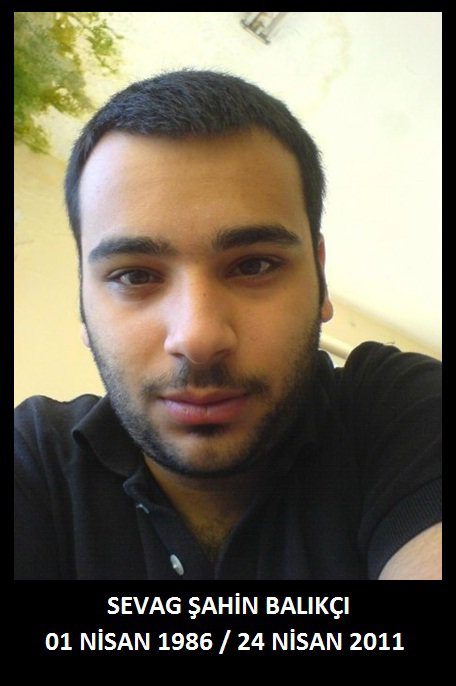
Sevag Sahin Balikci
Yesterday, on the 13th of May, a very young, very intelligent, bright-eyed, energetic, and warm-hearted journalist from Yerevan interviewed me. While talking, I suddenly found myself wishing I had a daughter like her. She asked me questions about the prospects of normalization between Turkey and Armenia. I told her what I think very briefly: How can anyone believe Turkey really wants friendly relations with Armenia while it, at the same time, displays such an unreservedly aggressive denial of the genocide (I mean, not just saying “We didn’t do it,” but saying “They deserved it”)? Official statements about taking steps for good relations with Armenia were all part of a marketing campaign to sell the “Turkey” brand to the world, as a country evolving into a more democratic system, eliminating its taboos, and seeking good relations with its neighbors. Among thousands, I gave only one very recent example.
That same day, journalist Ozgur Gundem reported how in Diyarbakir’s Dicle University, the history exam included the question: “The Ottoman state did not commit Armenian genocide. Deportations took place on the suggestion of Germany because of the treachery of Armenians who stabbed the Ottoman army in the back. During deportations some of them died of hunger, diseases, and cold weather. True or False?” Gundem called the professor who had prepared the exam question, and the latter confirmed he had prepared it knowingly, to ensure that his students learned the truth and were not mislead by unfounded allegations.[1] This is the country that is supposedly taking steps towards good relations with Armenia.
While we sat and talked in Uskudar by the sea, convoys of political parties were campaigning for the upcoming general elections with their unbearably high-volume songs and slogans filling the air, making it difficult for us to hear each other. At the same time, mass arrests were happening in the cities against Kurdish students, activists, and their supporters; military operations were intensifying in the Kurdistan mountains, with an unprecedented number of Kurds joining the funerals of guerillas; and nationalist mobs were attacking the Kurds’ Peace and Democracy Party offices in the west before the eyes of security forces.
That same day, on the 13th of May, before I met the young journalist, an e-mail had reminded me that it was also the day when Armenak Bakirciyan, the legendary guerilla leader of one of the oldest Marxist-Leninist armed movements in Turkey, was shot dead in an ambush by the military in Elazig (the old Armenian city of Harpert) in 1980.
Armenak, the son of an Armenian family from Diyarbakir, was named after Armenak Ghazarian, popularly known as Hrayr Tjhokhk, one of the heroes of the second Sasun resistance in 1904. More than a century later and carrying his name, Armenak Bakirciyan was Hrant Dink’s close friend at the Surp Hac Tibrevank Armenian School in Uskudar. He and Hrant Dink, together with other schoolmates, worked selflessly to find Armenian children in the remote villages of Anatolia, the grandchildren of genocide survivors who were unable to learn their mother tongue, and bring them to Istanbul to attend Armenian schools, where they could study in their own language. Some of these volunteer teachers of the Armenian language and culture joined the armed revolutionary organization TKP/ML-TIKKO in Turkey, waging an armed struggle, mainly in the southeast of Turkey, especially Dersim. Armenak was one of them, like Hayrabet Hancer, Nubar Yalimyan, and Manuel Demir, hiding in the mountains and punishing merciless army officers who made life hell to the villagers with arbitrary arrests and beatings in the village squares and market places, terrorizing them in every way. Armenak became a hero in the eyes of the local Kurds. He was caught wounded in a raid to the house he was hiding in and taken to prison in Izmir. Two years after his arrest, he managed to escape with the help of his comrades, fleeing to the mountains once again. On May 13, 1980, he was shot dead in an ambush in Elazig, Karakocan. The military, refusing to return his body to his family, buried him in the cemetery of the nameless. His comrades managed to secretly take his dead body out and bury him in the village of Farach, in the Mezgert (Mazgirt) District of Dersim to fulfill his last wish. During the small ceremony, the imam—in fact a secret Armenian—read lines from a poem written for Armenak: “Sing songs to me Armenak! / Let the darkness fall apart with your melody / Let your voice wake up mountains from sleep / And let life keep going with you.”
Armenak, despite his admirers and followers for more than 30 years now, was just as lonely as the others that Armenian Weekly contributors Talin Suciyan and Ayda Erbal referred to in their recent article “One Hundred Years of Abandonment.”[2] The armed illegal organization he joined as an Armenian communist was the most radical movement of its time, refusing to abide by the laws of the Republic of Turkey and waging an armed struggle against its security forces. However, the movement was also part of Turkish Marxism-Leninism, according to which Turkey’s historical backwardness was due to imperialism (that evil responsible for everything awful in Turkey) and not the Armenian Genocide which, alongside the ethnic cleansing of the Greeks, fatally destroyed the newly developing commercial bourgeoisie and the flourishing economic infrastructure, with its entire system of production and trade relations, thus putting the country 100 years back economically as well. Directing one’s anger to another, to a common enemy, to the wicked imperialism, rather than directing it to one’s self, has always been much more convenient and relieving.
Thirty years after Armenak’s death, on April 24, 2011, a young Armenian man, Sevag Sahin Balikci, not fighting against the Turkish Army—on the contrary, doing his military service for Turkey—was shot dead on the 96th anniversary of the Armenian Genocide. The military authorities issued an official statement saying that he was shot while joking around with his “close friend” in the same unit.[3] The “close friend” however, proved to be a Turkish ultra-nationalist, evident from his likes and dislikes on his Facebook page, which were soon removed.
The Human Rights Organization of Turkey has filed a complaint with the court demanding that legal action be taken against the Turkish General Staff for misleading the public and attempting to cover up the crime.
Sevag’s funeral was turned into a military show and ceremony of Turkification, with such a high number of army officers and government officials that they filled up the Surp Vartanants Church and left others in the garden, unable to go in. The soldiers loudly warned people to “step back” for the army generals to pass, and the coffin was adorned by the Turkish flag that, hours later, was held out to Sevag’s father by an army officer to kiss.
Now I take the liberty to quote in full what Talin Suciyan wrote in the May 6th issue of Agos, in response to the Turkish minister of EU affairs’ words about Sevag’s “representing the colors of Anatolia,” because nothing can express better what Armenians in Turkey were subjected to with the whole affair:
“First you made me into a tessera in your mosaic of cultures just to be able to put up with me. But soon you found that too static and resorted to the image of ebru.[4] Whether an ebru or a tessera, you all agreed that I was ‘a color of Anatolia.’ Yet, I’m neither your ebru nor your tessera, nor am I a color of your Anatolia. I know that I can acquire a color only if I’m dead and gone, mute and traceless; more colorful I become as you further destroy my history.” ‘What are you then?’ you might ask. I’m the child of the remnants of sword; the daughter of women whose bodies have been ravaged; the daughter of a people that many times have been forced to exile and whose traces have been erased throughout the last century from the land it lived on for millennia. I’m the daughter of a people that has been captivated, alienated from itself, subjugated, and whose existence as well as extermination have been denied, and temples, schools, foundations, even the hearts and minds of its members have been turned inside out. They call me a Turkish Armenian.”
“On April 24th, an Armenian died (shot dead) in barracks. The Armenians knew from their guts what that meant. But the minister for EU Affairs, Egemen Bagis, says that ‘our brother Sevag represents the colors of Anatolia.’ Bagis is right: A dead Armenian is always ‘our brother’! And yes, we do represent a color: A deep, bottomless black. An infinite black!”
“Sevag’s pitch-black eyes are staring at us; Sevag is draped in the blackest of all colors. Will you be able to look into those eyes without that gibberish about food, folk songs, and brotherhood? Don’t try to feel the suffering that has lasted a century. But you can understand the oppression we were subjected to at Sevag’s funeral ceremony; how the church has been taken away from its congregation and the funeral from its rightful owners. And just by looking at the archbishop’s post-service speech, you can understand how the Armenians remaining in Turkey have been sentenced to pay a perennial price for their survival. Don’t expect us to talk any longer, for words stand in front of us and laugh mockingly as we try harder to tell. Share in this loneliness.”[5]
The young journalist from Yerevan was looking at me sadly. She had just finished the frustrating story of her days in Turkey, contacting various people from all walks of life. “I will not come to Turkey again, I don’t want to,” she said, lowering her eyes. “Maybe I would as a journalist for professional reasons, but not as a visitor.”
“Then I will come to Yerevan,” I said, “we will meet there.”
This time my column will have no structural integrity. It will be fragmented just like life itself and just like my thoughts wandering around, coming and going at unexpected times, intertwined to form strange, disconnected images in my mind, culminating in absurd dreams at night.
Sevag Sahin Balikci
Yesterday, on the 13th of May, a very young, very intelligent, bright-eyed, energetic, and warm-hearted journalist from Yerevan interviewed me. While talking, I suddenly found myself wishing I had a daughter like her. She asked me questions about the prospects of normalization between Turkey and Armenia. I told her what I think very briefly: How can anyone believe Turkey really wants friendly relations with Armenia while it, at the same time, displays such an unreservedly aggressive denial of the genocide (I mean, not just saying “We didn’t do it,” but saying “They deserved it”)? Official statements about taking steps for good relations with Armenia were all part of a marketing campaign to sell the “Turkey” brand to the world, as a country evolving into a more democratic system, eliminating its taboos, and seeking good relations with its neighbors. Among thousands, I gave only one very recent example.
That same day, journalist Ozgur Gundem reported how in Diyarbakir’s Dicle University, the history exam included the question: “The Ottoman state did not commit Armenian genocide. Deportations took place on the suggestion of Germany because of the treachery of Armenians who stabbed the Ottoman army in the back. During deportations some of them died of hunger, diseases, and cold weather. True or False?” Gundem called the professor who had prepared the exam question, and the latter confirmed he had prepared it knowingly, to ensure that his students learned the truth and were not mislead by unfounded allegations.[1] This is the country that is supposedly taking steps towards good relations with Armenia.
While we sat and talked in Uskudar by the sea, convoys of political parties were campaigning for the upcoming general elections with their unbearably high-volume songs and slogans filling the air, making it difficult for us to hear each other. At the same time, mass arrests were happening in the cities against Kurdish students, activists, and their supporters; military operations were intensifying in the Kurdistan mountains, with an unprecedented number of Kurds joining the funerals of guerillas; and nationalist mobs were attacking the Kurds’ Peace and Democracy Party offices in the west before the eyes of security forces.
That same day, on the 13th of May, before I met the young journalist, an e-mail had reminded me that it was also the day when Armenak Bakirciyan, the legendary guerilla leader of one of the oldest Marxist-Leninist armed movements in Turkey, was shot dead in an ambush by the military in Elazig (the old Armenian city of Harpert) in 1980.
Armenak, the son of an Armenian family from Diyarbakir, was named after Armenak Ghazarian, popularly known as Hrayr Tjhokhk, one of the heroes of the second Sasun resistance in 1904. More than a century later and carrying his name, Armenak Bakirciyan was Hrant Dink’s close friend at the Surp Hac Tibrevank Armenian School in Uskudar. He and Hrant Dink, together with other schoolmates, worked selflessly to find Armenian children in the remote villages of Anatolia, the grandchildren of genocide survivors who were unable to learn their mother tongue, and bring them to Istanbul to attend Armenian schools, where they could study in their own language. Some of these volunteer teachers of the Armenian language and culture joined the armed revolutionary organization TKP/ML-TIKKO in Turkey, waging an armed struggle, mainly in the southeast of Turkey, especially Dersim. Armenak was one of them, like Hayrabet Hancer, Nubar Yalimyan, and Manuel Demir, hiding in the mountains and punishing merciless army officers who made life hell to the villagers with arbitrary arrests and beatings in the village squares and market places, terrorizing them in every way. Armenak became a hero in the eyes of the local Kurds. He was caught wounded in a raid to the house he was hiding in and taken to prison in Izmir. Two years after his arrest, he managed to escape with the help of his comrades, fleeing to the mountains once again. On May 13, 1980, he was shot dead in an ambush in Elazig, Karakocan. The military, refusing to return his body to his family, buried him in the cemetery of the nameless. His comrades managed to secretly take his dead body out and bury him in the village of Farach, in the Mezgert (Mazgirt) District of Dersim to fulfill his last wish. During the small ceremony, the imam—in fact a secret Armenian—read lines from a poem written for Armenak: “Sing songs to me Armenak! / Let the darkness fall apart with your melody / Let your voice wake up mountains from sleep / And let life keep going with you.”
Armenak, despite his admirers and followers for more than 30 years now, was just as lonely as the others that Armenian Weekly contributors Talin Suciyan and Ayda Erbal referred to in their recent article “One Hundred Years of Abandonment.”[2] The armed illegal organization he joined as an Armenian communist was the most radical movement of its time, refusing to abide by the laws of the Republic of Turkey and waging an armed struggle against its security forces. However, the movement was also part of Turkish Marxism-Leninism, according to which Turkey’s historical backwardness was due to imperialism (that evil responsible for everything awful in Turkey) and not the Armenian Genocide which, alongside the ethnic cleansing of the Greeks, fatally destroyed the newly developing commercial bourgeoisie and the flourishing economic infrastructure, with its entire system of production and trade relations, thus putting the country 100 years back economically as well. Directing one’s anger to another, to a common enemy, to the wicked imperialism, rather than directing it to one’s self, has always been much more convenient and relieving.
Thirty years after Armenak’s death, on April 24, 2011, a young Armenian man, Sevag Sahin Balikci, not fighting against the Turkish Army—on the contrary, doing his military service for Turkey—was shot dead on the 96th anniversary of the Armenian Genocide. The military authorities issued an official statement saying that he was shot while joking around with his “close friend” in the same unit.[3] The “close friend” however, proved to be a Turkish ultra-nationalist, evident from his likes and dislikes on his Facebook page, which were soon removed.
The Human Rights Organization of Turkey has filed a complaint with the court demanding that legal action be taken against the Turkish General Staff for misleading the public and attempting to cover up the crime.
Sevag’s funeral was turned into a military show and ceremony of Turkification, with such a high number of army officers and government officials that they filled up the Surp Vartanants Church and left others in the garden, unable to go in. The soldiers loudly warned people to “step back” for the army generals to pass, and the coffin was adorned by the Turkish flag that, hours later, was held out to Sevag’s father by an army officer to kiss.
Now I take the liberty to quote in full what Talin Suciyan wrote in the May 6th issue of Agos, in response to the Turkish minister of EU affairs’ words about Sevag’s “representing the colors of Anatolia,” because nothing can express better what Armenians in Turkey were subjected to with the whole affair:
“First you made me into a tessera in your mosaic of cultures just to be able to put up with me. But soon you found that too static and resorted to the image of ebru.[4] Whether an ebru or a tessera, you all agreed that I was ‘a color of Anatolia.’ Yet, I’m neither your ebru nor your tessera, nor am I a color of your Anatolia. I know that I can acquire a color only if I’m dead and gone, mute and traceless; more colorful I become as you further destroy my history.” ‘What are you then?’ you might ask. I’m the child of the remnants of sword; the daughter of women whose bodies have been ravaged; the daughter of a people that many times have been forced to exile and whose traces have been erased throughout the last century from the land it lived on for millennia. I’m the daughter of a people that has been captivated, alienated from itself, subjugated, and whose existence as well as extermination have been denied, and temples, schools, foundations, even the hearts and minds of its members have been turned inside out. They call me a Turkish Armenian.”
“On April 24th, an Armenian died (shot dead) in barracks. The Armenians knew from their guts what that meant. But the minister for EU Affairs, Egemen Bagis, says that ‘our brother Sevag represents the colors of Anatolia.’ Bagis is right: A dead Armenian is always ‘our brother’! And yes, we do represent a color: A deep, bottomless black. An infinite black!”
“Sevag’s pitch-black eyes are staring at us; Sevag is draped in the blackest of all colors. Will you be able to look into those eyes without that gibberish about food, folk songs, and brotherhood? Don’t try to feel the suffering that has lasted a century. But you can understand the oppression we were subjected to at Sevag’s funeral ceremony; how the church has been taken away from its congregation and the funeral from its rightful owners. And just by looking at the archbishop’s post-service speech, you can understand how the Armenians remaining in Turkey have been sentenced to pay a perennial price for their survival. Don’t expect us to talk any longer, for words stand in front of us and laugh mockingly as we try harder to tell. Share in this loneliness.”[5]
The young journalist from Yerevan was looking at me sadly. She had just finished the frustrating story of her days in Turkey, contacting various people from all walks of life. “I will not come to Turkey again, I don’t want to,” she said, lowering her eyes. “Maybe I would as a journalist for professional reasons, but not as a visitor.”
“Then I will come to Yerevan,” I said, “we will meet there.”
Subscribe to:
Posts (Atom)