Thursday, November 22, 2012

Artsakh Newsletter summarizes key developments in the Nagorno Karabakh Republic,

ARTSAKH NEWSLETTER   

November 1-15, 2012   

Artsakh Newsletter summarizes key developments in the Nagorno Karabakh Republic, Artsakh and is prepared by the NKR Office in the United States.  

SECURITY & POLITICS  
 
President of the House of Representatives of Uruguay Jorge Orrico visited NKR and met Artsakh Republic President Bako Sahakyan and other officials to discuss development of relations between Uruguay and NKR. Earlier in Yerevan, Jorge Orrico condemned Azerbaijan’s recent pardoning and promotion of a convicted axe murderer, stressing the importance of protection of human rights on the international arena. He also noted that Uruguay was the first country in the world to recognize the Armenian Genocide.

During his visit to Artsakh, President of the House of Representatives of Uruguay Jorge Orrico spoke at the NKR parliament. He stressed the importance of peaceful resolution of the conflict and respect freedom and basic human rights. Artsakh Speaker of the Parliament Ashot Ghoulian welcomed the visit of Uruguay delegation to Artsakh and stressed the importance of this visit for Artsakh. Later, the Uruguay delegation visited Shushi and Gandzasar as well as met Armenian refugees from Azerbaijan.    

“Rehabilitation of the Stepanakert airport is the sovereign right of the Nagorno Karabakh  Republic and pursues solely civilian and humanitarian objectives, including the realization of such a basic human right as the freedom of movement”, the NKR Foreign Ministry said in a letter circulated at the UN General Assembly and Security Council in a response to Azerbaijan’s efforts to thwart the airport’s opening.

Azerbaijan officially continues encouraging hatred against Armenians, stressed Armenia’s Representative to the United Nations, Amb. Garen Nazarian in his address during a UN session on elimination of racism, racial discrimination and intolerance.

Armenia will continue pushing for a negotiated settlement to the Karabakh conflict, but the country will not stand aside in case of new aggression against NKR from Azerbaijan, Armenian President Serzh Sargsyan stated in his interview with the Wall Street Journal. Sargsyan stressed that “…Azerbaijan is waiting for an occasion to start a conflict” and warned that that “would harm the people of Nagorno-Karabakh and Armenia but that most harm would come to the people of Azerbaijan.”

The recent meeting of Foreign Ministers of Armenia and Azerbaijan mediated by the OSCE Minsk Group Co-Chairs was an attempt to bring Azerbaijan to constructive dialogue, said Armenian Foreign Minister Edward Nalbandyan.

Azerbaijan did not allow U.S. Ambassador to Azerbaijan Richard Morningstar to visit the site in Julfa, Nakhijevan, where a medieval Armenian cemetery with thousands of cross-stone monuments (khachkars) was destroyed by the Azerbaijani authorities in 2005 (see the video). The Armenian National Committee of America called on the U.S. Ambassador to visit the area and to secure public access to the site. See full documentary on the subject.  

BUSINESS & ECONOMY
Growth in the construction sector continues in Artsakh, with $65 million invested in the first nine months of this year. See video.

Base Metals Company is preparing to put into operation a new ore deposit in the area of Tsakhkashen in Martakert region, NKR within two years.

SOCIETY

‘Hayastan’ All-Armenian Fund’s 15th international telethon will take place on November 22 live between 8:00am-8:00pm PST. (click for more info). This year’s contributions will assist in the rural development in Armenia and Artsakh and the urgent humanitarian needs of Syrian Armenians.
 
President Sahakyan stressed the importance of rural development projects for Artsakh, in his speech during the Hayastan All-Armenian Fund’s annual fundraising dinner in Moscow that secured pledges of more than $12 million. NKR President called upon Armenians to participate actively in the upcoming telethon.

Shoushi played host for a joint meeting of NKR and Armenian parliaments’ standing committees on Science, Education, Culture, Youth and Sport Affairs.

A few words about Artsakh

The Nagorno Karabakh Republic, Artsakh, was established in 1991 basing on a declaration of the local legislature, and results of a subsequent nation-wide referendum. The people of Artsakh defended their choice in a war unleashed by Azerbaijan.

 The Nagorno Karabakh Republic, Artsakh has emerged as a democratic, rule-of-law state with capable armed forces, a growing market economy, and an independent foreign policy.

*          *          *
*          *          *
We would like to hear from you. Please send your comments to Press Service
 at: info@nkrusa.org
Please visit our YouTube Channel: http://www.youtube.com/user/ArtsakhOnline

*          *          *
This material is distributed by the Office of the Nagorno Karabakh Republic in the United States on behalf of the government of the Nagorno Karabakh Republic, Artsakh. The NKR Office is registered with the U.S. government under the Foreign Agent Registration Act. Additional information is available at the Department of Justice, Washington, D.C.

The Office of the Nagorno Karabakh Republic in the United States is based in Washington, DC and works with the U.S. government, academia and the public representing the official policies and interests of the Nagorno Karabakh Republic, Artsakh. The NKR Office is registered with the U.S. Government under the Foreign Agent Registration Act. Additional information is available at the Department of Justice, Washington, D.C.

Office of the Nagorno Karabakh Republic in the United States
1334 G ST. NW, Suite 200, Washington, DC 20005
Tel:  (202) 223-4330;  Email: info@nkrusa.org  Web: www.nkrusa.org


Thursday, November 15, 2012

Photograph Links Germans to 1915 Armenia Genocide

Photograph Links Germans to 1915 Armenia Genocide

Newly discovered picture shows Kaiser's officers at scene of Turkish atrocity


Robert Fisk, “The Independent”, Beirut, Lebanon


The photograph – never published before – was apparently taken in the summer of 1915. Human skulls are scattered over the earth. They are all that remain of a handful of Armenians slaughtered by the Ottoman Turks during the First World War. Behind the skulls, posing for the camera, are three Turkish officers in tall, soft hats and a man, on the far right, who is dressed in Kurdish clothes.
But the two other men are Germans, both dressed in the military flat caps, belts and tunics of the Kaiserreichsheer, the Imperial German Army. It is an atrocity snapshot – just like those pictures the Nazis took of their soldiers posing before Jewish Holocaust victims a quarter of a century later.

Did the Germans participate in the mass killing of Christian Armenians in 1915? This is not the first photograph of its kind; yet hitherto the Germans have been largely absolved of crimes against humanity during the first holocaust of the 20th century. German diplomats in Turkish provinces during the First World War recorded the forced deportations and mass killing of a million and a half Armenian civilians with both horror and denunciation of the Ottoman Turks, calling the Turkish militia-killers "scum". German parliamentarians condemned the slaughter in the Reichstag.

Indeed, a German army medical officer, Armin Wegner, risked his life to take harrowing photographs of dying and dead Armenians during the genocide. In 1933, Wegner pleaded with Hitler on behalf of German Jews, asking what would become of Germany if he continued his persecution. He was arrested and tortured by the Gestapo and is today recognised at the Yad Vashem Jewish Holocaust memorial in Israel; some of his ashes are buried at the Armenian Genocide Museum in the capital, Yerevan.

It is this same Armenian institution and its energetic director, Hayk Demoyan, which discovered this latest photograph. It was found with other pictures of Turks standing beside skulls, the photographs attached to a long-lost survivor's testimony. All appear to have been taken at a location identified as "Yerznka" – the town of Erzinjan, many of whose inhabitants were murdered on the road to Erzerum. Erzinjan was briefly captured by Russian General Nikolai Yudenich from the Turkish 3rd Army in June of 1916, and Armenians fighting on the Russian side were able to gather much photographic and documentary evidence of the genocide against their people the previous year. Russian newspapers – also archived at the Yerevan museum – printed graphic photographs of the killing fields. Then the Russians were forced to withdraw.

Wegner took many photographs at the end of the deportation trail in what is now northern Syria, where tens of thousands of Armenians died of cholera and dysentery in primitive concentration camps. However, the museum in Yerevan has recently uncovered more photos taken in Rakka and Ras al-Ayn, apparently in secret by Armenian survivors. One picture – captioned in Armenian, "A caravan of Armenian refugees at Ras al-Ayn" – shows tents and refugees. The photograph seems to have been shot from a balcony overlooking the camp.

Another, captioned in German "Armenian camp in Rakka", may have been taken by one of Wegner's military colleagues, showing a number of men and women among drab-looking tents. Alas, almost all those Armenians who survived the 1915 death marches to Ras al-Ayn and Rakka were executed the following year when the Turkish-Ottoman genocide caught up with them.

Some German consuls spoke out against Turkey. The Armenian-American historian Peter Balakian has described how a German Protestant petition to Berlin protested that "since the end of May, the deportation of the entire Armenian population from all the Anatolian Vilayets [governorates] and Cilicia in the Arabian steppes south of the Baghdad-Berlin railway had been ordered". As the Deutsche Bank was funding the railway, its officials were appalled to see its rolling stock packed with Armenian male deportees and transported to places of execution. Furthermore, Professor Balakian and other historians have traced how some of the German witnesses to the Armenian holocaust played a role in the Nazi regime.

Konstantin Freiherr von Neurath, for example, was attached to the Turkish 4th Army in 1915 with instructions to monitor "operations" against the Armenians; he later became Hitler's foreign minister and "Protector of Bohemia and Moravia" during Reinhard Heydrich's terror in Czechoslovakia. Friedrich Werner von der Schulenburg was consul at Erzerum from 1915-16 and later Hitler's ambassador to Moscow.

Rudolf Hoess was a German army captain in Turkey in 1916; from 1940-43, he was commandant of the Auschwitz extermination camp and then deputy inspector of concentration camps at SS headquarters. He was convicted and hanged by the Poles at Auschwitz in 1947.

We may never know, however, the identity of the two officers standing so nonchalantly beside the skulls of Erzinjan.


  Photograph Links Germans to 1915 Armenia Genocid

Wednesday, November 7, 2012

Bell Tolls for Armenians Once Again in Diyarbakir

File4 1024x768 Bell Tolls for Armenians Once Again in Diyarbakir
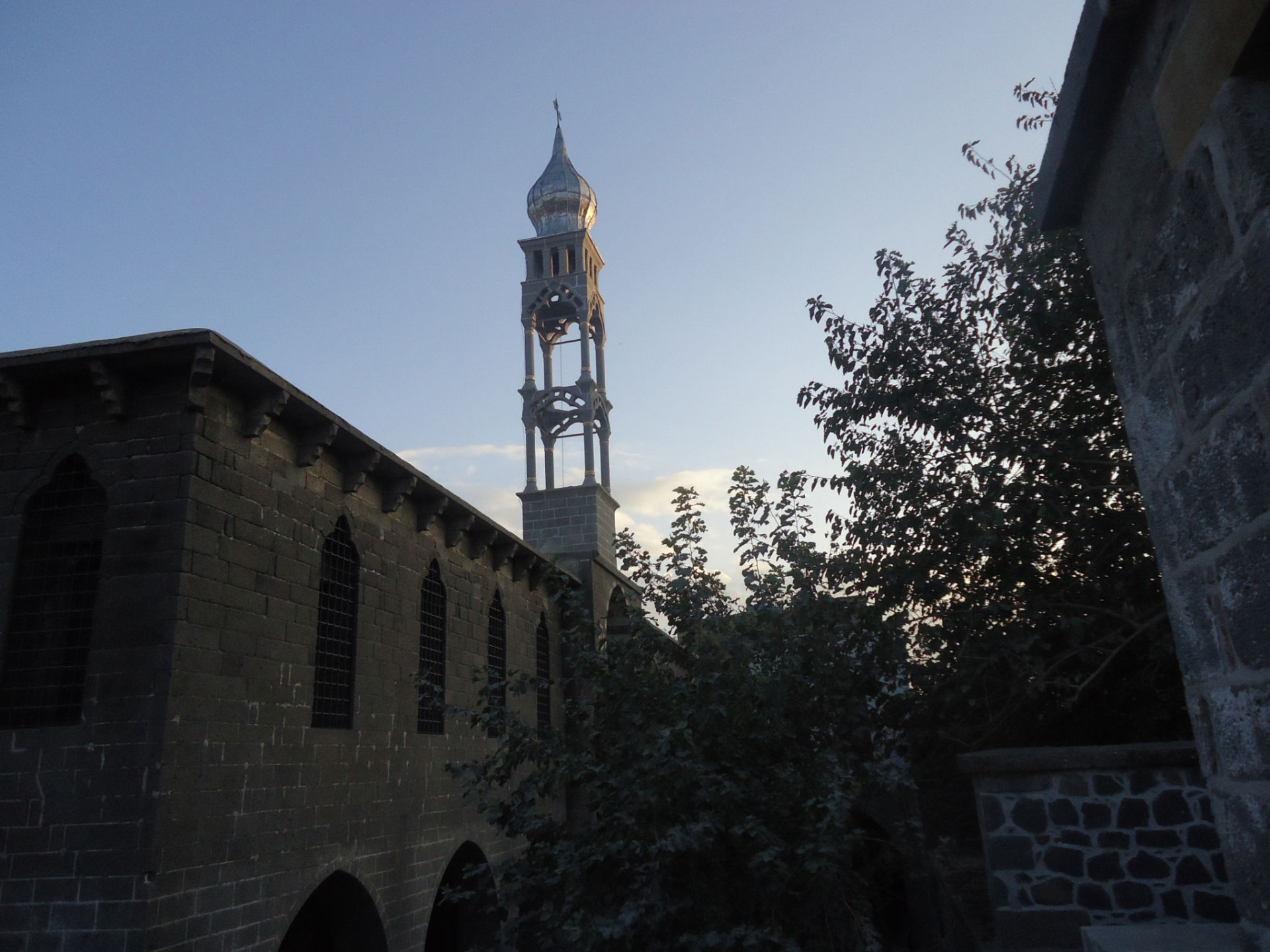
The bell tower of Sourp Giragos Church (Photo by Gulisor Akkum, The Armenian Weekly)
Armenian Weekly correspondent Gulisor Akkum reports from Diyarbakir.
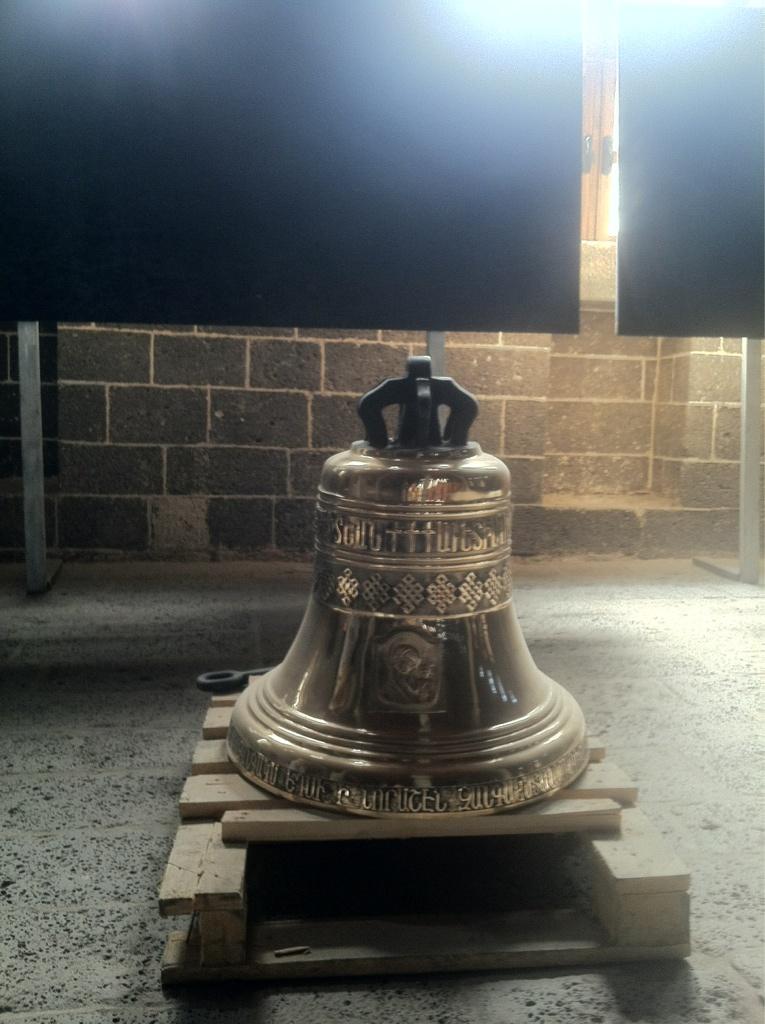
DIYARBAKIR, Turkey (A.W.)—The bell tower of Sourp Giragos Armenian Church in Diyarbakir was opened today and, after decades of silence, the bell tolled once again for Armenians.
Bell 224x300 Bell Tolls for Armenians Once Again in Diyarbakir
The Sourp Giragos Church bell (Photo by Khatchig Mouradian)
Acting Patriarch Archbishop Aram Ateshyan, who is originally from Diyarbakir/Dikranagerd, presided over the opening ceremony, which was attended by hundreds of Armenians from Turkey and abroad.
The Sourp Giragos Foundation of the Patriarchate began the renovation of the church in 2009, and the church opened for worship in October 2011. Due to a lack of funding, however, the bell tower was not rebuilt.
At the opening ceremony of the bell tower, the head of the Sourp Giragos Foundation, Ergun Ayik, said, “This church was once a beautiful, living proof of the Armenian population density in this city. Its architecture stands as testament to how advanced Armenian civilization was.”
He added, “Our ancestors bequeathed this church to us, yet for known reason, we weren’t able to claim ownership of this heritage. The renovation marked the beginning of the process of assuming this ownership.”
The director of Aras Publishing House, Mgrditch Margosyan, in turn, recounted how 12 years ago, at a symposium on the protection of Diyarbakir’s cultural and historical heritage, speakers were only discussing fortresses and mosques. “When my turn came to speak, I brought up the issue of the churches. I suppose such messages eventually rang a bell.”
Indeed, with the moral and financial support of Diyarbakir Mayor Osman Baydemir, the renovation of the church was completed, and, once more, after decades of silence, the sound of the church bell was heard in Diyarbakir side by side with the calls to prayer from the city’s mosques. (For details on the renovation, click here.)
Built in 1376, Sourp Giragos is the largest Armenian church in the Middle East. During the Armenian Genocide, the bell tower was demolished under the pretext that it was higher than the minarets of the mosques in the city, and the church itself was used as storage space for confiscated Armenian property. After World War I, Sumerbank (a state-owned bank) used the church as storage space. (Click here for a detailed history of the church.)
Translated from Turkish by Khatchig Mouradian.

Friday, October 19, 2012

A Vital Moment for Jerusalem

A Vital Moment for Jerusalem
By Edmond Y. Azadian

Holy places, which were meant to be lands of peace, have proven to be some of the most tortured regions of the world. And Armenians, with their traditional penchant for inhabiting troubled areas, have shared the plight of Jerusalem for more than two millennia. It is believed that Armenians settled in Jerusalem during the reign of Tigranes II, who had claimed Jerusalem, at one time, to be part of his vast empire, during his reign 95 to 55 BC .
But the Armenian monastic order in Jerusalem, the Brotherhood of St. James, dates back to the sixth century.
As Armenians have shared the perilous saga of Jerusalem with the religious orders of other faiths, they have been fortunate over the years to have amassed real estate as well as religious, scholarly and artistic treasures. Kings, princes, intellectuals and ordinary pilgrims have endowed the St. James Monastery with immeasurable treasures, believing that the Brotherhood will act as custodians of those treasures, rather than owners. But human weakness sometimes has played a more prominent role than faith by those in charge, thereby compounding the internal problems of the Patriarchate with problems created by outside forces.
With the loss of His Beatitude Archbishop Torkom Manoogian on October 12, 2012, of blessed memory, the Brotherhood  and the Patriarchate face new challenges which come with the succession procedures.
Archbishop Manoogian served for 22 years as Patriarch, having been elected on March 22, 1990.
Arthur Hagopian, in his heart-warming tribute, has covered lovingly the legacy and the achievements of the late Patriarch. Unfortunately, most of his good works enumerated in the article were overshadowed by the problems emanating from the Patriarchate. He was certainly an intellectual, an accomplished scholar like his namesake, Patriarch Torkom Koushakian, but he was not known for being an efficient administrator or a believer in delegating responsibilities to competent subordinates or professionals. That is why some valuable properties were lost during his administration and the succession process has turned into a guessing game.
The Armenian Patriarchate of Jerusalem is a monastic order serving as custodians of holy places, along with the Greek Orthodox, Roman Catholic as well as the Syriac and Coptic Churches. The compound of the Armenian Patriarchate covers one sixth of the Old City; in addition, the Patriarchate owns property outside the compound. To this day, the outside world has not been informed of the Patriarchate’s real estate holdings and perhaps no insider has full knowledge of the Patriarchate’s wealth either. But the world Armenian community has to extend a helping hand every time a desperate appeal is issued by the Patriarchate.
The Jerusalem Patriarchate, with all its treasures and wealth, has attracted the attention of many parties. Every time Israel and the Palestinians engage in  negotiations over the future of Jerusalem, the Armenian Patriarchate is on the table because it occupies such a piece of historic real estate. In addition to the Israelis and the Palestinians, Turkey is vitally interested in its fate, particularly in view of the archival materials pertaining to the Genocide. The Greek Patriarchate has proven to be a perennial thorn in the side of their Armenian counterpart, pursuing an aggressive policy of trampling Armenian rights in holy places, sometimes generating farcical stories during Easter or Christmas. All these forces are vigilantly focused on the election of the next Patriarch, to find out how well their interests will be represented in Jerusalem.
Another interested party is the See of Antelias, which still holds captive the Diocese in Iran, despite the demise of the Cold War, to undermine the authority of the Holy See at Echmiadzin. The division in the Armenian Church continues and the clergy in Antelias believe that every setback for Echmiadzin will help the cause of the Cilician See.
Turkey has already frozen the situation at the Istanbul Patriarchate by allowing a clergyman of whom they approve to take over, undercutting the influence of the Holy See in that jurisdiction.
After Archbishop Torkom was incapacitated, the Brotherhood convened on January 30, 2012, and assigned Archbishop Nourhan Manougian to provisionally run the affairs of the Patriarchate, until the election of a successor.
At this time, the Brotherhood is scheduled to convene on Friday, October 19, to elect a locum tenens (deghabah), until a successor Patriarch is elected 40 days after the death of the late Patriarch.
Whoever is elected locum tenens can control the developments and steer the election in a direction of his choosing.
The holy places are governed by a set of rules called the Status Quo, promulgated during the reign of Ottoman ruler Sultan Abdel-Majid. Successive governments have abided by the dictates of the Status Quo. The Armenian Patriarchate has its own internal bylaws, which allow only the membership of the Brotherhood to participate in the elections. Outwardly, this may sound rational, because it bars interference from outside forces, especially governments in charge of Jerusalem in any given period. But historically, governments have been involved, whether directly or indirectly, in the outcome of the election. One blatant example in recent memory of such interference was when the Jordanian authorities deported the elected Patriarch, Archbishop Tiran Nersoyan, and ushered in Archbishop Yeghishe Derderian to the throne. While the move was illegal, Archbishop Derderian proved to be a super diplomat, navigating the Patriarchate skillfully among the interests of the Israelis, Palestinians and Jordanians. (In fact, the elected Jerusalem Patriarch cannot take office until his election is approved by the Jordanian and Israeli authorities.)
Unfortunately, the Brotherhood’s bylaws have traditionally proven to be a firewall against the influence of well-intentioned Armenian parties and even against the influence of the Mother See of Echmiadzin.
Indeed, during the last convocation, the two delegates from Echmiadzin were not allowed to attend the convocation to read the message of His Holiness. Instead, the message was read by one of the members of the Brotherhood. And this arrogance was justified “because those two delegates were not members of the Brotherhood.”
Who will be elected locum tenens is anyone’s guess. Prominent and experienced clergy have refused to put their candidacy forward, leaving the floor open to younger clergy who need to prove their competence on the job. God forbid, if the wrong candidate musters the votes, as the very destiny of the Jerusalem Patriarchate will be in jeopardy.
As the saying goes, war is too important a business to be left to the generals; similarly, Jerusalem is too important a center to be left to the 20-30 clergymen, some of whom have chosen the vocation by default.
As we see, the pitfalls and challenges are enormous. Only a wise conclave can measure the historic importance of the moment and cast their votes for the best interests and the survival of the Patriarchate, over individual ambitions.

Wednesday, October 17, 2012

Can Turkey be Held Responsible for the 1915 Genocide?

Article in European Journal of International Law

State Identity, Continuity, and Responsibility: The Ottoman Empire, the
Republic of Turkey and the Armenian Genocide

By Vahagn Avedian
Ph.D. Candidate, Department of History, Lund University

Abstract

By studying the continuity between the Ottoman Empire and its succeeding
Turkish Republic, this article aims to address one crucial aspect of the
denial of the Armenian genocide by the Turkish state, namely the issue of
state responsibility.

There are psychological barriers in Turkey which have largely suppressed the
memories of possible wrongdoings during World War I and the ensuing
'Independence War'. However, the barrier that is created by the issue of
state responsibility is identified here as the fundamental obstacle for
genocide recognition by the Turkish state. This article aims to apply some
of the existing legal principles and theories of international law in order
to test their applicability to the two Turkish states and the issue of
internationally wrongful acts committed during World War I and the ensuing
years.

In addition to the Turkish Republic bearing the identity of the Ottoman
Empire, this article suggests that the Republic not only failed to stop
doing the wrongful acts of its predecessor, but it also continued the very
internationally wrongful acts committed by the Young Turk government.

Thus, the insurgent National Movement, which later became the Republic, made
itself responsible for not only its own wrongful acts but also those of its
predecessor, including the act of genocide committed in 1915-1916.
The issue of possible liability has ever since the creation of the Republic
formed the denialist policy which is Turkey's to this day.

Please note the copyright rules stated at
http://www.oxfordjournals.org/access_purchase/rights_permissions.html

Full HTML version:
http://ejil.oxfordjournals.org/content/23/3/797.full?keytype=ref&ijkey=4FZRu
LROIocgqw8

Full PDF version:
http://ejil.oxfordjournals.org/content/23/3/797.full.pdf?keytype=ref&ijkey=4
FZRuLROIocgqw8


Sunday, September 30, 2012

Yavuz BaydarColumnist, "Today's Zaman-Facing Turkey's Past: Struma and 1915

Facing Turkey's Past: Struma and 1915
Posted: 09/18/2012 12:02 pm

Apology, in my opinion, is secondary. First and foremost, the emphasis
should be on this society's courage to face the sins of the past. We
were deprived of it until today. This is a frightened society. I am not
ashamed to say this: We were fed this fear, we were scared throughout
all our lives. Our ruling system has been based on fear. We have to
change that. The only way is to confront our past.
These are the words of İshak Alaton, a prominent octogenarian Turkish
businessman of Jewish origin. After releasing his memoirs not so long
ago, Alaton has become more and more vocal, calling endlessly for an
end to the bloody Kurdish conflict as one of the "wise men" ready to be
part of a dialogue on reconciliation, asking for the courage to face
the crimes that were committed during the collapse of Ottoman rule and
asking citizens to speak out.

When a ship called the Struma was dragged to the port of Old İstanbul
in 1941, Alaton was a 15-year-old witness to the agony onboard. The
60-year-old vessel was the last hope of 769 Romanian Jews fleeing the
Nazis, but its engines had stopped at the Black Sea end of the
Bosporus. The issue led to pressure on Ankara from Adolf Hitler's
regime, and after 72 days of despair, the Struma was sent by Turkish
authorities back into the Black Sea, where it was torpedoed by the
Soviet navy. Only one person survived.

"Those responsible for this in Ankara are, to my mind, murderers. This
society, of which I am a part, has a problem with hiding from its past.
We pretend that if we lock them away the problems will be gone. But the
corpses that rot in there poison the air that we breathe. Is any
serenity possible without confrontation? Let us do it, so that we can
make peace with the past."

The Struma disaster, a hidden episode in the republic's history, is the
subject of a new book written by Halit Kakınç, and its preface is
written by, yes, Alaton himself.

It is not for nothing the subject of "genies out of the bottle." is to
persist on the agenda of Turkey, opened up in a sort of "Turkish
perestroika" by the ruling Justice and Development Party (AKP) in the
past decade.

And, only days after the release of the Struma book, another hit the
shelves -- a potential intellectual bombshell.

"1915: Armenian Genocide" is its title and, not only due to its cover
but also its groundbreaking content, it overwhelms many others on the
subject that have been published. What makes the book outstanding and
unique is that it was written by Hasan Cemal, an internationally
renowned editor and columnist who is the grandson of Cemal Pasha.

This kinship is key to understanding the book's historic significance:
Cemal Pasha was a member of the triumvirate, whose other parts were
Talat and Enver Pasha, responsible for the Great Armenian Tragedy,
which started with a mass deportation of Ottoman Armenians from their
homelands and ended with their annihilation between 1915 through 1916.

In his account, Hasan Cemal concludes it was genocide. He does not
intend, or pretend, to argue his case like a historian would. His is a
painful intellectual journey that takes us through his own evolution, a
rather ruthless self-scrutiny of his intellectual past that amounts to
an invaluable piece of private archeology.

He has done this before. In other books, he questioned his "militarist
revolutionary" past (in the '60s and'70s), confronting boldly his own
mistakes -- his deep disbelief in democracy, plotting coups, his
experience as newspaper editor, etc.

But this one is even more personal.

"It was the pain of Hrant Dink which made me write this book," he told
the press. Dink was a dear Turkish-Armenian colleague to many of us, as
he was to Cemal. He was assassinated in broad daylight on a street of
Istanbul by a lone gunman in January 2007, sending shockwaves around
the world.

"Look at my age; it's been years and years that I have defended the
freedom of expression. But should I keep secret some of my opinions,
only for myself? Should I still have some taboos of my own? Should I
still remain unliberated? Is it not a shame on me, Hasan Cemal?"

In the preface, he writes: "We cannot remain silent before the bitter
truths of the past. We cannot let the past hold the present captive.
Also, the pain of 1915 does not belong to the past, it is an issue of
today. We can only make peace with history, but not an 'invented' or
'distorted' history like ours, and reach liberty."

The pain of Dink's memory -- which scarred many of us so eternally --
may have been a crucial point for it, but by turning a "personal
taboo-breaking" into a public one, Cemal opened a huge hole in the wall
of denial of the state. It broke another mental dam.

This bold exercise in freedom of speech will, in time, pave the way for
the correct path. It is up to the individuals of Turkey to do the same,
and bow before their consciences. Perhaps this is why there has been
such silence over this book in the days since its publication. It is
also very difficult to find in bookstores. There are rumors that some
chains are refusing to sell it. This may be true, but it cannot now be
unpublished.

The genie is out of the bottle but the ghosts of the past are also very
much alive. The "silent treatment" is proof of that. If anything, it
shows how frightened people are. Not only does the state owe an apology
for the past, but an even bigger apology is necessary for enforcing,
decade after decade, a mass internalization of denialism in this
country.


Thursday, September 27, 2012

Sassounian: Azeri, Turkish-American Groups Denigrate US-Armenian Executive

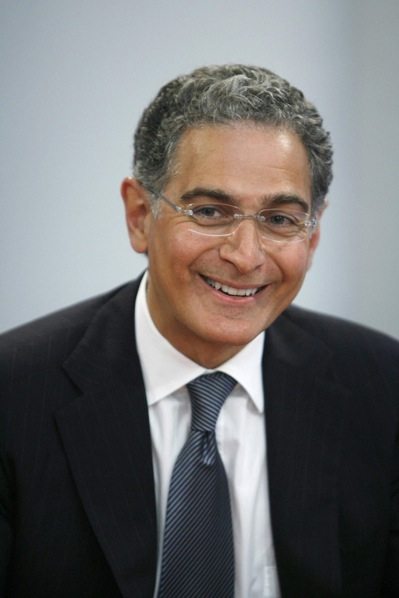
Four Azeri and Turkish-American organizations launched a coordinated anti-Armenian campaign last week, attacking the integrity of Mark Hoplamazian, the CEO of Hyatt Hotels Corporation, in order to intimidate him and other Armenian-American executives.
Hyatt 200x300 Sassounian: Azeri, Turkish American Groups Denigrate US Armenian Executive
Mark Hoplamazian
In a letter to Thomas Pritzker, executive chairman of Hyatt Board of Directors, leaders of the Assembly of Turkish-American Associations (ATAA), Azerbaijani-American Council (AAC), Federation of Turkish-American Associations (FTAA), and Azerbaijan Society of America (ASA) accused Hoplamazian of being involved in “ethnic propaganda campaigns.”
The Azeri and Turkish groups attacked Hoplamazian for speaking at the Sept. 22 banquet of the “Armenian Assembly of America (AAA), an Armenian-American lobbying group, as a Hyatt executive.” They also expressed their unhappiness that he “serves on the Advisory Board of ‘Facing History and Ourselves,’ a non-profit group that ‘teaches about the Armenian genocide.’”
The four Turkic organizations claimed that “Mr. Hoplamazian’s engagement with ethnic special interest groups that spread antagonisms against Turkey and Azerbaijan may be in violation of the Conflicts of Interest clause of Hyatt’s Code of Business Conduct and Ethics.” However, a review of the hotel chain’s code, posted on its website, does not provide the slightest hint that the Hyatt executive violated any of its provisions.
In their letter, the Azeri and Turkish groups made a series of malicious statements by referring to the Armenian Genocide as an “allegation” and as “World War I-era inter-communal atrocities.” They falsely alleged that these “atrocities” were “never tried in any tribunal and no intent to exterminate Armenians was ever established. No sentences or court verdicts were issued in terms of the 1948 United Nations Convention on Prevention and Punishment of Genocide.”
By making such ridiculous claims, the leaders of these Turkic organizations simply exposed their ignorance of the basic facts of the Armenian Genocide. They conveniently forgot about the Turkish Military Tribunals of 1919 that sentenced the Turkish ringleaders of the Armenian Genocide to death. U.S., Swiss, and Argentinean federal courts have also reaffirmed the veracity of the Armenian Genocide. Furthermore, in 1985 the UN Sub-Commission on Prevention of Discrimination and Protection of Minorities adopted a report classifying the Armenian Genocide as an example of genocide.
The Azeri and Turkish groups also claimed that they represent “over half million Americans of Turkic descent.” This cannot be true simply because there aren’t that many Turkic people living in the United States, according to the latest U.S. census. Even if there were half a million Turkic Americans, it is highly doubtful that all of them would have given their consent to be represented by these organizations for such absurd misadventures. Most probably, these four groups altogether have a tiny fraction of the constituencies they claim.
Clearly, the faulty statements and silly accusations of these Turkic groups are intended to intimidate Hoplamazian and force him to disengage from any involvement in Armenian or genocide-related issues. More ominously, by targeting and making an example of the Hyatt CEO, Azeri and Turkish groups hope to discourage other Armenian-American executives from pursuing similar activities.
In their joint letter, the Azeri and Turkish groups indirectly threatened Hyatt’s corporate interests by indicating that the company “currently runs a total of four successful hotels in Istanbul, Turkey, and Baku, Azerbaijan.” One wonders if the governments of Azerbaijan and Turkey have authorized these two-bit groups to speak on their behalf. Moreover, do these organizations realize that they are undermining the business interests of their native countries by foolishly threatening a global corporation like Hyatt?
It would be highly regrettable if the unwise Azeri and Turkish campaign against prominent Armenian-American executives were to start an undesirable chain of events that leads the Armenian community to take counter-actions against successful Turkish-American businessmen, such as Muhtar Kent, the chairman and CEO of the Coca-Cola Company.
The Azeri-Turkish letter is highly unlikely to bring any tangible benefits to these groups, as Hyatt’s Board of Directors will most probably dismiss their baseless allegations. More importantly, such a racist assault on the integrity of an exemplary Armenian-American executive would energize Armenians on the eve of the 100th anniversary of the genocide to pursue more vigorously their just demands from both Turkey and Azerbaijan.
Lastly, it is outrageous that these Azeri and Turkish groupings kept totally silent when an Azeri officer axed to death a sleeping Armenian in Budapest, Hungary, but are now alarmed when an Armenian-American CEO exercises his right to free speech in Beverly Hills!