n a previous article
about the Centennial of the Armenian Genocide in 2015, I argued about
the need to focus our limited resources to supporting independent
academic research, to continue to reveal the truth and facts of 1915 and
establish a “common body of knowledge” between Turks and Armenians. In
this article, I will elaborate on the necessity to deliver those facts
directly to the Turkish people; will outline some of the obstacles
created by the denialist policies of the Turkish state; and finally,
will provide a few suggestions for the Turkish state to consider by 2015.
Meaningful dialogue between two conflicting parties can only happen
when both parties are aware of the facts and the truth. Even though the
Turkish state has not allowed the truth of 1915 to come out until very
recently, there are now clear signs that the taboos are finally being
broken and that this “common body of knowledge” is emerging among
Turkish opinion makers and ordinary citizens.
For four generations, Turkish citizens were brainwashed about the
genocide by the state education system and the media. The Turkish
people, however, can no longer be defined as a homogenous, uniform
group. Clashes between the Turkish state and the sizable Kurdish/Alevi
population, as well as the prosecution and punishment of the “deep
state” leaders who ruled Turkey until a few years ago, have led some to
question the state’s version of history regarding 1915. A few bright
personalities/opinion makers in politics, academia, media, and
literature have advocated for increased democratization, freedom of
speech, and minority rights; moreover, they have acknowledged the truth
about the genocide and demanded that the state do so as well. There is
now a small but fast-increasing segment of the population that wants the
state to face its past.
To date, there have been very few attempts for dialogue between the
Armenian world and this liberalized segment of the Turkish population.
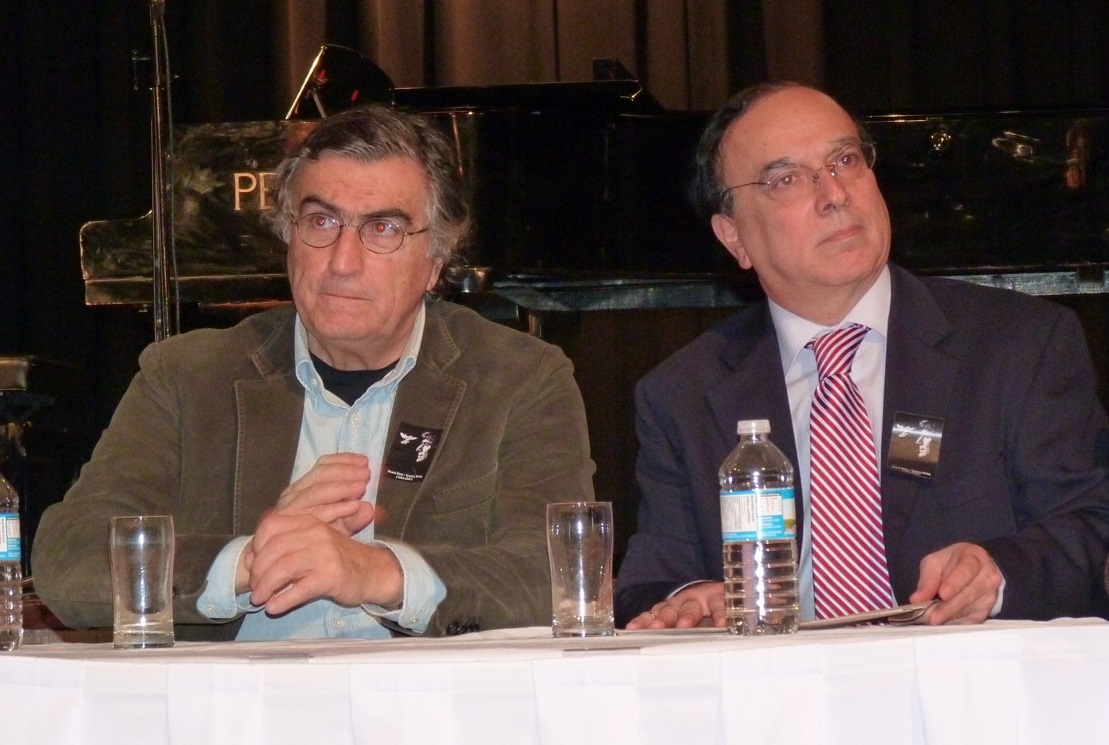
Apart from the activities of the Hrant Dink Foundation based in
Istanbul, the only contact has been through a few individuals in
academia, film, media, music, and culture; and organizationally, by the
Zoryan Institute in the academic field, by the Armenian NGO Civilitas
through its recently opened office in Istanbul, and some recent
political exchanges between Kurdish political parties and
representatives of the ARF. Armenian academia, NGOs, and opinion makers
should aim to establish direct contact with their Turkish counterparts
to convey the truth through jointly organized conferences, seminars, TV
programs, films, and translated publications.
Ordinary Turks, for example, should find out about the courageous
Turkish officials who resisted the inhumane government decisions to
annihilate the Armenian population in 1915. They should learn about the
fate of the properties left behind by the annihilated Armenians,
including hundreds of thousands of houses, fields, shops, warehouses,
factories, mines, churches, and schools, all confiscated by the state,
the Ittihat Terakki leaders, or local Muslim notables. They should
understand that most of the Ataturk House Museums scattered all over
Anatolia once belonged to deported or murdered Armenian citizens of the
Ottoman state. They should be reminded that the very residence where the
Turkish president sits today in Ankara was once owned by an Armenian
family.
Of course, the Turkish state will continue to use all of its
resources to prevent its citizens from finding out the truth.
Notwithstanding the boasts of Turkish Prime Minister Erdogan that the
archives are open and have nothing to hide, the reality is that the
Ottoman archives are not entirely open and have gone through two major
cleanups.
The first cleanup and destruction of files was back in 1918, when the
Ittihat Terakki leaders escaped from Istanbul in a German warship to
avoid prosecution as war criminals, carrying several trunkloads of
documents with them. At the same time, the main planner of the Armenian
deportations and massacres, Special Organization Chief Bahattin Shakir,
also burned rooms full of documents related to their activities.
The second purging was in the 1990′s when the Ottoman archives were
reorganized, translated into modern Turkish, and digitized. A team of
diplomats, historians, retired ambassadors, and military officers sifted
through millions of documents with the objective of eliminating any
incriminating reference to the Armenians.
Recent WikiLeaks documents indicate that the Ottoman archival
documents, initially estimated at 50 million records, numbered more like
200 million and therefore, the intended purge could not be carried out
effectively. Clearly, several thousand documents escaped scrutiny and a
few prominent Turkish scholars like Taner Akcam, Umit Kurt, and Ugur
Ungor have been able to produce significant historic facts about the
intended annihilation of the Armenians and the confiscation of their
properties based only on these archives. Recently it was revealed that
all researchers delving into the Armenian issue in the Ottoman archives
were being tracked and monitored. If their work was deemed to be against
the state version, there would be harassment and funding repercussions
against them, as well as the institutions where they worked/studied.
Meanwhile, Turkish researchers who produce/falsify/create documents
minimizing Armenian losses are encouraged and rewarded. In 2005, Murat
Bardakci, an investigative journalist, published Talat Pasha’s diary,
revealing that Talat had kept detailed records about the numbers and
destination of the deported Armenians. He had tallied the loss of
Armenians at 972,000, but had also stated that the total missing could
exceed 1.2 million due to unaccounted relocations.
During a recent TV talk show about history called “Rear Window of
History,” Bardakci invited a history professor from Sakarya University, a
state-sponsored “expert” on the Armenian issue. This expert announced
that the archives show that the Ottoman government took all precautions
to care for the 300,000 Armenians, who were temporarily deported
only from the eastern war front; that
only
a few thousand died from illness; and that most of them returned home
safely after the war. Bardakci confronted him by producing Talat Pasha’s
diary and the numbers that Talat himself had quoted. The expert said he
was only able to work with whatever is available in the state archives.
He also announced that Turkish historians have now “proven” that all
the genocide allegations are “fiction” based on American Ambassador
Henry Morgenthau’s book, which, he said, was specifically produced as a
propaganda tool to drum up support for the United States to enter the
war. Even Bardakci found this expert’s comments embarrassing for Turkey,
as it would result in more ridicule internationally and weaken Turkey’s
hand further on the eve of 2015.
If Erdogan really wants to prove that Turkey has nothing to hide, all
he has to do is order the release of two sets of critical documents—the
deportation books and the deeds. The first set of documents are the 33
dossiers of the Deportation and Liquidation Commissions formed in
1915-16 in various Ottoman Anatolian provinces. They recorded, listed,
appraised, and held on to the assets of the deported Armenians for their
eventual return, but also sold or distributed some of these assets to
Muslim refugees. The whereabouts of these dossiers is a mystery, but it
is speculated that they are still intact and kept in the prime ministry
offices. The second set of documents contain the Ottoman land registry
and property deeds records. In 2005, when the government attempted to
comply with European Union (EU) modernization initiatives by translating
and opening these records up to the public, it was prevented from doing
so by a stern warning—dated Aug. 26, 2005—from the National Security
Committee of the Turkish Armed Forces, which stated, “The Ottoman
records kept at the Land Register and Cadaster Surveys General
Directorate offices must be sealed and not available to the public, as
they have the potential to be exploited by alleged genocide claims and
property claims against the State Charitable Foundation assets. Opening
them to general public use is against state interests.”
Recently, it came to light that a former prime minister had come
close to taking a positive step toward resolving the Armenian issue.
Being a very pragmatic politician, in the early 1990′s Turgut Ozal had
sought to end Turkey’s denialist policy and had commissioned a study to
quantify the amount of compensation owed to Armenians worldwide. It is
reported that the study
did come up with a monetary figure, but
no further steps were taken, either because the cost would be
exorbitant, or because Ozal mysteriously died in 1993. His sudden death
is still a subject of speculation today, 20 years later; his body was
recently exhumed and examined for the presence of poison. It is said
that he was severely criticized by the military and the deep state, not
only for this Armenian episode, but more critically, for his desire to
end the separatist Kurdish issue by giving concessions.
Based on the feedback and comments my past articles have garnered,
there seems to be a significantly wide readership in Turkey, even within
their government circles. A recurring theme I hear is that the present
government, unlike the previous ones, has taken many positive steps
toward Armenians, but that there has been no acknowledgement or
reciprocating goodwill from the Armenian side. The positive examples
often cited include the restoration of the Akhtamar Holy Cross Church
(note that the church is still known as the Akdamar Museum in Turkey);
the return of several confiscated properties belonging to the Armenian
church and charitable foundations (note that these returns are still
less than 10 percent of the properties seized after the 1930′s, and
include none from before 1915, and no private properties); and increased
freedom of speech, with the utterance of the term “Armenian Genocide”
no longer a punishable offense (note that people like Hrant Dink can
still get killed for saying that term, and that his real murderers
remain hidden). I
do acknowledge that these are positive steps in the right direction, but they are only a few steps in a very long journey.
Perhaps the journey cannot be completed by 2015, but several concrete
and specific steps must be taken by Turkey in order to achieve some
credibility and respectability. Instead of diversionary tactical steps,
like Foreign Minister Davutoglu’s recent visit to Armenia, which
achieved nothing, I humbly offer a few suggestions for consideration by
my Turkish government acquaintances:
1. Open the border with Armenia without any preconditions. Rename the
Alican border-crossing the Hrant Dink Gate, in honor of the heroic
advocate for dialogue.
2. Grant citizenship to all living descendants of the deported Ottoman-Armenian citizens.
3. Clean up the textbooks at all levels of the educational system by
eliminating the falsifications, hatemongering, and discrimination toward
the Armenians (and other minorities).
4. Initiate a state program by the Ministry of Culture and Tourism to
restore the more than 2,000 destroyed or deteriorating Armenian
monasteries and churches, and return them to their rightful owner, the
Armenian Church (Istanbul Armenian Patriarchate).
5. Offer a symbolic but meaningful apology to the Armenian people for
all the crimes of 1915, by returning Mount Ararat and Ani to Armenia,
perhaps as part of a territorial exchange based on equivalent land area.
6. Open up to the public the afore-mentioned documents related to the
deportation/liquidation records and the Ottoman property deeds related
to the deported Armenians.
7. Allow the compensation cases by descendants of Ottoman-Armenian citizens to proceed in Turkish and international courts.
8. Offer free transit and duty-free port facilities for Armenia at a
Black Sea city such as Trabzon and Rize, as partial compensation for the
economic losses of Ottoman-Armenian citizens.
Turkish acquaintances in government circles complain that the
Armenians’ insistence on using the word “genocide” is a barrier to any
progress toward dialogue about 1915. None of the suggestions above refer
to that word, and all of them are doable by 2015, if there really is
goodwill.
Once there is knowledge of the facts, followed by dialogue about the
truth of 1915, among the Turkish opinion makers and ordinary citizens,
the far-reaching result would be the creation of voters aware of the
truth. Knowledgeable voters would then vote-in knowledgeable
parliamentary members and eventually governments, which would set
policies and decisions according to the voters’ preferences. I suggest
that decisions taken in the Turkish Parliament respecting the truth of
1915 will be far more effective than any decision taken in the
parliaments of third-party states.
Sources
Vatan daily newspaper, Sept. 12, 2011, “Bavul dolusu Ermeni belgesi
kacirildi” (Trunkloads of Armenian documents were taken out).
Zaman daily newspaper, April 24, 2012, “Ozal Yasasaydi Ermeni
Sorununu Cozecekti” (If Ozal had lived, he would have solved the
Armenian issue).
Internethaber news online, Dec. 12, 2013, “Turkiye’de skandal: Ermeni
meselesini calisan ogrenciler fislendi” (Scandal in Turkey: Students
researching the Armenian issue are being monitored).
Murat Bardakci,
Talat Pasanin Evrak-i Metrukesi (Talat Pasha’s Black Book), 2005, Everest Yayinlari (Everest Publishing House).


Thank you, Ayse, for writing this truth. Please be safe wherever you are.
The truth and the words expressed in this article must be a kick in the face for the likes of you for whom his nation can do no wrong and anything negative spoken about it must be the works of some foreign conspirators. You indeed represent a model Turkish citizen and you deserve the government you got and more. Obviously, it is you who needs pity because Armenians “living in the past” is nothing but an expression of a hidden fear in you for exposing your criminal and genocidal past.
The Armenians don’t need allah, whose teachings were used by racist Turkish Imams to help expedite race extermination, to help them with anything. You, on the other hand, need help from a shrink to get you out of that darkness you live in.
I hope Ms. Gunaysu’s article is available to the misnformed Turkish public. They can’t all be as closed-minded as poor Atilla!
I advise you to learn good about our “PAST” , as your and your nations “future” is going to be shaped by our “past”…
Turkey: 53
Armenia: 94
http://cpi.transparency.org/cpi2013/results/
These numbers should be embarassing for every patriotic Armenian. Until Armenia is a democracy, Armenians cannot even start to hope to gain anything out of anything going on in Turkey. In fact, given the demographic trends, my prediction is Armenia will not even be around in 20 years. That is, unless it becomes a democracy.
These numbers not only are _not_ embarrassing, but they are meaningless.
And my prediction for the next 20 years is this, Turkbeijani քոչվորoğlu:
-your fake homeland of Turkbeijan will break up into several parts: Talyshstan, Lezgistan, Avaristan,…,Sultanate of Baku Khanate.
-NKR will expand to the Kur river. Nakhichevan will be voluntarily returned to RoA.
-Turkey will be effectively broken up into 3-4 parts, like Iraq: Kurdistan, Alevi/Shia, Islamist Sunni, Secular Kemalist.
-RoA and (Turkish) Kurdistan will begin negotiations on how to come up with a mutually beneficial mechanism regarding Western Armenia.
About those surveys and indexes. Here is a couple for your edification, sonny boy. I can come up with dozens and dozens more that measure something or other, but if you remember last semester you failed to progress to double-digit arithmetic: we are eager to educate you, but we do not want to reverse what little progress we have made with your education by causing an overload, son.
[Global Food Index: Armenia is far ahead Azerbaijan in food quality and affordability]
http://www.panorama.am/en/region/2014/01/16/global-food-index/
{In the Global Food Index affordability, quality and diversity ranking of food, compiled by the Oxfam International organization, Armenia is significantly ahead of Azerbaijan. Armenia took the 57th place in the overall ranking, Azerbaijan – the 91st. Georgia is not noted in this rating. Iran is on the 80th place, Turkey – on the 77th.}
Armenia: 57
Turkey: 77
Turkbeijan: 91
[Armenia Ranks High in Economic Freedom]
http://asbarez.com/118443/armenia-ranks-high-in-economic-freedom/
{Armenia is ranked 18th among 43 countries in the Europe region in the 2014 Index of Economic Freedom released by the Wall Street Journal and the Heritage Foundation.
Armenia’s neighboring countries and Customs Union member states are ranked as follows: Georgia, 22nd; Iran, 173rd; Azerbaijan, 81st; Turkey, 64th; Russia, 140th; Belarus, 150th; and Kazakhstan, 67th.}
Armenia: 41
Turkey: 64
Turkbeijan: 81.
And about that Democracy: go and spread your fake democracy in your fake homeland of Turkbeijan, Yıldırım քոչվորoğlu.
Democracy reminder nomad:
China: one party, autocratic rule.
India: full democracy.
China leaves India in the dust in every measure of human development, and economic & military progress.
China just landed a robot on the Moon: only the 3rd country to do so.
Meanwhile, India is making tremendous progress in the Gang Rape Index.
You have a seething, irrational hatred of democracy. Why? There is a very high correlation between the level of democracy and the level of quality of life and a strong economy.
Putting a rover on the moon is not an indicator of a good government. India for example has its own space program with their own indigenous rockets. They’re sending a probe to Mars. The Soviet Union put a man in orbit first, built space stations and also put rovers on the moon (there is an Armenian connection with that rover btw). But I doubt you’d want to live under a soviet/communist system of government. Even Iran is putting rockets and test animals into orbit.
For all your cherry picking, it’s insanely easy to do the same by picking prosperous, low corruption, democratic countries to make authoritarian and autocratic countries look bad.
You feel threatened by a democratic style government and country. Why? My guess is you don’t want your guy, Serj, threatened by votes and democracy.
Are you currently living in a western, non-autocratic, country? I assume you are. Why aren’t you living in Armenia?
“Thank you, Ayse Gunaysu, for writing this truth. Please be safe wherever you are.”
The recent false and treacherous accusations spewed from the mouth of Turkish Foreign Minister Davutaglu are a sign of the growing desperation of the defeated west to salvage their standing.
Their plots to take Bashars honor are in vain. Never would a honorable commanding officer ever give support to forces arrayed against his own brothers in arms.
To suggest such a thing is dishonorable and surely an indication of Davutaglus own character.
My opinion on Ayse … There are certain kinds of people in the world who derive pleasure from being contrarian or anti-establishment. It is from such people that Soviet communism tried to build a revolutionary group in Turkey. The cold war is over, but these confused souls are still left there, influencing a next generation of rebels without a cause … Some, like Ayse, have found a cause in the Armenian Genocide. Which in itself is a noble cause. The problem is, doesn’t Turkey have its own deep problems with poverty, democracy, etc? If she is trying to do good, why does she do it for another nation’s interests and not her own? Well, that would not be contrarian enough, that is why! Not to further deconstruct her motivations, she also seems to be a narcissistic person seeking at least some form of praise (even contrarians need it). What is the point of her coming and saying all this to Armenians if not to get a pat on the back, WHILE at the same time feeling like she is a true contrarian. A great bargain indeed.
Ayse, yes, Turkey, as any former empire, has a lot of skeletons in its closet. One does not build an empire without them. Look at America. Built upon the genocide of MANY nations … a whole race in fact. And has constructed a country on the back of slave labor, and still exploiting their descendents. The only country that has used a nuclear bomb upon civilian cities. Yes, Turkey is not perfect. But that does not give you a moral right to trash it amongst its sworn enemies. You have every right to say what you say. But why say it here? Are you that desperate for an applause?
I have to congratulate you, and thanks to you, for your determination as a Turkish lady journalist with a such a courage, and bravery, uncovering the hidden truth of Turkey’s past, where most liberal minded Turkish intellectuals are afraid to do so!