Special for the Armenian Weekly
This year, we traveled to Beirut to celebrate Christmas with my
family. It was a joyful time despite the stresses of frequent suicide
bombings and already nerve-wracking traffic, compounded by the Syrian
refugee crisis and holiday mayhem. We shared great laughs, had
mouth-watering food, admired the resilience and candidness of the people
and, of course, heard many stories.
One of these stories has been stuck in my mind ever since, giving
rise to questions about what it means to be Armenian, how we “stay”
Armenian in the diaspora, and what role the existence of Armenia plays
in this.
When a friend’s sister picked up her three-year-old daughter from a
French school in a suburb of Paris, she was confronted with a question
she was not prepared for: “Mum, why do I speak French at school and
Armenian at home?”
“Because we are Armenian,” she responded.
Then: “But what does it mean to be Armenian?”
Sometimes kids ask the most difficult questions.
Of course, growing up in Lebanon I did not have to ask that question.
Not when I was as young as three anyway. We didn’t need to wonder what
it meant to be Armenian. It did not require additional effort or
measures that seemed to be at odds with other aspects or realities of
life. We just were Armenian. School was Armenian, agoump
was Armenian, scout club was Armenian, we spoke Armenian at home and
with friends, we had all-day long Armenian radio (more than one) and
even satellite Armenian TV. My mum would have the radio on in the
kitchen, and the TV on in the sitting room, so she could listen to
Armenian in whichever part of the house she happened to be.
Even now, despite the impact that decades of civil war and ongoing
political unrest have had on community life, you can still feel it when
you’re in Lebanon. You still hear Armenian conversation from every
corner while walking the streets of Bourj Hammoud, or have random
encounters with complete strangers in Ainjar, which leads to a lunch
invitation because he knows your husband’s aunt from when they worked
together in Titsmayree years ago. My husband loves it all. Born and having lived in Australia all his life, he has the thirst for it.
After many years of living abroad, now so do I. I don’t know how the
rest of the conversation with my friend’s niece went, but I’ve tried to
imagine how I would have reacted, if I were her mother.
“There is a country called Armenia where we come from,” I would have
said. It is the “simplest” and most logical response I can think of.
Identity is one of those concepts that are beyond straightforward
definitions. What it means to be Armenian will differ from one person to
another and involve a variety of cultural, political, religious, and
geographic factors. However, looking at the diaspora there is no
question that for many of us our Armenian identity has been so closely
intertwined with the Armenian Genocide—that colossal event that has
shaped so much of our thinking, collective memory, traditions, emotions,
sense of justice, and both national and personal consciousness.
For most of us, the Armenian Genocide is the “starting point” of our
individual family stories because we either don’t know much about what
was before 1915 or because we don’t have “access” to it.
Beyond what it means to be Armenian, for the typical diasporan what involves
being Armenian has come to be equated with taking part in community
life. Community organizations and institutions, social events, and
political awareness activities typically set the parameters of how we
“exercise” being Armenian.
Yet, in recent years there has been another colossal event in our
nation’s history: the emergence of an independent country, the longest
surviving independent Armenian state of modern times. But its impact on
what it means to be Armenian has been minimal. Many of us in the
diaspora are yet to take ownership of Armenia, make it ours in one way
or another, make it a part of our individual and family stories.
In diasporan communities where it is increasingly difficult to
“remain” Armenian, relying solely on language, history or culture, and
the parameters of community life, Armenia is that critical element that
can make being Armenian more “real” than ever before.
This has certainly been the case for me. These days, when I’m getting
takeaway coffee and the barista is trying to guess where I am from, I
tell them the short version: “I am from Armenia.” While my family
originates from Kayseri and Harput, over the years I have tried to make
today’s Armenia mine and I have written some beautiful stories along the
way. Armenia is where I met my husband, where we fell in love, and
where got married. Armenia is where my niece was born, where I met her
for the first time, and then a year later where I was godmother at her
beautiful Christening ceremony. Armenia is what I studied, researched,
and wrote about in my master’s thesis. Whether or not I got my degree
hinged on that thesis. It is where I encountered and befriended all
types of Armenians from all over the world. And it’s what I’ve made this
column about.
These are the stories that form an intrinsic part of what it means to
be Armenian for me, and they all involve Armenia. They connect me to my
identity and ground that identity in a place I can touch and feel. And I
know that our family has so many more stories that are yet to be
written in and on Armenia.
Sunday, March 9, 2014

Tuesday, March 4, 2014
Baptism Records ‘Renewed our Life’
The Armenian Weekly has published the baptism records of Sourp
Krikor Lusavorich Church in Gesaria (Kayseri) 1914-1914 in full on its
website. To access the records, click here. Below is a letter we received from a reader who learned details of her family history through these records.
Dear Editor:
I would like to thank George Aghjayan for his article, which was accompanied by the baptism records from the Armenian Church in Gesaria (Kayseri).
You have no idea how you renewed our life. My father passed three years ago never knowing his birth date or much about his childhood. All we knew is that he was born in Gesaria, Turkey, around sometime in 1915. The Turks had cut his grandfather’s tongue because he spoke Armenian and conducted village business and government matters in Armenian. That is why our last name became Dilsizian from Deukmejian: The “one who has their tongue cut by the Turks” was on everyone’s mind.
From the 1914-15 baptism records of Gesaria that you published, I found my father’s name, Hagop Delsezian, baptized on May 10, 1914. This was such a great revelation for me and my 89-year-old mother.
My family wants to thank you all and I wish my father had known his baptism date at least before he passed. He was so emotional when the immigration officers wanted to know his birthday and he didn’t know how to answer. He said in Armenian, “I’ll give my wedding date, I was born again that day.”
It was incredible after all these years to find out that my father Hagop Dilsizian was baptized in the beautiful Armenian Church in Gesaria on May 10, 1914.
Thank You!
Vicky Dilsizian Kherlopian
Belmont, Mass
Dear Editor:
I would like to thank George Aghjayan for his article, which was accompanied by the baptism records from the Armenian Church in Gesaria (Kayseri).
You have no idea how you renewed our life. My father passed three years ago never knowing his birth date or much about his childhood. All we knew is that he was born in Gesaria, Turkey, around sometime in 1915. The Turks had cut his grandfather’s tongue because he spoke Armenian and conducted village business and government matters in Armenian. That is why our last name became Dilsizian from Deukmejian: The “one who has their tongue cut by the Turks” was on everyone’s mind.
From the 1914-15 baptism records of Gesaria that you published, I found my father’s name, Hagop Delsezian, baptized on May 10, 1914. This was such a great revelation for me and my 89-year-old mother.
My family wants to thank you all and I wish my father had known his baptism date at least before he passed. He was so emotional when the immigration officers wanted to know his birthday and he didn’t know how to answer. He said in Armenian, “I’ll give my wedding date, I was born again that day.”
It was incredible after all these years to find out that my father Hagop Dilsizian was baptized in the beautiful Armenian Church in Gesaria on May 10, 1914.
Thank You!
Vicky Dilsizian Kherlopian
Belmont, Mass
Sumgait, Baku Pogroms Commemorated in Washington
Protesters Call for Justice for Gurgen Margaryan and All Victims of Azerbaijani Aggression
WASHINGTON—Braving sub-freezing temperatures, Greater Washington area Armenian-Americans honored the memory of the victims of Azerbaijani aggression and pledged ongoing solidarity with the freedom-loving people of Artsakh, at a February 28th protest held in front of the Azerbaijani Embassy.
 The demonstration, organized by the Washington Armenian Youth
Federation (AYF) Ani Chapter and St. Mary’s Armenian Church Youth
Organization (ACYO), coincided with the 26th anniversary of the
Azerbaijani pogroms against the Armenian population of Sumgait, which
set the stage for attacks in Baku in 1990 and a cycle of anti-Armenian
violence that continues to this day.
The demonstration, organized by the Washington Armenian Youth
Federation (AYF) Ani Chapter and St. Mary’s Armenian Church Youth
Organization (ACYO), coincided with the 26th anniversary of the
Azerbaijani pogroms against the Armenian population of Sumgait, which
set the stage for attacks in Baku in 1990 and a cycle of anti-Armenian
violence that continues to this day.
The demonstrators called special attention to the brutal axe-murder of Armenian Lieutenant Gurgen Margaryan, as the nation marks the 10th anniversary of his slaying by convicted Azerbaijani soldier Lt. Ramil Safarov. In a move that stunned the international community, Azerbaijani dictator Ilham Aliyev pardoned, promoted and praised Safarov upon extradition to his homeland in 2012. The AYF global social media awareness campaign last week, #Justice4Margaryan, called attention to this travesty, attracting the participation of thousands, including U.S. Representatives Adam Schiff (D-Calif.), David Cicilline (D-R.I.) and Frank Pallone (D-N.J.).
“Today, we gather at the Azerbaijani Embassy to remember those who perished in the Sumgait, Kirovabad, and Baku massacres between 1988-1990,” explained AYF Ani Chapter Chairman Hagop Simonian. “If we do not remember and spread awareness of these atrocities, events such as the axe-murder of Lt. Gurgen Margaryan and the recent killing of Jr. Sergeant Armen Hovhannisyan will continue to occur again and again. Sadly, the dictatorial Aliyev regime celebrates the deaths of these Armenian deaths, and rewards their murderers. We, as Armenian-Americans, must use our first amendment right to educate the world of these crimes.”
 A small group of Azerbaijani counter-protesters jeered as St. Mary’s
Armenian Church pastor, Fr. Hovsep Karapetyan led Armenian community
members in prayer in memory of those who perished in the Azerbaijani
pogroms. Police were forced to escort one Azerbaijani provocateur, after
he approached Armenian protesters and struck one with a sign. Many of
the Azerbaijani protesters were making the iconic “Grey Wolf” sign,
signaling solidarity with the Turkish ultra-nationalist and neo-fascist
youth organization accused of political killings.
A small group of Azerbaijani counter-protesters jeered as St. Mary’s
Armenian Church pastor, Fr. Hovsep Karapetyan led Armenian community
members in prayer in memory of those who perished in the Azerbaijani
pogroms. Police were forced to escort one Azerbaijani provocateur, after
he approached Armenian protesters and struck one with a sign. Many of
the Azerbaijani protesters were making the iconic “Grey Wolf” sign,
signaling solidarity with the Turkish ultra-nationalist and neo-fascist
youth organization accused of political killings.
Photos from the protest can be viewed on the AYF Ani Chapter Facebook page.
WASHINGTON—Braving sub-freezing temperatures, Greater Washington area Armenian-Americans honored the memory of the victims of Azerbaijani aggression and pledged ongoing solidarity with the freedom-loving people of Artsakh, at a February 28th protest held in front of the Azerbaijani Embassy.

AYF and Greater Washington Armenian Community Protest Sumgait / Baku Pogroms
The demonstrators called special attention to the brutal axe-murder of Armenian Lieutenant Gurgen Margaryan, as the nation marks the 10th anniversary of his slaying by convicted Azerbaijani soldier Lt. Ramil Safarov. In a move that stunned the international community, Azerbaijani dictator Ilham Aliyev pardoned, promoted and praised Safarov upon extradition to his homeland in 2012. The AYF global social media awareness campaign last week, #Justice4Margaryan, called attention to this travesty, attracting the participation of thousands, including U.S. Representatives Adam Schiff (D-Calif.), David Cicilline (D-R.I.) and Frank Pallone (D-N.J.).
“Today, we gather at the Azerbaijani Embassy to remember those who perished in the Sumgait, Kirovabad, and Baku massacres between 1988-1990,” explained AYF Ani Chapter Chairman Hagop Simonian. “If we do not remember and spread awareness of these atrocities, events such as the axe-murder of Lt. Gurgen Margaryan and the recent killing of Jr. Sergeant Armen Hovhannisyan will continue to occur again and again. Sadly, the dictatorial Aliyev regime celebrates the deaths of these Armenian deaths, and rewards their murderers. We, as Armenian-Americans, must use our first amendment right to educate the world of these crimes.”
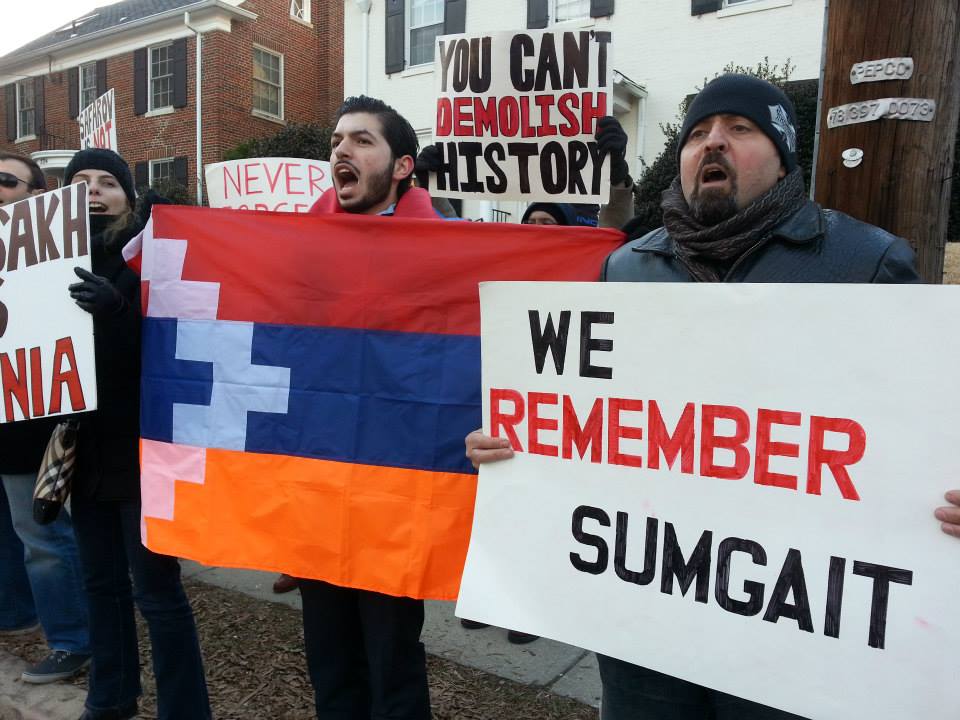
AYF and Greater Washington Armenian Community Protest Pogroms
Photos from the protest can be viewed on the AYF Ani Chapter Facebook page.
Wednesday, February 26, 2014
Call to the Commemoration of Armenian Genocide in Turkey
Call to the
Commemoration of Armenian Genocide in Turkey
Turks, Armenians and Europeans,
let’s commemorate the Armenian genocide together and in Turkey!
24-april-commemoration-in-taksim-istanbulIn 1915, the
implementation of a methodical and premeditated plan led to the extermination of
one and a half million Armenians in the Ottoman Empire, in an attempt to destroy
an entire civilization and to “Turkify” Anatolia. The Armenian people were the
victims of a genocide which would soon serve as a gruesome reference for others
to follow.
The successive governments of the Turkish Republic have
since fought to deny the dark side of the history of their country, and to make
their people and the world forget that the genocide ever occurred.
Until today the mere reference to these historical
facts has provoked fierce opposition in Turkey, including verbal and physical
threats and on occasion even murders against their authors. Genocide denial has
encouraged racism and hatred against Armenians and other non-Muslim
minorities.
While some allege that acknowledging the reality of the
Armenian Genocide is an attack on the Turkish people and on Turkishness, it is
in fact an attack on genocide-denial and a step towards justice and
democracy.
For some years now, some in Turkish civil society have
courageously organized commemorations of the Armenian genocide. A circle of
truth and righteousness has gradually widened, as more and more voices joined in
a humane and moving effort to confront the official discourse of
genocide-denial.
Last year, for the first time in nearly a century, a
foreign delegation made up of European antiracist, human rights and Armenian
diaspora leaders joined the commemorations in Turkey, answering the call for
solidarity launched by Turkish civil society.
Together we have shown that in Turkey those who
acknowledge and remember the Armenian genocide are more determined and more
numerous than those who deny it. We have shown that there exists a part of
Turkish society that is strongly attached to the values of democracy and human
rights, and is ready to confront its past with lucidity.
This year, human rights and anti-racist activists,
committed citizens, civil society leaders, intellectuals and artists, united in
Turkey and across Europe by a common desire to see the truth finally recognized,
will commemorate the Armenian Genocide in Turkey on April 24th 2014. Even though
we are on the eve of the centenary of the perpetration of the genocide, its
legacy remains part of our present.
Our shared initiative is one for recognition,
solidarity, justice, and democracy.
It is an initiative for recognition: it allows members
of the Armenian Diaspora and Turkish Armenians who have resisted exile to openly
mourn their ancestors; it allows Turkish individuals and organizations to ask
for forgiveness on behalf of their ancestors.
It is an initiative for solidarity between all those
who fight for the acceptance of history. The divide is not between Turks and
Armenians but between those who struggle for the recognition of the Armenian
Genocide and those who promote denial. Quite simply, it is not a question of
origins but of perspectives for the future.
It is an initiative for justice: In the words of Elie
Wiesel, “Genocide kills twice, the second time through silence.” Denial is the
perpetuation of genocide, and genocide is the most violent act which racism can
lead to. Fighting denial is an attempt to heal the trauma transmitted in
Armenian communities as well as in Turkish society from one generation to the
next. Fighting denial is thus part of the fight against racism, for a more equal
and a fairer society. It offers new generations the opportunity to look together
towards the future.
Finally, it is an initiative for democracy, not only
because lifting the taboo of the genocide is an indispensable condition for
advancing freedom of speech in Turkey, but also because, as Jorge Semprun
frequently recalled, democracy requires the vitality of civil society.
Strengthening relationships between civil societies will reinforce those who
have been fighting to advance democracy in Turkey and elsewhere in Europe.
For these reasons, on April 24 we will commemorate the
Armenian Genocide together and in Turkey. We call upon all individuals committed
to recognition, solidarity, justice and democracy to join us or to support us in
turning the page on a century of denial.
***
Paul Morin, Executive Director of the European Grassroots Antiracist Movement – EGAM (Europe), Cengiz Algan & Levent Sensever, Spokespeople for Durde! (Turkey), Alexis Govciyan & Nicolas Tavitian, President Europe and Director of the General Union of Armenians Charity of the Armenian General Benevolent Union – AGBU (Europe), Ayse Öktem, Steering Committee member of YSGP Istanbul (Turkey), Charles Aznavour, Singer (France), Bernard Henri Lévy, Philosopher (France), Abdullah Demirbas, Mayor of Sur district of Diyarbakir (Turkey), Ara Toranian, Co-President of “Coordination Council of Armenian Organizations in France” (CCAF), Serge Klarsfeld, President of “Sons and Daughters of Deported Jews from France” (France), Murat Timur, President of Van Bar Association (Turkey), Raffi Kantian, Chairman of the board, “German-Armenian Society” (Germany), Bernard Kouchner, former French Minister of Foreign Affairs, Founder of Doctors Without Borders and Doctors of the World, Adam Michnik, Historian, journalist, essayist and former leader of Solidarnosk (Poland), Ragip Zarakolu, Writer (Turkey),Romashuk Hairabedian, President of the “Armenian Social and cultural Foundation in The Netherlands” (The Netherlands), Jovan Divjak, Former Commanding General of Yugoslav Army, Defender of besieged Sarajevo (Bosnia), Ömer Laçiner, Writer (Turkey), Loris Toufanian, President of Armenian Youth Movement “Nor Seround” (France), Tahar Ben Jelloun, Writer and poet (Morocco), Dario Fo, Writer, Nobel Prize for literature (Italy), Ferhat Kentel, Sociologist (Turkey), Hakob Kazandjian, President of Armenian community of Cyprus (Cyprus), Miguel Angel Moratinos, Former Minister of Foreign Affairs (Spain), Murat Celikkan, Journalist (Turkey), André Glucksmann, Philosopher (France), Cindy Léoni, President of “SOS Racisme” (France), Yves Ternon, Historian and Professor (France), Sonia Aïchi, President of “FIDL” (High school’s Independent and Democratic Federation) (France), Yann Moix, Movie director and writer, Prix Renaudot 2013 (France), Oliviero Toscani, Photographer (Italy), Sacha Reingewirtz, President of the “French Union of Jewish Students” (France), Jean Yériché Gorizian, Spokeperson of Armenian Youth Movement “Nor Seround”, Richard Prasquier, President of “Foundation pour la Mémoire de la Shoah” (France), Laura Chatel &Lucas Nédelec Co-General Secretary “Jeunes Ecologistes” (France), Laura Slimani, President of Movement of Young Socialists (France), Alma Masic, President of Youth Initiative for Human Rights (YIHR) (Bosnia), Armen Artwich, Vice President of Foundation of Culture and Heritage of Polish Armenians (Poland), Deyan Kolev, Chairman of “Amalipe” (Bulgaria), Faik Akçay, Writer (Turkey), Sonia Avakian-Bedrosian, President of AGBU-Sofia (Bulgaria), Marian Mandache, Executive Director of “Romani Criss” (Romania), Çagla Oflas, Spokeperson of “Campaign for Confronting the Centennial Truth” (Turkey), Elina Chilinguirian, Journalist (Belgium), Raba Gjoshi, Executive Director of the Youth Initiative for Human Rights (YIHR) (Kosovo), Prof. Dr Ayse Gözen, Professor (Turkey), Patrick Donabedian, Historian and lecturer, Aix-Marseille University (France), Mario Mazic, Director of Youth Initiative for Human Rights (YIHR) (Croatia), Ümit Kurt, Writer (Turkey), Elena Gabriielian, Journalist (France), Jovana Vukovic, “Regional Centre for Minorities” (Serbia), Serdar Yazar, President of “Turkish Community in Berlin Brandeburg” (Germany), Akif Kurtulus, Writer (Turkey), Haik Garabedian, Co-president AGBU Young Professionals of Plovdiv (Bulgaria), Erika Muhi, Director of the Anti-Discrimination Bureau “NEKI” (Hungary), Gazi Giray Günaydin, Activist (Turkey), Irina Ghaplanya, Doctoral student, University of Cambridge (United Kingdom), Céline Gulekdjian, Film director (Belgium),Katalin Barsony, President of the “Romedia Foundation” (Hungary), Nurcan Kaya, Lawyer (Turkey), Inge Drost, President of the “Federation of Armenian Organizations in the Netherlands” (The Netherlands), Alain Daumas, President of “UFAT” (French Union of Roma Associations) (France), Roni Margulies, Journalist and poet (Turkey), Gueguel Khatchatouryan, President of the Armenian community in Milan (Italy), Adriatik Hasantari, President of “Roma Active” (Albania), Maja Micic, Director of Youth Initiative for Human Rights (YIHR) (Serbia), Elio Montanari, Photographer (Turkey), Hrant Kostanian, Associate Research Fellow, Centre for European Policy studies (Belgium), Marcel Kabanda, President of “Ibuka” (France), Filiz Montanari, Film Director (Turkey), Harout Palanjian, President of the Armenian community in the Netherlands (The Netherlands), Prof. Dr Sinan Özbek, Professor (Turkey),Héléne Piralian, Psychoanalyst (France), Miroslav Broz, President of “Konexe” (Czech Republic), Yildiz Önen, Spokeswoman of “Global Peace and Justice Coalition” (Turkey),Valentina Poghosya, Leader of the British Armenian community (United Kingdon), Maria De Franca, Director of “La Règle du Jeu” (France), Metin Algan, Activist of DurDe (Turkey), Balasz Denes, Director of “Open Society Initiative for Europe” (Hungary), Cem Rifat Sey, Writer (Turkey), Witold Klaus, President of SIP (Association for Legal Intervention) (Poland), Jörn Sudhoff, Professor of Social Sciences (Turkey), Dogan Özguden, Chief Editor, Info-Türk (Belgium), Katarzyna Kubin, Director of the Board of the “Foundation for Social Diversity” (Poland), Zeynep Tozduman, Investigative Writer (Turkey), Kalle Larson, Director of“Centrum Mot Rasism” (Sweden), Inci Tugsavul, Responsible editor Info-Türk (Belgium), Renée Le Mignot, Co-President of the “MRAP” (Movement against Racism and for Friendship between Peoples) (France), Haluk Ünal, Film Director (Turkey), Nick Lowes, Founder of “Hope Not Hate” (United Kingdom), Aldo Merkoci, President of “Mjaft Movement” (Albania),Ahmed Moawia, President of the “Greek Forum for Migrants” (Greece), Jette Moller, President of “SOS Mod Racisme” (Danemark), Angela Scalzo, General Secretary of “SOS Razzismo” (Italy), Nicolai Radita, President of “Roma National Centre” (Moldavia), Boris Raonic , President de “Civil Alliance” (Montenegro), Paula Sawicka, President of “Open Republic” (Poland), Jacques Bérès, President of “France-Syria Democracy”, President of “Enfants Du Canal” (France), Bruce Clarke, Artist (South Africa), Roni Alasor, Journalist and writer (Bulgaria), Sebu Aslangil, Jurist (Turkey), Irena Borisova, Director of “People Against Racism” (Slovakia), Ofer Bronchtein, President of “Forum pour la paix” (France), Prof. Chan E.S. Choenni, Hindustani Migration and Indian Diaspora, Free University (VU) Amsterdam (The Netherlands), Andrei Dragomir, Director of the Moldovan Centre for Human Rights (Moldovia),Lina Gidlung, Director of Antidiscrimination bureau Upsala (Sweden), Janette Gronsfort,President of “Rasmus Network” (Finland), Merle Haruoja, Director of “Estonian Institute for Human Rights” (Estonia), Pierre Henry, General Director of “France Terre d’Asile” and Executive Board Member of the “European Council for Refugees and Exiles”, Hristo Ivanovick, President of “Alliance for Human Rights” (Macedonia), Krassimir Kanev, President of the“Bulgarian Helsinki Committee” (Bulgaria), Anhelita Kamenska, Director of “Latvian Centre for Human Rights” (Latvia), Joël Kotek, Professor (Belgium), Jacky Mamou, President of “Urgence Darfour”, former President of “Doctors of the World”, Edward Mier-Jedrzejowicz, Business Executive, Foundation M.K. z Tyskiewiczow Krolikiewicz (Poland), Anna Šabatová, Head of “Czech Helsinki Committee” (Czech Republic), Ahmed Samih, Head of the “Andalus Institute for Tolerance and Anti-Violence Studies” (Egypt), Dominique Sopo, Former President of “SOS Racisme” (France), Rune Steen, Director of the “Norwegian Centre Against Racism” (Norway), Muhammadi Yonous, Head of the “Greek Forum of Refugees” (Greece),Ligue des Droits de l’Homme (League of Human Rights) (France), European Roma and Travellers Forum (ERTF), International Human Rights League.Also supported by the following Political leadersEwald Stadler, Member of European Parliament (Austria), Michèle Rivasi, Member of the European Parliament (France), Sevil Turan, Spokeswoman of YSGP (Left Party of the Future) (Turkey), Meltem Oral, Spokeswoman of The Revolutionist Socialist Labour Party (DSIP) (Turkey), Ufuk Uras, 23rd term MP (Turkey), Klemen Zumer, Advisor, European Parliament (Belgium), Senol Karakas, Spokesman of The Revolutionist Socialist Labour Party (DSIP) (Turkey), Andrej Hunko, Member of the Bundestag (Parliament) (Germany), Naci Sönmez, Spokesman of YSGP (Left Party of the Future) (Turkey),AndSerge Artunoff, Dentist (Belgium), Anelga Arslanian, Doctor (Belgium), Areg Barseghyan, International civil servant, Asian Development Bank (Armenia), Tatyos Bebek, Dentist (Turkey),Gilbert Dalgalian, Linguist (Belgium), Atilla Dirim, Translator (Turkey), Simon le Grand, International Civil Servant (Belgium), Dr Amine Ishkanian, Lecturer, London School of Economics and Political Science (United Kingdom), Souren Seraydarian, Former United Nations Executive (France), Zeynep Tanbay, Choreographer (Turkey), Sezai Temelli, Lecturer (Turkey), Lisa Abadjian, Psychologist (Belgium), Korhan Gümüs, Architect (Turkey), Güven Gürkan Öztan, Lecturer (Turkey), Silva Chemedikian, AGBU Sofia , Business Executive (Bulgaria), Michael Domanian AGBU – The Netherlands (The Netherlands), Chalabi Chalabi(The Netherlands), Alexandre Kalantarian (Administrator of S.A. Talent) (Belgium), Prof. Dr. Gençay Gürsoy (Turkey), Harout Mamikonian (The Netherlands), Lydia van de Fliert, International Human Rights Consultant (Belgium / The Netherlands), Ergun Günrah, PR (Turkey), Kate Markaryan, AGBU Europe (Europe), Oncho Cherchian, AGBU Sofia (Bulgaria)
______________________________________________
Genocide Encyclopedias and the Armenian Genocide
Special for the Armenian Weekly
The two key human rights concepts of “crimes against humanity” and “genocide” have their roots in the response to the Young Turk mass deportations and massacres of Armenians in the Ottoman Empire during World War I. Following the April 24, 1915 mass arrests of hundreds of Armenian political, religious, and community leaders in Constantinople and their subsequent exile and deaths, and the massacres of multitudes of other Armenian civilians, the Entente allied powers of England, France, and Russia on May 24, 1915 warned that the Young Turk dictatorship would be held accountable for the massacres and the “new crimes of Turkey against humanity and civilization.”
 In 1921, Soghomon Tehlirian was put on trial in Germany for having
assassinated Mehmet Talat, one of the key Young Turk triumvirate
responsible for the deportations and massacres of the Armenians. Raphael
Lemkin, a young Polish university student, who would later become a
lawyer, wondered why there existed domestic laws to deal with the murder
of one person, but no international law to punish those responsible for
the mass killing of a million or more persons. During the 1930’s,
Lemkin suggested the twin concepts of “vandalism” and “barbarism” to
deal with such crimes. The former dealt with the destruction of cultural
artifacts, while the latter related to acts of violence against
defenseless groups. By 1944, these twin concepts had merged into his
proposed international term: “genocide.” The new concept, along with
“crimes against humanity,” would become a key pillar of international
law.
In 1921, Soghomon Tehlirian was put on trial in Germany for having
assassinated Mehmet Talat, one of the key Young Turk triumvirate
responsible for the deportations and massacres of the Armenians. Raphael
Lemkin, a young Polish university student, who would later become a
lawyer, wondered why there existed domestic laws to deal with the murder
of one person, but no international law to punish those responsible for
the mass killing of a million or more persons. During the 1930’s,
Lemkin suggested the twin concepts of “vandalism” and “barbarism” to
deal with such crimes. The former dealt with the destruction of cultural
artifacts, while the latter related to acts of violence against
defenseless groups. By 1944, these twin concepts had merged into his
proposed international term: “genocide.” The new concept, along with
“crimes against humanity,” would become a key pillar of international
law.
With the introduction of the two crucial legal concepts of “crimes against humanity” and “genocide,” it remained for scholars and prosecutors alike to apply these principles to specific cases. Over time, there emerged the need to compare different historical and contemporary examples. Pioneering analytical and comparative books, such as Irving Horowitz’s Genocide (New Brunswick, Transaction Books, 1976) and Leo Kuper’s Genocide (Harmondsworth, Penguin Books, 1981), were penned in this regard. Before long, the field of genocide studies emerged and was formalized with the birth of the International Association of Genocide Studies (IAGS) in 1994. However, a challenge familiar to many in comparative politics arose; given that most individuals and scholars lack the global expertise to know sufficient details about all of the major case studies, there was an urgent need for encyclopedias and dictionaries on genocide.
Drawing intellectual inspiration and editorial guidance from Israel Charny, a pioneering project was launched. In 1999, the two-volume Encyclopedia of Genocide, (Santa Barbara, ABC-CLIO, 1999) was published. With substantial input by Rouben Adalian, the encyclopedia included two-dozen entries about the Armenian Genocide and the Ottoman Young Turk regime. The encyclopedia also contained several thematic entries that cited reference to the Armenian case. Adalian led the way with 17 entries that he penned on such such as the Hamidian Massacres, Adana, Musa Dagh, the Young Turks, Woodrow Wilson, and Henry Morgenthau, Sr. Other prominent authors included Vahakn Dadrian (Armenian Genocide documentation and courts martial), Roger Smith (Armenian Genocide denial), Robert Melson (comparison of the Armenian Genocide and the Holocaust), Samuel Totten (genocide films and literature), Peter Balakian (poetry on the Armenian Genocide), Sybil Milton (Armin T. Wegner), and Steve Jacobs (Raphael Lemkin). The two volumes were not only pioneering, but remain quite useful even today. This is a testament to their strong scholarship and the continued importance of the topic.
Soon after the appearance of the English-language two volume Encyclopedia of Genocide, a French-language one-volume version appeared: Israel Charny, ed., Le Livre noir de l’humanite: Encyclopedie mondiale des genocides (Toulouse, Editions Privat, 2001). For the most part in the French edition, the entries on the Armenian Genocide and other genocides were the same, but there were a few additions and deletions. Overall, students of the Armenian Genocide were exceptionally well served by the two editions.
The three-volume set edited by Dinah Shelton, titled Encyclopedia of Genocide and Crimes Against Humanity (Detroit, Thomson Gale, 2005), provided extensive material on the Holocaust and attempted to be more inclusive of other genocides. However, the coverage on the Armenian Genocide (with under 10 full entries) was less in this 3-volume account than in the earlier and smaller English and French Encyclopedia of Genocide. Nevertheless, the entries were written by prominent figures: Vahakn Dadrian (Armenians in the Ottoman Empire, Talat), Dennis Papazian (Armenians in Russia and the USSR), Michael Hagopian (Armenian Genocide documentary films), Atom Egoyan (Armenian Genocide feature films), and Peter Balakian (poetry, including a section on the Armenian Genocide).
The cluster of entries was stronger on the arts angle of the Armenian Genocide than the history or sociology. For example, Henry Morgenthau, Jr. addressing the Holocaust was listed, but not Henry Morgenthau, Sr. on the Armenian Genocide. The entry on Benjamin Whitaker was an important one, but remained silent on the Turkish government’s powerful efforts to thwart the UN’s Whitaker Report, which contained an important historical reference to the Armenian Genocide. The encyclopedia did, however, include an entry by Christopher Simpson on German missionary Johannes Lepsius and his brave report during World War I on the Armenian massacres. On another positive note, some of the thematic entries provided references to the Armenian Genocide.
The one-volume account edited by Leslie Horvitz and Christopher Catherwood, Encyclopedia of War Crimes and Genocide (New York, Facts on File, 2006), contained only one main entry on the Armenian Genocide and one partial reference in the entry on “crimes against humanity.” This was inadequate coverage of one of the major genocides of the 20th century. It seemed that the pattern had become one of declining coverage. But that was about to change.
The two-volume collection co-edited and co-authored by Samuel Totten and Paul Bartrop (with some assistance from Steve Jacobs), titled Dictionary of Genocide (Westport, Greenwood, 2008), saw a return to more comprehensive coverage. While no Armenian Genocide specialist authors were listed as contributors, the volumes included at least 40 entries on the Armenian Genocide and covered a wide range of topics. Entries dealt with the key perpetrators (Abdul Hamid II, Committee of Union and Progress/CUP, Ahmed Djemal, Ismail Enver, Mehemet Talat, Mehemed Nazim), famous places and incidents (Adana, Deir ez Zor, Forty Days of Musa Dagh), key humanitarian figures (Johannes Lepsius, British Viscount James Bryce, Ambassador Henry Morgenthau, German military medic Armin T. Wegner), international reaction (British and the Bryce Report on the “Treatment of the Armenians in the Ottoman Empire,” American on the formation of the “Armenian Atrocities Committee”), films (“Ararat,” “Voices from the Lake,” “Armenia: The Betrayed”), genocide centers (Armenian Genocide Institute Museum, Zoryan Institute), Armenian Genocide denialist authors (Bernard Lewis, Justin McCarthy), links to related Ottoman genocides (Assyrians, Pontic Greeks), and the Holocaust. It is a highly readable set of volumes that provides useful summary information about the Armenian Genocide. However, some readers would want more detailed entries, and that was about to appear.
In the internet age, it was inevitable that an online encyclopedia of genocide would emerge. The American educational publisher ABC-CLIO recently created a large database on genocide that was primarily intended for high school students and teachers, but would also be valuable to university students and professors. Entitled “Modern Genocide: Understanding Causes and Consequences,” it is available for an annual subscription fee. Developed in consultation with an advisory board comprised of Paul Bartrop, Steven Jacobs, and Suzanne Ransleben, the database continues to grow and be updated. At the current time, it contains seven main entries on the Armenian Genocide (Overview, Causes, Consequences, Perpetrators, Victims, Bystanders, International Reaction) by Alan Whitehorn. There are also several discussion essays by various authors (including Colin Tatz and Henry Theriault) on Armenian Genocide recognition and how well the genocide has been known, and about 70 individual subject entries. Entries include pieces done by Rouben Adalian, Paul Bartrop, Zaven Khatchaturian, Robert Melson, Khatchig Mouradian, Rubina Peroomian, George Shirinian, Roger Smith, and others. However, not as many Armenian Genocide specialists have contributed as one might have expected. In addition to the encyclopedia entries and genocide timeline, there are some primary source documents and photos. The online database provides useful insight on the Armenian Genocide. It also suggests what might be possible if all of the entries were to be gathered together into a separate encyclopedic volume that is focused on the genocide. Unfortunately, this is something that has not yet been done, but that one hopes will occur before 2015.
Quite significantly, all of the genocide encyclopedias together show that the Armenian Genocide constitutes an important case study, as it is included in each and every genocide encyclopedia from the first to the most recent. This reflects academic consensus among genocide scholars that the mass deportations and killings of Armenians constitute genocide. These important scholarly reference works thus provide significant academic documentation that can serve to repudiate the Turkish state’s repeated polemical denials of the Armenian Genocide. Accordingly, these genocide encyclopedias ought to be cited by scholars, jurists, and citizens alike. The European Court of Human Rights, in its recent (Dec. 17, 2013) flawed decision on Armenian Genocide denial, should have been aware of such key academic reference works. If they had, their reasoning, in all likelihood, would have been different. Without a doubt, these encyclopedias’ coverage of the Armenian Genocide remind us that time is long overdue for the Turkish government and its citizens to face the dark pages of their history.
The two key human rights concepts of “crimes against humanity” and “genocide” have their roots in the response to the Young Turk mass deportations and massacres of Armenians in the Ottoman Empire during World War I. Following the April 24, 1915 mass arrests of hundreds of Armenian political, religious, and community leaders in Constantinople and their subsequent exile and deaths, and the massacres of multitudes of other Armenian civilians, the Entente allied powers of England, France, and Russia on May 24, 1915 warned that the Young Turk dictatorship would be held accountable for the massacres and the “new crimes of Turkey against humanity and civilization.”
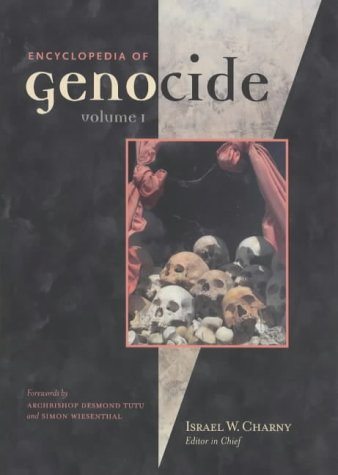
Drawing intellectual inspiration and
editorial guidance from Israel Charny, a pioneering project was
launched. In 1999, the two-volume Encyclopedia of Genocide, (Santa
Barbara, ABC-CLIO, 1999) was published.
With the introduction of the two crucial legal concepts of “crimes against humanity” and “genocide,” it remained for scholars and prosecutors alike to apply these principles to specific cases. Over time, there emerged the need to compare different historical and contemporary examples. Pioneering analytical and comparative books, such as Irving Horowitz’s Genocide (New Brunswick, Transaction Books, 1976) and Leo Kuper’s Genocide (Harmondsworth, Penguin Books, 1981), were penned in this regard. Before long, the field of genocide studies emerged and was formalized with the birth of the International Association of Genocide Studies (IAGS) in 1994. However, a challenge familiar to many in comparative politics arose; given that most individuals and scholars lack the global expertise to know sufficient details about all of the major case studies, there was an urgent need for encyclopedias and dictionaries on genocide.
Drawing intellectual inspiration and editorial guidance from Israel Charny, a pioneering project was launched. In 1999, the two-volume Encyclopedia of Genocide, (Santa Barbara, ABC-CLIO, 1999) was published. With substantial input by Rouben Adalian, the encyclopedia included two-dozen entries about the Armenian Genocide and the Ottoman Young Turk regime. The encyclopedia also contained several thematic entries that cited reference to the Armenian case. Adalian led the way with 17 entries that he penned on such such as the Hamidian Massacres, Adana, Musa Dagh, the Young Turks, Woodrow Wilson, and Henry Morgenthau, Sr. Other prominent authors included Vahakn Dadrian (Armenian Genocide documentation and courts martial), Roger Smith (Armenian Genocide denial), Robert Melson (comparison of the Armenian Genocide and the Holocaust), Samuel Totten (genocide films and literature), Peter Balakian (poetry on the Armenian Genocide), Sybil Milton (Armin T. Wegner), and Steve Jacobs (Raphael Lemkin). The two volumes were not only pioneering, but remain quite useful even today. This is a testament to their strong scholarship and the continued importance of the topic.
Soon after the appearance of the English-language two volume Encyclopedia of Genocide, a French-language one-volume version appeared: Israel Charny, ed., Le Livre noir de l’humanite: Encyclopedie mondiale des genocides (Toulouse, Editions Privat, 2001). For the most part in the French edition, the entries on the Armenian Genocide and other genocides were the same, but there were a few additions and deletions. Overall, students of the Armenian Genocide were exceptionally well served by the two editions.
The three-volume set edited by Dinah Shelton, titled Encyclopedia of Genocide and Crimes Against Humanity (Detroit, Thomson Gale, 2005), provided extensive material on the Holocaust and attempted to be more inclusive of other genocides. However, the coverage on the Armenian Genocide (with under 10 full entries) was less in this 3-volume account than in the earlier and smaller English and French Encyclopedia of Genocide. Nevertheless, the entries were written by prominent figures: Vahakn Dadrian (Armenians in the Ottoman Empire, Talat), Dennis Papazian (Armenians in Russia and the USSR), Michael Hagopian (Armenian Genocide documentary films), Atom Egoyan (Armenian Genocide feature films), and Peter Balakian (poetry, including a section on the Armenian Genocide).
The cluster of entries was stronger on the arts angle of the Armenian Genocide than the history or sociology. For example, Henry Morgenthau, Jr. addressing the Holocaust was listed, but not Henry Morgenthau, Sr. on the Armenian Genocide. The entry on Benjamin Whitaker was an important one, but remained silent on the Turkish government’s powerful efforts to thwart the UN’s Whitaker Report, which contained an important historical reference to the Armenian Genocide. The encyclopedia did, however, include an entry by Christopher Simpson on German missionary Johannes Lepsius and his brave report during World War I on the Armenian massacres. On another positive note, some of the thematic entries provided references to the Armenian Genocide.
The one-volume account edited by Leslie Horvitz and Christopher Catherwood, Encyclopedia of War Crimes and Genocide (New York, Facts on File, 2006), contained only one main entry on the Armenian Genocide and one partial reference in the entry on “crimes against humanity.” This was inadequate coverage of one of the major genocides of the 20th century. It seemed that the pattern had become one of declining coverage. But that was about to change.
The two-volume collection co-edited and co-authored by Samuel Totten and Paul Bartrop (with some assistance from Steve Jacobs), titled Dictionary of Genocide (Westport, Greenwood, 2008), saw a return to more comprehensive coverage. While no Armenian Genocide specialist authors were listed as contributors, the volumes included at least 40 entries on the Armenian Genocide and covered a wide range of topics. Entries dealt with the key perpetrators (Abdul Hamid II, Committee of Union and Progress/CUP, Ahmed Djemal, Ismail Enver, Mehemet Talat, Mehemed Nazim), famous places and incidents (Adana, Deir ez Zor, Forty Days of Musa Dagh), key humanitarian figures (Johannes Lepsius, British Viscount James Bryce, Ambassador Henry Morgenthau, German military medic Armin T. Wegner), international reaction (British and the Bryce Report on the “Treatment of the Armenians in the Ottoman Empire,” American on the formation of the “Armenian Atrocities Committee”), films (“Ararat,” “Voices from the Lake,” “Armenia: The Betrayed”), genocide centers (Armenian Genocide Institute Museum, Zoryan Institute), Armenian Genocide denialist authors (Bernard Lewis, Justin McCarthy), links to related Ottoman genocides (Assyrians, Pontic Greeks), and the Holocaust. It is a highly readable set of volumes that provides useful summary information about the Armenian Genocide. However, some readers would want more detailed entries, and that was about to appear.
In the internet age, it was inevitable that an online encyclopedia of genocide would emerge. The American educational publisher ABC-CLIO recently created a large database on genocide that was primarily intended for high school students and teachers, but would also be valuable to university students and professors. Entitled “Modern Genocide: Understanding Causes and Consequences,” it is available for an annual subscription fee. Developed in consultation with an advisory board comprised of Paul Bartrop, Steven Jacobs, and Suzanne Ransleben, the database continues to grow and be updated. At the current time, it contains seven main entries on the Armenian Genocide (Overview, Causes, Consequences, Perpetrators, Victims, Bystanders, International Reaction) by Alan Whitehorn. There are also several discussion essays by various authors (including Colin Tatz and Henry Theriault) on Armenian Genocide recognition and how well the genocide has been known, and about 70 individual subject entries. Entries include pieces done by Rouben Adalian, Paul Bartrop, Zaven Khatchaturian, Robert Melson, Khatchig Mouradian, Rubina Peroomian, George Shirinian, Roger Smith, and others. However, not as many Armenian Genocide specialists have contributed as one might have expected. In addition to the encyclopedia entries and genocide timeline, there are some primary source documents and photos. The online database provides useful insight on the Armenian Genocide. It also suggests what might be possible if all of the entries were to be gathered together into a separate encyclopedic volume that is focused on the genocide. Unfortunately, this is something that has not yet been done, but that one hopes will occur before 2015.
Quite significantly, all of the genocide encyclopedias together show that the Armenian Genocide constitutes an important case study, as it is included in each and every genocide encyclopedia from the first to the most recent. This reflects academic consensus among genocide scholars that the mass deportations and killings of Armenians constitute genocide. These important scholarly reference works thus provide significant academic documentation that can serve to repudiate the Turkish state’s repeated polemical denials of the Armenian Genocide. Accordingly, these genocide encyclopedias ought to be cited by scholars, jurists, and citizens alike. The European Court of Human Rights, in its recent (Dec. 17, 2013) flawed decision on Armenian Genocide denial, should have been aware of such key academic reference works. If they had, their reasoning, in all likelihood, would have been different. Without a doubt, these encyclopedias’ coverage of the Armenian Genocide remind us that time is long overdue for the Turkish government and its citizens to face the dark pages of their history.
Sunday, February 23, 2014
Amherst Reading Program to Feature ‘Sandcastle Girls’
AMHERST, Mass.—The Jones Library in Amherst is holding its second “On
the Same Page” community reading program, and will feature The Sandcastle Girls by best-selling author Chris Bohjalian.
 The
following series of programs, sponsored by the Friends of the Jones
Library System, will be held during the month of March at the Jones
Library, and are based on topics and themes from the novel. “On the Same
Page” will culminate in an appearance by Bohjalian on Tues., March 25,
at 7:30 p.m., at the Amherst Regional Middle School Auditorium. For
complete program descriptions, visit
www.joneslibrary.org/onthesamepage/osp2014.html.
The
following series of programs, sponsored by the Friends of the Jones
Library System, will be held during the month of March at the Jones
Library, and are based on topics and themes from the novel. “On the Same
Page” will culminate in an appearance by Bohjalian on Tues., March 25,
at 7:30 p.m., at the Amherst Regional Middle School Auditorium. For
complete program descriptions, visit
www.joneslibrary.org/onthesamepage/osp2014.html.
Tues., March 4 at 7 p.m., Woodbury Room. A screening of the documentary, “The Armenian Genocide,” produced in 2005 by Two Cats Productions. A discussion will follow, led by Henry Theriault, Professor of Philosophy at Worcester State University.
Sat., March 8 at 2:30 p.m., Goodwin Room. A book discussion led by Barry O’Connell, Professor of English Emeritus at Amherst College and a former professor of the author. A friendly discussion, open to all.
Thurs., March 13 at 7 p.m., Woodbury Room. “The American Missionaries and the Armenians: Successes and Limitations of Humanitarianism,” a presentation by Barbara Merguerian, vice president of the Armenian Museum of America, will take a look at the role of American missionaries in bringing aid to the Armenian people.
Tues., March 18 at 7 p.m., Woodbury Room. “Overcoming Evil: Preventing Genocide and Other Group Violence and Creating Peaceful Societies,” by Ervin Staub, Professor of Psychology Emeritus at the University of Massachusetts, will take a look at the societal conditions that can lead to violence against groups and discuss how to prevent such conflicts.
Tues., March 25 at 6 p.m., Woodbury Room. Join the Friends of the Jones Library System and Chris Bohjalian at this special reception. Sponsored by the FOJLS, the event is free and open to the public.
Tues., March 25 at 7:30 p.m., Amherst Regional Middle School Auditorium. “On the Same Page…with Chris Bohjalian.” Bohjalian will talk about the book, with an introduction by novelist Cammie McGovern. Books will be available for purchase and signing.
Copies of The Sandcastle Girls can be borrowed from the Jones Library and branches, requested and checked out from the C/W Mars library catalogue, or purchased at Amherst Books or Food for Thought Books in Amherst.
The Sandcastle Girls is a New York Times bestseller that was included on several “Best Book of 2012” lists and Arts and Letters Award from the Armenian National
 Committee of America and the Saint Mesrob Mashdots Medal by His
Holiness Aram I, Catholicos of the Great House of Cilicia. This novel
tells the parallel stories of Elizabeth, a Mt. Holyoke College graduate
who, in 1915, accompanies her father to Aleppo, Syria, to aid Armenian
refugees, and current-day Laura, a New Yorker trying to make sense of
the life story of her grandmother Elizabeth, as well as her own past.
The selection of this title is particularly timely, as the novel
addresses the Armenian Genocide that began in 1915; the 100th anniversary of this tragedy is approaching, and is sure to receive media attention in 2015.
Committee of America and the Saint Mesrob Mashdots Medal by His
Holiness Aram I, Catholicos of the Great House of Cilicia. This novel
tells the parallel stories of Elizabeth, a Mt. Holyoke College graduate
who, in 1915, accompanies her father to Aleppo, Syria, to aid Armenian
refugees, and current-day Laura, a New Yorker trying to make sense of
the life story of her grandmother Elizabeth, as well as her own past.
The selection of this title is particularly timely, as the novel
addresses the Armenian Genocide that began in 1915; the 100th anniversary of this tragedy is approaching, and is sure to receive media attention in 2015.
Bohjalian is the author of more than a dozen books, including the New York Times bestsellers The Night Strangers, Secrets of Eden, Skeletons at the Feast, The Double Bind, Before You Know Kindness, The Law of Similars, and Midwives. He won the New England Book Award in 2002, and his novel Midwives was a selection of Oprah’s Book Club. His work has been translated into more than 25 languages. He has also written for a wide variety of magazines, including Cosmopolitan, Reader’s Digest, and the Boston Globe Sunday Magazine, and he has been a Sunday columnist for Gannett’s Burlington Free Press since 1992. A graduate of Amherst College, Bohjalian lives in Vermont with his wife and daughter.
 The
following series of programs, sponsored by the Friends of the Jones
Library System, will be held during the month of March at the Jones
Library, and are based on topics and themes from the novel. “On the Same
Page” will culminate in an appearance by Bohjalian on Tues., March 25,
at 7:30 p.m., at the Amherst Regional Middle School Auditorium. For
complete program descriptions, visit
www.joneslibrary.org/onthesamepage/osp2014.html.
The
following series of programs, sponsored by the Friends of the Jones
Library System, will be held during the month of March at the Jones
Library, and are based on topics and themes from the novel. “On the Same
Page” will culminate in an appearance by Bohjalian on Tues., March 25,
at 7:30 p.m., at the Amherst Regional Middle School Auditorium. For
complete program descriptions, visit
www.joneslibrary.org/onthesamepage/osp2014.html.Tues., March 4 at 7 p.m., Woodbury Room. A screening of the documentary, “The Armenian Genocide,” produced in 2005 by Two Cats Productions. A discussion will follow, led by Henry Theriault, Professor of Philosophy at Worcester State University.
Sat., March 8 at 2:30 p.m., Goodwin Room. A book discussion led by Barry O’Connell, Professor of English Emeritus at Amherst College and a former professor of the author. A friendly discussion, open to all.
Thurs., March 13 at 7 p.m., Woodbury Room. “The American Missionaries and the Armenians: Successes and Limitations of Humanitarianism,” a presentation by Barbara Merguerian, vice president of the Armenian Museum of America, will take a look at the role of American missionaries in bringing aid to the Armenian people.
Tues., March 18 at 7 p.m., Woodbury Room. “Overcoming Evil: Preventing Genocide and Other Group Violence and Creating Peaceful Societies,” by Ervin Staub, Professor of Psychology Emeritus at the University of Massachusetts, will take a look at the societal conditions that can lead to violence against groups and discuss how to prevent such conflicts.
Tues., March 25 at 6 p.m., Woodbury Room. Join the Friends of the Jones Library System and Chris Bohjalian at this special reception. Sponsored by the FOJLS, the event is free and open to the public.
Tues., March 25 at 7:30 p.m., Amherst Regional Middle School Auditorium. “On the Same Page…with Chris Bohjalian.” Bohjalian will talk about the book, with an introduction by novelist Cammie McGovern. Books will be available for purchase and signing.
Copies of The Sandcastle Girls can be borrowed from the Jones Library and branches, requested and checked out from the C/W Mars library catalogue, or purchased at Amherst Books or Food for Thought Books in Amherst.
The Sandcastle Girls is a New York Times bestseller that was included on several “Best Book of 2012” lists and Arts and Letters Award from the Armenian National
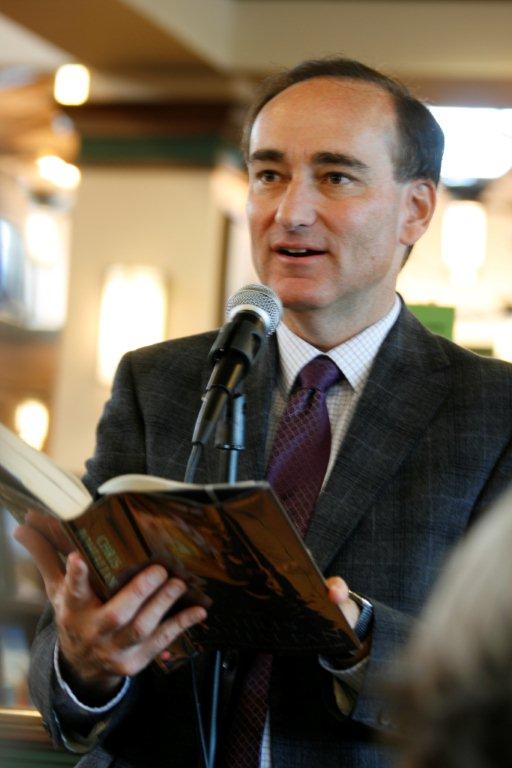
Chris Bohjalian (Photo by Tom Vartanedian)
Bohjalian is the author of more than a dozen books, including the New York Times bestsellers The Night Strangers, Secrets of Eden, Skeletons at the Feast, The Double Bind, Before You Know Kindness, The Law of Similars, and Midwives. He won the New England Book Award in 2002, and his novel Midwives was a selection of Oprah’s Book Club. His work has been translated into more than 25 languages. He has also written for a wide variety of magazines, including Cosmopolitan, Reader’s Digest, and the Boston Globe Sunday Magazine, and he has been a Sunday columnist for Gannett’s Burlington Free Press since 1992. A graduate of Amherst College, Bohjalian lives in Vermont with his wife and daughter.
Subscribe to:
Posts (Atom)