Tuesday, April 14, 2015

Pope Sparks Row With Turkey by Calling Armenian Massacre Genocide

 THE TRUTH IS THE TRUTH.....TURKEY HAS ANGER , HATRED AND REVENGE IN ITS HEART


VATICAN CITY — Pope Francis sparked a diplomatic row on Sunday by calling the massacre of up to 1.5 million Armenians 100 years ago "the first genocide of the 20th century," prompting Turkey to accuse him of inciting hatred.
Muslim Turkey accepts that many Christian Armenians died in clashes with Ottoman soldiers beginning in 1915, when Armenia was part of the empire ruled from Istanbul, but denies hundreds of thousands were killed and that this amounted to genocide.
At an Armenian rite Mass in St. Peter's Basilica to mark the 100th anniversary of the mass killings, Francis became the first head of the Roman Catholic Church to publicly pronounce the word "genocide" to describe them.
Some European and South American countries use the term to describe the killings, but the United States and some others, keen to maintain good relations with an important ally, avoid doing so.
Turkey was swift to protest. "The pope's statements, which are far from historical and judicial facts, cannot be accepted," Foreign Minister Mevlut Cavusoglu said on his Twitter account.
"Religious offices are not places to incite hatred and revenge with baseless accusations," he said.
The foreign ministry called its ambassador to the Holy See back to Ankara, and summoned the Vatican's ambassador, saying Francis' remarks had caused a "problem of trust" in diplomatic relations.
Pope John Paul II and Armenian Apostolic Church Supreme Patriarch Kerekin II called the massacre "the first genocide of the 20th century" in 2001, but that was in a joint written statement.
Francis, who has disregarded many aspects of protocol since becoming pope two years ago, uttered the phrase during a private meeting at the Vatican with an Armenian delegation in 2013, prompting a strong protest from Ankara.
As archbishop of Buenos Aires, Cardinal Jorge Bergoglio had already publicly described the killings as genocide before he was elected leader of the world's 1.2 billion Catholics in 2013.
In November, the Argentine-born pontiff made an official visit to Turkey as part of his efforts to strengthen relations with moderate Muslim states.
DENYING EVIL
At the start of the commemorative Mass, the pope described the "senseless slaughter" of 100 years ago as "the first genocide of the 20th century" and noted it was followed by Nazism and Stalinism.
"It is necessary, and indeed a duty, to honor their memory, for whenever memory fades, it means that evil allows wounds to fester. Concealing or denying evil is like allowing a wound to keep bleeding without bandaging it!" he said.
Francis's comments were also published by Armenian President Serzh Sarksyan's office on Sunday.
"We are deeply grateful to His Holiness Pope Francis for the idea of this unprecedented liturgy ... which symbolizes our solidarity with the people of the Christian world," Sarksyan said in a speech at a Vatican dinner on Saturday evening.
The pope said genocide continues today against Christians "who, on account of their faith in Christ or their ethnic origin, are publicly and ruthlessly put to death - decapitated, crucified, burned alive - or forced to leave their homeland."
Islamic State insurgents have persecuted Shi'ite Muslims, Christians and others who do not share their ultra-radical brand of Sunni Islam as they carved a self-declared caliphate out of swathes of Syria and Iraq, which share borders with Turkey.
Francis also urged reconciliation between Turkey and Armenia, and between Armenia and Azerbaijan over the disputed Caucasus mountain region of Nagorno-Karabakh. The appeal came in a letter handed out during a meeting after the Mass to Sarksyan and the three most important Armenian church leaders present.
(This story has been refiled to add dropped word "to" in the lead)
(Additional reporting by Orhan Coskun and Tulay Karadeniz in Ankara and Hasmik Mkrtchyan in Yerevan; Editing by Tom Heneghan and Robin Pomeroy)

Sunday, April 12, 2015

Pope Holds Centennial Mass, Condemns Genocide Denial by Turkey--SHAME AFTER 100 YEARS

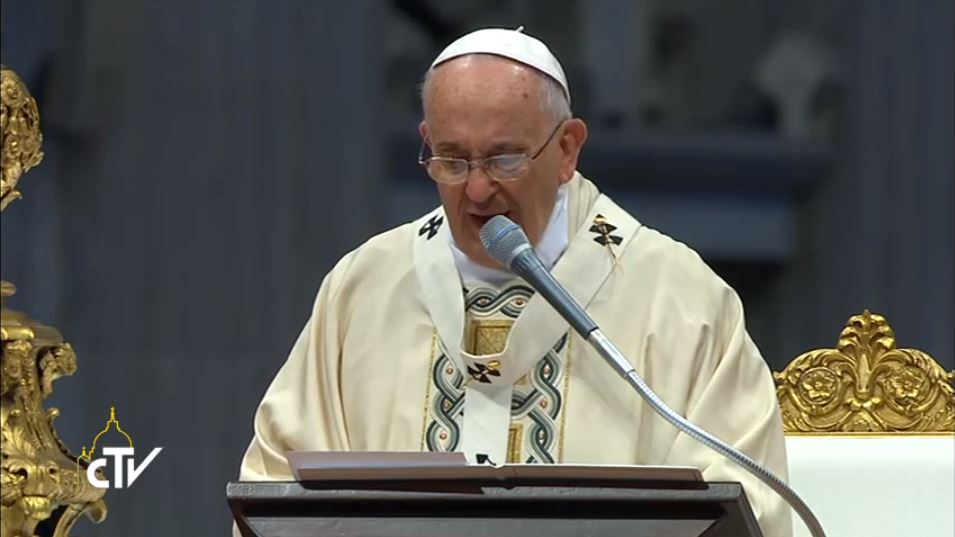
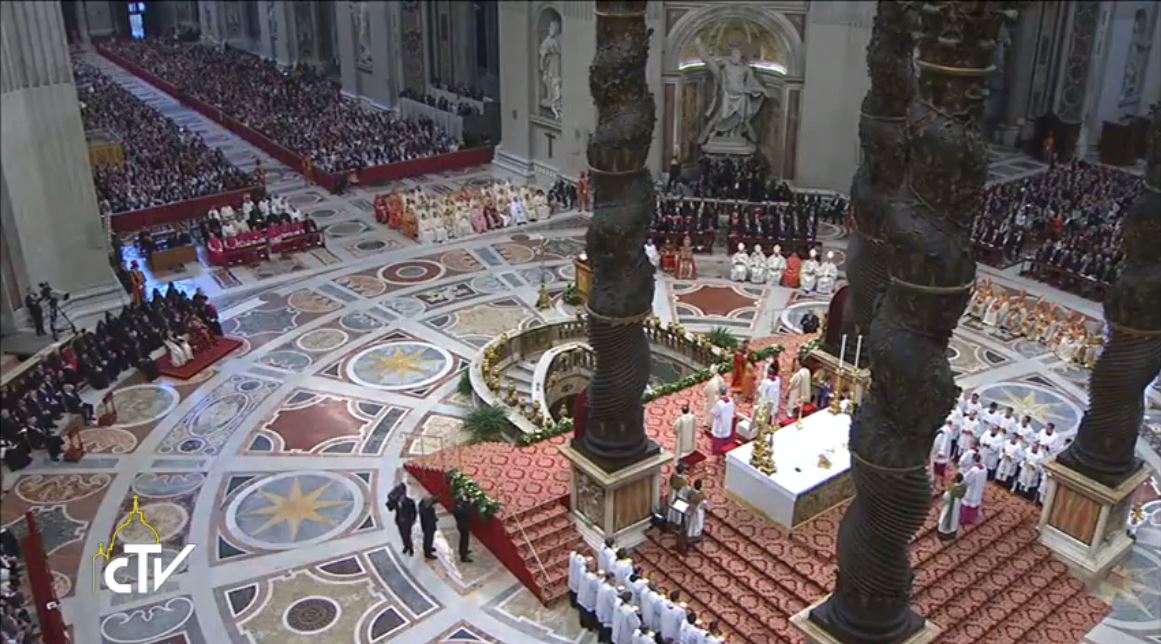
Pope Francis held Solemn Mass for the Centenary of the Armenian Genocide today, during which he remembered “the first genocide of the 20th century,” spoke about the consequences of forgetting and denial, and proclaimed the Armenian Saint Gregory of Narek a Doctor of the Church. Catholicoi Karekin II and Aram I, along with Patriarch Catholicos Nerses Bedros XIX, arrived at the Basilica of Saint Peter with Pope Francis. Armenian President Serge Sarkisian was also present at the Holy Mass.
Pope Francis held Solemn Mass for the Centenary of the Armenian Genocide.
Pope Francis holds a Solemn Mass for the Centenary of the Armenian Genocide.
In his powerful remarks, Pope Francis spoke about three major tragedies of the past century: “The first, which is widely considered ‘the first genocide of the 20th century,’ struck your own Armenian people, the first Christian nation, as well as Catholic and Orthodox Syrians, Assyrians, Chaldeans, and Greeks,”said Pope Francis. “Bishops and priests, religious, women and men, the elderly, and even defenseless children and the infirm were murdered. The remaining two were perpetrated by Nazism and Stalinism.”
A scene from the Holy Mass
In strong terms, Pope Francis condemned the failure to remember and the act of denial, which he said only kept wounds festering and bleeding. “Dear Armenian Christians, today, with hearts filled with pain but at the same time with great hope in the risen Lord, we recall the centenary of that tragic event, that immense and senseless slaughter whose cruelty your forebears had to endure,” he said, stressing, “It is necessary, and indeed a duty, to honor their memory, for whenever memory fades, it means that evil allows wounds to fester. Concealing or denying evil is like allowing a wound to keep bleeding without bandaging it!”
Dear Armenian Christians, today, with hearts filled with pain but at the same time with great hope in the risen Lord, we recall the centenary of that tragic event, that immense and senseless slaughter whose cruelty your forebears had to endure. It is necessary, and indeed a duty, to honor their memory, for whenever memory fades, it means that evil allows wounds to fester. Concealing or denying evil is like allowing a wound to keep bleeding without bandaging it!
Pope Francis lamented that the “enthusiasm” for preventing genocides created after World War II was “dissipating,” as evidenced by inaction in the face of today’s atrocities.
“It seems that the human family has refused to learn from its mistakes caused by the law of terror, so that today too there are those who attempt to eliminate others with the help of a few and with the complicit silence of others who simply stand by. We have not yet learned that ‘war is madness,’ ‘senseless slaughter,’” said Pope Francis.
“In the firm certainty that evil never comes from God, who is infinitely good, and standing firm in faith, let us profess that cruelty may never be considered God’s work and, what is more, can find absolutely no justification in his Holy Name,” Pope Francis added.
At the end of the Mass, His Holiness Karekin II, His Holiness Aram I, and His Beatitude Nerses Bedros XIX offered their remarks. Throughout the Mass, Armenian Church hymns were sung.
The English translation of the Pope’s remarks, as published by Vatican Radio, is below.
***
Greeting of the Holy Father
Mass for the Faithful of the Armenian Rite
April 12, 2015
On a number of occasions I have spoken of our time as a time of war, a third world war which is being fought piecemeal, one in which we daily witness savage crimes, brutal massacres and senseless destruction. Sadly, today too we hear the muffled and forgotten cry of so many of our defenseless brothers and sisters who, on account of their faith in Christ or their ethnic origin, are publicly and ruthlessly put to death—decapitated, crucified, burned alive—or forced to leave their homeland.
Today too we are experiencing a sort of genocide created by general and collective indifference, by the complicit silence of Cain, who cries out: “What does it matter to me? Am I my brother’s keeper?” (cf. Gen 4:9; Homily in Redipuglia, Sept. 13, 2014).
In the past century our human family has lived through three massive and unprecedented tragedies. The first, which is widely considered “the first genocide of the 20th century” (JOHN PAUL II and KAREKIN II, Common Declaration, Etchmiadzin, Sept. 27, 2001), struck your own Armenian people, the first Christian nation, as well as Catholic and Orthodox Syrians, Assyrians, Chaldeans, and Greeks. Bishops and priests, religious, women and men, the elderly, and even defenseless children and the infirm were murdered. The remaining two were perpetrated by Nazism and Stalinism. And more recently there have been other mass killings, like those in Cambodia, Rwanda, Burundi, and Bosnia. It seems that humanity is incapable of putting a halt to the shedding of innocent blood. It seems that the enthusiasm generated at the end of the Second World War has dissipated and is now disappearing. It seems that the human family has refused to learn from its mistakes caused by the law of terror, so that today too there are those who attempt to eliminate others with the help of a few and with the complicit silence of others who simply stand by. We have not yet learned that “war is madness,” “senseless slaughter” (cf. Homily in Redipuglia, Sept. 13, 2014).
Dear Armenian Christians, today, with hearts filled with pain but at the same time with great hope in the risen Lord, we recall the centenary of that tragic event, that immense and senseless slaughter whose cruelty your forebears had to endure. It is necessary, and indeed a duty, to honor their memory, for whenever memory fades, it means that evil allows wounds to fester. Concealing or denying evil is like allowing a wound to keep bleeding without bandaging it!
I greet you with affection and I thank you for your witness.
With gratitude for his presence, I greet Mr. Serge Sarkisian, the President of the Republic of Armenia.
My cordial greeting goes also to my brother Patriarchs and Bishops: His Holiness Kerekin II, Supreme Patriarch and Catholicos of All Armenians; His Holiness Aram I, Catholicos of the Great House of Cilicia; His Beatitude Nerses Bedros XIX, Patriarch of Cilicia of Armenian Catholics; and Catholicosates of the Armenian Apostolic Church and the Patriarchate of the Armenian Catholic Church.
In the firm certainty that evil never comes from God, who is infinitely good, and standing firm in faith, let us profess that cruelty may never be considered God’s work and, what is more, can find absolutely no justification in his Holy Name. Let us continue this celebration by fixing our gaze on Jesus Christ, risen from the dead, victor over death and evil!

Armenian Genocide to be celebrated Sunday, Pope Francis APRIL 12 2015

In preparation for a special Mass commemorating the 100th anniversary of the Armenian Genocide to be celebrated Sunday, Pope Francis received a delegation Thursday from the Armenian-Catholic Church.

“Tradition tells us that your people were the first to convert to Christianity in 301, and your 2,000-year history bears an admirable heritage of spirituality and culture, combined with an ability to recover from the many persecutions and trials to which it was subjected,” the Pope said.
Francis reflected that “the darkest forces can issue forth from the depths of the human heart capable of programming the systematic annihilation of one’s brother, considering him an enemy, an adversary or even an individual devoid of human dignity.”
“I think with sadness in particular of those areas like Aleppo, ‘the city of martyrs,’ that a hundred years ago were safe haven for the few survivors,” Francis said. “In recent times, the survival of all Christians there, not just Armenians, is endangered.”
The Pope invited his hearers to “cultivate a feeling of gratitude to the Lord, for being able to keep faith in Him even in the most difficult times.”
Francis also offered prayers that God would “hasten concrete gestures of reconciliation and peace among the nations that still fail to reach a reasonable consensus on the reading of such sad events.” The government of Turkey still rejects the idea of the Armenian Genocide, when some 1.5 million Armenians – more than half the Armenian population at the time – died in a systematic program of ethnic cleansing from 1915 to 1918. Turkey claims the deaths were due largely to disease and famine.
Armenians mark April 24, 1915, when several hundred Armenian intellectuals were rounded up, arrested, and later executed, as the start of the Armenian Genocide, which is generally understood to have extended to 1917.
Figures compiled by the University of Minnesota’s Center for Holocaust and Genocide Studies show that there were 2,133,190 Armenians in the Ottoman Empire in 1914 and only about 387,800 by 1922.
In April 2006, as archbishop of Buenos Aires, Jorge Bergoglio publicly invited Turkey to acknowledge the genocide and again in 2011 described the genocide as the “gravest crime of Ottoman Turkey against the Armenian people and the entire humanity.”
In 2013, Pope Francis called the Armenian massacre “the first genocide of the 20th century,” to which the Turkish Ministry of Foreign Affairs responded with a statement denouncing the Pope’s words: “The expressions of Pope Francis are absolutely unacceptable.”
On Sunday, Pope Francis will proclaim a 10th-century Armenian monk as a Doctor of the church when he celebrates a liturgy in Saint Peter’s Basilica with leaders and faithful of the Armenian Catholic Church.

Thursday, April 9, 2015

Dr. Richard Hovannisian Lecture at Kean Univerity, Union, New Jersey April 7, 2015

Dr. Richard Hovannisian Lecture at

Kean Univerity, Union, New Jersey

April 7, 2015
https://www.youtube.com/watch?v=jhneAy3XBTU

Thursday, April 2, 2015

Yegparian: 10 Reasons Why Obama Should NOT Travel to Armenia on April 24

I must give credit to fellow columnist, Harut Sassounian, for inspiring this piece with his “10 Reasons Why Obama Should Travel to Armenia on April 24″ that appeared last week. He took a positive approach. My disgust with the Obama Administration’s extensively anti-Armenian, pro-Turkish, and pro-Azerbaijani policies has resulted in the cynicism, sarcasm, and snark that mark this piece. I ask readers’ indulgence and tolerance in this respect. Maybe reverse psychology will work on this president who came into office inspiring such great hope, but beyond passage of “Obamacare” has been an utter disappointment, not because of bad policy (in most cases) but because of a lack of backbone.
Here are my 10 reasons for Air Force One to stay away from Yerevan’s Zvartnots Airport:


1) If Obama goes and pays proper respect to Armenians, genocide victims, and the Americans who raised millions of dollars to save the lives of Armenian orphans, he would have to accord appropriate and proper respect to the Orphan Rug woven by young genocide survivors and delivered as a gift of gratitude to President Calvin Coolidge. We wouldn’t want him flip-flopping on policy, would we?

 2) By visiting Armenia on this Centennial occasion, Obama might actually have to resort to using the rigor of his legal training as a constitutional scholar and use his brain to affirm what numerous other U.S. officials and bodies have done in the past, recognize the genocide for what it legally is. Given how much faster presidents age while in office, we certainly wouldn’t want to stress him any more, would we?

3) Since Obama has ruined his reputation among Armenians extensively, regaining that trust will be extremely difficult. Instead, he might end up catching a shoe with his face while visiting Armenia, home of the oldest known shoe. We wouldn’t want Armenia’s reputation sullied thus, nor Obama’s by having him become like George “Dubya” Bush, would we?

4) If Obama visited Armenia to mark the Centennial and in so doing helped put Armenia-Turkey relations on a rational, justice-based path to the future, he would damage the huge “reconciliation” industry that the U.S. has. We wouldn’t want him (or Armenians) to become known as an impediment to an improved economy at this time of a still-weak recovery, would we?
5) On such a visit, should Obama urge Turkey to lift its blockade (which under international law is an act of war) of Armenia while viewing the majesty of Mt. Ararat, he would further damage his friendship with Turkey’s president, Recep Tayyip Erdogan. We know “it’s lonely at the top” so we wouldn’t want Obama to lose what few “friends” he has left, would we?

6) If, in light of Azerbaijan’s ever-more-frequent border attacks, Obama stressed Washington’s strong support for a peaceful resolution to the Karabagh conflict, he would ruin his reputation as a (subtle) war-monger—think Syria, drones, and kill orders. We wouldn’t want to tarnish his name in this arena, would we?

7) If Obama were to use such a visit as a counter-balance to Armenia’s joining the Russian-led Eurasian Economic Union, he would once again be demonstrating good sense, and contradicting current, very disruptive American encirclement/agitation policies in Russia’s “near-abroad” (i.e., Russia’s perceived sphere of influence)—think Ukraine and Azerbaijan. We wouldn’t want an American president to be perceived as inconsistent, would we?

8) Russian President Vladimir Putin has accepted Yerevan’s invitation to attend Genocide Centennial commemorations, so he and Obama might meet there, since the latter is not planning on going to Moscow for the World War II Victory Day celebrations. Of course, this absence is meant to serve as sign of disapproval over Russia’s activities in Ukraine. But, just by meeting with Putin, Obama would be giving in a bit, which could be seen as an admission of error on Ukrainian policy. We wouldn’t want an American president to be perceived as anything but infallible, would we?


9) A visit to Yerevan on such an important occasion would be a goodwill gesture (or sop) to the Armenian community in the U.S. But, again this would be at odds with Obama’s fairly consistent dissing of this very community. We wouldn’t want inconsistency in President Obama’s domestic policies any more than in foreign policy, would we?

10) Obama would be the first U.S. president to visit the Republic of Armenia. He is already the first African-American president. We wouldn’t want him to be greedy and grab too many firsts, would we?
Please consider these profound “problems” that would result from Obama accepting the invitation to properly honor the Armenian Genocide’s victims and actually honor his pre-election pledge, and let him know what you think.

‘100 Years, 100 Facts Project’ Charges Ahead in Turkish

The 100 Years, 100 Facts Project (100years100facts.com) has launched the Turkish version of its website, “100 Yıl, 100 Gerçek” (100yil100gercek.com), raising the total number of languages to six.
The year-long online educational initiative was first translated into Portuguese (100anos100fatos.com.br), thanks to volunteers at the Brazilian-Armenian Portal Estação Armênia, who began to work on presenting the 100 entries on Armenian history and culture back when the website went live on April 24, 2014. More volunteering from a group of French-Armenian students led by Artem Asryan launched a French version online in early 2015 (100ans100faits.fr). Argentine Debora Babiszenko took on the task in late February of translating the site into Spanish (100anos100hechos.com). The website was also recently made available in Russian (100let100faktov.ru) thanks to the efforts of the Sevan community.
“We have been deeply gratified and, frankly, overwhelmed at how positive the responses have been to the 100 Years, 100 Facts Project,” Lena Adishian, project lead, said. “Just getting feedback or reader-submitted addenda to our entries is one thing. When you have whole groups willing to take the time to translate our work and expand our outreach in this Centennial year, well, that’s very moving for us and adds to our sense of responsibility. These kinds of efforts show that people all over the world are looking at the Centennial as an opportunity to celebrate our survival and the richness of our cultural heritage.”
“When we began 100 Years, 100 Facts, we always had in mind a multi-lingual approach, but the best we could do was to add automatic translation as a feature on the website,” Nareg Seferian, researcher and writer, added. “Reaching out to the Turkish-speaking world was a particular intention that we had, in fact. Now, thanks to a grant from the Calouste Gulbenkian Foundation, it will be a possibility, that too, in the run-up to April 24, 2015. As for the other languages, we will always be grateful to the volunteer translators for their excellent work.”
Although Turkish society has seen immense change in recent years, the shifts have been slow. There is still much ignorance about Armenian heritage in Turkey, in general, and the Armenian Genocide, in particular. The 100 Years, 100 Facts Project hopes to act in a small way to raise awareness and offer objective, researched information to the people of the Turkish-speaking world, thereby also contributing to the struggle against denialism and the movement for human rights in Turkey.
The 100 Years, 100 Facts Project is currently seeking publishers and funding for a book version of the contents of the website as a commemorative volume during this Centennial year of the Armenian Genocide.
The 100 Year, 100 Facts Project is an online educational initiative leveraging the power of the internet and social media to celebrate Armenian history and culture as a unique commemoration of the Centennial of the Armenian Genocide. The facts have steadily been published at 100years100facts.com, with the 100th entry due on April 24, 2015. In addition, 100 Years, 100 Facts has carried out an active social media campaign through Facebook, Twitter, Instagram, Google+, and Reddit. Since April, 24, 2014, the 100 Years, 100 Facts Project website has attracted over 45,000 visitors from more than 150 countries and territories.
For more information, e-mail 100years100facts@gmail.com.

SYSTEM OF A DOWN-Tankian, Dolmayan Hold Press Conference on Genocide Centennial

click for more

Join Akcam, Schiff, and Hamparian in Call for Justice

“Genocide is a disease that continues until today,” System of a Down’s Serj Tankian told reporters on April 1. “As Armenian-Americans and as band members who have had family members perish in this horrible tragedy, it’s important for us not just to raise awareness, but to help bring justice to this cause.”
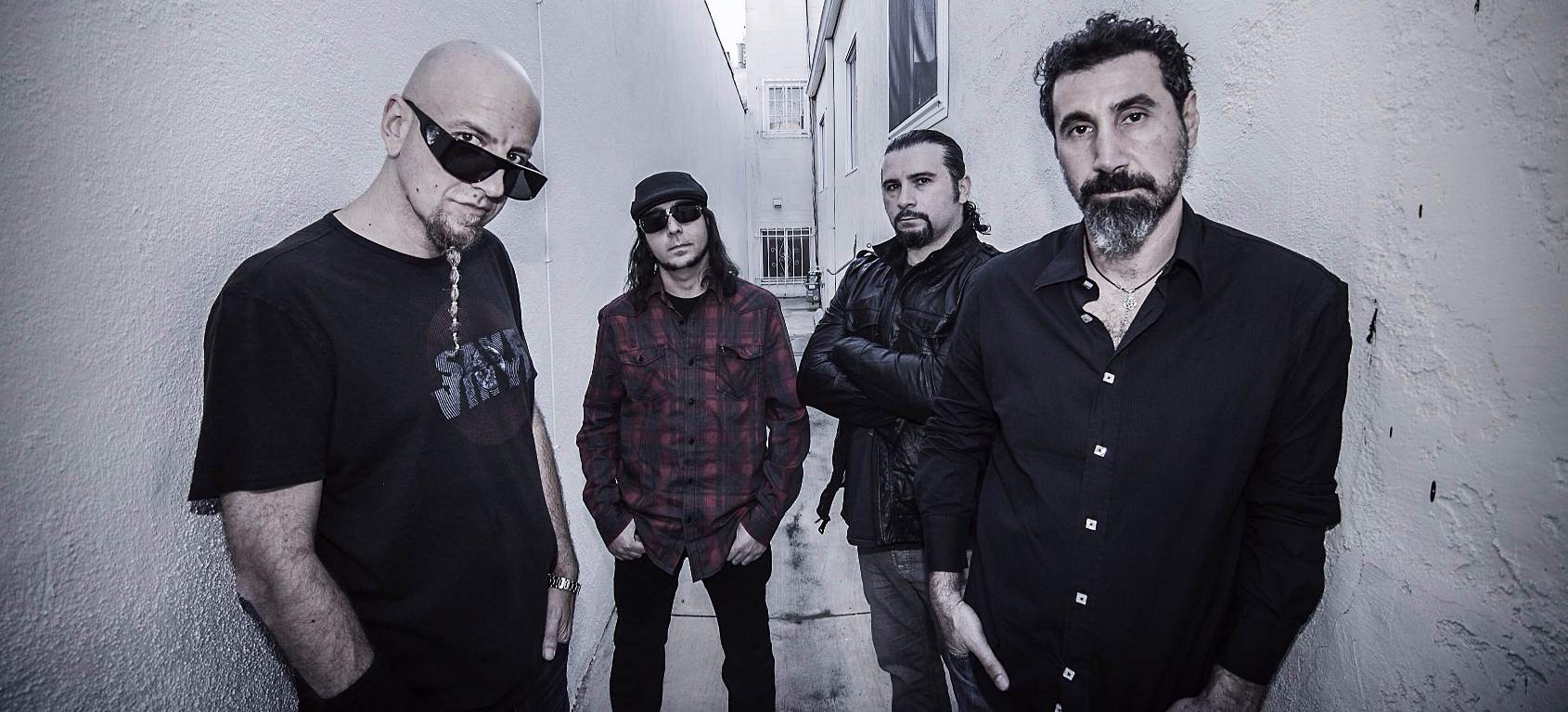
Tankian and bandmate John Dolmayan joined Congressman Adam Schiff (D-Calif.), Turkish historian Taner Akçam, and Executive Director of the Armenian National Committee of America (ANCA), Aram Hamparian in a telephone press call.  The five discussed the upcoming centennial anniversary of the Armenian Genocide and efforts to push the Obama Administration and the Turkish government to recognize the genocide.
System of a down will embark on an international tour called Wake up the Souls, in commemoration of the Centennial of the Armenian Genocide.
System of a down will embark on an international tour called Wake up the Souls, in commemoration of the Centennial of the Armenian Genocide. “For years, we had done a number of shows in Los Angeles called Souls that brought attention to the Armenian Genocide, and gathered funds for the cause. Being that this is the 100-year commemoration of the genocide, we decided to make Souls into a tour,” said Tankian.
Tankian and Dolmayan provided details about their April 23 show in Yerevan, which will be the last stop for the tour. The show will be the first time the band will be playing in Armenia. “It is a big honor for us to be doing our first show there at the 100th year commemoration of the genocide,” said Tankian.

Akcam: Wrong to pin national interests against morality
Akcam commented on the importance of the recognition of the Armenian Genocide by the U.S., stressing that instead of backing a denialist government in Turkey, the American government should instead support the “expanding and maturing” Turkish civil society that is ready to face its own history.
“To put national interests against morality is plain wrong,” said Akçam, adding that attitudes in Turkey are slowly changing. “I first started working on the Armenian Genocide in 1990. Since then, Turkey has changed and is continuing to change, especially after the assassination of Hrant Dink in Istanbul. People began commemorating the Armenian Genocide in Turkey,” said Akçam. He also noted that he expects hundreds of diasporan Armenians to join the ever-growing number of Turkish citizens who bravely hold demonstrations in Turkey on April 24.

Hamparian: Real peace is built on justice
“Turkey not only denies the truth of the crime, but also obstructs its justice,” said Hamparian, who provided details about ANCA’s March to Justice campaign.
“We want to see real peace between Turks and Armenians,” he said, adding that peace must be built on a foundation of truth and justice. Hamparian explained that the March to Justice is an interactive global online platform for the growth of sustained grassroots engagement in support of justice for the Armenian Genocide and durable security for the Armenian nation. Hamparian also explained how the ANCA has been pushing President Barack Obama to honor his 2008 pledge to recognize the Armenian Genocide, and working hard with congress to end Turkey’s gag rule.

Schiff: We have moral obligation to speak the truth
“With only a handful of survivors left, we feel a moral obligation to speak the truth about the genocide and ensure it is never forgotten,” said Schiff, who also announced that on April 22nd, for an entire hour on the House Floor, he will read names of Armenian Genocide victims.
“In a single hour, I will only be able to read the names of a mere fraction of those who were killed,” said Schiff, adding that “to read all of the names of the more than 1.5 million people murdered at the time, would take many weeks and weeks.” Schiff said that he hoped that the recitation of victims’ names will help call attention to the magnitude of the crime. He also urged those who lost family and loved ones during the genocide to send their names, all of which will be entered into the Congressional Record.
Schiff also provided details about the Armenian Genocide Truth and Justice Resolution, which was introduced on March 18 by Representatives Schiff, Robert Dold (R-Ill.), David Valadao (R-Calif.), and Frank Pallone (D-N.J.), along with 40 other members of the House of Representatives. The bipartisan resolution calls upon the president to work toward equitable, constructive, and durable Armenian-Turkish relations based upon the Republic of Turkey’s full acknowledgement of the facts and ongoing consequences of the Armenian Genocide.