Dashnaks Back New Russian-Armenian Pact
Armenia -- Armen Rustamian, a leader of the Armenian Revolutionary Federation, at a news conference, 31Aug 2010.
31.08.2010
Ruzanna Stepanian
The Armenian Revolutionary Federation (Dashnaktsutyun) believes that Armenia had no choice but to extend and deepen its military ties with Russia through a new defense agreement, a leader of the influential opposition party said on Tuesday.
Armen Rustamian, the de facto head of Dashnaktsutyun’s organization in Armenia, also said that the collapse of the Turkish-Armenian normalization process was a major factor behind that agreement. The deal, signed during Russian President Dmitry Medvedev’s recent visit to Yerevan, extended the presence of Russian troops in Armenia until 2044 and upgraded their role in ensuring the country’s security. It also committed Moscow to supplying the Armenian military with modern weaponry. Presenting his party’s official position on the pact, Rustamian argued that no other foreign power is ready to give Armenia such security guarantees. “It is probably not a secret to anyone that 80 percent of our military security -- in fact, much more than that -- is today conditioned by our relations with Russia,” he told a news conference. “So in terms of military security, Armenia today has no viable alternative. This is a fact.”“Therefore, any step aimed at enhancing that volume [of Russian-Armenian military cooperation] is by and large positive,” he added. The Armenian National Congress (HAK), a more radical opposition force led by former President Levon Ter-Petrosian, has also reacted positively to the Russian-Armenian deal. Still, HAK representatives have said it would be offset by the possible sale of sophisticated Russian air-defense missiles to Azerbaijan. The deal has been strongly criticized by another major opposition group, the Zharangutyun (Heritage) Party of Raffi Hovannisian. Zharangutyun leaders have questioned Armenian officials’ claims that the Russian troops would openly side with Armenia in the event of another war with Azerbaijan.Rustamian, who also heads the Armenian parliament’s committee on foreign relations, said closer military ties with Russia are particularly vital for Armenia following the collapse its dramatic rapprochement with Turkey, which has been fiercely opposed by Dashnaktsutyun. He claimed that the process has only strengthened the Turkish-Armenian relationship and increased the likelihood of renewed war in Nagorno-Karabakh.“We have created a much more dangerous situation for ourselves,” said Rustamian. “To a certain extent, this step [the signing of the Russian-Armenian pact] was dictated by that.”
Tuesday, August 31, 2010

Friday, August 27, 2010
ARMENIAN FAMILY FUN DAY AT THE NYS MUSEUM--OCT 2ND
ARMENIAN FAMILY FUN DAY AT THE NYS MUSEUM: Mark your calendar now so you don’t miss out on this day of family fun at the New York State Museum in Albany. On Saturday, October 2, from 12:00 noon to 2:00 p.m., come celebrate Armenian culture by learning more about the harvest in Armenia. There will also be hands-on educational activities for children of all ages to enjoy. The Armenian community has a 20-year relationship with the Museum through the Armenian Culture Series. Your support and feedback is always welcome and greatly appreciated to ensure its success for the future. You may contact event co-chairs Rafi & Marianne Topalian at rafitop@aol.com for more information or to offer your support
HOLY CROSS ANNUAL PICNIC: Holy Cross Armenian Church
HOLY CROSS ANNUAL PICNIC: Holy Cross Armenian Church, 255 Spring Avenue, Troy, will hold their Annual Blessing of the Grapes Picnic on Sunday, August 29, at 12:00 noon. All are invited. Dinners include two shish kebabs, one chicken kebab, pilaf, salad, bread and beverage for $15. Kebab sandwiches and Armenian pastries will also be available for purchase. Take out is available.
Armenian Orphan Rug Lives up to Its Name
Armenian Orphan Rug Lives up to Its Name
Posted By Tom Vartabedian On July 21, 2010 @ 2:13 am In Mid-Atlantic
WASHINGTON—Somewhere inside the White House, stashed away inside an obscure storage room, lays an historic rug.
A close-up of the Armenian Orphan Rug with its intricate detail bearing colorful images of animals akin to the Garden of Eden. The rug was woven in 1924-25 and presented to President Calvin Coolidge. It now lies in storage inside the White House.
Not just any rug, but one created by 400 Armenian orphans from 1924-25 in a town called Ghazir, about 40 miles north of Beirut.
This colorful piece of tapestry, which measures 18 feet by 12 feet, lives up to its name: It has remained an “orphan” rug since it passed through the hands of President Calvin Coolidge in 1926.
The intricacy is woven with a passion unlike others of its kind, containing some 4 million knots made to characterize the biblical Garden of Eden with its collection of animals and other symbolic features.
The big loom was set up for an “Isfahan.” The 400 orphaned girls worked in shifts and spent 18 months on its completion. It was then sent to Washington and presented at a special ceremony to the White House in recognition of the help rendered by the American people to Armenian orphans.
Armenian historians and archivists are looking for a more permanent home, one that will avail itself to tourists and public acclaim. They’d like nothing better than to see this rug on permanent display in the White House, with credit given to Armenian Genocide survivors or, at the very least, have it showcased inside the Genocide Museum, or perhaps the Smithsonian.
They seem to think there are political ramifications preventing this rug from enjoying the life of nobility, for which it was intended.
“If you bring out the story of this rug, you’re talking genocide, and this country doesn’t recognize the Armenian Genocide,” laments Dr. H. Martin Deranian, a prominent Worcester historian and dentist who has documented every facet of this jewel. “It’ll open up the story of the orphans. I’ve taken responsibility to see this story brought to the surface and its meaning appreciated.”
The Armenian Orphan Rug is viewed inside the White House in September 1984 by activists looking to preserve its identity. (L-R) U. S. Senator Carl Levin (D-Mich.), Dr. H. Martin Deranian, Worcester historian, and Set Momjian, a former ambassador to the United Nations.
Deranian has turned himself into a self-imposed rug ambassador in seeking the cause of justice. By unraveling this mystery, he’s hoping to bring greater credence to the Near East Relief and the scores of orphans saved during the genocide years of 1915-23.
He continues to pay homage to Dr. Jacob Kuenzler, or “Papa” Kuenzler as he was affectionately called, for evacuating thousands of Armenian orphans from Turkey to the relative security of Syria while working for the Near East Relief.
Kuenzler had the idea of starting a rug factory in Ghazir. He thought the girls would learn to weave rugs and go on earning a living this way.
It seemed to him that even on so small an outlay, much good could be achieved for these orphans. With only two looms, he started this rug factory in Ghazir, high up in the mountains.
President Coolidge was more than grateful for the rug. In a letter he wrote to Dr. John Finley, vice-president of the Near East Relief, Coolidge was overwhelmed by the gift.
“This beautiful rug woven by children in Lebanon has been received. This, their expression of gratitude for what we’ve been able to do for this country for their aid, is accepted by me as a token of their goodwill to the people of the United States who have assisted in the work of the Near East Relief. Please extend to these orphans my thanks and the thanks of the vast number of our citizens whose generosity this labor of love is intended to acknowledge. The rug has a place of honor in the White House where it will be a daily symbol of goodwill on earth.”
A “Golden Rule” Sunday had been instituted in the United States. Each year, on the first Sunday in December, people were asked to eat only a one-course meal and contribute the money they had saved to the Near East Relief. Some $2 million was collected annually.
An overall view of the Armenian Orphan Rug, which measures 18'x12'. Armenian activists are trying to have it removed from storage inside the White House and have it showcased.The presentation of the Ghazir rug to the White House in 1925 was given such widespread publicity that contributions from Golden Rule Sunday doubled. The factory received numerous orders for special carpets and many of the girls ultimately found homes and became brides.
The event was covered in the New York Times, which carried the headline, “President receives rug woven by orphans of Near East and praises work on relief.”
Coolidge displayed the rug in the Blue Room under his administration. It remained there until 1928 when he took it to his residence in Northampton, Mass.
The orphan rug graced his living room at a place called the Beeches until his death in 1933. From there, Mrs. Coolidge kept the rug inside her home in Northampton until she died in 1957, eventually landing with a son John until he sold his Connecticut home in 1974.
The rug wound up in storage at the Coolidge Homestead in Plymouth, Vt., when it was returned to the White House and added to the collection in 1983. It was placed in storage and not on public view, and has remained there for the past 27 years.
Deranian was invited to the White House to view the rug with U.S. Senator Carl Levin (D-Mich.) and Asbed Set Momjian, a former ambassador to the United Nations.
“The curator of the White House collection has indicated that it is highly unlikely the rug would be on exhibit in an official capacity,” said Deranian.
“It was an emotional feeling to touch this very rug. These girls with their nimble fingers wove their gratitude to America into every stitch. My interest dates back to my mother. During the deportation, she went through every indignity before ending up in Urfa.”
Call it fate but in 1995, Charlotte Movsesian of North Andover, Mass. observed a color photo in the Lawrence Eagle-Tribune of Hillary Clinton showing off the Blue Room during her husband’s administration. And there was the rug, bright and bold as ever.
She recognized that rug because her own mother Vartouhi (Hovsepian) Gulezian was one of those orphaned girls who helped weave it. Mrs. Gulezian was 14 years old and brought to America from Ghazir in 1926 to work at a loom as a demonstration during the sesquicentennial (150th anniversary) celebration of the founding of the United States. She was joined by another orphan, 15-year-old Gulunia Kehyaian.
Movsesian wrote to Clinton and inquired about the rug, never expecting a response. A month later, she received a letter from the White House curator, inviting the entire family to Washington.
Together with her husband Albert S., brother Martin, and mother, off they went by train to meet the appointment. They were welcomed not by Hillary Clinton but the White House curator and her assistant. And there was the rug Mrs. Gulezian had made with the others orphans. She recognized it.
“A rush of emotion came over me, not so much for the beauty but what it represented,” said Albert Movsesian, who promotes genocide education in local schools with stories of the rug.
“The fact the Near East Relief was responsible for helping so many orphans, including my mother-in-law, deserves our utmost appreciation,” he added. “I got down on my hands and knees and touched every part of the rug. I saw the Golden Rule Gratitude inscription in one of the corners.”
The Movsesians wound up spending 90 minutes at the White House that day, had photos taken by the rug, and off they went, laden with memories of a lifetime. No sign of any president, however.
“Very few people know the significance of this rug,” Movsesian brought out. “The story about it has been a well-kept secret in the Armenian community because these orphans didn’t talk about it. After we saw the rug, back into storage it went. It’s been there ever since, simply forsaken. We’re hoping to resurrect it into a place of honor where it belongs.”
If and when that might occur, the rug will represent a memorial to those orphans whose sad fingers wove into its warp and weft a permanent remembrance of the depths of Armenia’s blackest hour.
If it could only talk, it would speak volumes.
=
Posted By Tom Vartabedian On July 21, 2010 @ 2:13 am In Mid-Atlantic
WASHINGTON—Somewhere inside the White House, stashed away inside an obscure storage room, lays an historic rug.
A close-up of the Armenian Orphan Rug with its intricate detail bearing colorful images of animals akin to the Garden of Eden. The rug was woven in 1924-25 and presented to President Calvin Coolidge. It now lies in storage inside the White House.
Not just any rug, but one created by 400 Armenian orphans from 1924-25 in a town called Ghazir, about 40 miles north of Beirut.
This colorful piece of tapestry, which measures 18 feet by 12 feet, lives up to its name: It has remained an “orphan” rug since it passed through the hands of President Calvin Coolidge in 1926.
The intricacy is woven with a passion unlike others of its kind, containing some 4 million knots made to characterize the biblical Garden of Eden with its collection of animals and other symbolic features.
The big loom was set up for an “Isfahan.” The 400 orphaned girls worked in shifts and spent 18 months on its completion. It was then sent to Washington and presented at a special ceremony to the White House in recognition of the help rendered by the American people to Armenian orphans.
Armenian historians and archivists are looking for a more permanent home, one that will avail itself to tourists and public acclaim. They’d like nothing better than to see this rug on permanent display in the White House, with credit given to Armenian Genocide survivors or, at the very least, have it showcased inside the Genocide Museum, or perhaps the Smithsonian.
They seem to think there are political ramifications preventing this rug from enjoying the life of nobility, for which it was intended.
“If you bring out the story of this rug, you’re talking genocide, and this country doesn’t recognize the Armenian Genocide,” laments Dr. H. Martin Deranian, a prominent Worcester historian and dentist who has documented every facet of this jewel. “It’ll open up the story of the orphans. I’ve taken responsibility to see this story brought to the surface and its meaning appreciated.”
The Armenian Orphan Rug is viewed inside the White House in September 1984 by activists looking to preserve its identity. (L-R) U. S. Senator Carl Levin (D-Mich.), Dr. H. Martin Deranian, Worcester historian, and Set Momjian, a former ambassador to the United Nations.
Deranian has turned himself into a self-imposed rug ambassador in seeking the cause of justice. By unraveling this mystery, he’s hoping to bring greater credence to the Near East Relief and the scores of orphans saved during the genocide years of 1915-23.
He continues to pay homage to Dr. Jacob Kuenzler, or “Papa” Kuenzler as he was affectionately called, for evacuating thousands of Armenian orphans from Turkey to the relative security of Syria while working for the Near East Relief.
Kuenzler had the idea of starting a rug factory in Ghazir. He thought the girls would learn to weave rugs and go on earning a living this way.
It seemed to him that even on so small an outlay, much good could be achieved for these orphans. With only two looms, he started this rug factory in Ghazir, high up in the mountains.
President Coolidge was more than grateful for the rug. In a letter he wrote to Dr. John Finley, vice-president of the Near East Relief, Coolidge was overwhelmed by the gift.
“This beautiful rug woven by children in Lebanon has been received. This, their expression of gratitude for what we’ve been able to do for this country for their aid, is accepted by me as a token of their goodwill to the people of the United States who have assisted in the work of the Near East Relief. Please extend to these orphans my thanks and the thanks of the vast number of our citizens whose generosity this labor of love is intended to acknowledge. The rug has a place of honor in the White House where it will be a daily symbol of goodwill on earth.”
A “Golden Rule” Sunday had been instituted in the United States. Each year, on the first Sunday in December, people were asked to eat only a one-course meal and contribute the money they had saved to the Near East Relief. Some $2 million was collected annually.
An overall view of the Armenian Orphan Rug, which measures 18'x12'. Armenian activists are trying to have it removed from storage inside the White House and have it showcased.The presentation of the Ghazir rug to the White House in 1925 was given such widespread publicity that contributions from Golden Rule Sunday doubled. The factory received numerous orders for special carpets and many of the girls ultimately found homes and became brides.
The event was covered in the New York Times, which carried the headline, “President receives rug woven by orphans of Near East and praises work on relief.”
Coolidge displayed the rug in the Blue Room under his administration. It remained there until 1928 when he took it to his residence in Northampton, Mass.
The orphan rug graced his living room at a place called the Beeches until his death in 1933. From there, Mrs. Coolidge kept the rug inside her home in Northampton until she died in 1957, eventually landing with a son John until he sold his Connecticut home in 1974.
The rug wound up in storage at the Coolidge Homestead in Plymouth, Vt., when it was returned to the White House and added to the collection in 1983. It was placed in storage and not on public view, and has remained there for the past 27 years.
Deranian was invited to the White House to view the rug with U.S. Senator Carl Levin (D-Mich.) and Asbed Set Momjian, a former ambassador to the United Nations.
“The curator of the White House collection has indicated that it is highly unlikely the rug would be on exhibit in an official capacity,” said Deranian.
“It was an emotional feeling to touch this very rug. These girls with their nimble fingers wove their gratitude to America into every stitch. My interest dates back to my mother. During the deportation, she went through every indignity before ending up in Urfa.”
Call it fate but in 1995, Charlotte Movsesian of North Andover, Mass. observed a color photo in the Lawrence Eagle-Tribune of Hillary Clinton showing off the Blue Room during her husband’s administration. And there was the rug, bright and bold as ever.
She recognized that rug because her own mother Vartouhi (Hovsepian) Gulezian was one of those orphaned girls who helped weave it. Mrs. Gulezian was 14 years old and brought to America from Ghazir in 1926 to work at a loom as a demonstration during the sesquicentennial (150th anniversary) celebration of the founding of the United States. She was joined by another orphan, 15-year-old Gulunia Kehyaian.
Movsesian wrote to Clinton and inquired about the rug, never expecting a response. A month later, she received a letter from the White House curator, inviting the entire family to Washington.
Together with her husband Albert S., brother Martin, and mother, off they went by train to meet the appointment. They were welcomed not by Hillary Clinton but the White House curator and her assistant. And there was the rug Mrs. Gulezian had made with the others orphans. She recognized it.
“A rush of emotion came over me, not so much for the beauty but what it represented,” said Albert Movsesian, who promotes genocide education in local schools with stories of the rug.
“The fact the Near East Relief was responsible for helping so many orphans, including my mother-in-law, deserves our utmost appreciation,” he added. “I got down on my hands and knees and touched every part of the rug. I saw the Golden Rule Gratitude inscription in one of the corners.”
The Movsesians wound up spending 90 minutes at the White House that day, had photos taken by the rug, and off they went, laden with memories of a lifetime. No sign of any president, however.
“Very few people know the significance of this rug,” Movsesian brought out. “The story about it has been a well-kept secret in the Armenian community because these orphans didn’t talk about it. After we saw the rug, back into storage it went. It’s been there ever since, simply forsaken. We’re hoping to resurrect it into a place of honor where it belongs.”
If and when that might occur, the rug will represent a memorial to those orphans whose sad fingers wove into its warp and weft a permanent remembrance of the depths of Armenia’s blackest hour.
If it could only talk, it would speak volumes.
=
Russia, U.S. reached consensus on South Caucasus
Russia, U.S. reached consensus on South Caucasus
August 27, 2010 - 12:14 AMT 07:14 GMT
PanARMENIAN.Net - Recent statements by the U.S. Department of State prove that the United States and Russia has reached some consensus on South Caucasus, according to Gagik Harutyunyan, chairman of Noravank foundation.
“The U.S. is discontent with the activity of Turkey-Azerbaijan tandem and Turkey’s strengthening in the region,” he told a news conference on August 27.
Military expert Davit Jamalyan noted, for his part, that regional processes become more predictable
Aram I will not participate in Holy Cross church mass in Akhtamar
Aram I will not participate in Holy Cross church mass in Akhtamar
August 27, 2010 - 17:46 AMT 12:46 GMT
PanARMENIAN.Net - Catholicos of the Great House of Cilicia His Holiness Aram I refused to participate in the mass at Holy Cross church in Akhtamar island.
Continuing with the Genocide denial policy, Turkey just makes a show of tolerance to deceive the international community, said the press office of the Catholicosate of Cilicia.
“Turkey attempts to exploit the Armenian nation for its political purposes, once again practicing deception. Yet, it’s common knowledge that over 2000 Armenian churches situated in Western Armenia and Cilicia lie in ruins. Turkey can deceive no one by turning a single church into a tourist facility and museum. The Catholicos of the Great House of Cilicia will always be demanding recognition of Armenian Genocide and indemnification for moral and material damages from Turkey,” the statement said.
August 27, 2010 - 17:46 AMT 12:46 GMT
PanARMENIAN.Net - Catholicos of the Great House of Cilicia His Holiness Aram I refused to participate in the mass at Holy Cross church in Akhtamar island.
Continuing with the Genocide denial policy, Turkey just makes a show of tolerance to deceive the international community, said the press office of the Catholicosate of Cilicia.
“Turkey attempts to exploit the Armenian nation for its political purposes, once again practicing deception. Yet, it’s common knowledge that over 2000 Armenian churches situated in Western Armenia and Cilicia lie in ruins. Turkey can deceive no one by turning a single church into a tourist facility and museum. The Catholicos of the Great House of Cilicia will always be demanding recognition of Armenian Genocide and indemnification for moral and material damages from Turkey,” the statement said.
Azeri Official Accuses Russia, West Of Pro-Armenian Bias
Azeri Official Accuses Russia, West Of Pro-Armenian Bias
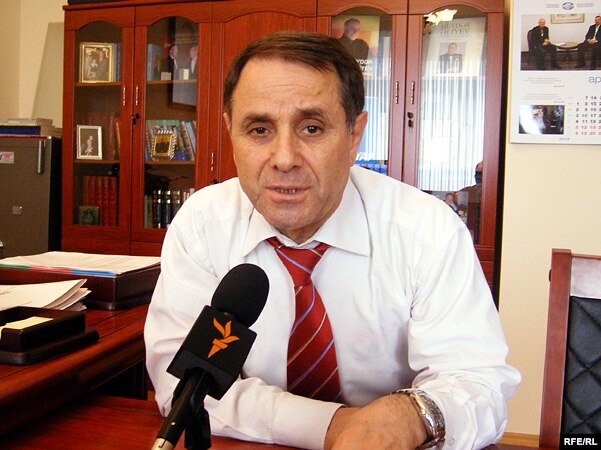
Azerbaijan -- Novruz Mammadov, head of international relations department of President′s Office, Baku, 01Apr2008
27.08.2010
Reacting to the signing of a new Russian-Armenian defense agreement, Azerbaijani President Ilham Aliyev’s chief foreign policy aide has claimed that both Russia and the West support Armenia in the Nagorno-Karabakh conflict.
“Giving such big support to an occupying country contradicts international legal norms and principles,” Novruz Mammadov told the APA news agency in an interview late on Thursday. “It is not very difficult to understand the essence of such overt support for such a state.”Mammadov said that by prolonging and upgrading its military presence in Armenia with that agreement Russia called into question its stated neutrality toward the Karabakh dispute. “With such statements and such support, it’s difficult to be an objective mediator,” he said. Armenian officials say that the new defense pact, which also commits the Russians to supplying its regional ally with modern weaponry, will discourage Azerbaijan from attempting to resolve the dispute by force. Defense Minister Seyran Ohanian told RFE/RL’s Armenian service this week that Russian troops could openly support Armenia in case of renewed fighting in Nagorno-Karabakh. “I don’t think that the signing of such an agreement between Russia and Armenia and a greater modernization of the local [Russian military] base will pose a threat only to Azerbaijan,” Mammadov said, commenting on these statements. “If the Armenian side thinks that Nagorno-Karabakh belongs to it, then it’s a big mistake.”“If Armenia wants to draw Russia into a war in Nagorno-Karabakh, then it’s another big mistake,” he added. Ohanian’s claims were rejected as “laughable” by Azerbaijan’s Defense Ministry. “Thisagreement is between two states, it is up to them. But this protocol cannot hinder or stop the Azerbaijani Army,” ministry spokesman Eldar Sabiroglu told ANS television on Thursday. According to RFE/RL’s Azerbaijani service, Sabiroglu also said Azerbaijan has no choice but to upgrade its armed forces by acquiring new weaponry.Mammadov, who heads the foreign relations department at Aliyev’s administration, also hit out at the United States and other Western powers. “One of the results of my calculations and observations is that the West and Europe … have channeled all their efforts into rendering support and assistance the occupier Armenia in a regular, systemic manner,” he said. The Azerbaijani official claimed in that context that the West organized an upcoming NATO disaster relief exercise in Armenia in order to force Turkey to open the Turkish-Armenian border. “They thus want to once again pit Turkey against Azerbaijan,” he said.
Azerbaijan -- Novruz Mammadov, head of international relations department of President′s Office, Baku, 01Apr2008
27.08.2010
Reacting to the signing of a new Russian-Armenian defense agreement, Azerbaijani President Ilham Aliyev’s chief foreign policy aide has claimed that both Russia and the West support Armenia in the Nagorno-Karabakh conflict.
“Giving such big support to an occupying country contradicts international legal norms and principles,” Novruz Mammadov told the APA news agency in an interview late on Thursday. “It is not very difficult to understand the essence of such overt support for such a state.”Mammadov said that by prolonging and upgrading its military presence in Armenia with that agreement Russia called into question its stated neutrality toward the Karabakh dispute. “With such statements and such support, it’s difficult to be an objective mediator,” he said. Armenian officials say that the new defense pact, which also commits the Russians to supplying its regional ally with modern weaponry, will discourage Azerbaijan from attempting to resolve the dispute by force. Defense Minister Seyran Ohanian told RFE/RL’s Armenian service this week that Russian troops could openly support Armenia in case of renewed fighting in Nagorno-Karabakh. “I don’t think that the signing of such an agreement between Russia and Armenia and a greater modernization of the local [Russian military] base will pose a threat only to Azerbaijan,” Mammadov said, commenting on these statements. “If the Armenian side thinks that Nagorno-Karabakh belongs to it, then it’s a big mistake.”“If Armenia wants to draw Russia into a war in Nagorno-Karabakh, then it’s another big mistake,” he added. Ohanian’s claims were rejected as “laughable” by Azerbaijan’s Defense Ministry. “Thisagreement is between two states, it is up to them. But this protocol cannot hinder or stop the Azerbaijani Army,” ministry spokesman Eldar Sabiroglu told ANS television on Thursday. According to RFE/RL’s Azerbaijani service, Sabiroglu also said Azerbaijan has no choice but to upgrade its armed forces by acquiring new weaponry.Mammadov, who heads the foreign relations department at Aliyev’s administration, also hit out at the United States and other Western powers. “One of the results of my calculations and observations is that the West and Europe … have channeled all their efforts into rendering support and assistance the occupier Armenia in a regular, systemic manner,” he said. The Azerbaijani official claimed in that context that the West organized an upcoming NATO disaster relief exercise in Armenia in order to force Turkey to open the Turkish-Armenian border. “They thus want to once again pit Turkey against Azerbaijan,” he said.
Subscribe to:
Posts (Atom)