By: Taner Akcam
It looks like the countdown to regime change has begun in Syria. And Turkey may end up having a say in the international intervention that’s likely to occur. Still, Turkey should engage in sober deliberations before getting involved in any outside intervention. From the perspective of Syria and the region, Turkey’s participation will not be perceived or explained as wanting to create free and democratic regimes in the region. One should never forget that the peoples of the region view themselves through a window that’s been framed by the events and perceptions of what has occurred in history.
Erdogan and his wife greet supporters after the 2011 elections in Turkey.
Turkey’s declaration that it will be playing a new role in the region and in the world was made in an address to the nation that followed the elections.[1] When making the declaration, “It’s time to count me in,” all of Turkey’s neighbors and their capital cities were recited one by one. The fact that Armenia and Yerevan were missing from that list was extremely significant. I’m not saying this because of my own personal interest in the subject of Armenia. The key to understanding if Turkey will be able to play a new role can be found from where it fits Armenia (and to that extent Christians) in the policies it will develop for the region. The Iran factor, too, should be added to the mix—Tehran was also not mentioned in the address. The clues to what the AKP’s policy will be in the region will be discovered in the place and role that will be given to the Shia sect, one of Islam’s major branches, along with Christians.
Allow me to formulate AKP’s policy like this: to end the victimization of Islamic societies, viewed as having been oppressed and victimized for centuries, through the adoption of international universal norms. Another way of stating this could be to call it a fight to protect the rights of the Muslim world, which is viewed as having been despised and oppressed by the West, and to raise its status to one of equality with the West, again through the direct adoption of Western norms. In other words, using the Hegelian German term aufheben, to repeal or abrogate the “masterslave” relationship and change the status of the “slaves” into “masters.” If necessary, they will achieve this by defying the West. This back story is instrumental to Erdogan’s tough stance with Israel and his “one minute” insistence at Davos.[2] The great wave of sympathy that was unleashed in Turkey and the region because of that tough stance shows that the AKP has pressed its finger upon a very deep wound.
‘Strike the West with a Western weapon’
The idea is that criticizing the nation-state boundaries that were forced upon the Middle East in accordance with the West’s colonial motives and developing policies of economic and political integration would reunite the fates of all the peoples in the region. In other words, the basis for the AKP’s regional policies is taking the Middle East and reconfiguring it as a kind of “common home” for all its inhabitants. The “zero problems with neighbors”[3] policy is a reflection of this thinking. It would be extremely shallow and shortsighted to conclude that Turkey’s new policies in the region are expansionist and imperialist schemes. One should take a wider perspective when examining them. One could argue that the creation of processes established on humanitarian universal and democratic (i.e., Western) values in the Middle East and of an economic, political, and cultural integration that ignores state boundaries, along the lines of the European Union, would be a very positive goal. The real question, however, is, does Turkey have what it takes, ideologically, politically, and economically, to create such a union in its region? The answer is both yes and no.
‘Crimes against Christianity’
Why “yes”? For this, I would like to point out an interesting and somewhat unknown fact: “Crimes against humanity” is a very important international legal term, used for the first time on May 24, 1915, in connection with the Armenian Genocide. It comprised the moral and legal background for the Nuremberg trials and the more recent Yugoslavian, Rwandan, and other international prosecutions of war crimes. This is common knowledge, but what is not so commonly known is that the expression was first drafted as “Crimes against Christianity.”
Great Britain, Russia, and France had initially defined the crimes committed by the Union and Progress Party (CUP) as “Crimes against Christianity,” but later exchanged the word “Christianity” with “humanity” after considering its possible misinterpretation and the negative reaction it could engender among the Muslim peoples who were under their own dominion at the time. It is as if all of the secrets of the subject being discussed here lay within that word: The revision of the word Christianity to humanity, and those against whom it was used (Unionists and the Ottoman Turks), seems to summarize all of the difficulty faced by the AKP and Turkey today.
The substitution of the word humanity for Christianity is like a short history of the values we accept as humanitarian universal norms. Values like human rights, democracy, etc., are actually the products of the Christian political and cultural world. This world, based on its GrecoRoman roots and the experience of enlightenment, has managed to take many of its own norms and sensitivities and turn them into universal, humanitarian values. One could view the history of humankind, to some extent, as a journey from Christian-specific values towards the creation of values that are universal to humanity. Nevertheless, it is completely understandable why this journey has been perceived by the Muslim world as one that is marked by hypocrisy and cunning, since Muslims perceive it as a history of colonialism.
Moving from world of Islamic culture to universality
What the AKP is trying to do is move the Islamic cultural world towards universality, just as the Christian cultural world moved away from its own particularity towards universality. Why can’t the Islamic world and its new leaders, like the AKP, do the same? One can interpret Erdogan’s address to the nation through this approach. Actually, one needs to concede that the AKP, in this sense, follows an Islamic tradition that dates back to the 18th and 19th centuries. The “newly awakening” Islamic movements of those centuries declared the universal norms of the West as values that were specific to Christianity, and saw them as hypocritical statements meant to disguise the West’s imperialist policies. This tradition viewed the Islamic world as the “oppressed nations” and defined the fight against the West as the “challenge by the oppressed against their colonizing masters.” It was, however, far from being able to define its own struggle on universal terms. Still, it represented the first steps that Islamic thought had taken towards universality. By having resurrected this powerful Islamic tradition and combining Western values with the Islamic cultural tradition, the AKP seems to be setting itself up as the last stop on this journey.
In this way, just as the West managed to take “crimes committed against Christianity” and turn it into “crimes committed against humanity,” under leadership like that of the AKP, it is possible for the Islamic world to turn “crimes committed against Muslims” into a more comprehensive category of “crimes committed against humanity.” So the strong Islamic cultural weight or emphasis on Islamic sensitivity found in Erdogan’s statements are not that important or, more precisely, are a necessity. In fact, one could say that the main reason for Erdogan’s popularity in both the Middle East and in the world is the way he manages to merge this emphasis on Islamic sensitivity with the West’s own values.
Muslim history not just a history of the oppressed
Why “no”? The main problem lies with whether the AKP will be able to take Islamic cultural values and traditions and move them towards universal humanitarian values. The key terms here are “oppression” and “victimhood.” As is known from the human rights organization that Muslim activist circles close to the AKP have created in Turkey, the Islamic sector sees itself as the truly oppressed. What the West (as well as the civilian-military bureaucratic elite, the West’s representatives in Turkey) is facing is a population that believes itself to be oppressed and victimized, and conceives its current struggle as one for equality and freedom for the oppressed. This is why Palestinians holds such a special place within this fight—; they constitute the most oppressed group in our region.
In truth, defining oneself as “oppressed and victimized” is a method used by just about every group. The problem is that the Islamic population has not experienced its recent past as “oppressed and victimized.” Mass murders, for which Muslims are in one way or another responsible, took place against Christians on this very soil. If the AKP enters Syria without either mentioning this history or honestly confronting those crimes, they will surely be reminded of all the crimes that were committed against other religions in recent history, thereby challenging the notion of the freedom fight that Islam, history’s oppressed and victimized, has been waging for centuries.
If the AKP, which seems to be the answer to the Muslim majority’s demands for “freedom and democracy” through a Muslim sensitivity, does not bring this fight to where it becomes a critique of the crimes that Muslims have committed in recent history, it will not be able to complete the journey towards universal humanitarian values. It will never be able to comprehend the successful transition the West made from Christian values to universal humanitarian values, and it will get stuck in a limited pre-defined space denoted by the sensitivity of Sunni-Muslims.
Adding Armenia to the Address to the Nation
From all appearances, there are two main issues plaguing the region: One is freedom and democracy; the other is security. It isn’t a coincidence that the Christians and other minorities support the Ba’ath regime in Syria. In order to get security, they are willing to give up their freedoms. While Turkey seems to provide answers to the Sunni-Muslim majority’s demand for freedom in Syria, it cannot do the same for the Christians’ demands for security. Quite the opposite. Turkey looks very much like a security threat to them, because it reminds them of what happened in 1915. It is very important to note that the Ba’ath regime recently appointed a Christian to the ministry of defense.
In order to change this perception, the AKP has to confront history and take a clear position regarding the crimes that were committed against the Christians. The AKP, however, is very far from being capable of doing this and, for this reason, will continue to be perceived as a potential repeat actor of 1915 to the Christians in the region. Therein lies the irony. Turkey, which wants to get involved in the region as an intervenor on behalf of “freedom and democracy,” is instead going to be a reminder of its past “crimes against humanity.”
We need to add two other important factors to this: The first is the close ties between Iran and the Syrian Alewites (Shia). Even if they rest upon a defense of the authoritarian regimes of Syria and Iran, Turkey’s intervention (made in the name of freedom and democracy, but missing an honest accounting of history) can lead to sectarian fighting—between the Sunni-Hanefis and Shia (Alewite). Secondly, it is a fact that under Jemal Pasha’s leadership, the CUP hung the leaders of the Arab nationalist movement along the main streets from Beirut to Damascus in 1915 and 1916. There is a known connection between the suppression of the Arab nationalist movement and the genocide of 1915. Each was a piece of the CUP’s policy to shape Anatolia around a Turkish-Muslim identity. Whether it is the Syrian Ba’ath regime or Arab nationalist circles in the region, no one will hesitate to remind Turkey of the truth behind the hanging of their own national leaders.
The bottom line is that the AKP can say whatever it wants about whatever Islamic cultural back story it is using to develop its new policies in the Middle East. If it does not confront history, however, it will appear as nothing less than a new Union and Progress Party. And herein lies the importance of including Armenia and Yerevan in the Address to the Nation: If the AKP wants to defend freedom and democracy in the region, and if it wants to walk a path towards universal humanitarian values by way of Islamic sensitivities, it needs to learn how to look at Islam’s recent past with a more critical eye. A statement about freedom and democracy must be defined in a way that responds to Christians’ demands for security and includes them in the equation. The road there passes through an honest reckoning with the crimes that have been committed in the past, not least of which was the Armenian Genocide.
What the AKP should not forget is that it was a very powerful self-critique that laid the foundation for the Christian West’s bombing of Christian Serbia.
Translated by Fatima Sakarya. The Turkish version of this editorial was published in Taraf, a daily newspaper in Istanbul, on Aug. 11, 2011.
Thursday, September 8, 2011

WILL THIS BE THE BEGINNING OF ISRAEL RECOGNISING THE ARMENIAN GENOCIDE?
WILL THIS BE THE BEGINNING OF ISRAEL RECOGNISING THE ARMENIAN GENOCIDE?
Israeli activist accuses Erdogan of historical amnesia for denying Armenian Genocide
September 08, 2011 04:28
Haim Ouizemann, vice president of the Israeli Organization of the Francophonie (OFI), who is also involved in politics and is working for several media outlets, has written an open letter to Turkish Prime Minister Recep Tayyip Erdogan.
In his letter Ouizemann condemns Turkey’s response to the report of Palmer and decision to expel Israeli Ambassador to Turkey Gaby Levy. Ouizemann also raises the issue of the Armenian Genocide and condemns Turkey for historical amnesia. In a letter published on Israël Flash website Ouizemann says that Turkey intends to appeal to the International Court in The Hague but at the same time is suffering from historical amnesia and denial policy. He stresses that Ankara continues to deny their undeniable responsibility for one of the biggest genocides in modern history, the Armenian Genocide.
He also mentions that Turkish writer Orhan Pamuk was forced to emigrate to U.S. due to persecution and death threats because of his extraordinary courage, unconditional support to the Armenian issue and his words: “One million Armenians and 30 thousand Kurds were killed in these (Turkish) lands, but no one, except for me, dares talk about it.”
“One and a half million Armenians, Turkish citizens, are still waiting for justice. Meanwhile, you are resisting paying tribute to memory of the victims. If you want to come to The Hague, then you should get there before us. You’re already late for a century,” he says.
News from Armenia - NEWS.am=
Israeli activist accuses Erdogan of historical amnesia for denying Armenian Genocide
September 08, 2011 04:28
Haim Ouizemann, vice president of the Israeli Organization of the Francophonie (OFI), who is also involved in politics and is working for several media outlets, has written an open letter to Turkish Prime Minister Recep Tayyip Erdogan.
In his letter Ouizemann condemns Turkey’s response to the report of Palmer and decision to expel Israeli Ambassador to Turkey Gaby Levy. Ouizemann also raises the issue of the Armenian Genocide and condemns Turkey for historical amnesia. In a letter published on Israël Flash website Ouizemann says that Turkey intends to appeal to the International Court in The Hague but at the same time is suffering from historical amnesia and denial policy. He stresses that Ankara continues to deny their undeniable responsibility for one of the biggest genocides in modern history, the Armenian Genocide.
He also mentions that Turkish writer Orhan Pamuk was forced to emigrate to U.S. due to persecution and death threats because of his extraordinary courage, unconditional support to the Armenian issue and his words: “One million Armenians and 30 thousand Kurds were killed in these (Turkish) lands, but no one, except for me, dares talk about it.”
“One and a half million Armenians, Turkish citizens, are still waiting for justice. Meanwhile, you are resisting paying tribute to memory of the victims. If you want to come to The Hague, then you should get there before us. You’re already late for a century,” he says.
News from Armenia - NEWS.am=
Tuesday, September 6, 2011
Sassounian: Turkey Can Run but Can’t Hide from Long Arm of US Law
By: Harut Sassounian
World heavyweight boxing champion Joe Louis once warned one of his opponents: “You can run, but you can’t hide.” This same warning now applies to the Turkish government and two of its major banks.
Ironically, after making every effort to block the serving of court papers, the Central Bank and Ziraat Bank filed a motion on June 1, 2011, seeking the dismissal of the case, arguing they had not received the proper documents.
Last December, when three Armenian Americans filed a multi-million dollar lawsuit in U.S. Federal Court against the Republic of Turkey, the Central Bank, and Ziraat Bank, the Turkish government ridiculed the charges, claiming “sovereign immunity.”
The Armenian American plaintiffs were seeking $64 million in compensation for the confiscation of their properties in Adana, Turkey, in the aftermath of the Armenian Genocide. The plaintiffs were also demanding additional millions of dollars for the accrued rent and interest the U.S. government paid Turkey in the past 60 years for use of the strategic Incirlik Air Base, located on Armenian-owned land.
Since one of the first steps in filing a lawsuit is to serve a copy of the court documents to the defendants, the three Turkish entities concocted elaborate schemes to avoid receiving the legal papers in order to delay or obstruct the trial. As a result, the plaintiffs’ attorneys had to go to extraordinary lengths during the past nine months to deliver the court documents to the Turkish defendants.
Ironically, after making every effort to block the serving of court papers, the Central Bank and Ziraat Bank filed a motion on June 1, 2011, seeking the dismissal of the case, arguing they had not received the proper documents.
On Aug. 2, U.S. Federal Judge Dolly Gee rejected the Turkish request, asserting that the plaintiffs’ representatives “made several attempts to serve the Bank defendants at their addresses in New York City. After being repeatedly denied access to the buildings and, in one case, being misdirected as to Ziraat Bank’s actual location, the process servers left copies of the summonses and complaint with the building security guards. Plaintiffs’ counsel then mailed additional copies to the each of the Bank defendants at these same addresses.”
The judge ruled that the Republic of Turkey had been adequately served with legal documents and ordered the Turkish entities to present their pleading in court no later than Aug. 19.
The plaintiffs’ attorneys faced greater difficulties in serving the court documents to the Turkish authorities than to the New York offices of the two banks. On Jan. 26, 2011, the English and Turkish versions of the complaint were mailed to the Ministry of Justice in Ankara, as required by the Hague Convention. On March 1, Turkey informed the plaintiffs’ lawyers in writing its refusal to accept the court papers, claiming the lawsuit infringes Turkey’s “sovereignty and security.”
After exhausting all other channels, the plaintiffs’ lawyers submitted the court documents to the U.S. Department of State on April 14, asking the latter to present them officially to the Turkish government. On June 20, the State Department advised the plaintiffs that the documents were forwarded through diplomatic channels to the Republic of Turkey.
The American Embassy in Ankara transmitted the documents with a “diplomatic note,” warning the Turkish government that under U.S. law “a defendant in a lawsuit must file an answer to the complaint within 60 days from the date of notice or face the possibility of having judgment entered against it.” The U.S. Embassy strongly urged the Turkish Foreign Ministry to comply with the requirements of United States laws or face “a default judgment.”
On Aug. 29, after the mandated 60 days had expired and no response was received from Turkey, the attorneys for the Armenian American plaintiffs asked the Federal Court to enter a default judgment against the Turkish defendants.
Vatan newspaper reported last week that the two Turkish banks, alarmed by the serious prospect of losing a multi-million dollar lawsuit due to their failure to respond to the U.S. Federal Court, rushed to hire a lawyer and asked for more time until Sept. 19, 2011 to file a response.
Should the Turkish defendants not show up in court on Sept. 19, the federal judge could enter a default judgment and order that their assets in the U.S., up to the value of the judgment, be seized and turned over to the Armenian American plaintiffs.
The Turkish government can no longer hide from its responsibilities for the devastating damage caused to the Armenian people as a result of the genocide. It is high time for Turkey to acknowledge its long history of colossal criminal acts and make appropriate amends.
World heavyweight boxing champion Joe Louis once warned one of his opponents: “You can run, but you can’t hide.” This same warning now applies to the Turkish government and two of its major banks.
Ironically, after making every effort to block the serving of court papers, the Central Bank and Ziraat Bank filed a motion on June 1, 2011, seeking the dismissal of the case, arguing they had not received the proper documents.
Last December, when three Armenian Americans filed a multi-million dollar lawsuit in U.S. Federal Court against the Republic of Turkey, the Central Bank, and Ziraat Bank, the Turkish government ridiculed the charges, claiming “sovereign immunity.”
The Armenian American plaintiffs were seeking $64 million in compensation for the confiscation of their properties in Adana, Turkey, in the aftermath of the Armenian Genocide. The plaintiffs were also demanding additional millions of dollars for the accrued rent and interest the U.S. government paid Turkey in the past 60 years for use of the strategic Incirlik Air Base, located on Armenian-owned land.
Since one of the first steps in filing a lawsuit is to serve a copy of the court documents to the defendants, the three Turkish entities concocted elaborate schemes to avoid receiving the legal papers in order to delay or obstruct the trial. As a result, the plaintiffs’ attorneys had to go to extraordinary lengths during the past nine months to deliver the court documents to the Turkish defendants.
Ironically, after making every effort to block the serving of court papers, the Central Bank and Ziraat Bank filed a motion on June 1, 2011, seeking the dismissal of the case, arguing they had not received the proper documents.
On Aug. 2, U.S. Federal Judge Dolly Gee rejected the Turkish request, asserting that the plaintiffs’ representatives “made several attempts to serve the Bank defendants at their addresses in New York City. After being repeatedly denied access to the buildings and, in one case, being misdirected as to Ziraat Bank’s actual location, the process servers left copies of the summonses and complaint with the building security guards. Plaintiffs’ counsel then mailed additional copies to the each of the Bank defendants at these same addresses.”
The judge ruled that the Republic of Turkey had been adequately served with legal documents and ordered the Turkish entities to present their pleading in court no later than Aug. 19.
The plaintiffs’ attorneys faced greater difficulties in serving the court documents to the Turkish authorities than to the New York offices of the two banks. On Jan. 26, 2011, the English and Turkish versions of the complaint were mailed to the Ministry of Justice in Ankara, as required by the Hague Convention. On March 1, Turkey informed the plaintiffs’ lawyers in writing its refusal to accept the court papers, claiming the lawsuit infringes Turkey’s “sovereignty and security.”
After exhausting all other channels, the plaintiffs’ lawyers submitted the court documents to the U.S. Department of State on April 14, asking the latter to present them officially to the Turkish government. On June 20, the State Department advised the plaintiffs that the documents were forwarded through diplomatic channels to the Republic of Turkey.
The American Embassy in Ankara transmitted the documents with a “diplomatic note,” warning the Turkish government that under U.S. law “a defendant in a lawsuit must file an answer to the complaint within 60 days from the date of notice or face the possibility of having judgment entered against it.” The U.S. Embassy strongly urged the Turkish Foreign Ministry to comply with the requirements of United States laws or face “a default judgment.”
On Aug. 29, after the mandated 60 days had expired and no response was received from Turkey, the attorneys for the Armenian American plaintiffs asked the Federal Court to enter a default judgment against the Turkish defendants.
Vatan newspaper reported last week that the two Turkish banks, alarmed by the serious prospect of losing a multi-million dollar lawsuit due to their failure to respond to the U.S. Federal Court, rushed to hire a lawyer and asked for more time until Sept. 19, 2011 to file a response.
Should the Turkish defendants not show up in court on Sept. 19, the federal judge could enter a default judgment and order that their assets in the U.S., up to the value of the judgment, be seized and turned over to the Armenian American plaintiffs.
The Turkish government can no longer hide from its responsibilities for the devastating damage caused to the Armenian people as a result of the genocide. It is high time for Turkey to acknowledge its long history of colossal criminal acts and make appropriate amends.
Thursday, September 1, 2011
Catholicos Warned Obama About Georgia’s Abuse of Minorities
His Holiness Karekin II, Catholicos of All Armenians, in December 2009, wrote a letter to President Barack Obama alerting him to the continued abuses of religious and ethnic minorities in Georgia, a cable released Friday by the whistleblower site WikiLeaks revealed.
In his letter, the Catholicos brought the “unacceptable situation” of religious minorities in Georgia to Obama’s attention, noting that the situation has worsened since the collapse of the Soviet Union.“As head of the Armenian Church, our unfortunate experience over the past two decades leads us to conclude that nothing in the religious sphere within Georgia has changed for the better since the collapse of the Soviet Union. On the contrary, religious life in the Republic of Georgia today “except within the Georgian Orthodox Church” is more restricted, repressed and intolerant for ethnic and religious minorities.
“After numerous years of effort and countless unsuccessful attempts to work with the Georgian government and the Georgian Orthodox Church to regulate the Armenian Church diocese and communities in Georgia, we are forced to formally bring to your attention the unresolved issues regarding:1. The lack of legal status for religious minorities in Georgia; and2. The Georgian government’s refusal to return church buildings and church properties. We require your decisive assistance to compel the Georgian authorities to live up to their international obligations, among which are the fostering of an environment where all Christian churches, as well as religious organizations of other faiths, can operate normally and have their human rights respected and protected,” said the Catholicos’ letter.
“The most recent example of the Georgian government’s indifference and wanton neglect resulted in the collapse two weeks ago of the historic St. Gevork of Mughni Armenian Church (built in 1356) in Tbilisi, Georgia; which is the second church we have lost in this manner. This has caused great indignation among our people and Church,” delineated the Catholicos.
The Catholicos concluded the letter by expressing hope that the US government “will implement the necessary steps to positively affect this unacceptable situation.”
In his letter, the Catholicos brought the “unacceptable situation” of religious minorities in Georgia to Obama’s attention, noting that the situation has worsened since the collapse of the Soviet Union.“As head of the Armenian Church, our unfortunate experience over the past two decades leads us to conclude that nothing in the religious sphere within Georgia has changed for the better since the collapse of the Soviet Union. On the contrary, religious life in the Republic of Georgia today “except within the Georgian Orthodox Church” is more restricted, repressed and intolerant for ethnic and religious minorities.
“After numerous years of effort and countless unsuccessful attempts to work with the Georgian government and the Georgian Orthodox Church to regulate the Armenian Church diocese and communities in Georgia, we are forced to formally bring to your attention the unresolved issues regarding:1. The lack of legal status for religious minorities in Georgia; and2. The Georgian government’s refusal to return church buildings and church properties. We require your decisive assistance to compel the Georgian authorities to live up to their international obligations, among which are the fostering of an environment where all Christian churches, as well as religious organizations of other faiths, can operate normally and have their human rights respected and protected,” said the Catholicos’ letter.
“The most recent example of the Georgian government’s indifference and wanton neglect resulted in the collapse two weeks ago of the historic St. Gevork of Mughni Armenian Church (built in 1356) in Tbilisi, Georgia; which is the second church we have lost in this manner. This has caused great indignation among our people and Church,” delineated the Catholicos.
The Catholicos concluded the letter by expressing hope that the US government “will implement the necessary steps to positively affect this unacceptable situation.”
Sassounian: Same Old Turkish Trick: Make Promises, Get Praised, but Deliver Nothing
Turkish leaders came up with a new ploy last week to impress world public opinion with fake magnanimity toward the country’s long-oppressed minorities.
Prime Minister Erdogan signed a decree last Saturday that supposedly will return hundreds of buildings that belonged to Christian and Jewish community foundations or charitable trusts. There are currently 162 such trusts (vakfs) registered in the Republic of Turkey.
Back in 1936, the Turkish government demanded that all non-Muslim foundations declare their property holdings. In 1974, Turkish courts illegally stripped these foundations from all properties acquired after 1936, and even some that belonged to them before that date. Last week’s decree requested the foundations to submit to the government within the next 12 months the list of properties confiscated from them — now worth billions of dollars — including schools, hospitals, orphanages, and cemeteries. If and when parliament adopts this decree, the Turkish government is pledging to either return the seized properties or pay compensation for those sold to third parties. It is important to note that this decree does not cover the hundreds of thousands of private properties that were confiscated by the Turkish authorities from Armenians and other minorities during and after World War I.
Before anyone starts thanking the Turkish leadership for its “kindness” or “fair mindedness” toward its non-Muslim citizens, one needs to scrutinize Ankara’s motives and anticipate its possible next steps.
Although Erdogan’s ruling party has more than sufficient votes in parliament to pass the proposed measure, no one should be surprised if this “generous” offer is considerably watered down in terms of the number and types of properties it covers and their current value, conveniently blaming these restrictions on the opposition parties. Erdogan’s previous promises to return confiscated properties to minority foundations were mired in bureaucratic red tape, causing lengthy delays and failure to honor almost all requests.
Most probably Turkish officials decided to issue this decree after losing several major property claims filed by Armenian and Greek foundations in the European Court of Human Rights. Clearly, Turkey can ill afford to lose hundreds of similar lawsuits. Adnan Ertem, head of Turkey’s administration of charitable trusts, told Sabah newspaper that by dealing internally with non-Muslim foundations, the government would be able to avoid paying much larger sums, including damages and court costs, should it lose the lawsuits filed in the European Court. Ertem claimed that there are 370 confiscated properties that should be returned to minority foundations.
More important than saving money, Turkey would spare itself the embarrassment of losing hundreds of court cases that would tarnish its reputation in the eyes of the world, particularly at a time when it is trying to join the European Union. In addition, Turkey has already scored a major propaganda coup by merely promising to return these properties. The international media has published glowing news reports of this “magnanimous” Turkish gesture, before a single piece of property has been returned to the minorities. No one should be surprised if Turkey uses this new decree as a propaganda tool to counter recent U.S. Congressional demands for the return of church properties to their rightful owners.
Likewise, no one should be surprised if Turkish leaders brazenly demand that the Armenian, Greek, and Israeli governments reciprocate with a gesture of their own toward Turkey. Turkish officials should be reminded that by returning the confiscated properties they are not doing a favor to the religious minorities. Such misplaced gratitude would be akin to a robbery victim thanking a thief who for selfish reasons decides to return a small portion of what he has stolen.
Even though the Turkish media has prematurely characterized the Erdogan decree as “historic” and “revolutionary,” in practice, it is less enforceable than the Turkish government’s obligations under the Treaty of Lausanne, which provides the country’s Armenian, Greek, and Jewish minorities much greater protection under international law. While domestic laws can be amended at any time, Turkey’s international treaty obligations cannot be restricted by governmental decree. Fearing for their own safety, none of the non-Muslim communities have dared to file a complaint with the United Nations or international courts, despite the fact that successive Turkish governments have violated the provisions of the Lausanne Treaty since its ratification in 1923.
My advice to Turkey’s minorities would be not to withdraw their lawsuits from the European Court of Human Rights until they recover their confiscated properties or receive appropriate financial restitution.
Prime Minister Erdogan signed a decree last Saturday that supposedly will return hundreds of buildings that belonged to Christian and Jewish community foundations or charitable trusts. There are currently 162 such trusts (vakfs) registered in the Republic of Turkey.
Back in 1936, the Turkish government demanded that all non-Muslim foundations declare their property holdings. In 1974, Turkish courts illegally stripped these foundations from all properties acquired after 1936, and even some that belonged to them before that date. Last week’s decree requested the foundations to submit to the government within the next 12 months the list of properties confiscated from them — now worth billions of dollars — including schools, hospitals, orphanages, and cemeteries. If and when parliament adopts this decree, the Turkish government is pledging to either return the seized properties or pay compensation for those sold to third parties. It is important to note that this decree does not cover the hundreds of thousands of private properties that were confiscated by the Turkish authorities from Armenians and other minorities during and after World War I.
Before anyone starts thanking the Turkish leadership for its “kindness” or “fair mindedness” toward its non-Muslim citizens, one needs to scrutinize Ankara’s motives and anticipate its possible next steps.
Although Erdogan’s ruling party has more than sufficient votes in parliament to pass the proposed measure, no one should be surprised if this “generous” offer is considerably watered down in terms of the number and types of properties it covers and their current value, conveniently blaming these restrictions on the opposition parties. Erdogan’s previous promises to return confiscated properties to minority foundations were mired in bureaucratic red tape, causing lengthy delays and failure to honor almost all requests.
Most probably Turkish officials decided to issue this decree after losing several major property claims filed by Armenian and Greek foundations in the European Court of Human Rights. Clearly, Turkey can ill afford to lose hundreds of similar lawsuits. Adnan Ertem, head of Turkey’s administration of charitable trusts, told Sabah newspaper that by dealing internally with non-Muslim foundations, the government would be able to avoid paying much larger sums, including damages and court costs, should it lose the lawsuits filed in the European Court. Ertem claimed that there are 370 confiscated properties that should be returned to minority foundations.
More important than saving money, Turkey would spare itself the embarrassment of losing hundreds of court cases that would tarnish its reputation in the eyes of the world, particularly at a time when it is trying to join the European Union. In addition, Turkey has already scored a major propaganda coup by merely promising to return these properties. The international media has published glowing news reports of this “magnanimous” Turkish gesture, before a single piece of property has been returned to the minorities. No one should be surprised if Turkey uses this new decree as a propaganda tool to counter recent U.S. Congressional demands for the return of church properties to their rightful owners.
Likewise, no one should be surprised if Turkish leaders brazenly demand that the Armenian, Greek, and Israeli governments reciprocate with a gesture of their own toward Turkey. Turkish officials should be reminded that by returning the confiscated properties they are not doing a favor to the religious minorities. Such misplaced gratitude would be akin to a robbery victim thanking a thief who for selfish reasons decides to return a small portion of what he has stolen.
Even though the Turkish media has prematurely characterized the Erdogan decree as “historic” and “revolutionary,” in practice, it is less enforceable than the Turkish government’s obligations under the Treaty of Lausanne, which provides the country’s Armenian, Greek, and Jewish minorities much greater protection under international law. While domestic laws can be amended at any time, Turkey’s international treaty obligations cannot be restricted by governmental decree. Fearing for their own safety, none of the non-Muslim communities have dared to file a complaint with the United Nations or international courts, despite the fact that successive Turkish governments have violated the provisions of the Lausanne Treaty since its ratification in 1923.
My advice to Turkey’s minorities would be not to withdraw their lawsuits from the European Court of Human Rights until they recover their confiscated properties or receive appropriate financial restitution.
Special Report: What is Turkey Returning to Armenians?
Special Report: What is Turkey Returning to Armenians?
Armenian Weekly)–The Turkish government recently announced that real estate assets confiscated by the State, which once belonged to Armenian, Greek, and Jewish charitable foundations, would be returned to the rightful owners, and that the government would pay compensation for any confiscated property that has since been sold to third parties. This is definitely a long overdue positive step in the right direction by the Turkish government, when compared with decades long injustice and discrimination of the past Turkish governments against its non-Muslim citizens. While this decree was hailed by the EU, Turkish media as well as the minority charitable foundations in Turkey, it was met by the Armenian Diaspora as an insufficient gesture at best, a cynical political trick at worst. Perhaps the following facts can help put the issue in context.
Selamet Han
In 1936, the Turkish government required the non-Muslim minority charitable foundations to submit a list of all their real estate assets to the state, which they did. In 1974, during the height of the Cyprus crisis and with inflamed hatred toward the Greeks, the Turkish government installed by the 1971 coup d’etat decreed that any assets not shown on the 1936 lists, that is, properties deeded to the charitable foundations after 1936, are illegally obtained and therefore, must be seized by the Turkish state. Some 1,410 properties willed or gifted to the non-Muslim charitable organizations from 1936 to 1974, were confiscated by the State, thus suddenly depriving the foundations from their beneficial uses and revenues. These assets included apartment, school and office buildings, houses, shops and vacant land, mostly in or near Istanbul, where most of the remaining non-Muslim minority citizens in Turkey lived. The present government decree pledges to return 162 of the 1,410 assets confiscated in 1974. Over the past several years, the charitable foundations had tried through Turkish legal channels to get back these assets but to no avail. They had recently applied to the European Court of Human Rights, which had already ruled against the Turkish state on a number of cases.
Below is a partial list of the Armenian charitable foundation assets to be returned by the government:
1. Gedikpasha Armenian Protestant primary school – the building is already demolished, at present used as a park
2. Gedikpasha Armenian Protestant Church – one apartment building in Kumkapi, a restaurant, a playground
3. Surp Harutyun Armenian Church – several flats in Beyoglu
4. Ferikoy Surp Vartanants Church – an apartment building and a vacant lot in Sisli
5. Kurucheshme Surp Khatch Yerevman Church – one building in Arnavutkoy
6. Kumkapi Surp Harutyun School – a store in Kumkapi and a store in Kadikoy
7. Kumkapi Mayr Asdvadzadzin Church – a flat in Eminonu
8. Yenikoy Surp Asdvadzadzin Church – a vacant lot in Istinye
9. Bomonti Mkhitaryan Armenian Catholic School – school buildings, two shops and a flat in Sisli
10. Yedikule Surp Prgitch (Holy Saviour) Armenian Hospital – a total of 19 properties, including one building lot, a house and four shared lots in Sariyer, a residential building in Moda, 2 residential buildings in Sisli, one flat in Beyoglu, one store in Kapalicarsi Covered Bazaar, a house in Uskudar, one apartment building, one flat and a warehouse in Kurtulus, a four storey hotel in Taksim, a retail and office commercial building in Beyoglu, a flat in Chamlica, a 47,500 sq. m. vacant lot in Beykoz, and a 44,000 sq. m. land adjacent to the Hospital, formerly the gardens of the Hospital, presently used as Zeytinburnu Soccer Stadium, a sports building, a parking lot and a tea garden, and last but not least, the valuable office building called Selamet Han in Eminonu, Istanbul.
It is noteworthy to emphasize the significance of the Selamet Han office building, which was donated in 1953 by well known businessman and oil magnate Caloust Gulbenkian. The impressive six storey art nouveau style building was built in early 20. century by Armenian architect Hovsep Aznavour, builder of many of the Istanbul landmarks in the Pera/Beyoglu district. The Selamet Han building, confiscated by the state in 1974, fell into disrepair and is now in a dilapidated condition. The Surp Prgitch Foundation has announced that as soon as the building is given back, it intends to restore it and put into use as a boutique hotel, to generate much needed revenues for the hospital operations.
The recent government decree at last and at least partially addresses the injustices of the 1974 confiscations, by pledging to return about ten percent of the 1,410 properties, mostly in Istanbul. However, there is a massive list of properties and assets belonging to the thousands of Armenian churches, monasteries and schools in Anatolia, lost after 1915. One example to illustrate the enormity of this issue is the case of the Surp Giragos Armenian Church in Diyarbakir, which by itself had owned more than 200 properties in central Diyarbakir prior to 1915. Another interesting example is the Sanasaryan High School in Erzurum. This school, which provided education of such high caliber that it even surpassed the Istanbul Armenian schools in the late 19. century, was closed down in 1915. It is still a little known fact in Turkey that Mustafa Kemal Ataturk, when drumming up support and organizing the resistance to the Allied occupation of Anatolia, convened the famous Erzurum Congress in this Armenian school in July-August 1919. The Sanasaryan School Foundation, had built and owned one of the largest office buildings in Istanbul in the late 19th Century, in order to support the Sanasaryan School in Erzurum. It is also a little known fact that the famous Sanasaryan Han Office Building in Istanbul was seized first by the Ottoman and then the Turkish Republic governments and converted into the General Security and Police Headquarters of Istanbul. This building became notorious for the imprisonment, torture and murder of hundreds of intelligentsia during the military government regimes in the 1970’s and 1980’s.
One last glaring example involves the lands belonging to the Surp Agop Armenian Cemetery, which were confiscated in the 1930s by the Istanbul municipal government. These lands were deeded in the 16. Century by the Ottoman Emperor Sultan Suleiman the Magnificent to the Armenian people for cemetery uses, as a reward to his personal cook Manuk Karaseferyan of Van, who saved the Sultan from a poisoning plot against him by the Germans and Hungarians after the campaign to take Budapest. The Armenian cemetery was in use for nearly four centuries from 1560s to 1930s. As these vast lands lie adjacent to the most popular road in the centre of the city, they were deemed most valuable by the Istanbul government and expropriated from the Armenian Surp Agop Foundation without any compensation, despite years of legal struggles. At present, these lands are occupied by the State Radio and Television Headquarters, The Turkish Armed Forces Istanbul Headquarters, the Military Museum, many fashionable hotels such as Hilton, Regency Hyatt, Divan, several apartment and office buildings, as well as the expansive Taksim Park, which has walkways made from marble of the Armenian tombstones.
The decree by the present government may seem insufficient or insignificant, but everything is relative, and this is an enormous first step of a long journey in the right direction when compared with past Turkish government policies. This journey requires mutual empathy, cooperation, encouragement and, above all, the uncovering of all hidden historic facts on the path to the creation of a common body of knowledge.
Armenian Weekly)–The Turkish government recently announced that real estate assets confiscated by the State, which once belonged to Armenian, Greek, and Jewish charitable foundations, would be returned to the rightful owners, and that the government would pay compensation for any confiscated property that has since been sold to third parties. This is definitely a long overdue positive step in the right direction by the Turkish government, when compared with decades long injustice and discrimination of the past Turkish governments against its non-Muslim citizens. While this decree was hailed by the EU, Turkish media as well as the minority charitable foundations in Turkey, it was met by the Armenian Diaspora as an insufficient gesture at best, a cynical political trick at worst. Perhaps the following facts can help put the issue in context.
Selamet Han
In 1936, the Turkish government required the non-Muslim minority charitable foundations to submit a list of all their real estate assets to the state, which they did. In 1974, during the height of the Cyprus crisis and with inflamed hatred toward the Greeks, the Turkish government installed by the 1971 coup d’etat decreed that any assets not shown on the 1936 lists, that is, properties deeded to the charitable foundations after 1936, are illegally obtained and therefore, must be seized by the Turkish state. Some 1,410 properties willed or gifted to the non-Muslim charitable organizations from 1936 to 1974, were confiscated by the State, thus suddenly depriving the foundations from their beneficial uses and revenues. These assets included apartment, school and office buildings, houses, shops and vacant land, mostly in or near Istanbul, where most of the remaining non-Muslim minority citizens in Turkey lived. The present government decree pledges to return 162 of the 1,410 assets confiscated in 1974. Over the past several years, the charitable foundations had tried through Turkish legal channels to get back these assets but to no avail. They had recently applied to the European Court of Human Rights, which had already ruled against the Turkish state on a number of cases.
Below is a partial list of the Armenian charitable foundation assets to be returned by the government:
1. Gedikpasha Armenian Protestant primary school – the building is already demolished, at present used as a park
2. Gedikpasha Armenian Protestant Church – one apartment building in Kumkapi, a restaurant, a playground
3. Surp Harutyun Armenian Church – several flats in Beyoglu
4. Ferikoy Surp Vartanants Church – an apartment building and a vacant lot in Sisli
5. Kurucheshme Surp Khatch Yerevman Church – one building in Arnavutkoy
6. Kumkapi Surp Harutyun School – a store in Kumkapi and a store in Kadikoy
7. Kumkapi Mayr Asdvadzadzin Church – a flat in Eminonu
8. Yenikoy Surp Asdvadzadzin Church – a vacant lot in Istinye
9. Bomonti Mkhitaryan Armenian Catholic School – school buildings, two shops and a flat in Sisli
10. Yedikule Surp Prgitch (Holy Saviour) Armenian Hospital – a total of 19 properties, including one building lot, a house and four shared lots in Sariyer, a residential building in Moda, 2 residential buildings in Sisli, one flat in Beyoglu, one store in Kapalicarsi Covered Bazaar, a house in Uskudar, one apartment building, one flat and a warehouse in Kurtulus, a four storey hotel in Taksim, a retail and office commercial building in Beyoglu, a flat in Chamlica, a 47,500 sq. m. vacant lot in Beykoz, and a 44,000 sq. m. land adjacent to the Hospital, formerly the gardens of the Hospital, presently used as Zeytinburnu Soccer Stadium, a sports building, a parking lot and a tea garden, and last but not least, the valuable office building called Selamet Han in Eminonu, Istanbul.
It is noteworthy to emphasize the significance of the Selamet Han office building, which was donated in 1953 by well known businessman and oil magnate Caloust Gulbenkian. The impressive six storey art nouveau style building was built in early 20. century by Armenian architect Hovsep Aznavour, builder of many of the Istanbul landmarks in the Pera/Beyoglu district. The Selamet Han building, confiscated by the state in 1974, fell into disrepair and is now in a dilapidated condition. The Surp Prgitch Foundation has announced that as soon as the building is given back, it intends to restore it and put into use as a boutique hotel, to generate much needed revenues for the hospital operations.
The recent government decree at last and at least partially addresses the injustices of the 1974 confiscations, by pledging to return about ten percent of the 1,410 properties, mostly in Istanbul. However, there is a massive list of properties and assets belonging to the thousands of Armenian churches, monasteries and schools in Anatolia, lost after 1915. One example to illustrate the enormity of this issue is the case of the Surp Giragos Armenian Church in Diyarbakir, which by itself had owned more than 200 properties in central Diyarbakir prior to 1915. Another interesting example is the Sanasaryan High School in Erzurum. This school, which provided education of such high caliber that it even surpassed the Istanbul Armenian schools in the late 19. century, was closed down in 1915. It is still a little known fact in Turkey that Mustafa Kemal Ataturk, when drumming up support and organizing the resistance to the Allied occupation of Anatolia, convened the famous Erzurum Congress in this Armenian school in July-August 1919. The Sanasaryan School Foundation, had built and owned one of the largest office buildings in Istanbul in the late 19th Century, in order to support the Sanasaryan School in Erzurum. It is also a little known fact that the famous Sanasaryan Han Office Building in Istanbul was seized first by the Ottoman and then the Turkish Republic governments and converted into the General Security and Police Headquarters of Istanbul. This building became notorious for the imprisonment, torture and murder of hundreds of intelligentsia during the military government regimes in the 1970’s and 1980’s.
One last glaring example involves the lands belonging to the Surp Agop Armenian Cemetery, which were confiscated in the 1930s by the Istanbul municipal government. These lands were deeded in the 16. Century by the Ottoman Emperor Sultan Suleiman the Magnificent to the Armenian people for cemetery uses, as a reward to his personal cook Manuk Karaseferyan of Van, who saved the Sultan from a poisoning plot against him by the Germans and Hungarians after the campaign to take Budapest. The Armenian cemetery was in use for nearly four centuries from 1560s to 1930s. As these vast lands lie adjacent to the most popular road in the centre of the city, they were deemed most valuable by the Istanbul government and expropriated from the Armenian Surp Agop Foundation without any compensation, despite years of legal struggles. At present, these lands are occupied by the State Radio and Television Headquarters, The Turkish Armed Forces Istanbul Headquarters, the Military Museum, many fashionable hotels such as Hilton, Regency Hyatt, Divan, several apartment and office buildings, as well as the expansive Taksim Park, which has walkways made from marble of the Armenian tombstones.
The decree by the present government may seem insufficient or insignificant, but everything is relative, and this is an enormous first step of a long journey in the right direction when compared with past Turkish government policies. This journey requires mutual empathy, cooperation, encouragement and, above all, the uncovering of all hidden historic facts on the path to the creation of a common body of knowledge.
Turkey to Return Properties Confiscated from Christian, Jewish Minorities
Turkey Decrees Partial Return of Confiscated Christian, Jewish Property (Update)
Hachikian: Erdogan’s decree would return less than one percent of the churches and church properties confiscated during the Armenian Genocide and the decades that followed it.
ANKARA, Turkey—Turkey’s government is returning hundreds of properties confiscated from the country’s Christian and Jewish minorities over the past 75 years in a gesture to religious groups over complaints of discrimination, and in a move likely to thwart possible court rulings against the country, reported the Associated Press (AP).
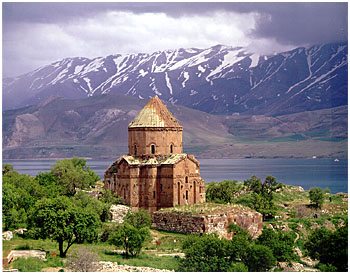
The Akhtamar Church
A government decree published on Aug. 27 returns assets that once belonged to Greek, Armenian, or Jewish trusts and makes provisions for the government to pay compensation for any confiscated property that has since been sold on.
Turkish Prime Minister Recep Tayyip Erdogan announced the decision formally on Aug. 28 when he hosted religious leaders and the heads of about 160 minority trusts, at a fast-breaking dinner for the holy Muslim month of Ramadan.
The properties include former hospital, orphanage or school buildings and cemeteries. Their return is a key European Union demand. A series of court cases has also been filed against primarily Muslim Turkey at the European Court of Human Rights. Last year, the court ordered Turkey to return an orphanage to the Greek Orthodox Patriarchate.
Some properties were seized when they fell into disuse over the years. Others were confiscated after 1974 when Turkey ruled that non-Muslim trusts could not own new property in addition to those that were already registered in their names in 1936. The 1974 decision came around the time of a Turkish invasion of Cyprus that followed a coup attempt by supporters of a union with Greece, when relations with that country were at an all time low.
Erdogan’s Islamic-rooted government, seeking to promote religious freedoms, has pledged to address the problems of the religious minorities. Over the past few years, it has amended laws to allow for the return of some of the properties, but restrictions remained and the issue of properties sold to third parties was left unsolved.
The decree overcomes those restrictions and helps scupper further court rulings.
“There was huge pressure from the European Court of Human Rights, which has already ruled against Turkey,” said Orhan Kemal Cengiz, a human rights activist and lawyer who specializes in minority issues. “It is nevertheless a very important development. With the return of properties and the compensations, the minority communities will be able to strengthen economically and their lives will be made easier.”
The country’s population of 74 million, mostly Muslim, includes an estimated 65,000 Armenian Orthodox Christians, 23,000 Jews, and fewer than 2,500 Greek Orthodox Christians.
Religious minorities have often complained of discrimination in Turkey, which had a history of conflict with Greece and with Armenians who accuse Turkish authorities of trying to exterminate them early in the last century. Turkey says the mass killings at that time were the result of the chaos of war, rather than a systematic campaign of genocide. Few minority members have been able to hold top positions in politics, the military, or the public service.
Turkey is also under intense pressure to reopen a seminary that trained generations of Greek Orthodox patriarchs. The Halki Theological School on Heybeliada Island, near Istanbul, was closed to new students in 1971 under a law that put religious and military training under state control. The school closed its doors in 1985, when the last five students graduated.
Pressure from the U.S.
As the Armenian Weekly has reported in recent months, there were more than 2,000 Armenian churches operating in what is today Turkey before the Armenian Genocide of 1915. Most of the churches were destroyed and their properties confiscated. The aforementioned decree does not include these church properties. It is only limited to properties confiscated over the past 75 years. Moreover, not only about ten percent properties confiscated after 1936 are being returned. (Read Armenian Weekly editorial on this issue here.)
“Erdogan’s decree, clearly prompted by increased Congressional scrutiny of Turkey’s repression of its Christian minority and successive losses at the European Court of Human Rights, would return less than one percent of the churches and church properties confiscated during the Armenian Genocide and the decades that followed it,” said ANCA Chairman Ken Hachikian. “Ninety-six years after the genocide perpetrated against the Armenians, Greeks, and Syriacs, this decree is a smokescreen to evade the much broader consequences of those brutal acts. The ANCA will expand its outreach to Congress and the [Obama] Administration to ensure that the Turkish government comes to terms with its brutal past, respects the religious freedom of surviving Christian communities, and returns the fruits of its crime.”
Last month, with a vote of 43-1, the House Foreign Affairs Committee adopted an amendment to the State Department Authorization bill, spearheaded by Ranking Democrat Howard Berman (D-Calif.) and Rep. David Cicilline (D-R.I.), calling for the return of Christian churches confiscated by the Turkish government and an end to Turkey’s discrimination against its Christian communities. ANCA Executive Director Aram Hamparian welcomed that decision, stating, “The Turkish government has destroyed or confiscated the vast majority of their holy sites and places of worship. The Foreign Affairs Committee today sent a powerful message to Turkey that it must come to terms with this brutal legacy, respect religious freedom of surviving Christian communities, and return the fruits of its crimes.” The passage of the resolution was also hailed by Greek and Syriac American organizations, including the American Hellenic Educational and Public Affairs Association (AHEPA), American Hellenic Institute (AHI), American Hellenic Council (AHC), and the Syriac Universal Alliance, among many others.
The amendment is similar to a resolution (H.Res.306), introduced in June by Representatives Ed Royce (R-Calif.) and Howard Berman (D-Calif.), which has over 35 co-sponsors.
Turkey’s treatment of its Christian minority has also emerged as an issue of contention in the Senate Foreign Relations Committee’s consideration of U.S. ambassador to Turkey nominee Francis Ricciardone. In response to questions submitted by Sen. Robert Menendez (D-N.J.), Ricciardone erroneously asserted that a majority of Christian churches functioning in 1915 continue to operate as churches today. A revised response recently submitted to the key Senate panel continued to misrepresent the number of functioning churches. In response, Armenian American church leaders issued powerfully worded spiritual messages. In an Aug. 15 statement, Archbishop Oshagan Choloyan, Prelate of the Armenian Apostolic Church of Eastern U.S., stressed that the ambassador’s initial assertion was “so blatantly false that it cannot remain unchallenged.” He went on to explain that “the facts are quite clear. From the massacres of Armenians in 1895-96 and the Armenian Genocide in 1915, to the decades following the establishment of the Turkish republic, Christian houses of worship were systematically destroyed or confiscated. My own church’s hierarchal see, the Armenian Catholicosate of Cilicia, was a victim of this process, and today is exiled in Lebanon. The archives of the Catholicosate contain hundreds of original deeds and other documentation of churches and church owned property that was confiscated.”
The Primate of the Armenian Apostolic Church of Eastern U.S., Archbishop Khajag Barsamian, stated that Ricciardone’s response had “deeply offended Armenian Americans,” explaining that “the loss of these many hundreds of churches, their neglect, and outright destruction, and the conversion of many of our sanctuaries into mosques, is a matter of intense pain to Armenians: an ongoing reminder of the loss of life and the destruction that we suffered as a result of the 1915 genocide.”
Hachikian: Erdogan’s decree would return less than one percent of the churches and church properties confiscated during the Armenian Genocide and the decades that followed it.
ANKARA, Turkey—Turkey’s government is returning hundreds of properties confiscated from the country’s Christian and Jewish minorities over the past 75 years in a gesture to religious groups over complaints of discrimination, and in a move likely to thwart possible court rulings against the country, reported the Associated Press (AP).
The Akhtamar Church
A government decree published on Aug. 27 returns assets that once belonged to Greek, Armenian, or Jewish trusts and makes provisions for the government to pay compensation for any confiscated property that has since been sold on.
Turkish Prime Minister Recep Tayyip Erdogan announced the decision formally on Aug. 28 when he hosted religious leaders and the heads of about 160 minority trusts, at a fast-breaking dinner for the holy Muslim month of Ramadan.
The properties include former hospital, orphanage or school buildings and cemeteries. Their return is a key European Union demand. A series of court cases has also been filed against primarily Muslim Turkey at the European Court of Human Rights. Last year, the court ordered Turkey to return an orphanage to the Greek Orthodox Patriarchate.
Some properties were seized when they fell into disuse over the years. Others were confiscated after 1974 when Turkey ruled that non-Muslim trusts could not own new property in addition to those that were already registered in their names in 1936. The 1974 decision came around the time of a Turkish invasion of Cyprus that followed a coup attempt by supporters of a union with Greece, when relations with that country were at an all time low.
Erdogan’s Islamic-rooted government, seeking to promote religious freedoms, has pledged to address the problems of the religious minorities. Over the past few years, it has amended laws to allow for the return of some of the properties, but restrictions remained and the issue of properties sold to third parties was left unsolved.
The decree overcomes those restrictions and helps scupper further court rulings.
“There was huge pressure from the European Court of Human Rights, which has already ruled against Turkey,” said Orhan Kemal Cengiz, a human rights activist and lawyer who specializes in minority issues. “It is nevertheless a very important development. With the return of properties and the compensations, the minority communities will be able to strengthen economically and their lives will be made easier.”
The country’s population of 74 million, mostly Muslim, includes an estimated 65,000 Armenian Orthodox Christians, 23,000 Jews, and fewer than 2,500 Greek Orthodox Christians.
Religious minorities have often complained of discrimination in Turkey, which had a history of conflict with Greece and with Armenians who accuse Turkish authorities of trying to exterminate them early in the last century. Turkey says the mass killings at that time were the result of the chaos of war, rather than a systematic campaign of genocide. Few minority members have been able to hold top positions in politics, the military, or the public service.
Turkey is also under intense pressure to reopen a seminary that trained generations of Greek Orthodox patriarchs. The Halki Theological School on Heybeliada Island, near Istanbul, was closed to new students in 1971 under a law that put religious and military training under state control. The school closed its doors in 1985, when the last five students graduated.
Pressure from the U.S.
As the Armenian Weekly has reported in recent months, there were more than 2,000 Armenian churches operating in what is today Turkey before the Armenian Genocide of 1915. Most of the churches were destroyed and their properties confiscated. The aforementioned decree does not include these church properties. It is only limited to properties confiscated over the past 75 years. Moreover, not only about ten percent properties confiscated after 1936 are being returned. (Read Armenian Weekly editorial on this issue here.)
“Erdogan’s decree, clearly prompted by increased Congressional scrutiny of Turkey’s repression of its Christian minority and successive losses at the European Court of Human Rights, would return less than one percent of the churches and church properties confiscated during the Armenian Genocide and the decades that followed it,” said ANCA Chairman Ken Hachikian. “Ninety-six years after the genocide perpetrated against the Armenians, Greeks, and Syriacs, this decree is a smokescreen to evade the much broader consequences of those brutal acts. The ANCA will expand its outreach to Congress and the [Obama] Administration to ensure that the Turkish government comes to terms with its brutal past, respects the religious freedom of surviving Christian communities, and returns the fruits of its crime.”
Last month, with a vote of 43-1, the House Foreign Affairs Committee adopted an amendment to the State Department Authorization bill, spearheaded by Ranking Democrat Howard Berman (D-Calif.) and Rep. David Cicilline (D-R.I.), calling for the return of Christian churches confiscated by the Turkish government and an end to Turkey’s discrimination against its Christian communities. ANCA Executive Director Aram Hamparian welcomed that decision, stating, “The Turkish government has destroyed or confiscated the vast majority of their holy sites and places of worship. The Foreign Affairs Committee today sent a powerful message to Turkey that it must come to terms with this brutal legacy, respect religious freedom of surviving Christian communities, and return the fruits of its crimes.” The passage of the resolution was also hailed by Greek and Syriac American organizations, including the American Hellenic Educational and Public Affairs Association (AHEPA), American Hellenic Institute (AHI), American Hellenic Council (AHC), and the Syriac Universal Alliance, among many others.
The amendment is similar to a resolution (H.Res.306), introduced in June by Representatives Ed Royce (R-Calif.) and Howard Berman (D-Calif.), which has over 35 co-sponsors.
Turkey’s treatment of its Christian minority has also emerged as an issue of contention in the Senate Foreign Relations Committee’s consideration of U.S. ambassador to Turkey nominee Francis Ricciardone. In response to questions submitted by Sen. Robert Menendez (D-N.J.), Ricciardone erroneously asserted that a majority of Christian churches functioning in 1915 continue to operate as churches today. A revised response recently submitted to the key Senate panel continued to misrepresent the number of functioning churches. In response, Armenian American church leaders issued powerfully worded spiritual messages. In an Aug. 15 statement, Archbishop Oshagan Choloyan, Prelate of the Armenian Apostolic Church of Eastern U.S., stressed that the ambassador’s initial assertion was “so blatantly false that it cannot remain unchallenged.” He went on to explain that “the facts are quite clear. From the massacres of Armenians in 1895-96 and the Armenian Genocide in 1915, to the decades following the establishment of the Turkish republic, Christian houses of worship were systematically destroyed or confiscated. My own church’s hierarchal see, the Armenian Catholicosate of Cilicia, was a victim of this process, and today is exiled in Lebanon. The archives of the Catholicosate contain hundreds of original deeds and other documentation of churches and church owned property that was confiscated.”
The Primate of the Armenian Apostolic Church of Eastern U.S., Archbishop Khajag Barsamian, stated that Ricciardone’s response had “deeply offended Armenian Americans,” explaining that “the loss of these many hundreds of churches, their neglect, and outright destruction, and the conversion of many of our sanctuaries into mosques, is a matter of intense pain to Armenians: an ongoing reminder of the loss of life and the destruction that we suffered as a result of the 1915 genocide.”
Subscribe to:
Posts (Atom)