Sunday, June 24, 2012

Sassounian: Israel Has One Good Reason for Recognizing the Genocide

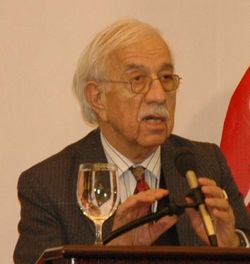
Israel’s Parliament, the Knesset, held “an historic session” on June 12, during which “seven different political parties overwhelmingly endorsed recognition of the Armenian Genocide,” according to Dr. Israel Charny, the executive director of the Institute on the Holocaust and Genocide in Jerusalem. He cautiously predicted that the Knesset would complete its legislative procedures leading to recognition of the Armenian Genocide.
Israel Charny Sassounian: Israel Has One Good Reason for Recognizing the Genocide
Israel Charny
While acknowledging the genocide would be salutary, Israel should have done so long ago. In fact, the Jewish state should have been the first country to recognize the genocide, in view of the awesome legacy of the Holocaust, the Shoah. Who should empathize more with the victims of genocide than those who have suffered a similar fate themselves? As Knesset member Nino Abesadze pointed out during the hearing, “It is precisely because we have been a victim people that we do not dare fail to identify with another victim people.” Another influential Knesset member, Zeev Elkin, the chair of the Likud Caucus, stated, “We are one of the last nations in the world that has still not recognized the Armenian Genocide. It is our moral responsibility that we have still not met.”
During the June 12 hearing, Knesset Chairman Reuven Rivlin spoke “firmly and inspiringly” with “profound feeling of both a Jewish and an Israeli imperative to extend a long overdue recognition,” Charny reported. Rivlin announced that there was no need for a new vote to recognize the Armenian Genocide since the Knesset had already voted unanimously for its recognition last year. Charny explained that unlike the U.S. Congress, Knesset resolutions first go to the Plenary Session before being considered by one of its committees. The next step for the genocide resolution is the Education Committee, after which it will be sent back to the Knesset for a final vote. Only then can it be said that the Knesset has officially recognized the Armenian Genocide.
One of the unexpected developments at the June 12 hearing was a statement by Minister of Environmental Affairs Gilad Erdan, who announced that he was speaking officially on behalf of the government. He stated unambiguously that Israel had decided to recognize the Armenian Genocide. Furthermore, Erdan claimed that “the State of Israel has never denied it; on the contrary, we deplore the [Armenian] genocide.” This was a surprising statement, since it is well known that, under Turkish pressure, Israel has persistently opposed recognition of the genocide. Nevertheless, in defiance of Israeli state denialism, on April 24, 2000, Minister of Justice Yossi Beilin and Minister of Education Yossi Sarid acknowledged the Armenian Genocide, prompting the government to repudiate their statements. Beilin had also recognized the genocide in 1994, while serving as deputy foreign minister.
The fact that serious discussions on the Armenian Genocide are now taking place at a time of deteriorating relations between Turkey and Israel raises troubling questions about the motives of the Israeli government. It would be morally repugnant to see the mass murder of a nation being exploited for crass political calculations. Yet, one has to realize that international relations are rarely based on moral principles. Were it not for economic and political considerations, the whole world would have long ago recognized the Armenian Genocide.
While critics may be displeased that Israel is considering recognition of the genocide at a time of discord with Turkey, the greater wrong, in my view, was not doing the right thing for all these years. Even now, despite efforts to rectify the past and uphold the truth, some Israeli officials are concerned that raising the Armenian Genocide issue would further exacerbate relations with Turkey. Knesset member Arieh Eldad dismissed such objections by pointing out the illogical stance of the naysayers: “A few years ago, people said we couldn’t talk about it because of our good relations with Turkey. Now people say we can’t talk about it because of our bad relations with Turkey.”
Eldad added that when people are reluctant to address moral and ethical issues there is always a claim that the timing of such a discussion is wrong.
There is, however, one red line that no Armenian should cross: Israeli officials have sought to obtain political concessions from Armenia and Armenians in return for genocide recognition. Such demands should be rejected outright since Armenians do not owe anything to Israel for recognizing the genocide—a universally acknowledged historical fact. Israel should recognize the Armenian Genocide simply because it is the right thing to do, reflecting the sentiments of all righteous Jews worldwide.

Alchemy near the Chasm of Death: Visiting a Mass Grave of the Armenian Genocide

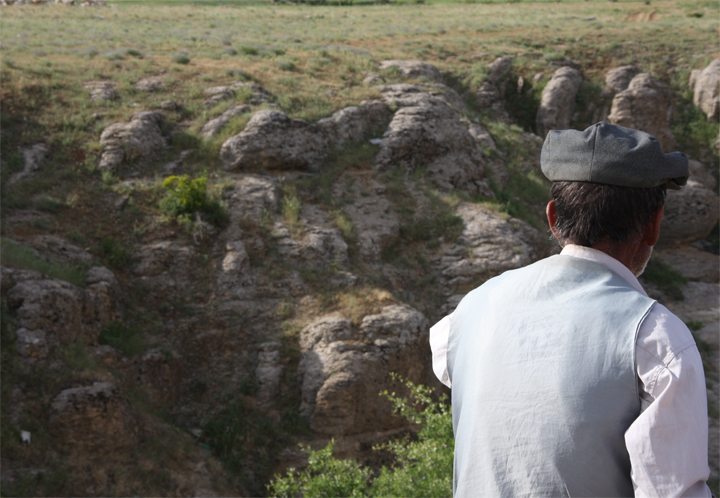
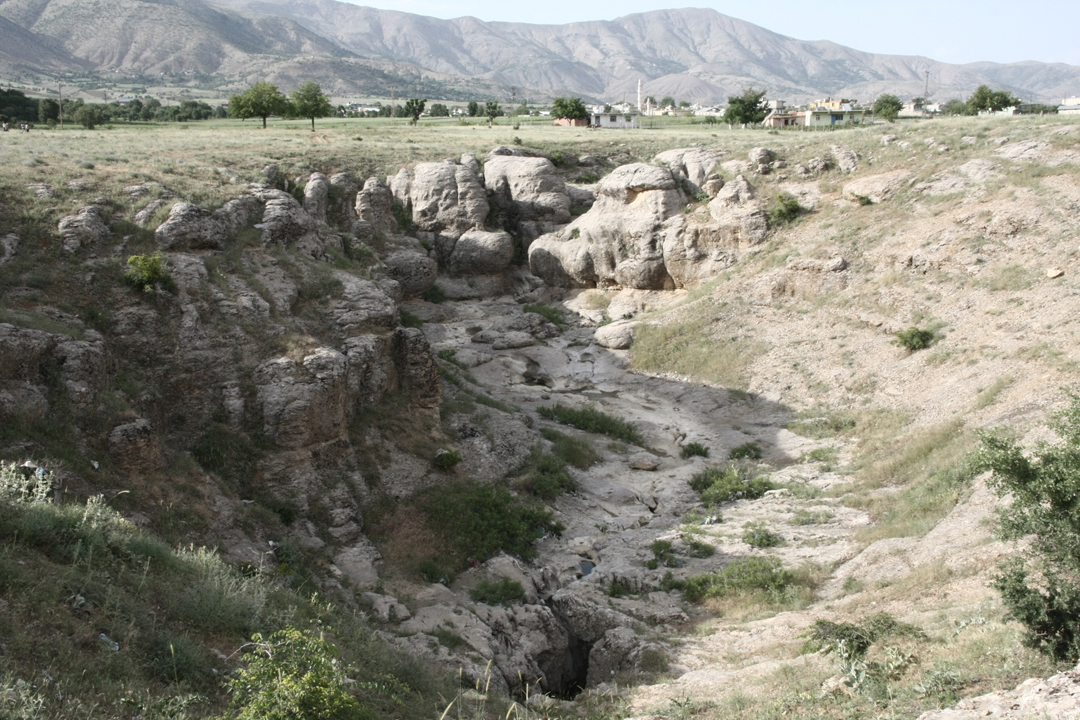
“They brought the Armenians here. Thousands of them. They stripped them of their belongings and threw them into the chasm,” explains a Kurdish villager who had spotted us while driving by.
IMG 5307 web 300x200 Alchemy near the Chasm of Death: Visiting a Mass Grave of the Armenian Genocide
“They brought the Armenians here. Thousands of them. They stripped them of their belongings and threw them into the chasm.” Chasm appears as dark opening at the center. (Photo by Nanore Barsoumian)
We are standing at the mouth of a deep, eerie cleft—bottomless, according to the locals—called Dudan by Armenians and Kurds for centuries (also known as Yudan Dere).
“How do you know the Armenians were killed here?” I ask.
It’s not that I’m skeptical. We know from various survivor and perpetrator accounts that the 10,000 Armenians of Chunkush (Çüngüş, a district of the province of Diyarbakir) were led here by gendarmes and armed chetes in 1915, brutally murdered, and hurled into the chasm.
“There was a woman in our village. She lived to be 104,” he replies. “She saw it all.”
He pauses. “Everybody knows.”
We had already realized that everybody knew. In Chunkush, one of the locals, a teenager, had given us directions to Dudan where, he said, the entire population of the almost exclusively Armenian village had perished.
As we were driving in that direction, we asked a man where Dudan is. He jumped into our van and led us there. When we got to Dudan, our driver, a Kurd from Diyarbakir, asked him, “What happened here?”
“Nothing,” the man murmured.
“They say something happened to the Armenians here,” the driver insisted.
IMG 4502 web 300x225 Alchemy near the Chasm of Death: Visiting a Mass Grave of the Armenian Genocide
Dudan is “a famous cavern [that] drops vertically downward several hundred feet. The entire population of the town [of Chunkush] were said to have been driven to their death in this cavern.” (Photo by Khatchig Mouradian)
At that point, the man became visibly angry. “I do not know,” he said, and stormed out of the van.
***
The murder of the Armenians of Chunkush constitutes one of the largest, most brutal in situ massacres of the Armenian Genocide. The Armenians from Chunkush were marched to Dudan—only two hours away by foot—and massacred on the spot. Historian Raymond Kevorkian writes:
“The males were dealt with first, in accordance with a classic procedure: tied together in small groups of fewer than 10, they were handed over to butchers who bayoneted them or killed them with axes and then threw the bodies into the chasm. The method used on the women was quite similar, except that they were first systematically stripped and searched and then had their throats cut, after which their corpses were also thrown into the chasm. Some of them preferred to leap into the abyss themselves, dragging their children with them; thus they cheated their murderers of part of their booty.”1
In his memoir, Rev. Henry H. Riggs, an American missionary who served in Kharpert (Harput), describes Dudan as “a famous cavern [that] drops vertically downward several hundred feet.” He adds, “the entire population of the town [of Chunkush] were said to have been driven to their death in this cavern.”2
Almost no one survived. The massacre was so comprehensive that “not a single Armenian from Chunkush appeared on the bloody deportation routes…in Aleppo, Der Zor, Damascus, or any part of Arabia,” writes Karnig Kevorkian in his 600-page book on Chunkush.3
Untitled 1 300x207 Alchemy near the Chasm of Death: Visiting a Mass Grave of the Armenian Genocide
At that point, the man became visibly angry. “I do not know,” he said, and stormed out of the van. (Photo by Nanore Barsoumian)
***
“This place smells of death,” says George, one of my co-travelers. “I can’t stay here any longer.” He walks towards the van, leaving me and my colleague, Nanore, behind.
I myself have never felt any closer to what can best be described as a doorway to hell. We take pictures, record a video of the site, and start surveying the area—just in case.
“The only way to get to the bottom of this is to get to the bottom of this,” I tell Nanore, and silently congratulate myself for figuring out a lame way to momentarily lighten the mood.
As we walk back, the Kurdish villager approaches me and, hesitantly, mutters: “Can I ask you something?”
“Sure!” I say, as I continue walking.
“My grandfather found a lot of items. They belonged to Armenians…”
Now he has my attention. “Go on!”
“Well, people in my village say these items were all made of gold, but that when they were found, they turned into copper.”
I am confused. “Really?”
“Yes, yes. That’s what they say. They also say that if someone can read the Armenian inscriptions on them, they will turn back to gold.”
I am dumbfounded. But I ask him to continue.
“So I was wondering,” he says, “whether you’d be willing to read them for me.”
Of all the possible responses pushing each other in my mind, trying to come out in words, I opt for the most diplomatic one. “I doubt that I have such powers, but bring them!”
IMG 5315 web 300x200 Alchemy near the Chasm of Death: Visiting a Mass Grave of the Armenian Genocide
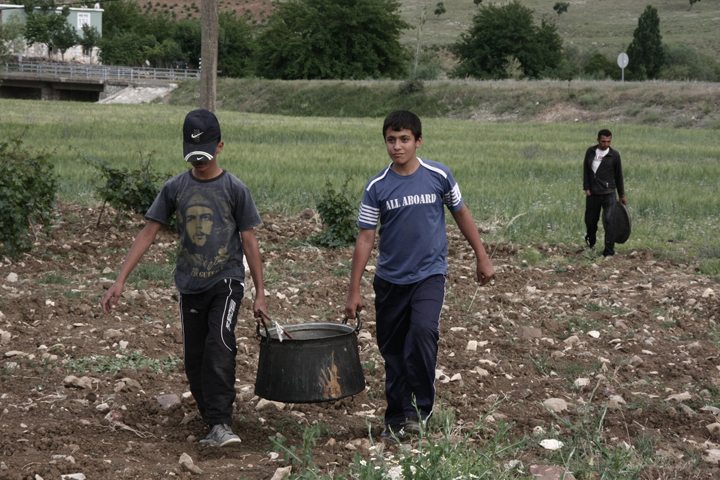
After a few minutes, we see a man, a woman, and several kids with loads of tools and copper and silver trays and utensils walking in our direction… (Photo by Nanore Barsoumian)
The Kurdish villager takes out his cell phone and makes a call. He then asks us to get back into the van and follow him. I tell my co-travelers about our conversation.
“I really want to see what this guy has,” I say. “We’ll be careful.”
We hop into the van and follow his car. A few minutes later, he pulls up near a field. We get off, still suspicious, and wait for him to make another phone call.
After a few minutes, we see a man, a woman, and several kids with loads of utensils and copper and silver trays walking in our direction…

Wednesday, June 13, 2012

TURKEY MUST ADMITT THEY COMMITTED GENOCIDE AGAINST THE ARMENIANS


Rivlin: Remembering Armenian genocide not attack on Turkey

By GIL HOFFMAN, JPOST.COM STAFF
06/12/2012 18:35

Knesset discusses murder of more than a million Armenians at the hands of the Turks over a hundred years ago; Meretz leader Gal-On accuses gov't of using tragedy to attack Turkey, calls for 'Marmara' apology.

Knesset Speaker Reuven Rivlin [file] Photo: Courtesy: Knesset Channel
Knesset Speaker Reuven Rivlin said Tuesday that Israel has an obligation to remember the murder of more than a million Armenians at the hands of the Turks more than a hundred years ago, but warned that the issue should not be turned into an attack on the Turkish government of today. The Knesset speaker made the comments at a Knesset discussion of the Armenian genocide.
Speaking a day before State Comptroller Micha Lindenstrauss was scheduled to release a report on Israel’s interception of Turkish ships bound for the Gaza Strip which led to a diplomatic crisis between the countries, Rivlin insisted that the discussion of the Armenian genocide was not politically motivated.
"We have an ethical obligation to remember that a million Armenians were killed. It is forbidden to make the issue political. Our charges are not pointed at the Turkish regime today. We must make our voices heard when other nations are targeted for destruction," Rivlin stated.
"Those who drafted the Final Solution for the Jews figured the world would be silent as they were when the Armenians were murdered. The Knesset cannot ignore this episode that is factual. We cannot forgive nations who ignore our disaster and we cannot ignore the disasters of others," the Knesset speaker added.
Meretz chairwoman Zehava Gal-On, who initiated the Knesset discussion, accused the government of Prime Minister Binyamin Netanyahu of using the Armenian tragedy to attack Turkey.
Gal-On stated the government should "finally recognize" the episode as a genocide and restore relations with Turkey by agreeing to apologize for the deaths of nine Turkish pro-Palestinian activists at the hands of IDF commandos during the May 2010 raid of the Mavi Marmara vessel, which was part of a flotilla attempting to break the blockade of the Gaza Strip.
"The Armenian genocide is not an opportunity for public diplomacy," Gal-On told the Knesset plenum, adding that "Israel is strong enough to apologize for the killing of Turkish citizens without it harming Israel's honor or its security. We don't need to choose between recognizing genocide and relations with Turkey. We can have both."
The Meretz leader stated that "the Jewish people who have experienced the worst Holocaust have an obligation to show sensitivity to the disasters of others."
National Union MK Arieh Eldad called on Turkey to recognize its responsibility for its "historical crime," which he said included children being "put into cellars and gassed." Eldad quoted Adolf Hitler as having said "who remembers what happened to the Armenians," when he was asked what the world would say about his Final Solution against the Jews.
Kadima MK Robert Tibayev was the only lawmaker to speak against Israel recognizing the Armenian genocide, saying that Israel should not interfere in the issue, but rather let historians, or an international body decide if there was a genocide.
Balad MK Saed Nafaa, a Christian, took the opportunity to accuse current Turkish Prime Minister Recep Tayyip Erdogan of being hypocritical by complaining about the atrocities being committed by Syrian President Bashar Assad against his people while he himself has killed dozens of Kurds.
http://www.jpost.com/DiplomacyAndPolitics/Article.aspx?id=273608
###

MKs: 'We must recognize Armenian tragedy'

Knesset debates whether to recognize mass killing of Armenians by Ottoman Turks during World War I as genocide
Moran Azulay
Published:  06.12.12, 18:31 / Israel News

The Knesset held a special session Tuesday on the mass killing of Armenians by Ottoman Turks during World War I. "We must not politicize this matter," said Knesset Speaker Rivlin, adding that in spite of the sensitivity of the issue, there is no intention to blame Turkey or the current Turkish government.
MK Zahava Gal-On, chairwoman of the Meretz faction, who initiated the discussion, said that in recent years "the Armenian genocide has been swept under the rug" due to foreign relations concerns.


"Remembering and recognizing this genocide is our moral obligation. However, the timing of the discussion is problematic, when it is used for political bashing."
Recognition of the Armenian genocide by Israel would enrage Turkey and further strain the already tense ties between the two countries.
For years, Israel has refrained from commenting on the matter for fear of angering Turkey, which until recently was its closest ally in the Muslim world. But as ties have frayed under the Islamic-oriented rule of Turkish Prime Minister Recep Tayyip Erdogan, Israel appears to be changing course.

Armenian Death March

The Armenian genocide remembrance day is marked every year on April 24. The mass murders by the Ottoman Turks were carefully planned and executed during and after World War I. Hundreds of thousands were sent to labor camps.
Finally, the Ottoman Turks chased the remaining Armenians from their villages to Syria in a death march. Women, children and elderly people marched for weeks without food or water, hunted down by soldiers and criminals. During the marches thousands were perished, murdered, raped and even burnt alive. In villages near the Black Sea, the Turks put the Armenians on boats and drowned them.
Reports on the atrocities reached Europe and the US as early as 1915, which immediately condemned the acts and blamed the Ottoman regime for "crimes against humanity."

The Ottoman massacre of the Armenians was the first genocide of the 20th century, and remains the center of political debate. The Turks continue to deny the genocide, claiming that the Armenians were only transferred, and that deaths only occurred during the fighting between the Armenians and the Kurds.
http://www.ynetnews.com/articles/0,7340,L-4241591,00.html
###

Reuven Rivlin: “As a country struggling in the international arena with Holocaust denial, we cannot deny the tragedy of another people”

As it was informed yesterday Israeli Knesset is going to have a debate on the recognition of Armenian Genocide.
As timesofisrael.com web-site writes as Israeli relations with Turkey continue to deteriorate, on Tuesday the Knesset marked the Armenian genocide with a special session to debate recognition of the genocide.
“The Israeli parliament has in the past refrained from public debates on the subject for fear of alienating the Turkish government, one of the Jewish state’s few allies in a hostile Middle East.
However, the timing of the discussion about the Armenian genocide, perpetrated by the Ottomans about a century ago, coincides with the release of the state comptroller’s report about the 2010 raid on the Mavi Marmara, a Turkish ship attempting to break the blockade of the Gaza Strip, in which the IDF killed nine Turkish nationals, as well as the Turkish decision to indict senior IDF officials in absentia over the incident.
Knesset Speaker Reuven Rivlin said that the discussion of the genocide, promoted by MK Zahava Gal-On (Meretz), was not connected to the current strained relations between Israel and Turkey”, the source writes.
Rivlin also told Globes: “As Jews, and as human beings, we cannot ignore this issue and we must not turn away from our commitment to morality… As [a country] struggling in the international arena with Holocaust denial, we cannot deny the tragedy of another people.”
In December 2011, the Knesset Education Committee discussed the Armenian genocide for the first time. Gal-On, who also initiated that discussion, said then: “For years, Israel always took into account its relations with Turkey. That is the central issue in terms of recognition of the murder of the Armenian people, which has yet to take place in Israel’s Knesset,” Haaretz.com wrote.
Photo from timesofisrael.com
http://times.am/?l=0&p=8401
###

The Associated Press

With eye on Turkey, Israel debates Armenia deaths

June 12, 2012
JERUSALEM—The Israeli parliament has begun a debate over whether to recognize the mass killing of Armenians by Ottoman Turks during World War I as genocide.
Such a move would enrage Turkey and further strain the already tense ties between the two countries.
For years, Israel has refrained from commenting on the matter for fear of angering Turkey, which until recently was its closest ally in the Muslim world. But as ties have frayed under the Islamic-oriented rule of Turkish Prime Minister Recep Tayyip Erdogan, Israel appears to be changing course.
Parliament speaker Reuven Rivlin denied that Tuesday's debate was related to deteriorating ties with Turkey. In a radio interview, he said there is no intent to provoke, only to remember.
It was unclear if there would be a vote Tuesday.
http://www.boston.com/news/world/middleeast/articles/2012/06/12/with_eye_on_turkey_israel_debates_armenia_deaths/
###

Israel's Knesset Discusses Armenian Genocide in Move Set to Anger Turkey

Israeli parliament opens debate over recognition of mass killing by Ottoman Turks during First World War.

By Gianluca Mezzofiore
June 12, 2012 5:08 PM GMT
The Israeli parliament, the Knesset, has begun a controversial debate about recognising the massacre of more than one and a half million Armenians by Ottoman Turks during the First World World War as genocide.
(Photo: Wikipedia)
Israeli MPs discuss killings of one and a half million Armenians by Turkey during First World War
Following Turkey's decision to try senior Israeli officials in court for their part in a Israel Defence Forces raid on the Gaza-bound ship Mavi Marmara in 2009, Israel's move is likely to enrage Turkey and cause further tension in diplomatic relations between the two countries.
For years, the Knesset has avoided the subject in order not to upset Turkey.
Since diplomatic relations between Israel and Turkey have deteriorated under the moderate-Islamist rule of Prime Minister Recep Tayyip Erdogan, determination has grown to discuss the mass killings of Armenians by Turkey during the Ottoman Empire.
Knesset speaker Reuven Rivlin denied that the debate was set to provoke Turkey.

Fighting Holocaust denial
"As Jews, and as human beings, we cannot ignore this issue and we must not turn away from our commitment to morality," Rivlin said. "As [a country] struggling in the international arena with Holocaust denial, we cannot deny the tragedy of another people."
In December 2011, the Knesset Education Committee discussed the genocide for the first time.
"For years, Israel always took into account its relations with Turkey. That is the central issue in terms of recognition of the murder of the Armenian people, which has yet to take place in Israel's Knesset," said Meretz Party chair Zahava Gal-On, who is initiating the debate
Richard Giragosian, director of the Regional Studies Centre, said Israeli authorities want to use recognition of the genocide as an issue with which to "punish" Turkey. He noted that the move could negatively affect its international recognition campaign and possibly hamper efforts to get Turkey to acknowledge the genocide.
To report problems or to leave feedback about this article, e-mail: g.mezzofiore@ibtimes.co.uk
To contact the editor, e-mail: editor@ibtimes.co.uk
http://www.ibtimes.co.uk/articles/351327/20120612/israel-knesset-armenian-genocide.htm#ixzz1xb2ameKm

###

Israeli MP: no new Genocide-related issues raised at Knesset discussion

Israeli MP: no new Genocide-related issues raised at Knesset discussion
June 12, 2012 - 19:09 AMT
PanARMENIAN.Net - A public discussion about the Genocide of the Armenian people is ongoing at Israeli Knesset.
As Israeli MP and public figure Ze'ev Elkin told a PanARMENIAN.Net reporter, “nothing new has been said at the discussion.” As the politician said, the issue has already been submitted to Knesset’s Education and Culture Committee for consideration. “The discussion was purely ceremonial. No new Genocide-related issues were raised, the sitting being a plenary one,” he noted.
The public discussion was initiated at the request of MK Zahava Gal-On (Meretz) and supported by Knesset chairperson Reuven Rivlin.
http://www.panarmenian.net/eng/news/111504/

Monday, June 4, 2012

ARMENIAN FESTIVAL-JUNE 2 AND 3--WATERVLIET NY--ST PETER ARMENIAN CHURCH


2012 ARMENIAN FESTIVAL

Join us for always-delicious Armenian food and pastries ~ Armenian music and dancing ~ Exciting rides and activities for children ~ MEGA BUCKS RAFFLE along with daily 50/50 raffles ~ Saturday Night Tavloo (Backgammon) Tournament ~ Sunday afternoon dance lesson ~ Cooking demonstrations both days ~ Giftshop & Bookstore and vendors ~ and so much more . . .
SATURDAY, JUNE 2 ~ 12:00 noon to 7:00pm
SUNDAY, JUNE 3 ~ 12:00 noon to 5:00pm
Sponsorship opportunities also available.  Contact the church office for more information.
FESTIVAL MENU:
DINNERS
Kebab Medley Dinner $16
Includes one lamb shish kebab, one chicken shish kebab, one losh kebab, rice pilaf, tossed salad and pita bread. Garlic & lemon sauce available ~ great on the chicken!
Lamb Kebab Dinner $14
Includes one lamb shish kebab, one losh kebab, rice pilaf, tossed salad and pita bread.
Chicken Kebab Dinner $12
Includes two chicken kebabs, rice pilaf, tossed salad and pita bread. Garlic & lemon sauce available.
SANDWICHES & COMBO MEALS
Losh Kebab Sandwich $8 - One Losh Kebab on pita bread served with rice pilaf.
Lamb Kebab Sandwich $8 - Lamb Kebab meat on pita bread served w/rice pilaf.
Chicken Kebab Sandwich $7 - Chicken Kebab meat on pita bread served w/rice pilaf.
Lahmejune Meal $8 - Two lahmejune served w/tossed salad.
Kid’s Meal $5 - One hot dog served with rice pilaf.
ALA CARTE
Lahmejune $3 each (warmed) or $18 dozen (frozen)  - A traditional meat “pie” made on a flat bread with ground lamb, finely chopped vegetables and spices.
Rice Pilaf $6 serves 4+ - Traditional pilaf made with browned fine egg noodles, white rice, butter & chicken stock.
Fasoulia $3 serving - Stewed green beans with tomato, onion & garlic.
Tossed Salad $3 serving - Fresh garden salad with Italian dressing.
Cheese Beoreg $3 serving - Flaky, baked, cheese-filled phyllo dough.
Yalanchi $5/6pcs - Grape leaves stuffed with seasoned  onions & rice.
Hummus $6 serving - Dip made from pureed chic peas & sesame paste served with pita bread.
Babaganoush $6 serving - Dip made from pureed eggplant & sesame paste served with pita bread.
DESSERTS
A variety of homemade Armenian pastries will all be sold ala carte in the Bakery Area.  Some of the scrumptious desserts you will find include, but not limited to, the following:
Boorma - A delicious, light dessert made of phyllo dough filled with a syrup and nut mixture, and rolled into a finger-sized cylinder.
Kadayif - Made of shredded (‘bird’s nest”) dough filled with nuts and syrup.
Paklava - A flaky, layered dessert filled with nuts and syrup.
Cheoreg - A sweet roll made into individual spirals.
Paklava Sundae - Paklava pastry pieces over vanilla ice cream topped with optional chocolate or caramel sauce and whipped cream.
Also Available - Brownies, cookies and other assorted desserts.
BEVERAGES
Coffee will be served at the Bakery Area.  Beer, wine, bo-ttled water and soft drinks will be served at the Beverage Wagon.  Specialty Armenian beer and Armenian coffee will also be available.
RAFFLES & SPONSORSHIP:
Mega Bucks Raffle:  $25 per ticket with only 300 tickets available.  Three Cash Prizes:  $1,000   $500   $250.  Winners announced at Festival at 4:00 p.m. on Sunday, June 3.
Daily 50/50 Raffles: $5 per chance.  A winner will be drawn at the end of each Festival day.
Ticket holders need not be present to win.   Tickets may be purchased at the Festival or in advance by contacting the church office.  NYS ID #GC  01-103-099-09504
Festival Sponsorship Program: Sponsorship in the 2012 Festival will provide a means of publicity for your business or company.  As a means of support, individuals may also become Festival Sponsors.  Click here for a Sponsorship Form with full details.  Contact the church office by Tuesday, May 29, to be included in the Sponsorship program booklet.
SCHEDULE OF ACTIVITIES:
Saturday, June 2
12:00pm Parev! Festival Begins!
  2:00pm Cooking Demo: Pilaf
  3:00pm Cooking Demo: Pakalava
  4:00pm Cooking Demo: Eetch
  2:30pm Tavloo (Backgammon) Tournament begins: Registration Fee $15
  6:00pm 50/50 Raffle Drawing
  7:00pm Day 1 comes to a close!  Join us again on Sunday.
Sunday, June 3
12:00pm Day 2 Begins!
  1:30pm Tour of Church Sanctuary
  2:30pm Armenian Line Dance instruction
  3:30pm Cooking Demo: Simit
  4:00pm 50/50 Raffle Drawing & Mega Bucks Raffle Drawing
  5:00pm Festival ends!  Hope to see you next year!
OTHER ACTIVITIES: 10-n-1 Bounce House for the children; Bead-making activity, Dunk Tank, and more . . .
BOOKSTORE & GIFTSHOP
A wide variety of gift items will be available for purchase through our St. Peter Church Bookstore & Giftshop as well as from the many vendors participating in the 2012 Armenian Festival.   Among the new items available this year is a variety of Armenian T-shirts for adults, children and infants.  Click here to see a display of styles.

Sunday, May 27, 2012

ARMENIAN HERITAGE PARK IN BOSTON MASS

BOSTON, Mass.—A persistent and nagging rain failed to dampen the spirits of nearly 1,000 attendees who turned out May 22 at Rose Kennedy Greenway for the much-anticipated dedication of Armenian Heritage Park.
20100522 ArmenianHP Dedication 002 300x199 ‘Tears of Joy’ Mark Genocide Memorial Dedication
A scene from the dedication (photo by Michael Casey)
The event marked a decade-long $6 million project that captured the hearts and minds of Armenians from coast-to-coast.
For those with a grim outlook, they felt the storm was just another burden shouldered by Armenians throughout its long and turbulent history.
Others felt the raindrops represented “holy water” and were tears of joy shed by the 1.5 million martyrs over such an imposing memorial park and monument.
Even Middlesex County Sheriff Peter Koutoujian, whose inspiration helped guide the project, shed a tear in his closing remarks after being overcome with emotion.
“I think people worried about this being a memorial and that was never our intent,” said Koutoujian, an honorary co-chairman. “We had to drive the issue home and explain that this is something we are all here to embrace. It’s not just an Armenian heritage park. It’s about all our experiences.”
People sat on rain-soaked chairs toting umbrellas while others stood unprotected from the rain. A canopied stage shielded speakers and other VIPs. A barrage of cameras also withstood the elements.
“This park will stand in tribute to these Armenian immigrants and many other immigrant communities who escaped tragedy and misfortune to find safety on our shores,” said James Kalustian, the foundation’s president. “This park commemorates those who lost their lives in the genocide against the Armenian people and all other genocides that followed.”
Visitors may relax on benches in the shade of trees by historic Faneuil Hall, walk the Labyrinth (a circular winding path paved in granite and set in lawn), take delight as children splash in a single jet of water at its center, or marvel at the 12-sided abstract geometric sculpture, a split dodecahedron resting on a 16-foot diameter reflecting pool.
The Labyrinth celebrates the journey of life, symbol of an eternity etched within its granite center. Annually, the sculpture will reconfigure to commemorate lives lost during the 1915-23 genocide and all other massacres that have marked the immigrant experience.
“The quest for human dignity comes through when you talk to the proponents of this project,” said Governor Deval Patrick. “Their yearning for recognition and acknowledgement, along with the fact it was a gift to the Commonwealth, makes it a very moving opportunity.”
Boston Mayor Thomas Menino called the Armenians “a resilient population who has made tremendous strides since the genocidal years.”
“They’ve contributed immensely to the wellbeing and enhancement of Greater Boston,” he pointed out. “We’ve offered hope and refuge to immigrants seeking to create a new life in America. This memorial park is a tribute to their proud heritage.”
U.S. Congressman Ed Markey, a proponent for genocide recognition as one of state’s most venerable legislators, urged his colleagues to pass recognition.
“As we approach the centennial in 2015, it’s time for our country to stand among other nations of the world in bringing credence to the Armenian Genocide,” he said. “Human rights are something we must embrace in our daily lives.”
A scheduled appearance by Armenia President Serge Sarkiain was cancelled during the final hour. His place was taken by Foreign Minister Eduard Nalbandian, Tatoul Markarian, Armenia’s ambassador to the United States, and Hranush Hakobyan, minister of the diaspora, each of whom delivered stirring messages.
A dinner the night before drew 450 patrons, thanks to the generosity of such benefactors as Carolyn Mugar, James Kalustian, Noubar and Anna Afeyan, and the Nishan Atinizian family.
Registrar of Motor Vehicles Rachel Kaprielian, honorary co-chairman, served as mistress of ceremonies. Afeyan spoke of the resurgence of economic conditions in Armenia. Prayers were offered by Archbishop Khajag Barsamian and Archbishop Oshagan Choloyan.
Entertainment was provided by Knarik Nerkararyan, Sevag Khatchadourian, and Levon Hovsepian.
Three awards were presented by the Armenian Embassy for dedicated service in the diaspora to James Kalustian, for his work as foundation president and other efforts; Dr. Herand Markarian, for his many years as a devoted playwright; and Noubar Berberian, whose work in Armenian media remains noteworthy. Markarian’s play “Silence” just wrapped up a successful tour off-Broadway.
Billed as a gift to the City of Boston and Commonwealth of Massachusetts, representatives from 37 churches and organizations all contributed to the fruition of this project.

Sunday, April 29, 2012

Ungor: Turkey Has Acknowledged the Armenian Genocide

The Armenian Weekly Magazine
April 2012 
“Turkey denies the Armenian Genocide” goes a jingle. Yes, the Turkish state’s official policy towards the Armenian Genocide was and is indeed characterized by the “three M’s”: misrepresentation, mystification, and manipulation. But when one gauges what place the genocide occupies in the social memory of Turkish society, even after nearly a century, a different picture emerges. Even though most direct eyewitnesses to the crime have passed away, oral history interviews yield important insights. Elderly Turks and Kurds in eastern Turkey often hold vivid memories from family members or fellow villagers who witnessed or participated in the genocide. This essay is based on countless interviews conducted with the (grand-)children of eye witnesses to the Armenian Genocide. The research results suggest there is a clash between official state memory and popular social memory: The Turkish government is denying a genocide that its own population remembers.
IMG 3414 300x225 Ungor: Turkey Has Acknowledged the Armenian Genocide
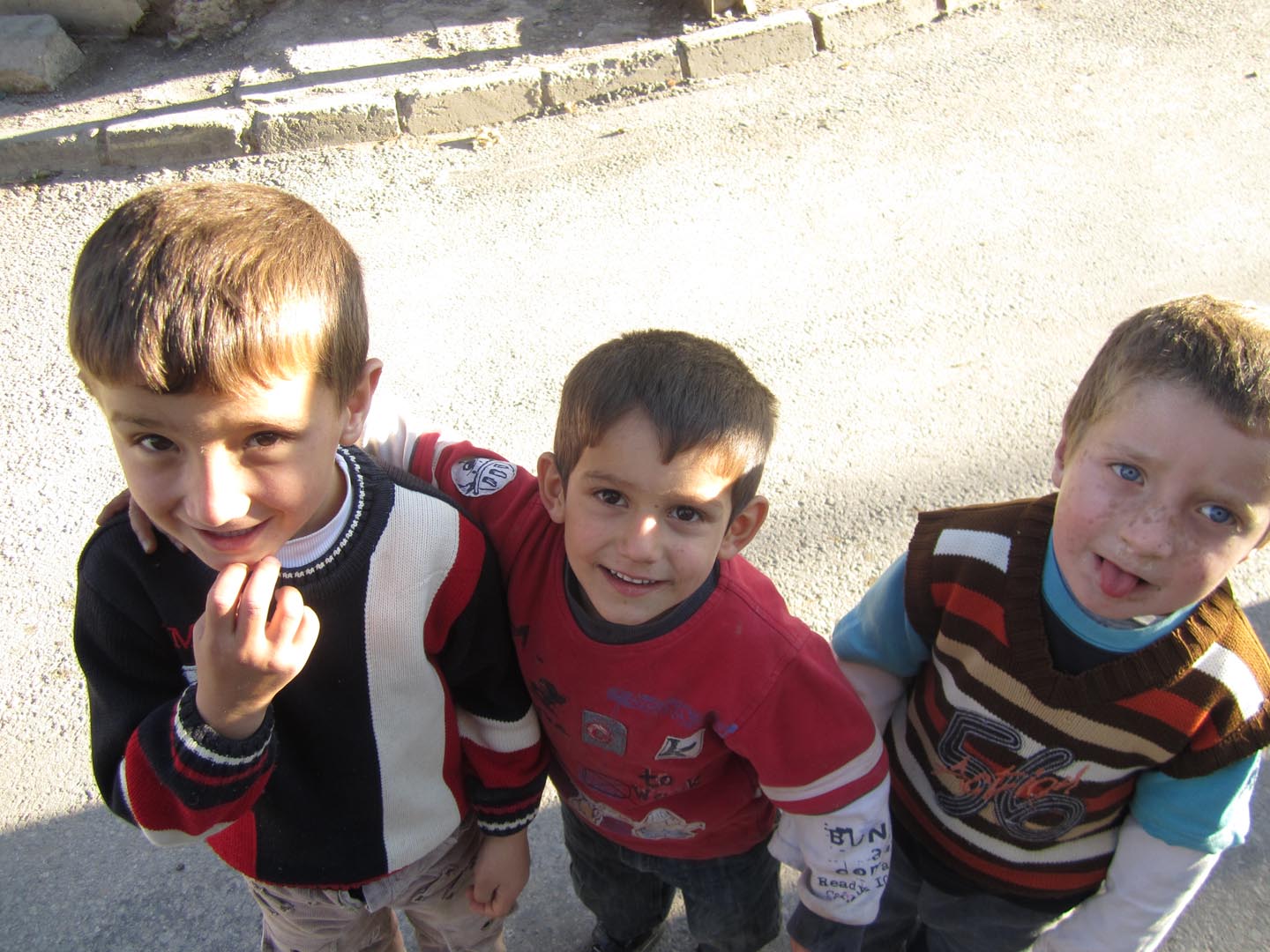
Children in Mush (Photo by Khatchig Mouradian)
Oral history in Turkey
Oral history is an indispensible tool for scholars interested in mass violence. A considerable collection of Armenian and Syriac oral history material has been studied by colleagues.1 The existing body of oral history research in Turkey, though gradually developing, has hardly addressed the genocide. A potential research field was politicized by successive governments and the Turkish Historical Society. Several documentaries about the victimization of Ottoman Muslims in the eastern border regions have included shots of elderly Muslims speaking about their victimization at the hand of Armenians (and presumably Cossacks) in 1918. It seems unmistakable that the Turkish-nationalist camp fears that the local population of Anatolian towns and villages might “confess” the genocide’s veracity and disclose relevant details about it. For example, the 2006 PBS documentary “The Armenian Genocide” by Andrew Goldberg includes remarkable footage of elderly Turks speaking candidly about the genocide. One of the men remembers how his father told him that the génocidaires had mobilized religious leaders to convince the population that killing Armenians would secure them a place in heaven. Another middle-aged man recounts a recollection of his grandfather’s that neighboring Armenian villagers were locked in a barn and burnt alive.2
In the past decade, I have searched (and found) respondents willing to relate their personal experiences or their family narratives related to the war and the genocide. In the summers of 2002 and 2004-07, I conducted up to 200 interviews with (grand-)children of contemporaries in eastern Turkey, all semi-structured and taped. Needless to say, oral history has its methodological pitfalls, especially in a society where the memory of modern history is overlaid with myth and ideologies. Many are unwilling to reflect about their family histories because they have grown accustomed to ignoring inquisitive and critical questions, not least on their own moral choices in the face of their neighbors’ destruction. Others are reluctant to admit to acts considered shameful.3
But while some were outright unwilling to speak once I broached the taboo subject, others agreed to speak but wished to remain anonymous, and again many others were happy to speak openly, with some even providing me access to their private documents. Even though direct eyewitnesses to the crime have most probably passed away, these interviews proved fruitful. Elderly Turks and Kurds often remember vivid anecdotes from family members or villagers who witnessed or participated in the massacres. My subject position as a “local outsider” (being born in the region but raised abroad) facilitated the research as it gave me the communicative channels to at once delve deeply and recede at the appropriate moments. It also provided me with a sense of immunity from the dense moral and political field in which most of this research is embedded.
Turkish and Kurdish eyewitness accounts
A.D., a Kurdish writer from Varto (Muş), recalled a childhood memory from 1966 when an earthquake laid bare a mass grave near his village. The villagers knew the victims were Armenians from a neighboring village. According to A.D., when the village elder requested advice from the local authorities on what to do, within a day military commanders had assigned a group of soldiers to re-bury the corpses. The villagers were warned to never speak about it again.4
Interviews with elderly locals also yielded considerable useful data about the genocide itself. For example, a Kurdish man (born 1942) from Diyarbekir’s northern Piran district, had heard from his father how fellow villagers would raid Armenian villages and dispatch their victims by slashing their throats wide open. As they operated with daggers and axes, this often led to decapitations. After the killing was done, the perpetrators could see how the insides of the victims’ windpipes were black because of tobacco use.5 Morbid details such as these are also recorded by the following account from a Kurdish man from the Kharzan region, east of Diyarbekir:
My grandfather was the village elder (muhtar) during the war. He told us when we were children about the Armenian massacre. There was a man in our village; he used to hunt pheasants. Now the honorless man (bêşerefo) hunted Armenians. Grandpa saw how he hurled a throwing axe right through a child a mother was carrying on her back. Grandpa yelled at him: “Hey, do you have no honor? God will punish you for this.” But the man threatened my grandfather that if he did not shut up, he would be next. The man was later expelled from the village.6
Here is another account from a Turkish woman (born 1928) from Erzincan:
Q: You said there were Armenians in your village, too. What happened to them?
A: They were all killed in the first year of the war, you didn’t know? My mother was standing on the hill in front of our village. She saw how at Kemah they threw (döktüler) all the Armenians into the river. Into the Euphrates. Alas, screams and cries (bağıran çağıran). Everyone, children and all (çoluk çocuk), brides, old people, everyone, everyone. They robbed them of their golden bracelets, their shawls, and silk belts, and threw them into the river.
Q: Who threw them into the river?
A: The government of course.
Q: What do you mean by ‘the government’?
A: Gendarmes.7
These examples suggest that there still might be something meaningful gained from interviews with elderly Turks and Kurds. Needless to say, had a systematic oral history project been carried out in Turkey much earlier, e.g. in the 1960’s or 1970’s, undoubtedly a wealth of crucial information could have been salvaged. Besides the excellent research conducted in Turkey by colleagues such as Leyla Neyzi, Ayşe Gül Altınay, and others, interviews by individual researchers are at best a drop in the ocean. A measured research project with a solid book as output would be a memorable achievement for the centenary of the genocide.
Discussion
When I was traveling from Ankara to Adana in the summer of 2004, I stopped by the friendly town of Ereğli, north of the Taurus mountain range. My friend, an academic visiting his family, had invited me along. Strolling through the breezy town, we came across one of my friend’s acquaintances, an “Uncle Fikri.” The old man looked sad, so we asked him what was wrong. He said, “My father has been on his deathbed for a few days now.” When we tried to console him, he answered: “I’m not sad because he will die, he has been sick for a while now. I just cannot accept that he refuses to recite the Kelime-i Shehadet before he passes on.” (Shahadah, the Muslim declaration of belief: “There is no God but Allah and Muhammed is his Prophet.”) The man looked deep into our eyes, there was an awkward silence for four seconds, we understood each other, and we parted.
In this example, only two generations separated us from the eyewitness generation. Therefore, I believe there might still be avenues for oral history research on the genocide. Father Patrick Desbois is a French Catholic priest who travels to Ukraine in a concerted effort to document the Shoah through the use of oral history. His team locates mass graves and interviews contemporary witnesses about the mass shootings of Jews, which often took place just outside the Ukrainian villages they visit. The elderly respondents usually remember the slaughter in vivid detail.8 Desbois’ work on Ukraine has proven helpful in completing the already comprehensive picture historians have of Nazi mass murder in that region. During a private conversation, Desbois intimated that he would be interested in launching a similar project in Turkey, if a viable initiative was proposed.9 It might be worthwhile to gauge what place the Armenian Genocide occupies in the social memory of Turks and Kurds, even after nearly a century. The conclusion would undoubtedly warrant my introductory comment: The Turkish government is denying a genocide that its own population remembers.

Tuesday, April 24, 2012

DEMAND FROM TURKEY TO RECOGNIZE THE ARMENIAN GENOCIDE BEFORE THE CENTENNIAL ANNIVERSARY OF 2015

 
Excellent production with many new photos and newsclips. Please try to watch the full film. ThankYou.
 
 
In commemoration of the 97th anniversary of the Armenian Genocide.


Our Message Is Directed To Turkey


RECOGNIZE THE ARMENIAN GENOCIDE of 1915  BEFORE THE CENTENNIAL ANNIVERSARY IN 2015

We address this e-mail to everyone Armenian and Non Armenian throughout the world.
Whether you speak or understand English, French, German or Armenian, please, watch this 90 minute presentation and come to your own conclusions


Spread this link. Let ordinary people of the world, intellectuals of this world, clergymen of this world, politicians of this world, heads of states of this world, let them all see and hear what is documented in this presentation.

We challenge all and everyone to see this presentation and urge them, as decent human beings, to demand, and if need be, to shout at the face of deniers of the Armenian Genocide to stop insulting the entire humanity.

But over and above all, let the whole world


DEMAND FROM TURKEY TO RECOGNIZE THE ARMENIAN  GENOCIDE BEFORE THE CENTENNIAL ANNIVERSARY OF 2015


The Armenian Rights Council of Montreal