Monday, October 28, 2013

Dual Survival: Man and Church in the Lake Van Region of Historic Armenia

Story and photos by Mathhew Karanian
(Special to the Armenian Weekly)
If you’ve ever watched a reality survival show on television—one of those shows were a couple of adventurers get dropped off in a desert with instructions to survive long enough to make it back home—then you might be able to conjure up an image of me hiking in Historic Armenia.
I was on the shore of Lake Van, researching and photographing the Armenian churches of the region.
My goal for this day was modest: hike to the ancient Armenian monastery of St. Thomas, a monastery that looks older than the treeless mountain that it’s perched upon. Survival was the last thing on my mind.
But my priority for the day changed when I was about mid-way through the 90-minute trek to the top.
©2013MKaranian 0318 AW3 Dual Survival: Man and Church in the Lake Van Region of Historic Armenia
The 10th to 11th century Armenian Monastery of St. Thomas rests on a hilltop above the southeast shore of Lake Van. (Photo by Matthew Karanian)
This was roughly about the same time that my supply of water ran out. Remember, survival had been the last thing on my mind. So, of course I hadn’t carried any water.
The mid-day temperature was pushing closer to 100 degrees, and I had begun to reminisce about better times—like the time, earlier that day, when the mercury hadn’t yet risen above 90.
©2013MKaranian 0277 AW 199x300 Dual Survival: Man and Church in the Lake Van Region of Historic Armenia
The mid-day temperature was pushing closer to 100 degrees, and I had begun to reminisce about better times—like the time, earlier that day, when the mercury hadn’t yet risen above 90. (Photo by Matthew Karanian)
I still wanted to see the church.
But now that the risks of dehydration and heat stroke had been added to my itinerary, my priority was to make it back down the mountain. I wanted it all! I wanted to see the church, and I also wanted to survive.
I was hiking with Khatchig Mouradian, the Editor of the Armenian Weekly. He and I had the same goals. Better yet, he also had some water. He offered me half of what remained in his bottle. We were brothers in arms, and would share our water supply, 50-50. I reached for the bottle. It contained about two ounces of warm water.
I was incredulous. “Really, Khatchig, I can only have one ounce?”
Yes, he replied. “We will need the rest to survive.”
I took a drink, and we continued our ascent.
There were no trees to shelter us from the sun as we scrambled up the mountain, but every two or three hundred feet there was some dwarf scrub that cast just enough shade to offer a bit of relief from the heat. We dashed from brush to brush, like soldiers in battle, until we had reached the monastic walls of St. Thomas.
©2013MKaranian 0279 AW Dual Survival: Man and Church in the Lake Van Region of Historic Armenia
We dashed from brush to brush, like soldiers in battle, until we had reached the monastic walls of St. Thomas. (Photo by Matthew Karanian)
We discovered that the survival of the church was also at risk.
A Remote Treasure
The buildings of St. Thomas were constructed in the tenth and eleventh centuries, and are stoically sited on a mountaintop overlooking the southeast shore of Lake Van. The main surviving building, the cathedral, is about one thousand years old.
The current peril to the structure is caused, at least in part, by local people who are acting upon a long-discredited myth. Some of the Kurds who now live in Historic Armenia believe, incorrectly, that there is buried treasure at Armenian churches.
And so some of these treasure seekers dig for gold and jewels wherever they see the ruins of an Armenian site. Judging from what I observed at St Thomas last month, some people appear to have believed that there was treasure hidden in the ground beneath this church, too.
We saw holes dug in the earth near the foundation, at the entrance, and in the church yard. These excavations have undermined the foundation of St. Thomas, and similar burrowing undermines other churches, such as the nearby Karmravank, where treasure hunters have also sought supposedly long lost gold.
©2013MKaranian 0369 AW Dual Survival: Man and Church in the Lake Van Region of Historic Armenia
The ruins of Karmravank, on the southeast shore of Lake Van, a short distance from the Monastery of St. Thomas. (Photo by Matthew Karanian)
According to the discredited myth, Armenians buried gold and other valuables beneath the altars and near the points of entry to their churches. Ask a Kurdish villager if the Armenians supposedly did this while fleeing during the Genocide, or whether they buried their gold as a matter of routine in the years before the Genocide, and they are apt to just shrug their shoulders.
The odds of buying a winning lottery ticket are better than the odds of finding buried treasure at an Armenian church, because the odds of finding the buried treasure are zero. There’s no treasure. But people still buy lotto and they still dig for treasure.
Even if the legend was true, which it isn’t, any treasure would surely have been dug up many years ago. Still, logic and truth have not deterred treasure hunters, even now, a century after the Armenians were expelled from this area.
As a result, the only treasures that really exist in places such as St. Thomas and at nearby Karmravank—the sacred structures themselves—are at risk of being destroyed.
We made it safely back down the mountainside, and found plenty of shade and water. We lived to share the story of yet another ancient Armenian site that may not survive.

Matthew Karanian is an author and attorney, and he practices law in Pasadena, Calif.  He has spent several years working in Armenia as both law professor and Associate Dean at the American University of Armenia. His latest book is ‘Armenia and Karabakh: The Stone Garden Travel Guide. He is currently working on a new book about Historic Armenia that will be published in 2015. Book details at www.ArmeniaTravelGuide.com and at www.Amazon.com

Thursday, October 24, 2013

‘Something Broke Inside Me’: Armenians Who Fled Azerbaijan Speak

The Armenian Weekly August 2013 Magazine
The woman sitting across from me stopped speaking. Tilting her chin downward she closed her eyes and shook her head slightly.
No.
Oh, I said, startled as I looked up from my notebook. I saw there were tears running down her face. Oh, it’s OK. You don’t have to go on. I turned to my interpreter. Please tell her she doesn’t have to continue if she doesn’t feel comfortable. I wanted to reach across the table and place my hand on her arm, to offer a reassuring touch. A sign of consolation. A pause. She nodded through the tears. A stiff smile crossed her face for a second, revealing a trace of relief. Her hands in her lap, she remained motionless.
I’m so sorry, I said. Please tell her I didn’t mean to make her uncomfortable.
The woman had stopped herself midsentence, choking up while recounting the story of her neighbor in Baku. They had lived in the same apartment building for years. It was where, in the courtyard, the resident families would hold cookouts during warm summer evenings, where their children would play together, and where they would share meals during the holidays. It was the same building where she and her husband spent years remodeling the floors, the bathroom, and the kitchen to make it truly comfortable. And it was where one night a group of angry Azerbaijanis broke down her neighbor’s door, grabbed her by the arms, and threw her from the window, four stories to her death on the concrete below. Then, in some twisted final act, the Azerbaijani men combined their might to hurl her large wooden bureau out of the window so that it landed on top of her.
I took a breath. Where to go from here? I thought.
This woman was one of the many displaced Armenians from Baku who I interviewed for my master’s thesis. The quest to complete the thesis was bumpy, to say the least; I switched topics at least three times over the course of several months before settling on one that continues to fascinate me—the human face of violence and war. I did so by focusing on the Nagorno Karabagh conflict, specifically the pogroms of Baku, and the Armenians who fled Azerbaijan because of them. Setting out on an equally trying road of finding people to interview, I spent weeks searching, traveling up and down the East Coast to interview those who were forced from a place that their families had called home for generations. Through my interviews I tried to figure out how conflict-induced displacement had impacted the cultural identity of some of Baku’s Armenians, now members of the Armenian Diaspora. I set out to explore the way people relate to others within their own ethnic group and their sense of belonging to that group. And while I focused on how this group of people expressed their identities through symbolic ethnicity—like language and the Armenian Church, for example—what moved me the most was much of the material I didn’t include in the final product: the stories of abrupt and horrific violence, the heart-wrenching and shocking tales of neighbors turning against neighbors, incredible loss, struggle, survival, and subsequent rebirth.
After some silence the woman suddenly surprised me by continuing. After that, I hid, all night long in a closet and then again for the entire next day. As soon as I could, I left on the ferry to Turkmenistan.
The long-simmering dispute between Armenia and Azerbaijan over Nagorno-Karabagh finally erupted into violent clashes in 1988 when pogroms were waged against Armenians by Azerbaijanis, first in the small industrial city of Sumgait, located about 20 miles outside of Baku. While tensions had culminated in several episodes of violence around Armenia and Azerbaijan up until that point, they were nothing compared to the gruesome violence of Sumgait. When about 50 people assembled in Sumgait’s Lenin Square for a rally protesting Karabagh’s unification with Armenia and demanded that Armenians leave Azerbaijan, violence exploded on a seemingly unimaginable scale, engulfing the city as gangs tore through, vandalizing property, looting and destroying homes, and smashing and burning cars. People were hacked to death with axes. Metal pipes were used as crude weapons. Homes were destroyed. Women were gang raped in public. Some people were dismembered, some were set on fire. Thirty-two people died in the Sumgait pogroms—26 Armenians and six Azerbaijanis.
Many Bakvetsis were incredulous; the violence that struck Sumgait was atrocious, so horrifying, that most never believed it would be able to permeate a multicultural, downright cosmopolitan city like Baku—where Russians, Jews, Ukrainians, Azerbaijanis, and Armenians not only intermingled but were friends. While discrimination was embedded in the social strata, the differences between these ethnic groups were mostly overlooked in daily life.
In no other capital in the Soviet Union were people as proud as they were of being from Baku. After the genocide took place, these were the people who accepted us. Azeris were the people who accepted us, one man told me.
There were streets named after Armenians in Baku, there were Armenian schools and churches, and a specific neighborhood in the center of the city called Armenikend, or “Armenian Village.” Armenians for the most part considered themselves integral to the history and the strength of the city.
Life in Baku, it was beautiful, many of them told me. Parties. Concerts. Barbeques. Family gatherings. Some had salvaged photos, which they spread out across coffee tables and in their dining rooms, showing me life as they had once known it. Birthday cakes. Singing around pianos. Vacations to the Black Sea in the summer, sunlight dripping off the palm trees. Sure, Armenians were second-class citizens, but everyone was friends with everyone else for the most part, they told me. Life was rich.
After Sumgait happened, Baku was relatively quiet until a certain tension and fear gripped the streets, permeating the fabric of the city. It’s not going to happen in Baku. It’s never going to happen in Baku, was what many of the people I interviewed said they thought after Sumgait. It could never happen here.
Then it all changed.
Things continued to shift, Armenians were targeted more and more. They feared for their safety when they were outside. Some were followed by Azerbaijanis and forced to make a quick escape by hiding in nearby buildings. Mobs of Azerbaijanis, sometimes as big as 30 or 40 people, would comb the city, pulling people off of buses and out of crowds in an attempt to “catch” Armenians. If they couldn’t identify Armenians based on physical characteristics, the Azerbaijanis would also run “tests” of shibboleths, like the pronunciation of the Azeri word for “hazelnut,” (fundukh), which Armenians tended to say with a “p” instead of an “f” sound.
Eventually, a curfew was imposed. Threats increased. Many Armenians began to trade their apartments and sell their belongings in preparation for a way out of Azerbaijan.
In January 1990, rallies eventually broke out in the north of the country and in Baku following the decision of the Armenian Parliament to include Karabagh in its budget. When a list of Armenians’ addresses was posted on the front door of the Azerbaijani Popular Front headquarters in public view, violence erupted in Baku. Ninety people died in the pogroms, known as “Black January,” in violence just as horrific as Sumgait.
For one week, it was a bloodbath with no one to stop it, one man told me.
Azerbaijanis would break into homes, searching for Armenians, vandalizing everything. Once again, people were assaulted, killed, raped, and mutilated.
For many Armenians fearing for their lives, the acquaintances and the neighbors they had known for years turned their backs on them. There were those who helped, too, of course, like the Azerbaijani neighbor who harbored one woman and her daughter in his apartment for days until they could finally be evacuated by a relative in the KGB, who escorted them out with the Russian families being evacuated from Baku. And there was the young group of Azerbaijanis who saved one of their friends from an inquisitive mob, insisting he was just one of them—a Tartar who couldn’t speak Azeri. Or the kind neighbor who hid her Armenian friends in her closets and under her bed while Azerbaijanis raided her apartment building.
We are left with broken hearts, one woman told me. My students asked me, ‘Why did you leave?’ I tell them that it’s not like they knocked on my door nicely and said, ‘Go.’ They killed and they raped. Something broke inside me.
The violence in Baku essentially drove the rest of the Armenian population out of Azerbaijan. Most—about 200,000—had left by the end of 1989 and had resettled in Armenia, Russia, and other former Soviet republics. Over the course of several days during and after the pogroms, the Armenians of Baku fled for their lives, gathering up their families and whatever few possessions they could to leave by plane or by train or by truck or ferry. They left everything behind, and their stomachs were weighed down with the horrible feeling that they were probably never going to come back. The 18 Armenians that I interviewed went to Armenia, and Moscow or southern Russia, primarily because they had some kind of personal connection to someone living in the country at the time, some family or friends who could provide support. Eventually, these 18 people came to the United States, primarily as refugees, where they started over a second time.
For some, seeking refuge in their historic homeland, Armenia, after the pogroms seemed logical. Even though they spoke Russian at home instead of Armenian, and even if they had no family members to host them, they thought they would have the space and the support to rebuild their lives in Armenia, and the shock of displacement would be lessened. For some it was a source of pride. This was our land, our soil. We’re going to have our roots there, they said.
Sometimes it was viewed as the only option. We left Azerbaijan to go to Armenia because we had no other choice, one told me. There was nowhere else we could go. But it wasn’t always the easiest experience.
For some, life in Armenia meant struggle, and they were treated as outsiders. Some were criticized for having lived so far from the motherland or for not being able to speak Armenian. Others told me of being yelled at or even spit on, being called “Turks” or shortvatz (flipped) Armenians who had been happy living with the enemy.
Having come from a cosmopolitan city like Baku, many were in shock when they suddenly found themselves living in refugee housing in rural areas, where they were forced to grow their own food or wash their laundry by hand. Our house became a refugee camp, said one person whose three-room apartment in Abovyan was typically filled with 17 displaced relatives at any given time.
Others had similar experiences living in Russia, where they were called “black,” a derogatory name for people from the Caucasus, or where they were physically assaulted simply because they were perceived as being different. This discrimination grew more persistent after the fall of the Soviet Union, concurrent with the rise of Russian nationalism.
During the 1990s, the United States allowed those fleeing persecution in the Soviet Union to come to the U.S. as refugees. Many Armenians—up to 100,000—came to the United States between 1989 and 1996, and many received priority refugee status in the early 1990s. Most of the people I interviewed arrived on U.S. soil with next to nothing—broken suitcases and no more than $300 in their pockets. As adults who had established themselves as engineers, teachers, musicians, and scientists back in Baku, they had to reinvent themselves.
Some took jobs in factories or cafeterias while they tried to learn English. Others pursued their educations and tried to get ahead. Struggles continued for some, and lasted longer than expected. And often, a question arose: Did we make the right
decision to come here?
For most I spoke with, the answer is yes. Armenians are no strangers to collective trauma and violence. It’s no surprise these 18 people displayed the resiliency and the strength needed to not only rebuild their lives, but to succeed after being affected both directly and indirectly by violence that is so often the consequence of geopolitics.
I’ve lived in Azerbaijan. I’ve lived in Armenia, Russia, and now I live in America. Obviously I can adapt, one participant said. You have to lose part of you to become part of something else.
Over the course of more than two decades they have turned themselves back into engineers and teachers. Some have become activists and writers in places like New Jersey and Boston and Washington. Some have become mothers and fathers and grandparents. Some have connected more to their Armenian roots. Others say they are indifferent.
Those I interviewed had many ways of describing how they thought of Baku now: a shut door, a closed page, a home erased, just as evidence of the Armenian presence in Baku has been washed away with the defacement and destruction of monuments and cemeteries.
For many, Baku is now just a piece of their history, the memories of which remain in the recesses of their minds. Perhaps that’s what happens when there is really no way of going back home. Very few said they would ever go back, even if they were allowed to.
There is no such place, one woman told me. That’s all. It’s gone.
While researching this topic, I found that while the violence of the pogroms was recorded, the long-term impact they had on the Armenians from Baku had scarcely been touched. More than once I was asked why I was interested in this topic. No one really cares about this anymore anyway, some said. Still, I was fascinated. And perhaps at the very least, I hoped to make some contribution to documenting stories that haven’t really been told.
Toward the end of my interviews, one woman made a remark about how Baku Armenians are a dying people. My generation, that’s it. Our kids–they won’t remember, they won’t know. I will try to pass the memories, though. We still remember my dad’s aunt. She was a Genocide survivor. She was 8 or 10 years old and they escaped the Genocide. We still remember her telling us about it. So we will probably do the same with our kids.

Sunday, October 20, 2013

Armenian Life Returns to Diyarbakir

Armenian Life Returns to Diyarbakir

St. Giragos Church, located within the historic walls of the city of Diyarbakir, has been renovated. (photo by armradio.am)


By: Vicken Cheterian Translated from Al-Hayat (Pan Arab).
اقرا المقال الأصلي باللغة العربية
It was on a hot Sunday in the summer when I visited St. Giragos Church, located within the historic walls of the city of Diyarbakir. A small crowd gathered inside the building, which had recently been renovated. That morning, I not only got the chance to meet new people, but was also acquainted with new ways of self-identifying.

About This Article

Summary :
Diyarbakir, a predominantly Kurdish city in southeastern Turkey, is rediscovering its Armenian roots.
Publisher: Al-Hayat (Pan Arab)
Original Title:
Armenian Life Suddenly Returns to the City of Diyarbakir
Author: Vicken Cheterian
First Published: October 11, 2013
Posted on: October 16 2013
Translated by: Sami-Joe Abboud and Pascale El-Khoury
Categories : Turkey  
I met Ramzi Demir, a construction-equipment vendor and Kurdish Muslim who is well aware of his Armenian roots. I also met Chetin Yilmaz, an ethnic Turk from the city of Gallipoli. Yilmaz was sent to the southeast of the country to teach Turkish “to help Kurds be good Turkish citizens. However, they opted for the Christian religion instead,” as he put it.
A group of young people visiting the church included Nisreen and Habon, who decided to come after they discovered their Armenian origins. I also met Armin Demerjian, the deacon of the Church of St. Giragos. He was once called Abdur Rahim Zorusselan, before he returned to his original religion. Armin welcomed me with a joyful grin and told me in Armenian, “Welcome, my little brother!”
Demerjian is in his mid 50s. He was born in the town of Liga, north of Diyarbakir, from where his ancestors hail. His family was exterminated during the massacres of 1915, but a five-year-old child named Hocep survived, saved by influential Turkish tribal leader in the region, Haji Zubair.
When Hocep grew up, his name was changed to Abdullah. He converted to Islam and married the daughter of Haji Zubair. He became a famous baker in the town of Liga. Everyone saw him as a good Armenian man.
I walked with Armin around the church. The building, which was meticulously built seven centuries ago, has been renovated, adding a touch of beauty to the impoverished neighborhood. We went to a hall where the walls were decorated with photographs of the Armenian way of life in Diyarbakir before the great massacre. There hung a photo of two Armenian schools, one for boys and one for girls, and a photo of the newspaper Independent Tigris with pictures of craftsmen, coppersmiths, jewelry makers, weavers and a brass band. There was also an old postcard in French portraying the Armenian neighborhood and the high church bell towers. The black-and-white photographs created a sad memorial, not only because they brought back memories of the past, but because they remind us that an entire way of life has been wiped away.
There was once a large Armenian community in Diyarbakir. Most of its members were craftsmen and traders. In 1915, when the Committee of Union and Progress, the powerful party that pushed the Ottoman Empire to fight in the First World War, decided to get rid of the Armenians living in the empire. Approximately 120,000 Armenians in the province were sent outside the city walls and massacred. The survivors, mostly women and orphans, went to camps in the Syrian desert. In the 1920s and 1930s, the Armenians living in villages and towns in the province moved to Diyarbakir to form a new, small community. More left the villages after the war broke out in the southeast of the country between the Kurdistan Workers Party and the Turkish army. Today, a descendant of the survivors is forming a new Armenian community in this historic city.
When I started to take pictures, Armin grabbed an Armenian-language instruction book and held it to his chest in front of the camera.
Armin's son, Hassan Zor Aslan, recently finished his university education and wants to become a teacher. He is fluent in English and Turkish, and his mother tongue is Kurdish. When coffee was served, Hassan did not take a cup. It was Ramadan, and Hassan was fasting. While his father was forced to rediscover his Armenian past and deep Christian roots, Hassan, 21, found his path through Islam.
“We are Muslims, but we know that we are Armenians,” he told me. In 2006, when the students of Diyarbakir revolted against the Turkish police and the army there, Hassan was sent to his uncle's house in the town of Bursa in western Turkey to continue his education away from the trouble.
Hassan continued, “I faced an identity crisis there. There, I decided to be a Muslim.” It was there that he also decided to become a professor. When asked how he sees his father, who returned to the Armenian Apostolic Church, he said, “I am happy to see my father getting back in touch with his Armenian identity. However, I am afraid not only of the state but also of militant groups.”
Gafur Torqay is the one who pushed for the renovation of the church. His story is no different from those of the others. His father is called Ba Ohanian, and he hails from the mountainous area of Sason, northeast of Diyarbakir. During the genocide, everyone there was killed, and only three children survived: a girl and two boys. The girl became a refugee in Syria and emigrated from there to Armenia, while the boys remained in Turkey and converted to Islam.
He proudly stated, “Thanks to the two boys, the number of our family members reached 500. These boys spoke Kurdish at home, but when they were sent to school they were prohibited from speaking the Kurdish and Armenian languages and forced to communicate in Turkish.” Gafur criticized Turkish naturalization policies, saying, “After being forced to become a Kurd, we were taught how to become Turks.”
Furthermore, with the emergence of the Kurdish national identity in the past decade, Armenian descendants who had changed their religion claimed their right to the Armenian identity regardless of religious affiliation.
Gafur recalls the first time he visited St. Giragos Church in the 1980s. Back then, there were 30 families living in the vicinity of the Armenian church in the Sur District of Diyarbakir, known as the Infidels District. This is also the title of a novel written by Mgrdich Margossian, who wrote about the life of the Armenian community.
In this city, Gafur met his wife and his family. He believes that the renovation of the church — which was destroyed after the departure of the last Armenian family — is the most important step yet. The church has been renovated thanks to the efforts of a small group of people who exerted tremendous efforts to collect the necessary funds. The municipality of Diyarbakir, controlled by the Kurdish Peace and Democracy Party, paid a third of the renovation costs. The church was reopened in October 2011, with thousands of Armenians coming from all over the world to participate in the event.
Today, the Diyarbakir municipality has begun organizing classes to teach the Armenian language. In 2012, 35 students were registered in language classes and in the following year this number rose to 65. Gafur pointed out that 80% of the students are Muslim Armenians, while there is a Christian or Kurdish Armenian minority.
Gafur recalled how his neighbors found out he was of Armenian descent and how they thought that he and his family had converted to another religion. Families with Armenian roots try to arrange marriages among themselves, he added, stressing, “We are the third generation after the genocide. The second generation knew nothing about Armenian heritage. They were afraid. If we do not act to revive the Armenian identity here, we will lose it.” He hopes that the young people of Armenian descent rediscover their original identity and Armenian culture without questioning their Islamic religious identity.
From there, Gafur took me to St. Sarkis Church. At the entrance, we could see that a Kurdish family had taken residence in the few rooms that remained undestroyed. The architectural style is reminiscent of St. Giragos with its beautiful domes, though wrecked. Projects are in the works for the renovation of this church, too.
At the altar, Gafur pointed to a hole and angrily said, “They are trying to find gold. I was here two weeks ago; this hole was not there.” Similar holes can be found in Armenian churches across eastern Turkey as residents still search for old Armenian gold after 98 years.
Then we headed to the Armenian cemetery. Years ago, the famous musician Aram Dikran wanted to be buried there after his death, but the Turkish state did not allow it. Today, two stones are placed as a sign for the chosen cemetery of Aram Dikran.

Sunday, October 6, 2013

Skulls and Bones Exposed in Mass Grave Near Van

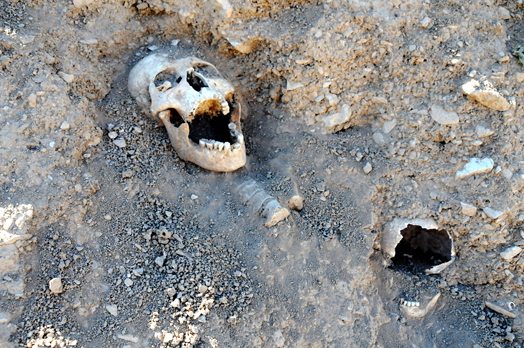
VAN, Turkey (A.W.)—Skulls and bones, possibly from the Armenian Genocide, protrude from the soil near a school in the district of Westan in Van, according to a newspaper report.
skulls 300x199 Skulls and Bones Exposed in Mass Grave Near Van
Skulls and bones, possibly from the Armenian genocide, protrude from the soil.
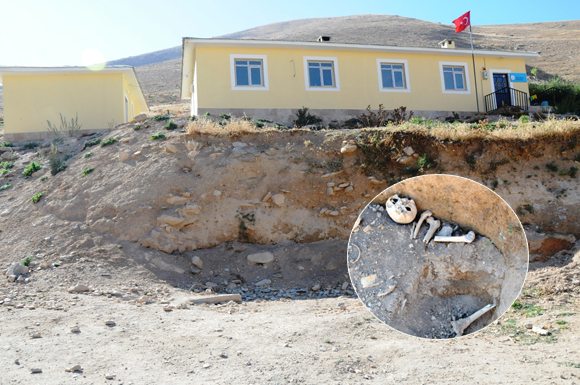
The pro-Kurdish Ozgur Gundem reported that in the village of Ili in the district of Westan (current name Gevaş), a mass grave believed to be from the Armenian genocide has been unearthed during the construction of the Dağyöre Elementary School last year.
The bones remain there, protruding from the soil, to this day. Villagers say the mass grave is likely that of the Armenians who lived in the village a century ago.
The village, Ili (current name Dağyöre), southwest of Gevaş (Armenian name Vosdan), had 21 Armenian households prior to the Armenian Genocide.
school Skulls and Bones Exposed in Mass Grave Near Van
The mass grave is near the elementary school of the village.

Sunday, September 29, 2013

The Confiscation of Armenian Properties: An Interview with Ümit Kurt

The following interview with Ümit Kurt tackles how the physical annihilation of the Armenians paralleled the confiscation and appropriation of their properties in 1915. By citing the various laws and decrees that orchestrated the confiscation process, Kurt places our understanding of the genocide within a legal context.
 The Confiscation of Armenian Properties: An Interview with Ümit Kurt
Umit Kurt
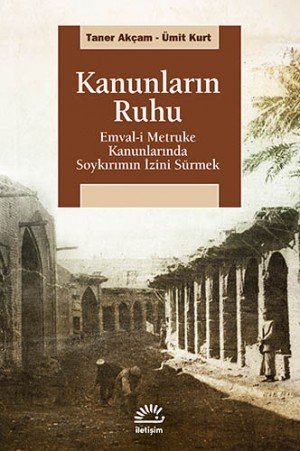
Ümit Kurt is a native of Aintab, Turkey, and holds a bachelor of science degree in political science and public administration from Middle East Technical University, and a master’s degree from Sabancı University’s department of European studies. He is currently a Ph.D. candidate in the department of history at Clark University and an instructor at Sabancı University. He is the author of several books, including Kanunların Ruhu: Emval-i Metruke Kanunlarında Soykırımın İzlerini Aramak (The Spirit of Laws: Seeking the Traces of Armenian Genocide in the Laws of Abandoned Property, 2012) with Taner Akçam. His main area of interest is the confiscation of Armenian properties and the role of local elites/notables in Aintab during the genocide. Below is the full text of the interview Kurt granted The Armenian Weekly earlier this month.
***
Varak Ketsemanian: What were the laws and regulations that governed the confiscation of Armenian properties during the genocide?
Ümit Kurt: A series of laws and decrees, known as the Abandoned Properties Laws (Emval-i Metruke Kanunları), were issued in the Ottoman and Turkish Republican periods concerning the administration of the belongings left behind by the Ottoman Armenians who were deported in 1915. The best-known regulation on the topic is the comprehensive Council of Ministers Decree, dated May 30, 1915. The Directorate of Tribal and Immigrant Settlement of the Interior Ministry (İskan-ı Aşâir ve Muhacirin Müdiriyeti) sent it the following day to relevant provinces organized in 15 articles. It provided the basic principles in accordance with which all deportations and resettlements would be conducted, and began with listing the reasons for the Armenian deportations. The most important provision concerning Armenian properties was the principle that their equivalent value was going to be provided to the deportees.
The importance of the decree of May 30 and the regulation of May 31 lie in the following: The publication of a series of laws and decrees were necessary in order to implement the general principles that were announced in connection with the settlement of the Armenians and the provision of the equivalent values of their goods. This never happened. Instead, laws and decrees began to deal with only one topic: the confiscation of the properties left behind by the Armenians.
umit book 199x300 The Confiscation of Armenian Properties: An Interview with Ümit Kurt
The cover of ‘The Spirit of Laws’
Another regulation was carried out on June 10, 1915. This 34-article ordinance regulated in a detailed manner how the property and goods the Armenians left behind would be impounded by the state. The June 10, 1915 regulation was the basis for the creation of a legal system suitable for the elimination of the material living conditions of the Armenians, as it took away from the Armenians any right of disposal of their own properties. Article 1 of the June 10, 1915 regulation announced that “committees formed in a special manner” were going to be created for the administration of the “immovable property, possessions, and lands being left belonging to Armenians who are being transported to other places, and other matters.”
The most important of these committees were the Abandoned Properties Commissions (Emval-i Metruke Komisyonları). These commissions and their powers were regulated by Articles 23 and 24. The commissions were each going to be comprised of three people, a specially appointed chairman, an administrator, and a treasury official, and would work directly under to the Ministry of the Interior.
The most important steps toward the appropriation of Armenian cultural and economic wealth were the Sept. 26, 1915 law of 11 articles, and the 25-article regulation of Nov. 8, 1915 on how the aforementioned law would be implemented.
Many matters were covered in a detailed fashion in the law and the regulation, including the creation of two different types of commissions with different tasks called the Committees and Liquidation Commissions (Heyetler ve Tasfiye Komisyonları); the manner in which these commissions were to be formed; the conditions of work, including wages; the distribution of positions and powers among these commissions and various departments of ministries and the state; the documents necessary for applications by creditors to whom Armenians owed money; aspects of the relevant courts; the rules to be followed during the process of liquidation of properties; the different ledgers to be kept, and how they were to be kept; and examples of relevant ledgers. This characteristic of the aforementioned law and regulation is the most important indication of the desire not to return to the Armenians their properties or their equivalent value.
The Temporary Law of Sept. 26, 1915 is also known as the Liquidation Law (Tasfiye Kanunu). Its chief goal was the liquidation of Armenian properties. According to its first article, commissions were to be established to conduct the liquidation. These commissions were to prepare separate reports for each person about the properties, receivable accounts, and debts “abandoned by actual and juridical persons who are being transported to other places.” The liquidation would be conducted by courts on the basis of these reports.
The temporary law also declared that a regulation would be promulgated about the formation of the commissions and how the provisions of the law would be applied. This regulation, which was agreed upon on Nov. 8, 1915, regulated in a detailed fashion the protection of the movable and immovable property of Armenians who were being deported, the creation of new committees for liquidation issues, and the working principles of the commissions. The two-part regulation with 25 articles moreover included explanatory information on what had to be included in the record books to be kept during the liquidation process, and how these record books were to be used.
In brief, these were the major legal rules and regulations in 1915.

VK: How did the Ottoman government deal with the property of Armenians living in Istanbul, since no actual massacres took place in the capital? Were there laws for them, too?
UK: It is very important to note that these laws and statutes were known as the Abandoned Properties Laws, which was the official euphemism and an established term in the CUP propaganda to characterize the expropriation of the Armenians, and were merely applied to deported Armenians. Movable and immovable properties of Armenians who were not deported were not subjected to the Abandoned Properties Laws. As known, there were some Armenians deported from Istanbul—of course, very limited compared to Western Armenia—and properties of those deported Armenians in Istanbul also went through this process of confiscation, expropriation, and liquidation of their properties.

VK: How does the concept of confiscation and destruction of property help us understand the broader picture of the genocide?
UK: Actually, a new group of critical genocide scholars has started to come up with a new definition of genocide by taking into consideration the confiscation and destruction of property and wealth of the victim groups. In doing so, these critical genocide scholars have brought Raphael Lemkin’s original definition of genocide to the attention of existing genocide scholarship.
I see Raphael Lemkin as the founding father of genocide literature. Lemkin introduced the concept of genocide for the first time in 1944 in his book entitled Axis Rule in Occupied Europe. The book consists of a compilation of 334 laws, decrees, and regulations connected with the administration of 17 different regions and states under Nazi occupation between March 13, 1938 and Nov. 13, 1942. That is to say, Lemkin did not introduce the concept of genocide together with the barbaric practices like torture, oppression, burning, destruction, and mass killing observed in all genocides, but through a book quoting and analyzing legal texts. Could this be a coincidence?
Given its importance, it is necessary to stress this one more time: In the year that Lemkin completed the writing of his book (1943), he already knew of all the crimes perpetrated by Nazi Germany. However, he did not present the concept of genocide in a framework elucidated by these crimes. On the contrary, he introduced it through some laws and decrees that were published on how to administer occupied territories and that perhaps in the logic of war might be considered “normal.” We cannot say that this situation accords well with our present way of understanding genocide. In the general perception, genocide is the collapse of a normally functioning legal system; it is the product of the deviation of the system from the “normal” path. According to this point of view, genocide means that the institutions of “civilization” are not working and are replaced by barbarism. Lemkin, however, seems to be saying the complete opposite of this, that genocide is hidden in ordinary legal texts. By doing this, it is as if he is telling us not to look for the traces of genocide as barbaric manifestations that can be defined as inhuman, but to follow their trail in legal texts.
Genocide as a phenomenon fits inside the legal system—this is an interesting definition. And this definition is one of the central theses of our book. The Armenian Genocide does not just exist in the displays of barbarity carried out against the Armenians. It is at the same time hidden in a series of ordinary legal texts.
What we wish to say in our book is that genocide does not only mean physical annihilation. Going even further, we can assert that we are faced with a phenomenon in which whether the Armenians were physically annihilated or not, is but a detail. How many Armenians died during the course of the deportations/destruction or how many remained alive is just a secondary issue from a definitional point of view; what is important is the complete erasure of the traces of the Armenians from their ancient homeland.
The total destruction of the Armenians marked the fact that a government tried to eliminate a particular group of its own citizens in an effort to settle a perceived political problem. Between 1895 and 1922, Ottoman Armenians suffered massive loss of life and property as a result of pogroms, massacres, and other forms of mass violence. The 1915 Armenian Genocide can be seen as the pinnacle of this process of decline and destruction. It consisted of a series of genocidal strategies: the mass executions of elites, categorical deportations, forced assimilation, destruction of material culture, and collective dispossession. The state-orchestrated plunder of Armenian property immediately impoverished its victims; this was simultaneously a condition for and a consequence of the genocide. The seizure of the Armenian property was not just a byproduct of the CUP’s genocidal policies, but an integral part of the murder process, reinforcing and accelerating the intended destruction. The expropriation and plunder of deported Armenians’ movable and immovable properties was an essential component of the destruction process of Armenians.
As Martin Dean argues in Robbing the Jews: The Confiscation of Jewish Property in the Holocaust, 1933-1945, ethnic cleansing and genocide usually have a “powerful materialist component: seizure of property, looting of the victims, and their economic displacement are intertwined with other motives for racial and interethnic violence and intensify their devastating effects.” In the same vein, the radicalization of CUP policies against the Armenian population from 1914 onward was closely linked to a full-scale assault on their property.
Thus, the institutionalization of the elimination of the Christian-Armenian presence was basically realized, along with many other things, through the Abandoned Properties Laws. These laws are structural components of the Armenian Genocide and one of the elements connected to the basis of the legal system of the Republican period. It is for this reason that we say that the Republic adopted this genocide as its structural foundation. This reminds us that we must take a fresh look at the relationship between the Republic as a legal system and the Armenian Genocide.
The Abandoned Properties Laws are perceived as “normal and ordinary” laws in Turkey. Their existence has never been questioned in this connection. Their consideration as natural is also an answer as to why the Armenian Genocide was ignored throughout the history of the Republic. This “normality” is equivalent to the consideration of a question as non-existent. Turkey is founded on the transformation of a presence—Christian in general, Armenian in particular—into an absence.
This picture also shows us a significant aspect of genocide as Lemkin pointed out. Genocide is not only a process of destruction but also that of construction. By the time genocide perpetrators are destroying one group, they are also constructing another group or identity. Confiscation is an indispensable and one of the most effective mechanisms for perpetrators to realize the aforementioned process of destruction and construction.

VK: What happened to the property after it was seized from the Armenians?
UK: Most of the Armenians properties were distributed to Muslim refugees from the Balkans and Caucasia at that time. Central and local politicians and bureaucrats of the Union and Progress Party also made use of Armenian properties.
The exhaustive process of administering and selling the property usually involved considerable administrative efforts, employing hundreds of local staff. Economic discrimination and plunder contributed directly to the CUP’s process of destruction in a variety of ways. At the direct level of implementation, the prospect of booty helped to motivate the local collaborators in various massacres and the deportation orchestrated by the CUP security forces in Anatolia in general.
The CUP cadres were quite aware that the retention of the Armenian property would give the local people a material stake in the deportation of the Armenians. In many cities of Anatolia, especially local notables and provincial elites who had close connections with the CUP obtained and owned most of the properties and wealth of Armenians. This process was realized in Aintab, Diyarbekir, Adana, Maras, Kilis, and other cities in the whole Anatolia. For my Ph.D. dissertation project, I am exploring how Armenians properties and wealth changed hands and were taken over by local elites of the city during the genocide.
Similar to the policy of Nazi leaders regarding the “Aryan”ization of Jewish property in the Holocaust, the CUP aimed to have complete control over the confiscation and expropriation of Armenian properties for the economic interests of the state, but could not prevent incidents of corruption from taking place.
It should be emphasized that corruption was fairly rift among bureaucrats and officers of the Abandoned Properties Commissions and Liquidation Commissions who were the responsible actors for administering and confiscating Armenian properties under the supervision and for the advantage of the state, as did happen in the “Aryan”ization of Jewish property.
Despite the widespread incidence of private plunder and corruption, there is no doubt that the seizure of Armenian property in the Ottoman Empire was primarily a state-directed process linked closely to the development of the Armenian Genocide. However, the widespread participation of the local population as beneficiaries of the Armenian property served to spread complicity, and also legitimize the CUP’s measures against the Armenians.
A number of leading members of the Central Committee of the Union and Progress Party, as well as CUP-oriented governors and mutasarrıfs, seized a great deal of property, especially those belonging to affluent Armenians in many vilayets. In addition, according to one argument, CUP leaders also utilized Armenian property and wealth to meet the deportation expenses.
Also, it is worth mentioning an important detail on the National Tax Obligations (Tekâlif-i Milliye) orders. This topic is important to show the Nationalist movement’s viewpoint concerning the Armenians, and also Greeks and the properties they left behind. The National Tax Obligations Orders were issued by command of Mustafa Kemal, the head of the Grand National Assembly and commander-in-chief of the Turkish Nationalist army, to finance the War of Independence against Greece. The abandoned properties of Armenians were also seen as an important source of financing for the war between 1919 and 1922.
After the establishment of the Turkish Republic, in 1926, Turkish Grand National Assembly passed a law. This law was promulgated and enforced on June 27, 1926. According to this law, Turkish governmental officers, politicians, and bureaucrats who were executed as a result of their roles in the Armenian deportations or who were murdered by Dashnaks were declared “national heroes,” and so-called Abandoned Properties of Armenians were given to their families.
And finally in 1928, the Turkish Republic introduced a new regulation that granted muhacirs or Muslim refugees who were using Armenian properties the right to have the title deeds of those properties, which included houses, lands, field crops, and shops.
As you can see, a variety of actors and institutions seized properties and wealth that the deported Armenians were forced to leave behind.

VK: What did this entire process of confiscation and appropriation represent, on the one hand to the Ottoman Elite, and on the other to the average Turk? Was it an ideological principle or a mere motivating element for further destruction?
UK: We should be very cautious when giving a proper answer to this question. Also, in my view, this aspect of the Armenian Genocide should be compared with the “Aryan”ization of Jewish properties in the Holocaust. We can see palpable resemblances between these two dispossession processes.
It is obvious that the material stake for the average Turkey played a significant role in his/her participation in the destruction process of Armenians. Economic motivation was always present and enabled CUP central actors to carry out their ultra-nationalist ideological policies against Armenians in terms of gaining the support and consent of average Turkish-Muslim people.
To have a better appreciation of the motivation of the average Turk, one should look at what happened at the local level—which means we need more local and micro studies in order to understand how the deportation and genocide alongside the plunder and pillage of Armenian properties took place in various localities in Anatolia.
The process of genocide and deportation directed at the Armenians was, in fact, put into practice by local notables and provincial elites. These local actors prospered through the acquisition of Armenians’ property and wealth, transforming them into the new wealthy social stratum. In this respect, the Union and Progress Party’s genocide and deportation decree on May 27, 1915 had a certain social basis through the practice of effective power, control, and support mechanism(s) at local levels. Therefore, a more accentuated focus on the local picture or the periphery deserves closer examination.
The function of the stolen Armenian assets in the Turkification process makes the confiscation of Armenian properties a social matter. In this respect, the wide variety of participants and the dynamic self-radicalization of the CUP and state institutions at the local level need to be examined. Although the CUP was involved throughout the confiscation process and was fully in charge of it, the collaboration of local institutions and officers also played a considerable role. The local institutions and offices could not operate in complete isolation from their respective societies and the prevailing attitudes in them.
The expropriation of the Armenians, therefore, was not limited simply to the implementation of the CUP orders, but was also linked to the attitude of local societies towards the Armenians, that is, to the different forms of Armenian hatred. As in the empire, the corruptive influence that spread with the enrichment from Armenian properties in Anatolia could also have led to various forms of accommodation of CUP policies. The robbery of the property is also a useful barometer to assess the relations of various local populations toward the CUP, to the CUP central and local authorities, and also toward the Armenian population in each city.
With regard to the widespread collaboration of parts of the local populace in measures taken against the Armenians, the distribution of a great amount of the Armenian property provided a useful incentive that reinforced hatred for the local Armenians as well as other political and personal motives.
One should keep in mind the fact that the participation of local people is a necessary condition to ensure the effectiveness of genocidal policies. Planned extermination of all members of a given category of people is impossible without the involvement of their neighbors—the only ones who know who is who in a local community.
Therefore, the entire process of confiscation can be evaluated and construed as both an ideological principle and economic motivation. These two aspects cannot be separated from each other in our analysis. In my view, the ideological principle was hugely supported and complemented by economic motivation and material stakes. In some instances, ideology played a more significant role than economic motivation, and in other instances economic interests came into prominence vis-à-vis ideology. Yet, in any case, these two parameters were on the ground and constituted effective mechanisms and dynamic in the confiscation, plunder, and seizure of Armenian material wealth.

Woman in Turkey Reveals Armenian Identity After 82 Years

Woman in Turkey Reveals Armenian Identity After 82 Years


A woman in Turkey who had hidden her Armenian identity for 82 years, revealed the secret to her youngest son the day before she passed away.
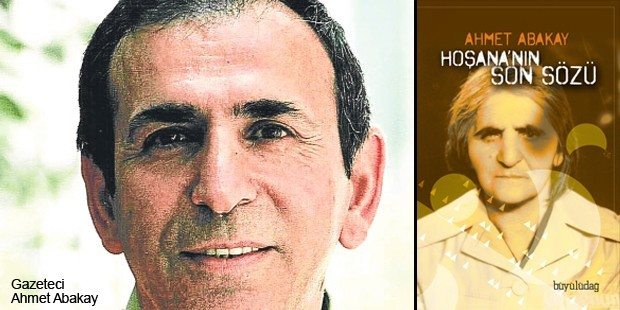
ahmet abakay 300x150 Woman in Turkey Reveals Armenian Identity After 82 Years
Abakay and the cover of his book
Hoşana, who was brought up as an Alevi in a Kurdish village, told the secret to her youngest son, journalist Ahmet Abakay.
Abakay, who is the president of a journalists’ association,  has now published a book, titled Hoşana’nın Son Sözü (Hoşana’s Last Word), detailing his mother’s story.
“How can a person hide her Armenian roots for 82 years from her family, children, grandchildren, and her environment?” asks Abakay, according to an article on the Turkish website T24.com.tr.
In recent years, countless stories of Turkish and Kurdish persons revealing their Armenian identity have appeared in the media.

Friday, September 13, 2013

Mouradian: Encounter with a Skull

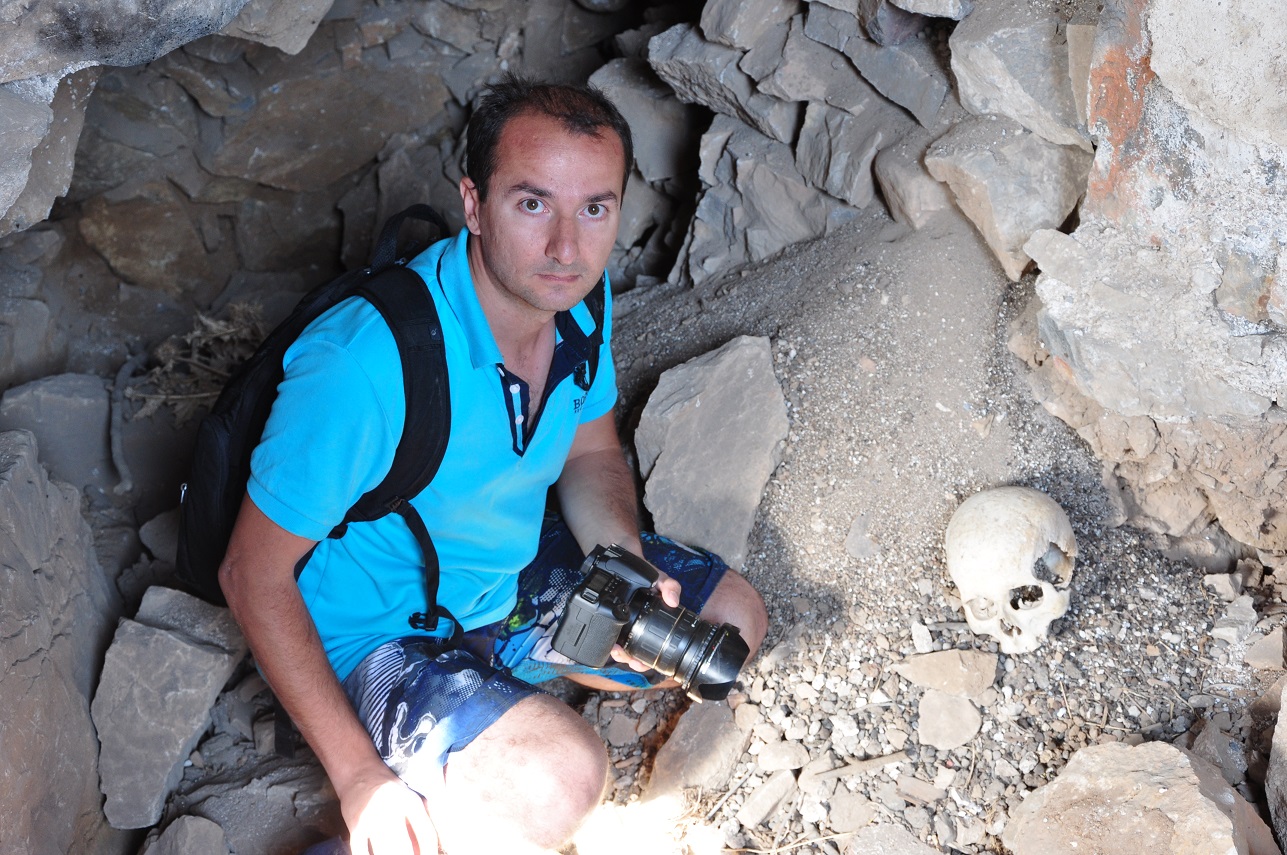
We stand aghast at the entrance of an Armenian monastery* perched on a hill near Lake Van.
“Is that what I think it is?” I ask George, my companion on a trip to document Armenian cultural heritage in Turkey.
“Can’t be,” he replies in disbelief. “Must be a soccer ball.”
I go past broken khatchkars (Armenian cross-stones) and around large holes dug up by treasure hunters—a familiar site for visitors of historic Armenian churches in Turkey—and shudder.
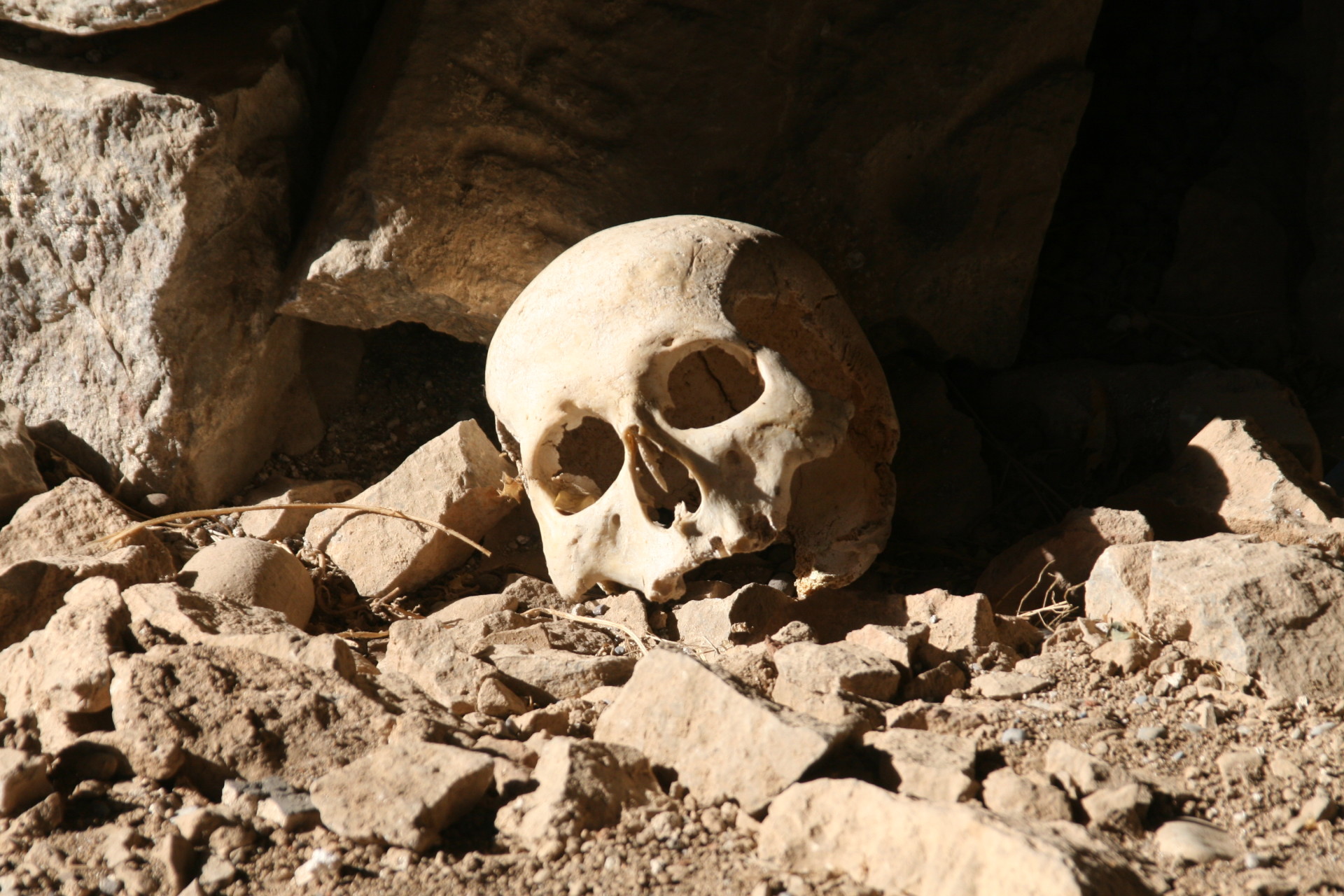
The orbital cavities of a skull are staring at me.
1x1.trans Mouradian: Encounter with a Skull
Nothing could have prepared me for that eye contact with an ancestor who had resurfaced a century after the genocide of my people. (Photo by George Aghjayan)
Nothing could have prepared me for that eye contact with an ancestor who had resurfaced a century after the genocide of my people. Not all the bones and skulls I’ve seen at memorials, not the hundreds of horror stories I’ve heard locals tell of what their forefathers did to Armenians.
I approach and hold the skull in my hands with an affection bordering on the macabre.
Who was this person whose remains were dug out and tossed aside? A clergyman? Perhaps the abbot of the monastery? After all, it was customary to bury clergy inside the narthex.
I can’t help but think that after the murder of a nation, the theft of a people’s land and wealth, and the ongoing denial of the crime, the skeletons are coming out—literally—with a little help from Turks and Kurds who want yet more Armenian gold, more booty, and don’t mind more desecration and destruction.
I don’t want to leave the skull behind, but after a brief discussion with George, we agree to inter it not far away from the hill.
I place the tortured cranium in my hat and we leave the monastery in search for an inconspicuous—and, hopefully, final—resting place.
Soon I, too, am digging a hole.
We bury the skull, while the breeze over Lake Van whispers a prayer.
At some point on the way back, I realize I am wearing my ash-covered hat. I had unwittingly put it back on after burying the skull.
That evening, the mirror in my hotel room shows a dusting of white ash on my hair.

*The name and exact location of the monastery are withheld out of concerns of further desecration.
Author’s [naïve] question: After decades of actively destroying Armenian cultural and religious sites in Turkey and allowing vandals and treasure hunters to finish the job by digging, drilling, and defacing, is it not time for Turkish authorities to break with past practices and initiate a program aimed at stabilizing structures and preventing further vandalism?
1x1.trans Mouradian: Encounter with a Skull
We bury the skull, while the breeze over Lake Van whispers a prayer. (Photo by Khatchig Mouradian)