Friday, November 30, 2012

Upstate New York Armenian Community Participates in Festival of Nations
WATERVLIET, N.Y. — The Festival of Nations, one of the areas most anticipated events
of the year, took place in late October at the Empire State Plaza Convention Center in
downtown Albany, with a strong presence from the Armenian community.
As clearly stated in their bylaws, “The purpose of the Festival is to create awareness
and appreciation for the cultural heritage of the people from diverse national origins and
to promote unity, understanding and fellowship among the many national and ethnic
groups residing in the Capital District and vicinity.” And it did just that as 23 nations,
including Armenia, were represented in this year’s celebration.
The Festival of Nations, Inc., started 41 years ago. Armenia was one of the first nations
to participate. While there were a few years of Armenia’s absence in the event, the community,
through the recent efforts of Deacon Rafi Topalian who also serves on the
Festival of Nations planning committee, has participated on several levels of the Festival.
This year, Armenia had a food booth selling lahmajoun prepared by Bill Nevins of
CeCe’s catering, and, homemade paklava by Marianne Topalian. Additionally, Samantha
Karian participated in the Miss Festival of Nations contest as Miss Armenia, while young
Armenian boys and girls from the area, under the direction of choreographer Maria
Derian, performed traditional dances on stage for a crowd of thousands.
“Participating in the Festival of Nations was an incredible experience for me, not only
because I was representing the Armenian culture, but because I had the opportunity to
learn about other nations, their cultures and customs,” shared Karian. She added, “The
festival is meant to bring nations of the world together, and that’s just what it did this
year and has done for the past four decades. I am proud that I was able to bring a name
and face to the Armenian community this year, and am honored that I was selected to
represent our beloved nation.”
“Nine years ago, I became involved with the Festival of Nations,” Topalian who rallies
the Armenian community. He further explained, “It is
a very important event within the greater Capital
District because it indeed unites and creates an environment
of celebration and acceptance of all cultures.”
Manoj Ajmera, who has served as the chairman of
the Festival of Nations Executive Committee for the
past 27 years, agrees. “This event is a forum to showcase
different cultures while allowing for camaraderie
between people of different nations,” he said, adding
how beneficial it is to the younger generation as well.
“The Festival of Nations provides children a glimpse of
the world in a short time and allows them to also
appreciate their own heritage and culture,” explained
Ajmera, who is originally from India.
This event also serves to unite the Armenian people
as well. This year, Topalian organized the Capital
District Armenian Cultural Organization, which represents
all Armenian churches and groups in the area,
including St. Peter Armenian Church of Watervliet,
Holy Cross Armenian Church of Troy, the United
Armenian Calvary Congregational Church, and, the
Knights and Daughters of Vartan. “We sincerely hope
that this combined contribution will continue in order
for us to represent the Armenian community at the
Festival of Nations annually,” expressed Topalian.
“This newly-formed organization not only serves to have a united representation during
the event, but is also a great platform and example of how we as Armenians can indeed
come together for the greater good.”
“It is rewarding to be a part of a committee that organizes such an invaluable and
important event for the entire community,” concluded Topalian.
To find out about how you can help to ensure Armenia’s participation in the Festival
of Nations for decades to come, or for sponsorship opportunities, contact Topalian by
emailing rafitop@aol.com.
of the year, took place in late October at the Empire State Plaza Convention Center in
downtown Albany, with a strong presence from the Armenian community.
As clearly stated in their bylaws, “The purpose of the Festival is to create awareness
and appreciation for the cultural heritage of the people from diverse national origins and
to promote unity, understanding and fellowship among the many national and ethnic
groups residing in the Capital District and vicinity.” And it did just that as 23 nations,
including Armenia, were represented in this year’s celebration.
The Festival of Nations, Inc., started 41 years ago. Armenia was one of the first nations
to participate. While there were a few years of Armenia’s absence in the event, the community,
through the recent efforts of Deacon Rafi Topalian who also serves on the
Festival of Nations planning committee, has participated on several levels of the Festival.
This year, Armenia had a food booth selling lahmajoun prepared by Bill Nevins of
CeCe’s catering, and, homemade paklava by Marianne Topalian. Additionally, Samantha
Karian participated in the Miss Festival of Nations contest as Miss Armenia, while young
Armenian boys and girls from the area, under the direction of choreographer Maria
Derian, performed traditional dances on stage for a crowd of thousands.
“Participating in the Festival of Nations was an incredible experience for me, not only
because I was representing the Armenian culture, but because I had the opportunity to
learn about other nations, their cultures and customs,” shared Karian. She added, “The
festival is meant to bring nations of the world together, and that’s just what it did this
year and has done for the past four decades. I am proud that I was able to bring a name
and face to the Armenian community this year, and am honored that I was selected to
represent our beloved nation.”
“Nine years ago, I became involved with the Festival of Nations,” Topalian who rallies
the Armenian community. He further explained, “It is
a very important event within the greater Capital
District because it indeed unites and creates an environment
of celebration and acceptance of all cultures.”
Manoj Ajmera, who has served as the chairman of
the Festival of Nations Executive Committee for the
past 27 years, agrees. “This event is a forum to showcase
different cultures while allowing for camaraderie
between people of different nations,” he said, adding
how beneficial it is to the younger generation as well.
“The Festival of Nations provides children a glimpse of
the world in a short time and allows them to also
appreciate their own heritage and culture,” explained
Ajmera, who is originally from India.
This event also serves to unite the Armenian people
as well. This year, Topalian organized the Capital
District Armenian Cultural Organization, which represents
all Armenian churches and groups in the area,
including St. Peter Armenian Church of Watervliet,
Holy Cross Armenian Church of Troy, the United
Armenian Calvary Congregational Church, and, the
Knights and Daughters of Vartan. “We sincerely hope
that this combined contribution will continue in order
for us to represent the Armenian community at the
Festival of Nations annually,” expressed Topalian.
“This newly-formed organization not only serves to have a united representation during
the event, but is also a great platform and example of how we as Armenians can indeed
come together for the greater good.”
“It is rewarding to be a part of a committee that organizes such an invaluable and
important event for the entire community,” concluded Topalian.
To find out about how you can help to ensure Armenia’s participation in the Festival
of Nations for decades to come, or for sponsorship opportunities, contact Topalian by
emailing rafitop@aol.com.
Book on Armenian Genocide becomes bestseller in Turkey
Subject:
Genocide Book Bestseller in Turkey
Book on Armenian Genocide becomes bestseller in Turkey
The
prominent Turkish journalist Hasan Cemal’s recent book titled “1915: Armenian
Genocide,” which was published last month, has become a bestseller in Turkey ,
Today’s Zaman daily’s columnist writes in his article.
The
daily stresses that the author of this controversial book is the grandson of
Cemal Pasha, a key figure in the Young Turk government. In his book, Hasan Cemal
not only presented factual data on the tragedy, but, also, he spoke about how
his personal views have changed and how he turned from a genocide denier to a
recognizer.
“The
book starts with the first column Hasan Cemal wrote on the topic on Feb. 18,
1985, largely loyal to the official view of Ankara, which maintains that the
question has to do with ‘reciprocal massacres’ between Armenians and Muslims,
and ends with the talk he gave at the University of California, Los Angeles on
March 31, 2011, in which he recognized the ‘Armenian genocide,’” the columnist
writes.
The
book also quotes passages from Cemal Pasha’s memoirs published in Germany in
1919, in which Cemal Pasha—who is considered to be one of the organizers of the
genocide—specifically claimed that, “The real blame [for the Genocide] is with
the Russian policy which rascally incited them to attack each other [that is,
the Armenians and the Turks].
Pointing
to the fact that so far no prosecutions were launched in Turkey against the
book’s author, or its publisher, Today’s Zaman states: “Turkey is moving on to
leave no taboos unbroken on the other.”
“The
late Hrant Dink, a prominent Turkish-Armenian journalist, who fell victim to a
racist plot in 2007, said, ‘Neither denial nor recognition first, but
cognition.’ I believe those words are still relevant,” Today’s Zaman’s columnist
concluded in his article.
Sunday, November 25, 2012
Bedrosyan: Hidden Truths or Lies
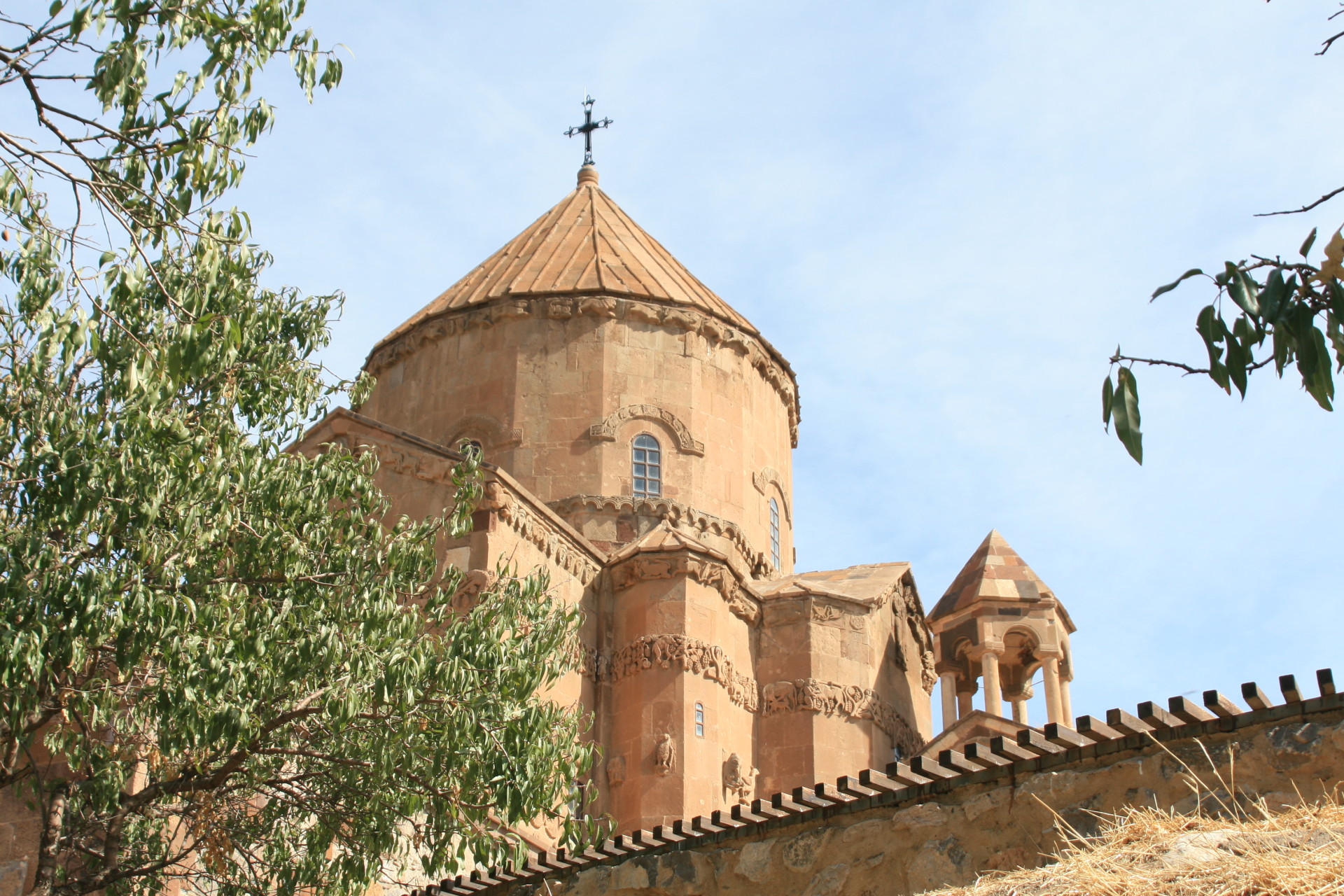
Even the name of the island was changed to
“Akdamar,” meaning “white vein” in Turkish, so that the Armenian
Akhtamar connection would disappear. Why this fear, this paranoia? How
can these moves convince anybody in Turkey or the outside world that
this is not an Armenian church? (Photo by Khatchig Mouradian)
The second largest and most modern airport in Turkey is called the Istanbul Sabiha Gokcen International Airport, named after the adopted daughter of Mustafa Kemal Ataturk, the first female pilot in Turkey, a hero who helped put down the Alevi/Kurdish rebellion in Dersim in 1936-38 by bombing the rebels from her plane. Her photos and accomplishments are prominently displayed on billboards at the airport, and are seen by millions of passengers. And yet, there is another side to her story: Her real name is Hatun Sebilciyan, an Armenian girl from Bursa, who was orphaned in 1915, adopted by Mustafa Kemal Ataturk, and given the Gokcen (azure, color of the sky in Turkish) surname by him after completing pilot training. Former Agos Editor Hrant Dink became a marked man by the “deep state” in Turkey when he first uncovered this truth after interviewing Sebilciyan’s surviving relatives in Lebanon in 2001. This fact was deemed an “insult to Turkishness” by the military, the media, and the government. Another recently uncovered fact: The people being bombed in Dersim were not rebels, but mostly women and children; the leaders were already hanged the previous year, a fact acknowledged and apologized for by Prime Minister Recep Tayyip Erdogan, mostly to score political points against the governing party at the time (the current opposition party). To add more to the sad irony, these women and children were mostly remnants of the 25,000 Armenians who had sought refuge and found shelter with the Dersim Alevi Kurds in 1915. It is not certain whether Sebilciyan/Gokcen knew that she was Armenian, or if she knew that the women and children she bombed were Armenian.
The ancient city of Ani near Kars, situated on the Armenian border separated by the Akhurian River, is known as the “city with 1,001 churches.” It is a former capital of the Armenian Bagratid Kingdom, and had a continuous Armenian presence from the 5th-17th century. It reached its glory days in the 10th and 11th centuries, when it became a central gateway on the Silk Route; its growing population of 100,000 even exceeded Constantinople at the time. Most of the buildings and churches are now destroyed, but the main Ani cathedral, Dikran Honents Church, the Sourp Prgitch Church, and the city walls are still standing, with clearly visible Armenian writings carved in the stonewalls. After years of neglect (or target practice) by the Turkish military on the remaining buildings, the current Turkish government has opened up Ani to tourists and has started some preliminary restoration efforts. However, there is not a single word about Armenians in the Turkish guidebooks or historic descriptions on Ani. The standing churches and buildings are referred to as belonging to the Georgians or the Seljuks. Even the name Ani is now spelled with an i without the dot, or “Anı”—which means “memory” in Turkish—so that the Armenian Ani connection to this city will disappear. The denial policy and the paranoia linked to 1915 has stretched so far that even the Armenian presence in Ani is being denied.
The museum in Kars exhibits historical artifacts collected from the region—wood-carved church doors, stone tombstones, carpets, and dowry chests. Descriptions explain that the ancient ones are from the Urartians, the more recent ones from the Russians or Georgians. And yet, all these artifacts have clearly visible Armenian writings carved in the wood or stone or woven into the fabric. Again, here, the denialist paranoia has gone to extreme limits, but it can only fool a few Turks who cannot recognize the Armenian alphabet.
The Holy Cross Church on Akhtamar Island near Van dates back to 921 AD. It was built by the Armenian King Gagik, together with a palace and other buildings on the island. Armenian priests lived there continuously until 1915. All the buildings on the island were willfully destroyed by the Turkish army from the 1920’s to 1950’s, and only through the intervention of renowned Kurdish author Yashar Kemal was the Holy Cross Church building spared. The current Turkish government decided to restore the church as a state museum in 2007. While there are beautiful Armenian writings carved on the church walls, both inside and outside the building, there is not a single word in the descriptive plaques or guidebooks indicating that this is an Armenian church. Even the name of the island was changed to “Akdamar,” meaning “white vein” in Turkish, so that the Armenian Akhtamar connection would disappear. Why this fear, this paranoia? How can these moves convince anybody in Turkey or the outside world that this is not an Armenian church?
In Istanbul, almost all of the prominent historic buildings built from the 17th-20th century—such as the Ottoman imperial palaces, mosques, military barracks, universities, schools, or fountains—were built by Armenians. Led by the renowned Balyan family, royal architects for several generations, teams of Armenian tradesmen and craftsmen were involved in all aspects of the royal construction projects, including stone masonry, tile and mosaic manufacturing and setting, plumbing, foundations, glassworks, and metal works. And yet, until 10 years ago, official guides would tell tourists that Italian contractors named Balianis were involved in the construction of these buildings. Similarly, at least a quarter of the buildings in the historic Pera district, along the main thoroughfare called Istiklal Caddesi, were either built by Armenian architects or owned by Armenians. Millions of Istanbul citizens and tourists live, work, and play in these buildings, without realizing their historic Armenian connection. Two years ago, when the Hrant Dink Foundation published a book on Armenian architects of Istanbul, and hosted an exhibition displaying photos of the buildings, it was like a revelation, causing uproar and amazement among the media and general public.
The government policy of forced amnesia over an Armenian presence prior to 1915 extends beyond architects and builders. Armenians served as ministers in the Ottoman government from the early 1800’s until 1915, and were in charge of key ministries such as the treasury, armaments, mint, public works, customs, and post office departments. Tens of thousands of Armenians worked in the bureaucracy, army, and state hospitals. And the Turkish government has not only hidden their contributions but their very existence, as well. As a result, the general Turkish population has only recently started to realize the important role played by the Armenians in the Ottoman public sector. The contributions of Armenians in the private sector, of course, are completely and forcefully hidden, because all Armenian assets and properties—such as farms, factories, mines, warehouses, businesses, orchards, and buildings—were plundered and taken over by the Turkish/Kurdish leaders and the general public in 1915. In fact, the very foundation of the Turkish private and public sector economy and industry, the start-up of wealthy individuals and corporations, is based entirely on the seized Armenian assets; therefore, this is an understandable component of the denial policy.
The positive contributions by Armenians during the Turkish Republican era are also kept hidden. The introduction of the Latin alphabet and conversion from Ottoman Turkish to modern Turkish was implemented by an Armenian linguistics expert, Prof. Agop Martayan. In gratitude, Kemal Ataturk gave him the surname of Dilacar, meaning “the one who unlocks the language.” In Turkish textbooks, he is referred to as A. Dilacar, with his first name Agop never spelled out. When he passed away in 1978, the Turkish media printed his obituary as Adil Acar, further Turkifying his given name. Another example of a hidden truth is the case of Armenian musician Edgar Manas, the composer of the Turkish national anthem, a fact only known by a few Armenians and completely covered up by the Turks.
Why this fear, this paranoia, resulting in total denial? It goes beyond the denial of the historical facts of 1915. It is the denial of the existence of an entire people on these lands. Is it fear over the Armenian assets and properties left behind? Is it the simplistic argument: If Armenians never lived here, there could not have been a genocide? But then, if Armenians never lived here, how could they have massacred the Turks, as is claimed by the Turkish version of official history? Rather than speculate about the answers, I’ll refer instead to the remarks made by prominent Kurdish professor Ismail Besikci, the recent recipient of the Hrant Dink Foundation Peace Award:
“The Ittihadists [Committee of Union and Progress] had devised a plan to reorganize the Ottoman Empire on the basis of Turkish ethnic identity. The nationalization of the Ottoman economy was a further significant target. But Greeks, Armenians, and other Christian people, as well as Islamic but non-Turkish people such as Kurds, non-Muslim Turkish and Kurdish people such as Alevis, presented significant obstacles to the execution of this Turkification project. They would get rid of the Greeks by forcing them into exile to Greece. The Armenian population would be eliminated under the guise of forced deportation into the desert. Then, the Kurds would be assimilated into Turkishness, and the Alevis into Islam. The wealth and immovable properties of the Greeks, forced into exile, and the Armenians, perished through genocide, would be confiscated by Muslim Turkish notables. A huge, widespread looting operation took place of the assets left behind by the Armenians and Greeks, helping the Ottoman economy, and then the Turkish economy, to be nationalized. Today, the source of the wealth of the haute bourgeoisie is the Armenian and Greek assets. In Kurdish areas of Turkey, the source of wealth of the Kurdish tribe leaders is again the Armenian and Syriac assets.”
As Besikci has said, it has become apparent that the experiment of trying to convert a multi-ethnic, multi-religious, multi-cultural Anatolian society into a monolithic, mono-ethnic, single-religion Turkish nation, and then denying this fact, has failed. The hidden truths about the fate of the Armenian and Greek people, and their assets, can no longer be denied within and outside Turkey, despite state efforts. The assimilation of the Kurds did not succeed, despite state efforts.
As another Kurdish intellectual has very appropriately remarked, for many years the Turks denied that Armenians were ever killed on these lands, and also denied that Kurds ever lived on these lands. An increasingly larger number of opinion-makers in the Turkish media and academia have started to reveal the hidden truths, and sooner or later, the people of Turkey will realize that the historic facts are different than what they have been told by the state. As it becomes apparent that the hidden truths cannot be hidden any longer, the challenge for the Turkish government will be how to revise its stance from denial to acceptance of the truth, and how to deal with the truth vis a vis its own citizens as well as the outside world. It is hoped that this process will be carried out within the norms of dialogue, the establishment of common body of knowledge.
Posted by Raffi Bedrosyan on November 23, 2012
Thursday, November 22, 2012
Artsakh Newsletter summarizes key developments in the Nagorno Karabakh Republic,
ARTSAKH NEWSLETTER
November 1-15, 2012
Artsakh Newsletter summarizes key developments in the Nagorno Karabakh Republic, Artsakh and is prepared by the NKR Office in the United States.
November 1-15, 2012
Artsakh Newsletter summarizes key developments in the Nagorno Karabakh Republic, Artsakh and is prepared by the NKR Office in the United States.
SECURITY & POLITICS
President of the House of
Representatives of Uruguay Jorge Orrico visited
NKR and met Artsakh Republic President Bako Sahakyan and other officials to
discuss development of relations between Uruguay and NKR. Earlier in Yerevan,
Jorge Orrico condemned
Azerbaijan’s recent pardoning and promotion of a convicted axe murderer,
stressing the importance of protection of human rights on the international
arena. He also noted that Uruguay was the first country in the world to
recognize the Armenian Genocide.
During his visit to Artsakh,
President of the House of Representatives of Uruguay Jorge Orrico spoke at the NKR parliament.
He stressed the importance of peaceful resolution of the conflict and respect
freedom and basic human rights. Artsakh Speaker of the Parliament Ashot Ghoulian
welcomed the visit of Uruguay delegation to Artsakh and stressed the importance
of this visit for Artsakh. Later, the Uruguay delegation visited Shushi and Gandzasar
as well as met Armenian refugees from Azerbaijan.
“Rehabilitation of the Stepanakert
airport is the sovereign right of the Nagorno Karabakh Republic and pursues
solely civilian and humanitarian objectives, including the realization of such a
basic human right as the freedom of movement”, the NKR Foreign Ministry said in
a letter circulated at the UN
General Assembly and Security Council in a response to Azerbaijan’s efforts to
thwart the airport’s opening.
Azerbaijan officially continues
encouraging hatred against Armenians, stressed Armenia’s Representative to the
United Nations, Amb. Garen Nazarian in his address during a UN session on
elimination of racism, racial discrimination and intolerance.
Armenia will continue pushing for
a negotiated settlement to the Karabakh conflict, but the country will not stand
aside in case of new aggression against NKR from Azerbaijan, Armenian President
Serzh Sargsyan stated in his interview
with the Wall Street Journal. Sargsyan stressed that “…Azerbaijan is
waiting for an occasion to start a conflict” and warned that that “would harm
the people of Nagorno-Karabakh and Armenia but that most harm would come to the
people of Azerbaijan.”
The recent meeting of Foreign
Ministers of Armenia and Azerbaijan mediated by the OSCE Minsk Group Co-Chairs
was an attempt to bring Azerbaijan to constructive dialogue, said Armenian Foreign Minister
Edward Nalbandyan.
Azerbaijan did not allow U.S.
Ambassador to Azerbaijan Richard Morningstar to visit the site in Julfa,
Nakhijevan, where a medieval Armenian cemetery with thousands of cross-stone
monuments (khachkars) was destroyed by the Azerbaijani
authorities in 2005 (see the video). The Armenian
National Committee of America called on the U.S. Ambassador to visit the
area and to secure public access to the site. See full documentary
on the subject.
BUSINESS & ECONOMY
Growth in the construction sector continues in Artsakh, with
$65 million invested in the first nine months of this year. See video.
Base Metals Company is preparing to put into operation a
new ore deposit in the area of Tsakhkashen in Martakert region, NKR within
two years.
SOCIETY
‘Hayastan’ All-Armenian Fund’s
15th international telethon will take place on November 22
live between 8:00am-8:00pm PST. (click for more info). This year’s
contributions will assist in the rural development in
Armenia and Artsakh and the urgent humanitarian
needs of Syrian Armenians.
President Sahakyan stressed the importance of rural
development projects for Artsakh, in his speech during
the Hayastan All-Armenian Fund’s annual fundraising dinner in Moscow that
secured pledges of more than $12
million. NKR President called upon Armenians to participate actively
in the upcoming telethon.
Shoushi played host for a joint meeting of NKR and Armenian
parliaments’ standing committees on Science, Education, Culture, Youth and Sport
Affairs.
A few words about
Artsakh
The Nagorno Karabakh Republic,
Artsakh, was established in 1991 basing on a declaration of the local
legislature, and results of a subsequent nation-wide referendum. The people of
Artsakh defended their choice in a war unleashed by Azerbaijan.
The Nagorno Karabakh Republic,
Artsakh has emerged as a democratic, rule-of-law state with capable armed
forces, a growing market economy, and an independent foreign
policy.
*
* *
Join us on
Facebook: http://www.facebook.com/pages/Office-of-Artsakh-in-the-USA/338103006220449
*
* *
We would like to hear from you. Please send your comments to Press Service at: info@nkrusa.org
We would like to hear from you. Please send your comments to Press Service at: info@nkrusa.org
*
* *
This material is
distributed by the Office of the Nagorno Karabakh Republic in the United States on behalf of the government of
the Nagorno Karabakh Republic, Artsakh. The NKR Office is registered with
the U.S. government under the Foreign Agent
Registration Act. Additional information is available at the Department of
Justice, Washington, D.C.
The Office of the Nagorno Karabakh Republic in
the United States is based in Washington, DC and works with the U.S. government, academia and the public
representing the official policies and interests of the Nagorno Karabakh Republic, Artsakh. The NKR Office is
registered with the U.S. Government under the Foreign Agent Registration Act.
Additional information is available at the Department of Justice, Washington, D.C.
Office of
the Nagorno Karabakh Republic in the United States
1334 G ST. NW,
Suite 200, Washington, DC 20005
Thursday, November 15, 2012
Photograph Links Germans to 1915 Armenia Genocide
Newly discovered picture shows Kaiser's officers at scene of Turkish atrocity
Robert Fisk, “The Independent”, Beirut, Lebanon
 The
photograph – never published before – was apparently taken in the
summer of 1915. Human skulls are scattered over the earth. They are all
that remain of a handful of Armenians slaughtered by the Ottoman Turks
during the First World War. Behind the skulls, posing for the camera,
are three Turkish officers in tall, soft hats and a man, on the far
right, who is dressed in Kurdish clothes.
The
photograph – never published before – was apparently taken in the
summer of 1915. Human skulls are scattered over the earth. They are all
that remain of a handful of Armenians slaughtered by the Ottoman Turks
during the First World War. Behind the skulls, posing for the camera,
are three Turkish officers in tall, soft hats and a man, on the far
right, who is dressed in Kurdish clothes.
But the two other men are Germans, both
dressed in the military flat caps, belts and tunics of the
Kaiserreichsheer, the Imperial German Army. It is an atrocity snapshot –
just like those pictures the Nazis took of their soldiers posing before
Jewish Holocaust victims a quarter of a century later.
Did the Germans participate in the mass killing of Christian Armenians in 1915? This is not the first photograph of its kind; yet hitherto the Germans have been largely absolved of crimes against humanity during the first holocaust of the 20th century. German diplomats in Turkish provinces during the First World War recorded the forced deportations and mass killing of a million and a half Armenian civilians with both horror and denunciation of the Ottoman Turks, calling the Turkish militia-killers "scum". German parliamentarians condemned the slaughter in the Reichstag.
Indeed, a German army medical officer, Armin Wegner, risked his life to take harrowing photographs of dying and dead Armenians during the genocide. In 1933, Wegner pleaded with Hitler on behalf of German Jews, asking what would become of Germany if he continued his persecution. He was arrested and tortured by the Gestapo and is today recognised at the Yad Vashem Jewish Holocaust memorial in Israel; some of his ashes are buried at the Armenian Genocide Museum in the capital, Yerevan.
Did the Germans participate in the mass killing of Christian Armenians in 1915? This is not the first photograph of its kind; yet hitherto the Germans have been largely absolved of crimes against humanity during the first holocaust of the 20th century. German diplomats in Turkish provinces during the First World War recorded the forced deportations and mass killing of a million and a half Armenian civilians with both horror and denunciation of the Ottoman Turks, calling the Turkish militia-killers "scum". German parliamentarians condemned the slaughter in the Reichstag.
Indeed, a German army medical officer, Armin Wegner, risked his life to take harrowing photographs of dying and dead Armenians during the genocide. In 1933, Wegner pleaded with Hitler on behalf of German Jews, asking what would become of Germany if he continued his persecution. He was arrested and tortured by the Gestapo and is today recognised at the Yad Vashem Jewish Holocaust memorial in Israel; some of his ashes are buried at the Armenian Genocide Museum in the capital, Yerevan.

It is this same Armenian institution and
its energetic director, Hayk Demoyan, which discovered this latest
photograph. It was found with other pictures of Turks standing beside
skulls, the photographs attached to a long-lost survivor's testimony.
All appear to have been taken at a location identified as "Yerznka" –
the town of Erzinjan, many of whose inhabitants were murdered on the
road to Erzerum. Erzinjan was briefly captured by Russian General
Nikolai Yudenich from the Turkish 3rd Army in June of 1916, and
Armenians fighting on the Russian side were able to gather much
photographic and documentary evidence of the genocide against their
people the previous year. Russian newspapers – also archived at the
Yerevan museum – printed graphic photographs of the killing fields. Then
the Russians were forced to withdraw.
Wegner took many photographs at the end of the deportation trail in what is now northern Syria, where tens of thousands of Armenians died of cholera and dysentery in primitive concentration camps. However, the museum in Yerevan has recently uncovered more photos taken in Rakka and Ras al-Ayn, apparently in secret by Armenian survivors. One picture – captioned in Armenian, "A caravan of Armenian refugees at Ras al-Ayn" – shows tents and refugees. The photograph seems to have been shot from a balcony overlooking the camp.
Another, captioned in German "Armenian camp in Rakka", may have been taken by one of Wegner's military colleagues, showing a number of men and women among drab-looking tents. Alas, almost all those Armenians who survived the 1915 death marches to Ras al-Ayn and Rakka were executed the following year when the Turkish-Ottoman genocide caught up with them.
Some German consuls spoke out against Turkey. The Armenian-American historian Peter Balakian has described how a German Protestant petition to Berlin protested that "since the end of May, the deportation of the entire Armenian population from all the Anatolian Vilayets [governorates] and Cilicia in the Arabian steppes south of the Baghdad-Berlin railway had been ordered". As the Deutsche Bank was funding the railway, its officials were appalled to see its rolling stock packed with Armenian male deportees and transported to places of execution. Furthermore, Professor Balakian and other historians have traced how some of the German witnesses to the Armenian holocaust played a role in the Nazi regime.
Konstantin Freiherr von Neurath, for example, was attached to the Turkish 4th Army in 1915 with instructions to monitor "operations" against the Armenians; he later became Hitler's foreign minister and "Protector of Bohemia and Moravia" during Reinhard Heydrich's terror in Czechoslovakia. Friedrich Werner von der Schulenburg was consul at Erzerum from 1915-16 and later Hitler's ambassador to Moscow.
Rudolf Hoess was a German army captain in Turkey in 1916; from 1940-43, he was commandant of the Auschwitz extermination camp and then deputy inspector of concentration camps at SS headquarters. He was convicted and hanged by the Poles at Auschwitz in 1947.
We may never know, however, the identity of the two officers standing so nonchalantly beside the skulls of Erzinjan.
Wegner took many photographs at the end of the deportation trail in what is now northern Syria, where tens of thousands of Armenians died of cholera and dysentery in primitive concentration camps. However, the museum in Yerevan has recently uncovered more photos taken in Rakka and Ras al-Ayn, apparently in secret by Armenian survivors. One picture – captioned in Armenian, "A caravan of Armenian refugees at Ras al-Ayn" – shows tents and refugees. The photograph seems to have been shot from a balcony overlooking the camp.
Another, captioned in German "Armenian camp in Rakka", may have been taken by one of Wegner's military colleagues, showing a number of men and women among drab-looking tents. Alas, almost all those Armenians who survived the 1915 death marches to Ras al-Ayn and Rakka were executed the following year when the Turkish-Ottoman genocide caught up with them.
Some German consuls spoke out against Turkey. The Armenian-American historian Peter Balakian has described how a German Protestant petition to Berlin protested that "since the end of May, the deportation of the entire Armenian population from all the Anatolian Vilayets [governorates] and Cilicia in the Arabian steppes south of the Baghdad-Berlin railway had been ordered". As the Deutsche Bank was funding the railway, its officials were appalled to see its rolling stock packed with Armenian male deportees and transported to places of execution. Furthermore, Professor Balakian and other historians have traced how some of the German witnesses to the Armenian holocaust played a role in the Nazi regime.
Konstantin Freiherr von Neurath, for example, was attached to the Turkish 4th Army in 1915 with instructions to monitor "operations" against the Armenians; he later became Hitler's foreign minister and "Protector of Bohemia and Moravia" during Reinhard Heydrich's terror in Czechoslovakia. Friedrich Werner von der Schulenburg was consul at Erzerum from 1915-16 and later Hitler's ambassador to Moscow.
Rudolf Hoess was a German army captain in Turkey in 1916; from 1940-43, he was commandant of the Auschwitz extermination camp and then deputy inspector of concentration camps at SS headquarters. He was convicted and hanged by the Poles at Auschwitz in 1947.
We may never know, however, the identity of the two officers standing so nonchalantly beside the skulls of Erzinjan.

Photograph Links Germans to 1915 Armenia Genocid
Wednesday, November 7, 2012
Bell Tolls for Armenians Once Again in Diyarbakir
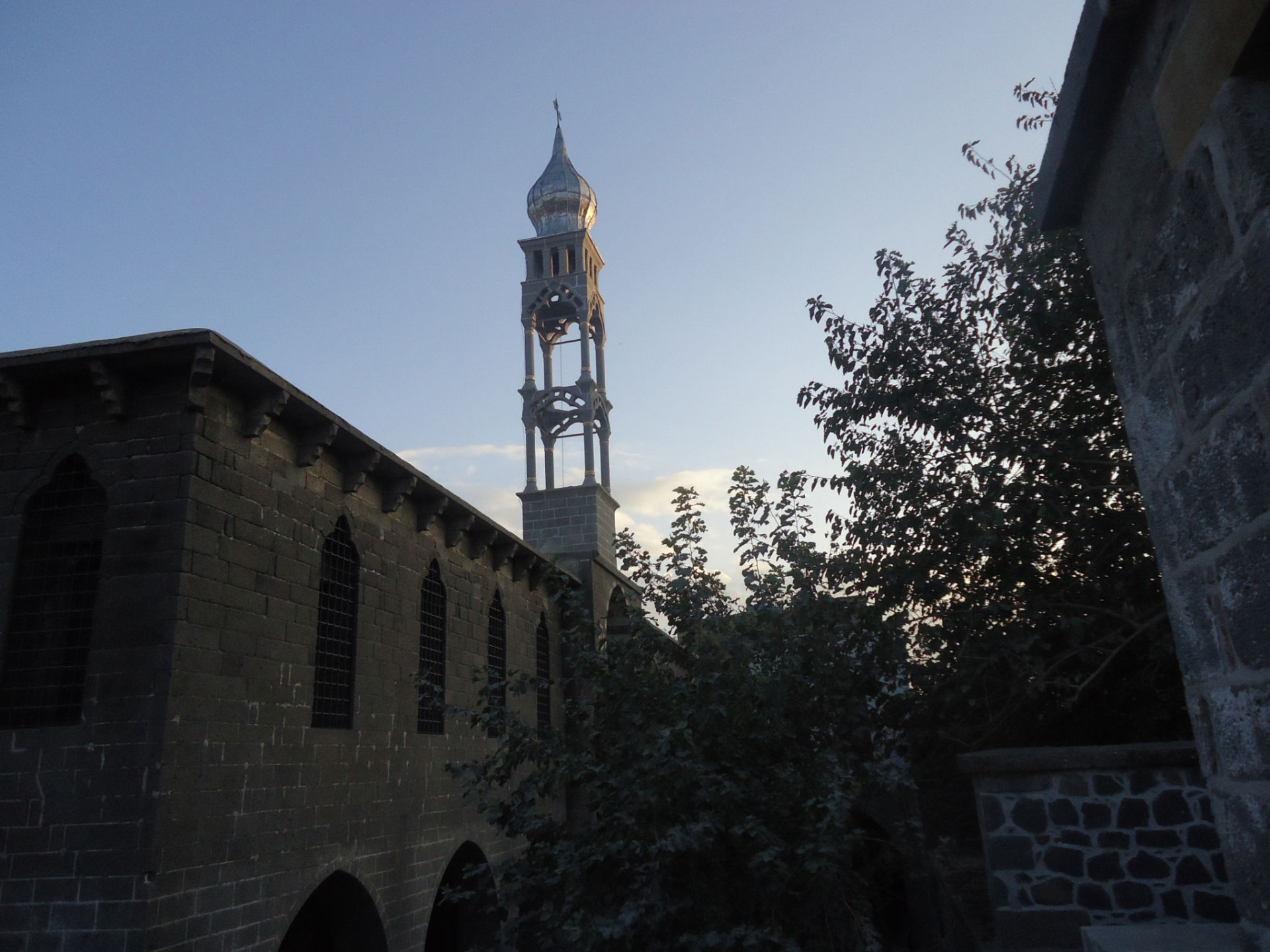
The bell tower of Sourp Giragos Church (Photo by Gulisor Akkum, The Armenian Weekly)
DIYARBAKIR, Turkey (A.W.)—The bell tower of Sourp Giragos Armenian Church in Diyarbakir was opened today and, after decades of silence, the bell tolled once again for Armenians.
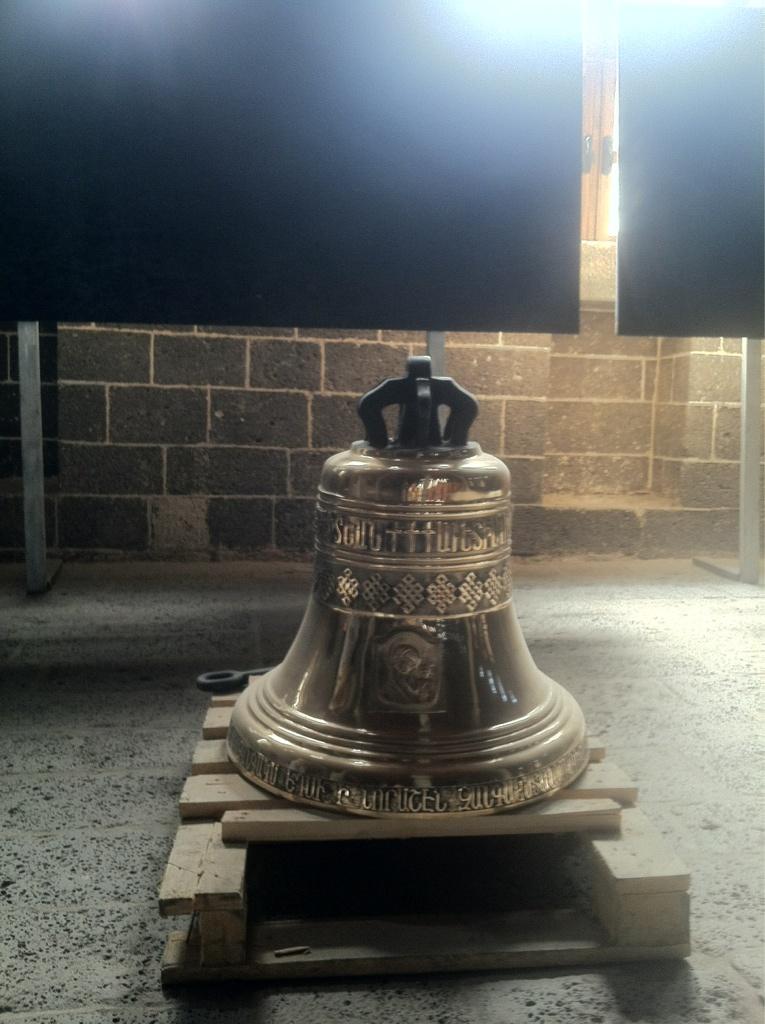
The Sourp Giragos Church bell (Photo by Khatchig Mouradian)
The Sourp Giragos Foundation of the Patriarchate began the renovation of the church in 2009, and the church opened for worship in October 2011. Due to a lack of funding, however, the bell tower was not rebuilt.
At the opening ceremony of the bell tower, the head of the Sourp Giragos Foundation, Ergun Ayik, said, “This church was once a beautiful, living proof of the Armenian population density in this city. Its architecture stands as testament to how advanced Armenian civilization was.”
He added, “Our ancestors bequeathed this church to us, yet for known reason, we weren’t able to claim ownership of this heritage. The renovation marked the beginning of the process of assuming this ownership.”
The director of Aras Publishing House, Mgrditch Margosyan, in turn, recounted how 12 years ago, at a symposium on the protection of Diyarbakir’s cultural and historical heritage, speakers were only discussing fortresses and mosques. “When my turn came to speak, I brought up the issue of the churches. I suppose such messages eventually rang a bell.”
Indeed, with the moral and financial support of Diyarbakir Mayor Osman Baydemir, the renovation of the church was completed, and, once more, after decades of silence, the sound of the church bell was heard in Diyarbakir side by side with the calls to prayer from the city’s mosques. (For details on the renovation, click here.)
Built in 1376, Sourp Giragos is the largest Armenian church in the Middle East. During the Armenian Genocide, the bell tower was demolished under the pretext that it was higher than the minarets of the mosques in the city, and the church itself was used as storage space for confiscated Armenian property. After World War I, Sumerbank (a state-owned bank) used the church as storage space. (Click here for a detailed history of the church.)
Translated from Turkish by Khatchig Mouradian.
Subscribe to:
Comments (Atom)