Reflections on a Groundbreaking Conference in Istanbul
In early November, the Hrant Dink Foundation held a conference on
“Islamicized Armenians” at the Istanbul Bosphorus University, breaking
one more taboo in Turkey. Islamicized Armenians were hitherto a hidden
reality, a secret known by many, but which couldn’t be revealed to
anyone, whispered behind closed doors but filed in government
intelligence offices, and it finally broke free into the public.
The late Hrant Dink would have been elated to see this conference
become a reality, eight years after the first conference on “Armenians
during the late Ottoman Empire era and the 1915 events” was held at
Istanbul Bilgi University, when protesters hurled insults at the
conference participants and government ministers labelled them as
“traitors stabbing Turks in the back.” That conference had also broken a
taboo, but Hrant was already a marked man for revealing the identity of
the most famous Islamicized Armenian—Sabiha Gokcen, Ataturk’s adopted
daughter and the first female Turkish combat pilot, who was an Armenian
orphan named Hatun Sebilciyan.
It is a known fact that in 1915, tens of thousands of Armenian
orphans were forcibly Islamicized and Turkified; that tens of thousands
of Armenian girls and young women were captured by Kurds and Turks as
slaves, maids, or wives; that tens of thousands Armenians converted to
Islam to escape the deportations and massacres; and that tens of
thousands of Armenians found shelter in friendly Kurdish and Alevi
villages, but lost their identity. What happened to these survivors,
these living victims of the 1915 genocide? Hrant was obsessed with them:
“We keep talking about the ones ‘gone’ in 1915. Let us start talking
about the ones who ‘remained.’”
These remaining people survived, but mostly in living hells.
Remarkably, their children and grandchildren are now “coming out,” are
no longer hiding their Armenian roots. One of the first was the famous
Turkish lawyer Fethiye Cetin, who revealed that her grandmother was
Armenian, in her book My Grandmother. This was followed by another book edited by Aysegul Altinay and Fethiye Cetin, titled The Grandchildren,
about dozens of Turkish/Kurdish people describing their Armenian roots,
without revealing their real identities. Then came the reconstruction
of the Surp Giragos Armenian Church in Diyarbakir/Dikranagerd, which
became a destination for many hidden Armenians in Eastern Anatolia. On
average, over a hundred people visit the church daily, most of them
hidden Armenians. Some come to pray, get baptized, or married, but most
just visit to feel Armenian, without converting back to Christianity.
This has created a new identity of Muslim Armenians, in addition to
the historical and traditional identity of Christian Armenians. In a
country where only Muslim Turks can work for the government, where being
non-Muslim is sufficient excuse for persecution, harassment and
attacks, where the word Armenian is used as the biggest insult, it takes
real courage for someone to reveal that he is now an Armenian and no
longer a Turk/Kurd/Muslim. People can easily lose their jobs,
livelihood, or even lives for changing their identity. As an example of
the level of racism and discrimination in the country, an
ultra-nationalist opposition member of parliament years ago accused
Turkish President Abdullah Gul of having Armenian roots in his family
from Kayseri. Gul sued her for defamation, and the courts sided with
him, ordering her to pay compensation for such an insult.
It is difficult to estimate the number of Islamicized Armenians in
Turkey, and even more difficult to predict what proportion of them are
aware of their Armenian roots, or how many are willing to regain their
Armenian identity. Based on independent studies of the 1915 events, one
can conclude that more than 100,000 orphans were forcibly
Islamicized/Turkified, and that another 200,000 Armenians survived by
converting to Islam or by finding shelter in friendly Kurdish and Alevi
regions. It is therefore conceivable that 300,000 souls survived as
Muslims. The population of Turkey has increased seven fold since then;
using the same multiple, one can extrapolate that there may be two
million people with Armenian roots in Turkey today, originating from the
1915 survivors. There were even more widespread conversions to Islam
during the 1894-96 massacres, when entire villages were forcibly
Islamicized. A couple centuries before, Hamshen Armenians were
Islamicized in northeast Anatolia. The Muslim Hamshentsis,
numbering about 500,000, speak a dialect based on Armenian, but had
never identified themselves as Armenian, until recently. Adding all
these forced conversions prior to and during 1915, one can conclude that
the number of people with Armenian roots in present-day Turkey reaches
several million. (The numbers are difficult to accurately estimate, but
in any case, they easily exceed the present population of Armenia.)
The reality is that the secrets of “Armenianness” whispered for three
or four generations after 1915 are now becoming loud revelations of new
identities. As evidenced in the recent conference, even Hamshen
Armenians have started exploring and reclaiming their long lost roots.
During the reconstruction of the Surp Giragos Church and in my travels
in eastern and southeastern Anatolia, one out of every three Kurds that I
met had an Armenian grandmother in the family. This fact, hidden until
recently, is now revealed openly, often leading young generations to
reclaim their Armenian identities, but without giving up Islam. One
interesting observation is that the hidden Armenians were aware of other
hidden ones and all attempted to intermarry, resulting in many couples
who ended up having Armenian roots from both parents.
The conference attracted numerous academicians, historians, and
journalists from both within and outside Turkey, as well as dozens of
presenters of oral history. One of the most dramatic presentations was
about Sara, a 15-year-old Armenian girl from Urfa Viranshehir, who was
captured by the Turkish strongman of the region, Eyup Aga. Eyup wanted
to take Sara as his third wife. When Sara refused, Eyup killed her
mother. When Sara refused again, Eyup killed her father. When Eyup
threatened to kill Sara’s little brother, Sara couldn’t resist any more,
and married the killer of her parents, on the condition that her
brother be spared and she be allowed to keep her name. But her brother
was also eventually killed. As she resisted Eyup’s advances, she was
repeatedly raped and was pregnant 15 times, giving birth to 15 babies,
who all died prematurely. Eyup constantly tortured her, even marking a
cross in her body with a knife. His family also mistreated her, viewing
her as an outcast, and she had a hellish life to the end. At the end of
the story, the presenter, a Turkish academician, revealed that Eyup and
the family who committed these crimes against Sara was her own family.
Her final statement was even more dramatic than the story: “We always
hear stories told by the victims. It is now time for the perpetrators to
start talking about and owning their crimes.”
There are new revelations about how the Turkish government kept tabs
on Islamicized Armenians. Apparently, the government kept records of
every Armenian village or large Armenian clan that was forcibly
Islamicized in 1915. It was recently discovered that the identification
cards of hidden or known Armenians had a special numbering system to
secretly identify them. There are anecdotes that a few Turkish
candidates for air force pilot positions were turned away even though
they qualified after rigorous tests, when government records revealed
that they come from Islamicized Armenian families.
It is of greater concern to us how the Islamicized Armenians are
being dealt with by Armenians. It seems that the Istanbul Armenian
community and, more critically, the Istanbul Armenian Patriarchate are
unable or unwilling to accept the hidden Armenians coming out as
Armenians, unless these people accept Christianity, get baptized, and
learn to speak Armenian. But it is unrealistic to expect the new
Armenians to comply with these requirements. Since Armenians in Turkey
are all defined as belonging to the Armenian Church, if the newcomers
are rejected by the Patriarchate, they become double outcasts, not only
from their previous Muslim Turkish/Kurdish community, but also from the
Armenian community, as they cannot get married, baptized, or buried by
the church and cannot send their children to Armenian schools. If they
have made a conscious decision to identify themselves as Armenian—a
risky and dangerous initiative under the present circumstances—they
should be readily accepted as Armenians, regardless of whether they stay
Muslim or atheist or anything else. Relationships get even more
complicated as there are now many families with one branch carrying on
life as Muslim Turks/Kurds, another branch as Muslim Armenian, and a
third branch as Christian Armenian. The Etchmiadzin Church in Armenia is
more tolerant, and has issued the following statement: “Common
ethnicity, land, language, history, cultural heritage, and religion are
general measures in defining a nation. Even if one or more of these
measures can be missing due to historic reasons, such as the inability
to speak the language, or practice the religion, or the lack of
knowledge of cultural and historic heritage, this should not be used to
exclude one’s Armenian identity.” Yet, Charles Aznavour’s approach is
the most welcoming: “Armenia should embrace the Islamicized Armenians
and open its doors to them.”
After Armenia, Karabagh, and the Armenian Diaspora, there is now an emerging fourth
Armenian world—the Islamicized Armenians of Turkey. Accepting this new
reality will help both Turks and Armenians understand the realities and
consequences of 1915.
Tuesday, November 19, 2013

Armenians of China Celebrate Opening of ‘Maxian Hong Kong Armenian Center’
HONG KONG—On Sat., Nov. 9, the Armenian community of China, known as
“ChinaHay,” along with more than 100 guests, including many from
overseas, gathered in Hong Kong to attend the official opening ceremony
of the newly established Jack & Julie Maxian Hong Kong Armenian
Center.
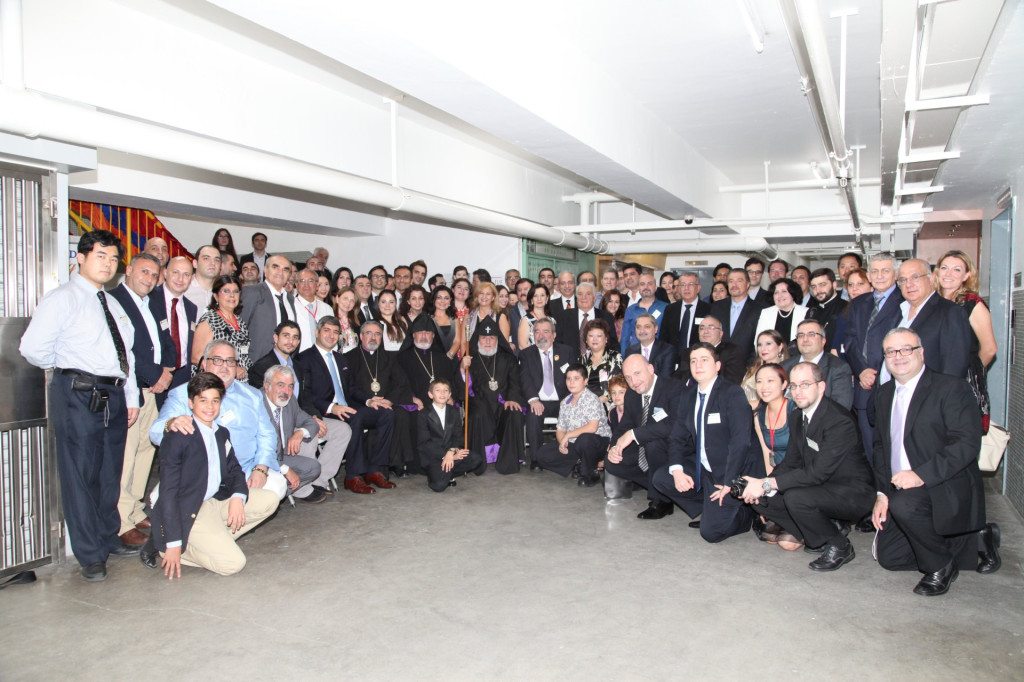 Honorary guests included His Holiness Karekin II, Supreme Patriarch
and Catholicos of All Armenians; His Grace Bishop Haigazoun Najarian,
Primate of the Diocese of Australia and New Zealand; His Eminence
Archbishop Aram Ateshian, Patriarchal Vicar of Constantinople; His
Excellency the Armenian Ambassador to China, Armen Sargsyan; and the
Honorary Consul of Armenia to Thailand, Arto Artinian.
The two-day celebration began with a ribbon-cutting ceremony followed by the blessing given by Catholicos Karekin II at the beautiful center altar built especially for religious events. “Armenian couples will marry here, and Armenian kids will be baptized in this house,” Jack Maxian said in his welcoming speech. “We will arrange Armenian meetings in this center, festivities devoted to Armenian culture, and foreigners will be surprised that the Armenian people are able to build an Armenian house outside of their own land.”
That evening, Catholicos Karekin II granted the St. Nerses Shnorhali Medal of Honor to Mr. and Mrs. Maxian for their devotion to the nation. “We are happy to see that Armenian national identity is so well preserved in a remote country like China, despite the small size of the community,” he said. His Holiness also visited the grave of Sir Paul Catchik Chater, likely the most famous Armenian in Asia, who moved to Hong Kong in 1864 from Calcutta India and became one of the most successful businessmen in the history of Hong Kong with streets, parks, and buildings across Hong Kong still bearing his name.
Speaking on behalf of the Armenian community of China, Henri Arslanian highlighted the symbolic importance of this event and presented Mr. and Mrs. Maxian with a real piece from Mt. Ararat in appreciation of their years of devotion to the community and to celebrate their efforts in bringing the idea of creating an Armenian center to life.
Jack Maxian, in his inauguration speech, said, “I am convinced that, very soon, with your personal and collective commitment, the capacity of the center will multiply and the Armenian community of China will become exemplary in its patriotic and Armenian-oriented activity.” Jack and Julie Maxian generously donated a large collection of paintings to adorn the walls of the center, all of which were made especially for this occasion. The guests also enjoyed a wonderful Armenian dinner prepared by Julie Maxian for the occasion.
On the second day of the great celebration, Bishop Haigazoun Najarian held the Holy Mass, the first ever celebrated in the center. The guests also enjoyed brunch, after which they attended a lecture by Prof. Sebouh Aslanian, the Chair of Armenian Studies at UCLA, who traveled to Hong Kong for the occasion and described the role of Julfan Armenian merchants in the early modern world of the Indian Ocean, and up to Manila and China.
Later, the guests learned that Armenian-language, history, and culture classes would be offered at the center via the Armenian Virtual College (AVC). Yervant Zorian, the founder of the AVC, described how the educational institute has been helping similar communities worldwide and the enthusiasm of the AVC team in working with the Armenian community of China in the coming years.
The Jack & Julie Hong Kong Armenian Center will now host Armenians from China and all over the world. It will hold events with guest speakers, hold exhibitions, invite Armenian artists to perform, but, most importantly, it will be a gathering venue for Armenians and their friends.
Armenians have been traveling to and living in China for centuries. In 1910, the Armenian Relief Society (ARS) created the Armenian Club of Shanghai as a station for refugees in Shanghai. The club evolved over the years into a social club where the community gathered and where Armenian weddings, baptisms, and events took place. In 1923, the 400-strong community of Harbin in northern China built their first church. Most of the Armenians in China left the country around 1949 following the communist takeover. The Armenian Club of Shanghai was converted to private ownership by the Communists in 1949, and the Armenian Church was destroyed as part of Mao’s Cultural Revolution in the late 1960’s. The Armenian community of China has been growing considerably over the last few years. It currently consists of approximately 500 Armenians living in the country, mainly in the cities of Hong Kong, Shenzhen, Guangzhou, Shanghai, Nanjing, and Beijing.
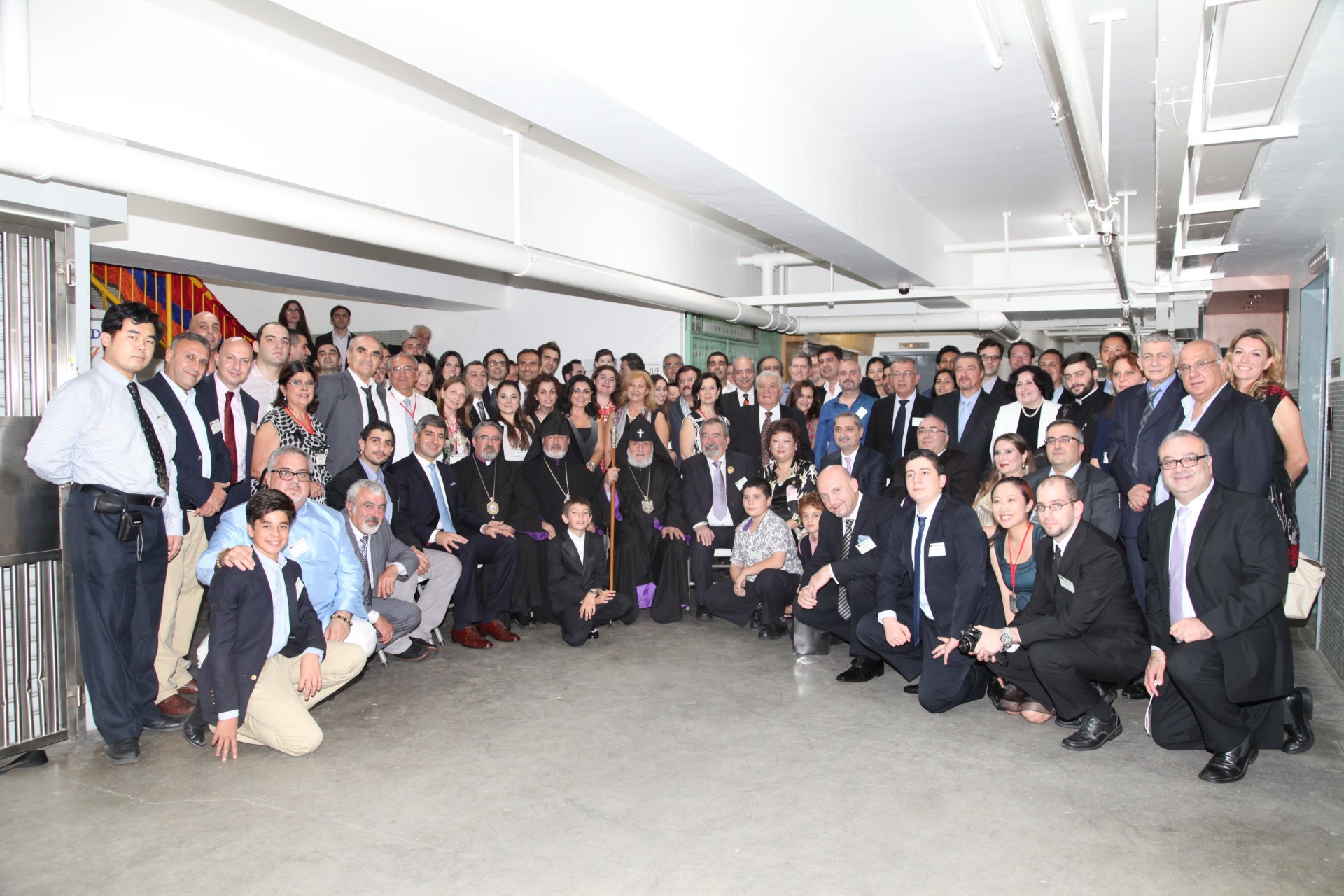
A group photo from the celebration
The two-day celebration began with a ribbon-cutting ceremony followed by the blessing given by Catholicos Karekin II at the beautiful center altar built especially for religious events. “Armenian couples will marry here, and Armenian kids will be baptized in this house,” Jack Maxian said in his welcoming speech. “We will arrange Armenian meetings in this center, festivities devoted to Armenian culture, and foreigners will be surprised that the Armenian people are able to build an Armenian house outside of their own land.”
That evening, Catholicos Karekin II granted the St. Nerses Shnorhali Medal of Honor to Mr. and Mrs. Maxian for their devotion to the nation. “We are happy to see that Armenian national identity is so well preserved in a remote country like China, despite the small size of the community,” he said. His Holiness also visited the grave of Sir Paul Catchik Chater, likely the most famous Armenian in Asia, who moved to Hong Kong in 1864 from Calcutta India and became one of the most successful businessmen in the history of Hong Kong with streets, parks, and buildings across Hong Kong still bearing his name.
Speaking on behalf of the Armenian community of China, Henri Arslanian highlighted the symbolic importance of this event and presented Mr. and Mrs. Maxian with a real piece from Mt. Ararat in appreciation of their years of devotion to the community and to celebrate their efforts in bringing the idea of creating an Armenian center to life.
Jack Maxian, in his inauguration speech, said, “I am convinced that, very soon, with your personal and collective commitment, the capacity of the center will multiply and the Armenian community of China will become exemplary in its patriotic and Armenian-oriented activity.” Jack and Julie Maxian generously donated a large collection of paintings to adorn the walls of the center, all of which were made especially for this occasion. The guests also enjoyed a wonderful Armenian dinner prepared by Julie Maxian for the occasion.
On the second day of the great celebration, Bishop Haigazoun Najarian held the Holy Mass, the first ever celebrated in the center. The guests also enjoyed brunch, after which they attended a lecture by Prof. Sebouh Aslanian, the Chair of Armenian Studies at UCLA, who traveled to Hong Kong for the occasion and described the role of Julfan Armenian merchants in the early modern world of the Indian Ocean, and up to Manila and China.
Later, the guests learned that Armenian-language, history, and culture classes would be offered at the center via the Armenian Virtual College (AVC). Yervant Zorian, the founder of the AVC, described how the educational institute has been helping similar communities worldwide and the enthusiasm of the AVC team in working with the Armenian community of China in the coming years.
The Jack & Julie Hong Kong Armenian Center will now host Armenians from China and all over the world. It will hold events with guest speakers, hold exhibitions, invite Armenian artists to perform, but, most importantly, it will be a gathering venue for Armenians and their friends.
Armenians have been traveling to and living in China for centuries. In 1910, the Armenian Relief Society (ARS) created the Armenian Club of Shanghai as a station for refugees in Shanghai. The club evolved over the years into a social club where the community gathered and where Armenian weddings, baptisms, and events took place. In 1923, the 400-strong community of Harbin in northern China built their first church. Most of the Armenians in China left the country around 1949 following the communist takeover. The Armenian Club of Shanghai was converted to private ownership by the Communists in 1949, and the Armenian Church was destroyed as part of Mao’s Cultural Revolution in the late 1960’s. The Armenian community of China has been growing considerably over the last few years. It currently consists of approximately 500 Armenians living in the country, mainly in the cities of Hong Kong, Shenzhen, Guangzhou, Shanghai, Nanjing, and Beijing.
Wednesday, November 13, 2013
Examining ‘the Denialist Habitus in Post-Genocidal Turkey’
An Interview with Talin Suciyan
The forced eradication of the Armenians from their homeland in 1915 has generated a unique scholarship that closely examines the genocidal policies from 1915 to 1923. One aspect, however, has remained blurred: the post-genocidal period and the repercussions of the genocide on the remaining Armenian population in Turkey. In this interview with the Armenian Weekly, Talin Suciyan shows the consistency of state policies and internalization of these policies on the level of everyday life by the larger parts of the society. According to Suciyan, the normalization of denial both by the state and the society created a denialist habitus. She also presents tangible examples of how the Armenians had to become part of the denial as there was no other way of existence for them in the public sphere.
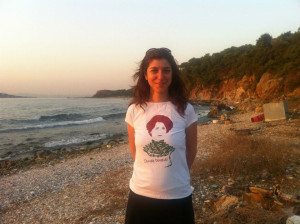
Suciyan was born in Istanbul, Turkey. She attended the Armenian elementary school in her town and the Sahakyan Nunyan Armenian High School in Samatya. She graduated from Istanbul University’s radio, TV, and cinema department and continued her studies in Germany, South Africa, and India, receiving her master’s degree in social sciences. For 10 years, she worked in the field of journalism, producing and co-directing documentaries. From 2007-08, she reported from Armenia for Agos Weekly. In October 2008, she began to work at Ludwig Maximilian University’s (LMU) Institute of Near and Middle Eastern Studies as a teaching fellow, and as a doctoral student at the university’s Chair of Turkish studies. Currently, Suciyan teaches the history of late Ottoman Turkey, Republican Turkey, and Western Armenian. Since 2010, she has organized lecture series at LMU aimed at bridging the gap between Armenian and Ottoman studies. She successfully defended her Ph.D. dissertation in June 2013.
Varak Ketsemanian: In the introduction of your dissertation, you discuss the concept of denialist habitus. What were the mechanisms of denial in the post-genocide Republic of Turkey?
Talin Suciyan: Perhaps it would be good to start with an explanation of what I mean by “post-genocide habitus of denial.” This concept encompasses all of the officially organized policies, such as the 20 Classes, Wealth Tax, Citizen Speak Turkish Campaigns, prohibitions of professions for non-Muslims, etc., and the social support provided to these policies. These have mostly been against non-Muslims or others who for some reason became the target of state. Denialist habitus constitutes our daily life with its various forms. For instance, the Talat Pasha Elementary School, Ergenekon Avenue, and all the streets named after CUP leaders are very ordinary part of our lives. These examples become striking when you imagine having a school named after Hitler in Germany. Normalized hatred in the public sphere, in the media and press against the Kurds, Armenians, Alewites, or other non-Muslim groups are all part of this habitus. Juridical system is also not exempt from it. The cases of “denigrating Turkishness” and the atmosphere created through these cases in the society—involving the confiscation of properties of non-Muslims, kidnapping Armenians girls, systematic attacks on Armenians remaining in Asia Minor and northern Mesopotamia, changing the names of the villages where non-Muslims used to live, destroying their cultural heritage in the provinces, or using their churches or monasteries as stables—are all part of the post-genocide denialist habitus in Turkey.
 With all of these practices, not only is the annihilation of these
people denied, but also their very existence and history. As a result,
the feeling of justice in the society could not be established. In this
atmosphere, racism on a daily basis becomes ordinary. This racism, both
in the provinces and in Istanbul, can easily be traced in the oral
histories I’ve conducted. Through their personal histories, we see how
they experienced it while playing on the streets, attending funerals,
weddings, Sunday masses, or gatherings in their houses—in other words,
their very existence in the provinces easily turned into a reason to be
attacked. Of course, this was not only against Armenians. For instance,
Jews in Tokat also had to deal with racist attacks on a daily basis. In
Agop Aslanyan’s book, Adım Agop Memleketim Tokat, he refers to the
racist attacks against Jews on the street, where they were equated with
lice. [1]
The victims had no one, no institution to count on, they were absolutely alone in the struggle for their very existence and the denial of that existence. Their complaints were not heard. The assailants consequently knew that by attacking non-Muslims, verbally and physically, there would no punitive consequences. Official state policies during the first decades of the republican era in Turkey and also later enabled and supported the establishment and normalization of this habitus.
In other words, the republican state institutionalized this habitus of denial with its official policies both on the national and local levels, and supported its internalization on the societal level. Therefore, societal peace, a feeling of justice and freedom, cannot be established unless Turkey recognizes what happened between 1915 and 1923.
V.K.: On p. 4, you write, “Armenian Sources themselves become part of the Denial.” How?
T.S.: Yes, in this habitus of denial, the Armenian press was required to write certain things in certain ways. For instance, according to the memoirs of Ara Koçunyan, the editor-in-chief of the “Aztarar” daily, Manuk Aslanyan was called by the governor Muhittin Üstündağ to his office because he failed to cover the news of the annexation of Sanjak (Hatay). Although Aslanyan published an editorial two days after this conversation, his newspaper was nevertheless closed. There are various other examples of prohibiting or closing Armenian newspapers without any reason. “Nor Or” and “Hay Gin” are just two other examples from the republican era. These newspapers were apparently not good enough in internalizing the denialist habitus.. For instance, the “Marmara” newspaper, in its reporting on the destruction of an Armenian church in Sivas in the 1940’s, put the responsibility of locum tenens on Kevork Arch. Aslanyan, although the church was dynamited by Turkish officials.
Another example could be given in the context of relations with the diaspora: Armenian intellectuals and the press in Istanbul were expected to distance themselves from diaspora communities. So, they too had to use hostile language when describing other Armenian communities in the diaspora, denying the fact that those people in other parts of the world were their relatives. This continues to be an issue even today. However, I should point out that diaspora hatred is one of the oldest and deepest components of Kemalism, which can be traced in the republican archives in Turkey. The state prepared detailed reports on the Armenian newspapers and their editors-in-chief in the 1930’s and 1940’s–and, most probably, in later periods as well. In these reports, one of the most important criteria was the relation to other communities in the diaspora. In other words, for an Armenian newspaper to be regarded as “state friendly,” the first question was whether it was reporting news from other communities or not, and whether it had a network with other communities. It was in this atmosphere that the post-genocide habitus of denial was partly internalized by some Armenian community members, public opinion makers. The book-burning ceremony undertaken by Armenian community leaders of The 40 Days of Musa Dagh can be read in this context, too. [2] It is also important to emphasize that by being part of this habitus, the editors of the newspapers were hoping to have some more bargaining power with the state on other communal issues, such as the confiscation of properties or laws regulating the communal life. We can trace this very clearly in the editorials. However, this hope never turned into a reality.
 It is important to underline, that I am not blaming anyone for what
they did, or what they could not do, I only point out the sword of
Democles that has been hanging over their heads.
V.K.: What role did the Armenian newspapers play in the re-construction of the community’s image in post-genocide Istanbul?
T.S.: Armenian newspapers had some very difficult tasks to accomplish. In the absence of Armenian history classes and an atmosphere of absolute prohibition of all books related to Armenian history, the newspapers were trying to provide historical knowledge by publishing biographies, and series on Armenians in the Ottoman Empire, the history of Armenian Church, etc.
Secondly, they had to react to anti-Armenian campaigns in the absence of representative bodies. Turkish editors, many of whom were parliamentarians at the same time, referred to Armenian editors and journalist as the representatives of their community, although there was no notion of representation. This very political task often put their existence in danger. Armenian newspapers were translating almost all news items related to Armenians from Turkish newspapers, and they were following the Armenian press in other countries. Thus, reading Armenian newspapers meant both following the agenda of Turkey and partly the agenda of Armenians in other parts of the world. Furthermore, Armenian newspapers were following the court cases opened against the pious foundations that mostly ended up with confiscated properties, such as in the case of Sanasaryan Han, Yusufyan Han, the cemetery of Pangalti, and many others. Cases of “denigrating Turkishness,” which have been filed almost exclusively against non-Muslims, were also followed closely. One can also find information about Armenian life in the provinces in the papers. Important primary sources, such as official documents, decisions of the Patriarchate or Catholicosates were all published in the newspapers. I should add that there were tens of newspapers and journals in the first decades of the republic, and that they all had different priorities. Therefore, Armenian newspapers and yearbooks are very good sources of republican history, like the memoirs of the patriarchs and public intellectuals, minutes and reports of the General (Armenian) National Assembly, the letters of the Catholicoses, among others.
V.K.: What were the repercussions of this denialist habitus? What was its social, political, cultural, and economic impact on the writing of the history of the community?
T.S.: We cannot talk about a historiography on Armenians during the republican years. Non-Muslims only appear in historical research when it concerns attacks, such as the pogroms of Sept. 6-7 1955, the Wealth Tax, 20 Classes, and others. Of course, the literature in these fields helps us a lot, but these are peak moments. One should look at the practices of daily life to understand how these tax policies, pogroms, or organized attacks affected them. How did the circumstances enable these attacks or policies against which there was no opposition? The denialist habitus as a concept helps us understand everyday life, which kept the society ready for provocations and reproductions of racism. I should perhaps add that republican elite, from 1923 onwards, was trying to “solve the problem” of the non-Muslims remaining in the country. In the memoirs of Patriarch Zaven Der Yeghiayan, we can see the process of negotiations with Refet Pasha [Bele] on this issue. This was also discussed during the deliberations prior to the signing of the Lausanne Treaty. In the minutes of secret parliament hearings we read how the presence of non-Muslims has been problematized. [3] Consequently, through the absolute prohibition of opening Armenian schools, the kidnapping Armenian girls throughout the republican period, the raiding of homes, the dynamiting or confiscation of cultural monuments, republican governments wanted to push the remaining Armenians out of Asia Minor and northern Mesopotamia, while at the same time, imagining Istanbul as a panopticon, a strict zone of control where all non-Muslims should be concentrated. A similar policy was implemented on the island of Imroz, where Greeks were allowed to remain after 1923. First, in the 1960s, an open-air prison was established there: criminals were brought to the island with their families. Consequently, the crime rate increased considerably. Then, Muslim settlers from the Black Sea region were brought to the island. Constant demographic engineering attempts were made in order to push the remaining Greeks out of the island. The consequences of these policies were disastrous. Both in Imroz and in the provinces republican governments pursued the same aim: Creating a society without non-Muslims, breaking the link between the people and the geography they lived in, and in the long run, eradicating the memory of their existence.
V.K.: How did the first post-genocide generation of intellectuals reflect on the image of the Armenian community of Istanbul in the 1930’s and 1940’s?
T.S.: It is difficult to talk about one image. However, there was one very important characteristic about the “Nor Or” generation: They were the first generation of intellectuals who were born right after 1915 and were mostly active in leftist politics in Turkey. Why did they feel the need to publish an Armenian language newspaper? I think this is an important question to ask. It is quite clear that they had no other place to bring up the issues that were related to the community. They were urging for a more democratic community administration, with more participation and, on the other hand, they were very expressive about the anti-Armenian state policies and anti-Armenian campaigns reproduced by the public opinion-makers. Avedis Aliksanyan, Aram Pehlivanyan, Zaven Biberyan, Vartan and Jak Ihmalyan brothers, and others were pointing out the changing conjuncture after World War II and the need for equality for non-Muslims, in particular for Armenians in Turkey. “Nor Or” was one of the most outspoken and courageous newspapers in the republican history of Turkey. For instance, Zaven Biberyan advocated the right to immigrate to Soviet Armenia for Armenians in Turkey, which was quite dangerous; or he drew parallels between Jews and Armenians while responding to the anti-Armenian campaigns in the Turkish press. Most likely, these were the reasons behind the prohibition of “Nor Or” in December 1946, by Martial Law. Although there were other newspapers that were banned for a certain period, “Nor Or” was the only Armenian newspaper that was prohibited for good. The editors were imprisoned, and later left the country. Zaven Biberyan returned in the mid-1950’s, but all the others lost their contact with the society they were born and raised in.
V.K.: In your dissertation, you write that “Another international crisis parallel to the issue of Patriarchal election crisis was the territorial claim of the Armenian political organizations at the San Francisco Conference. This claim was pushed further by the USSR government.” How did Turkey deal with the territorial claims presented by the Armenian political organizations?
T.S.: This was one of the most challenging issues for the Armenian community in Turkey. Turkey had sent a group of editors to San Francisco, and they remained there for quite long, around three months. Their task was to lobby for Turkey. The territorial claims presented by the Armenian organizations in the San Francisco Conference had a shocking impact on the Turkish delegation, especially when this claim was coupled with the call for immigration to Soviet Armenia by Stalin. With the call for immigration to Soviet Armenia, it was quite easy to blame all Armenians for being communists, especially the ones in Turkey, since they were queued in front of the USSR Embassy in Istanbul to register for immigration. At the end, Armenians from Turkey only waved to the ships passing through the Bosporus, and none of them were able to go to Soviet Armenia in 1946. The reason is not yet clear to me, there was always a question mark in the minds of Soviet officials regarding the Armenians in Turkey. After World War II, hatred against communism in Turkey was heightened to a great extent as a result of the territorial claims and immigration call for Armenians.
 The anti-Armenian campaign in Turkey was launched by the editors who
reported from San Francisco. The newspapers “Yeni Sabah,” [4] “Gece
Postası,” [5] “Vatan,” [6] “Cumhuriyet,” [7] “Akşam,” [8] “Tasvir,” [9]
the abovementioned daily from Adana, “Keloğlan,” [10] “Son Telgraf,”
[11] and “Tanin” all used quite a bit of racist language against
Armenians. Asım Us, for instance, in his editorial for “Vakıt” asked
Armenian intellectuals “to be conscientious and fulfill their duties.”
[12] However, this was not typical to that period only. Throughout the
year, after the San Francisco numerous conference articles were
published along the same lines. In September 1945, Peyami Safa called
the Armenians of Turkey to duty with an article entitled, “Armenians of
Turkey, where are you?” published in “Tasvir” in September 1945. [13]
The editors of the Armenian newspapers tried to respond to all these
attacks. Aram Pehlivanyan, who penned a Turkish editorial published in
“Nor Or,” in order to be heard by Turkish public opinion makers, thus
explained the situation: “We are witnessing attacks of some of the
Turkish newspapers against Armenians. The Armenian press is trying to
respond to these attacks as much as it can. However, we have to admit
that Armenian newspapers can have only a little impact on Turkish public
opinion. Therefore, this self-defense is as ridiculous as fighting with
a pin as opposed to a sword.” [14]
V.K.: How did the Patriarchal Election Crisis of 1944-1950 discuss the changing power relations on the post-World War II international scene?
T.S.: With the sudden death of Patriarch Mesrob Naroyan in 1944, Kevork Arch. Arslanyan was appointed as locum tenens. First, this was the period when a conflict turned into a court case between Arch. Arslanyan and the Armenian Hospital Sourp Prgich over the inheritance of Patriarch Naroyan. Second, the Turkish government was hindering the gatherings of the General (Armenian) National Assembly (GNA) and this was paralyzing the whole community administration, for the patriarchal elections could only take place with the GNA meeting. This had already been a problem starting in the 1930’s, when the whole community administration, (i.e., Nizamname of Armenian millet) had started to be undermined systematically. Kemalist secularism of the new Turkish state had targeted the administrations of non-Muslim communities, since they had the right to administer their communities based on Nizamnames, and the republican state had nothing to offer instead of these communal rights. In the last analysis, this policy was enabling the state to create de facto regulations according to its own will and interest. Coming back to the topic of patriarchal elections, not being able to organize the elections resulted in a split in the community: those who were for and those who were against Arch. Arslanyan. Almost every week, attacks and quarrels between the two groups took place in various churches.
Thirdly, the Catholicosate of Etchmiadzin, which was becoming active in the diaspora with Stalin’s immigration call, was also involved in this crisis, as well as the Catholicosate of Cilicia in Antelias, Lebanon, and other communities in the diaspora. This was the first communal crisis that turned into an international one during the republican years, leaving the Armenian community in Turkey in a very fragile position, since there were no mechanisms of representation and no real mechanisms of solving the problem. In other words, this crisis was a result of the eradication of the community’s legal basis, which had continued after 1915 and taken a systematic character with the republican policies. If the Ottoman state until 1915 had some kind of responsibility towards its non-Muslim millets, citizens or subjects, there was a complete evaporation of this responsibility during the republican period. Communities were told to no longer be communities, but equal citizens of the republic, like any other citizen of Turkey, which in reality did not apply and, more importantly, meant that Armenians no longer had the rights stemming from Nizamname. Thus, the legal basis of the communities, gained during the 19th century, was first problematized by the republican governments and then systematically eradicated, leaving the communities alone with the problems created as a result of this eradication.
Armenian newspapers, public opinion-makers, and the reports prepared by the GNA, eventually gathered by December 1950, are very rich sources to understand this very problematic period. The following comment was made in the report prepared by the investigative committee:
“This is not a history of a period, since it does not include all the incidents with their reasons and results. This is not a biographical account of someone. This is only 1 page of the overall crisis that our community has been going through for the last 30 years.” [15]
Last but not least, it is important to emphasize that this is not only the history of the Armenian community, but the history of Turkey during the first decades of the republican period. Single-party years and also decades that followed should be re-read in light of these sources, which would eventually radically change the historiography.
V.K.: Why did you dedicate your dissertation to the memory of Varujan Köseyan?
T.S.: Most of the Armenian newspapers that I referenced in my dissertation (“Nor Lur,” “Aysor,” “Tebi Luys,” “Marmara,” “Ngar,” “Panper,” and others) were located in the archives of the Sourp Prgich Armenian Hospital in Istanbul. This archive was put together by the late Varujan Köseyan (1920-2011), who rescued hundreds of volumes of Armenian newspapers from recycling. I spent quite a bit of time with him during the last two years of his life conducting interviews, and I was honored to enjoy his friendship. The room that I was working in, was like a storage room. Thanks to the efforts of the hospital administration, especially of Arsen Yarman and Zakarya Mildanoğlu, the archive room has been recently renovated and is now waiting for its researchers. Unfortunately, Köseyan could not see it. Yet, without his efforts, this research could not have been done by using such a wide range of sources, nor could the archive have been established. We owe our history to Köseyan.
The forced eradication of the Armenians from their homeland in 1915 has generated a unique scholarship that closely examines the genocidal policies from 1915 to 1923. One aspect, however, has remained blurred: the post-genocidal period and the repercussions of the genocide on the remaining Armenian population in Turkey. In this interview with the Armenian Weekly, Talin Suciyan shows the consistency of state policies and internalization of these policies on the level of everyday life by the larger parts of the society. According to Suciyan, the normalization of denial both by the state and the society created a denialist habitus. She also presents tangible examples of how the Armenians had to become part of the denial as there was no other way of existence for them in the public sphere.
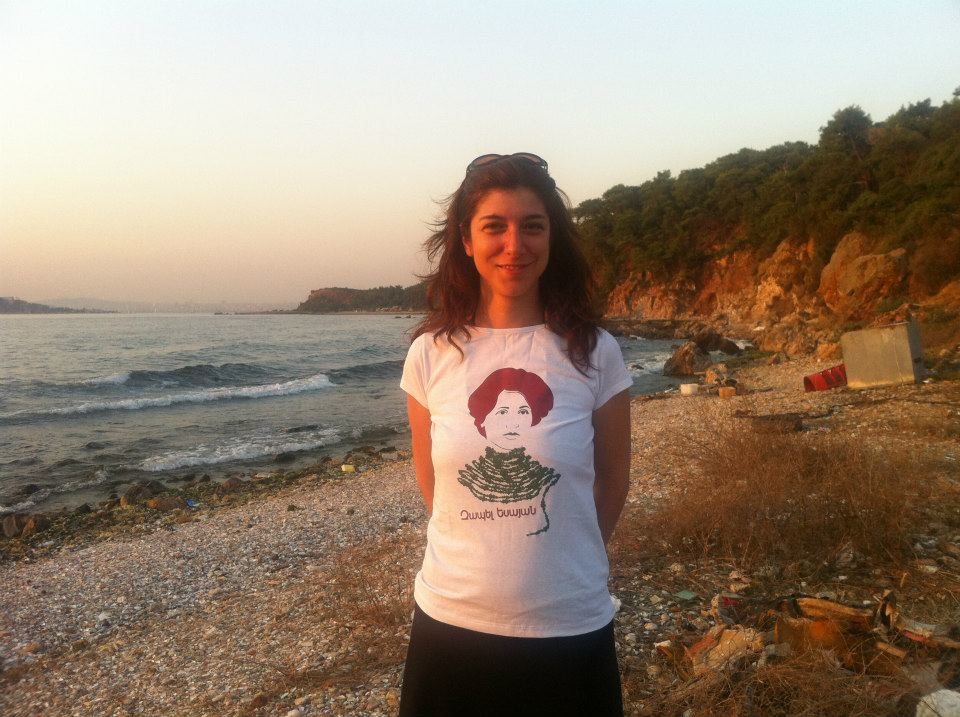
Talin Suciyan (Photo by Lara Aharonian)
Suciyan was born in Istanbul, Turkey. She attended the Armenian elementary school in her town and the Sahakyan Nunyan Armenian High School in Samatya. She graduated from Istanbul University’s radio, TV, and cinema department and continued her studies in Germany, South Africa, and India, receiving her master’s degree in social sciences. For 10 years, she worked in the field of journalism, producing and co-directing documentaries. From 2007-08, she reported from Armenia for Agos Weekly. In October 2008, she began to work at Ludwig Maximilian University’s (LMU) Institute of Near and Middle Eastern Studies as a teaching fellow, and as a doctoral student at the university’s Chair of Turkish studies. Currently, Suciyan teaches the history of late Ottoman Turkey, Republican Turkey, and Western Armenian. Since 2010, she has organized lecture series at LMU aimed at bridging the gap between Armenian and Ottoman studies. She successfully defended her Ph.D. dissertation in June 2013.
Varak Ketsemanian: In the introduction of your dissertation, you discuss the concept of denialist habitus. What were the mechanisms of denial in the post-genocide Republic of Turkey?
Talin Suciyan: Perhaps it would be good to start with an explanation of what I mean by “post-genocide habitus of denial.” This concept encompasses all of the officially organized policies, such as the 20 Classes, Wealth Tax, Citizen Speak Turkish Campaigns, prohibitions of professions for non-Muslims, etc., and the social support provided to these policies. These have mostly been against non-Muslims or others who for some reason became the target of state. Denialist habitus constitutes our daily life with its various forms. For instance, the Talat Pasha Elementary School, Ergenekon Avenue, and all the streets named after CUP leaders are very ordinary part of our lives. These examples become striking when you imagine having a school named after Hitler in Germany. Normalized hatred in the public sphere, in the media and press against the Kurds, Armenians, Alewites, or other non-Muslim groups are all part of this habitus. Juridical system is also not exempt from it. The cases of “denigrating Turkishness” and the atmosphere created through these cases in the society—involving the confiscation of properties of non-Muslims, kidnapping Armenians girls, systematic attacks on Armenians remaining in Asia Minor and northern Mesopotamia, changing the names of the villages where non-Muslims used to live, destroying their cultural heritage in the provinces, or using their churches or monasteries as stables—are all part of the post-genocide denialist habitus in Turkey.
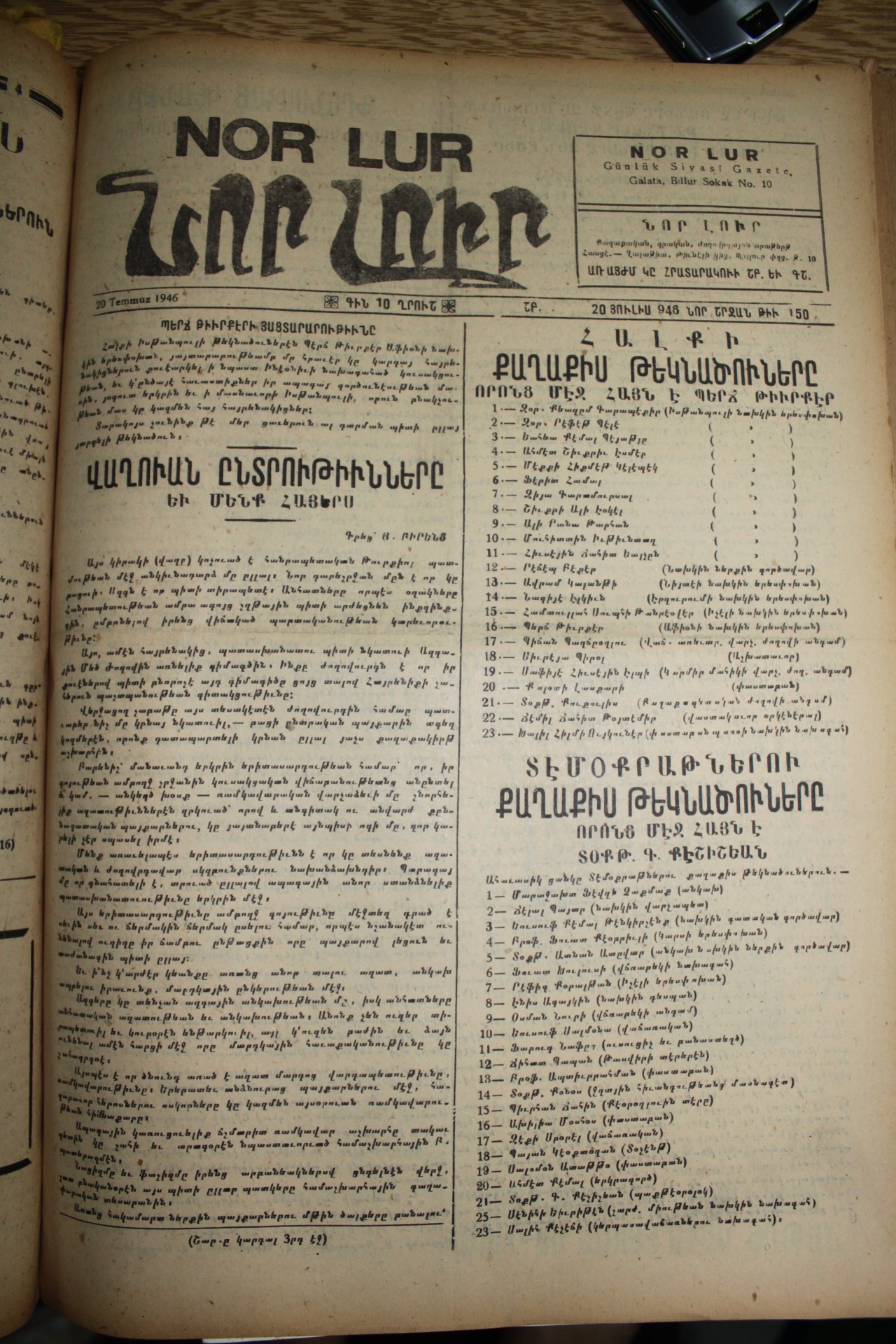
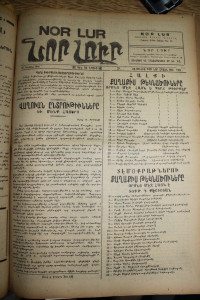
The front page of the 20 July 1946 issue of Nor Lur.
The victims had no one, no institution to count on, they were absolutely alone in the struggle for their very existence and the denial of that existence. Their complaints were not heard. The assailants consequently knew that by attacking non-Muslims, verbally and physically, there would no punitive consequences. Official state policies during the first decades of the republican era in Turkey and also later enabled and supported the establishment and normalization of this habitus.
In other words, the republican state institutionalized this habitus of denial with its official policies both on the national and local levels, and supported its internalization on the societal level. Therefore, societal peace, a feeling of justice and freedom, cannot be established unless Turkey recognizes what happened between 1915 and 1923.
V.K.: On p. 4, you write, “Armenian Sources themselves become part of the Denial.” How?
T.S.: Yes, in this habitus of denial, the Armenian press was required to write certain things in certain ways. For instance, according to the memoirs of Ara Koçunyan, the editor-in-chief of the “Aztarar” daily, Manuk Aslanyan was called by the governor Muhittin Üstündağ to his office because he failed to cover the news of the annexation of Sanjak (Hatay). Although Aslanyan published an editorial two days after this conversation, his newspaper was nevertheless closed. There are various other examples of prohibiting or closing Armenian newspapers without any reason. “Nor Or” and “Hay Gin” are just two other examples from the republican era. These newspapers were apparently not good enough in internalizing the denialist habitus.. For instance, the “Marmara” newspaper, in its reporting on the destruction of an Armenian church in Sivas in the 1940’s, put the responsibility of locum tenens on Kevork Arch. Aslanyan, although the church was dynamited by Turkish officials.
Another example could be given in the context of relations with the diaspora: Armenian intellectuals and the press in Istanbul were expected to distance themselves from diaspora communities. So, they too had to use hostile language when describing other Armenian communities in the diaspora, denying the fact that those people in other parts of the world were their relatives. This continues to be an issue even today. However, I should point out that diaspora hatred is one of the oldest and deepest components of Kemalism, which can be traced in the republican archives in Turkey. The state prepared detailed reports on the Armenian newspapers and their editors-in-chief in the 1930’s and 1940’s–and, most probably, in later periods as well. In these reports, one of the most important criteria was the relation to other communities in the diaspora. In other words, for an Armenian newspaper to be regarded as “state friendly,” the first question was whether it was reporting news from other communities or not, and whether it had a network with other communities. It was in this atmosphere that the post-genocide habitus of denial was partly internalized by some Armenian community members, public opinion makers. The book-burning ceremony undertaken by Armenian community leaders of The 40 Days of Musa Dagh can be read in this context, too. [2] It is also important to emphasize that by being part of this habitus, the editors of the newspapers were hoping to have some more bargaining power with the state on other communal issues, such as the confiscation of properties or laws regulating the communal life. We can trace this very clearly in the editorials. However, this hope never turned into a reality.
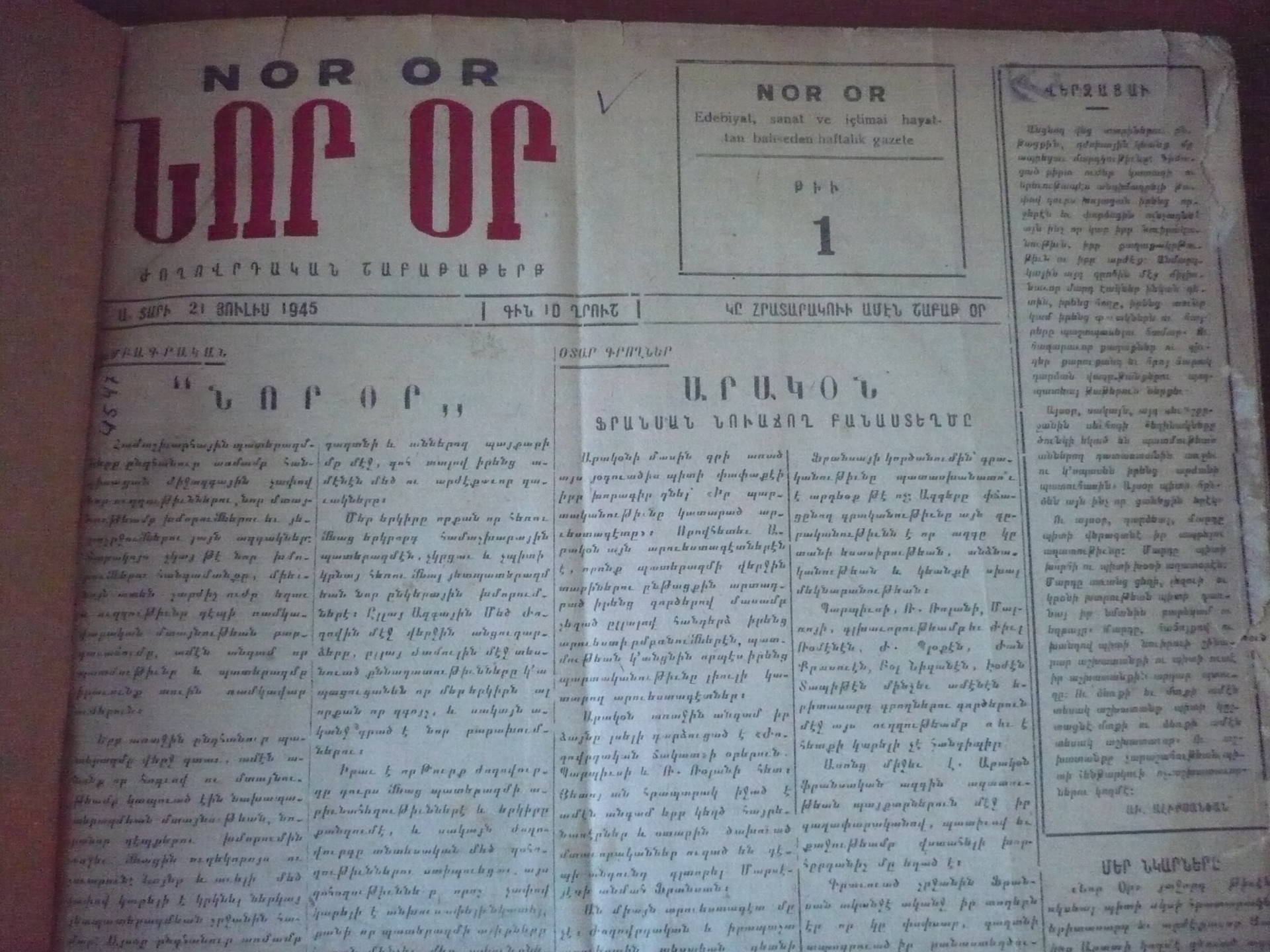
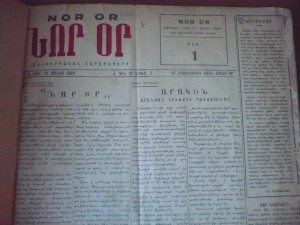
The front page of the 21 July 1945 issue of Nor Or.
V.K.: What role did the Armenian newspapers play in the re-construction of the community’s image in post-genocide Istanbul?
T.S.: Armenian newspapers had some very difficult tasks to accomplish. In the absence of Armenian history classes and an atmosphere of absolute prohibition of all books related to Armenian history, the newspapers were trying to provide historical knowledge by publishing biographies, and series on Armenians in the Ottoman Empire, the history of Armenian Church, etc.
Secondly, they had to react to anti-Armenian campaigns in the absence of representative bodies. Turkish editors, many of whom were parliamentarians at the same time, referred to Armenian editors and journalist as the representatives of their community, although there was no notion of representation. This very political task often put their existence in danger. Armenian newspapers were translating almost all news items related to Armenians from Turkish newspapers, and they were following the Armenian press in other countries. Thus, reading Armenian newspapers meant both following the agenda of Turkey and partly the agenda of Armenians in other parts of the world. Furthermore, Armenian newspapers were following the court cases opened against the pious foundations that mostly ended up with confiscated properties, such as in the case of Sanasaryan Han, Yusufyan Han, the cemetery of Pangalti, and many others. Cases of “denigrating Turkishness,” which have been filed almost exclusively against non-Muslims, were also followed closely. One can also find information about Armenian life in the provinces in the papers. Important primary sources, such as official documents, decisions of the Patriarchate or Catholicosates were all published in the newspapers. I should add that there were tens of newspapers and journals in the first decades of the republic, and that they all had different priorities. Therefore, Armenian newspapers and yearbooks are very good sources of republican history, like the memoirs of the patriarchs and public intellectuals, minutes and reports of the General (Armenian) National Assembly, the letters of the Catholicoses, among others.
V.K.: What were the repercussions of this denialist habitus? What was its social, political, cultural, and economic impact on the writing of the history of the community?
T.S.: We cannot talk about a historiography on Armenians during the republican years. Non-Muslims only appear in historical research when it concerns attacks, such as the pogroms of Sept. 6-7 1955, the Wealth Tax, 20 Classes, and others. Of course, the literature in these fields helps us a lot, but these are peak moments. One should look at the practices of daily life to understand how these tax policies, pogroms, or organized attacks affected them. How did the circumstances enable these attacks or policies against which there was no opposition? The denialist habitus as a concept helps us understand everyday life, which kept the society ready for provocations and reproductions of racism. I should perhaps add that republican elite, from 1923 onwards, was trying to “solve the problem” of the non-Muslims remaining in the country. In the memoirs of Patriarch Zaven Der Yeghiayan, we can see the process of negotiations with Refet Pasha [Bele] on this issue. This was also discussed during the deliberations prior to the signing of the Lausanne Treaty. In the minutes of secret parliament hearings we read how the presence of non-Muslims has been problematized. [3] Consequently, through the absolute prohibition of opening Armenian schools, the kidnapping Armenian girls throughout the republican period, the raiding of homes, the dynamiting or confiscation of cultural monuments, republican governments wanted to push the remaining Armenians out of Asia Minor and northern Mesopotamia, while at the same time, imagining Istanbul as a panopticon, a strict zone of control where all non-Muslims should be concentrated. A similar policy was implemented on the island of Imroz, where Greeks were allowed to remain after 1923. First, in the 1960s, an open-air prison was established there: criminals were brought to the island with their families. Consequently, the crime rate increased considerably. Then, Muslim settlers from the Black Sea region were brought to the island. Constant demographic engineering attempts were made in order to push the remaining Greeks out of the island. The consequences of these policies were disastrous. Both in Imroz and in the provinces republican governments pursued the same aim: Creating a society without non-Muslims, breaking the link between the people and the geography they lived in, and in the long run, eradicating the memory of their existence.
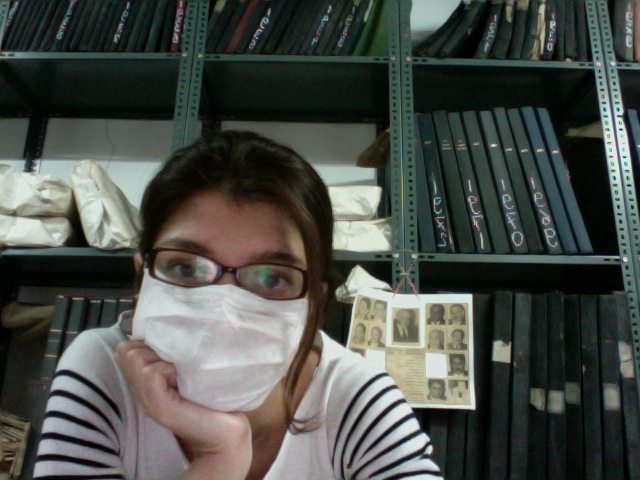
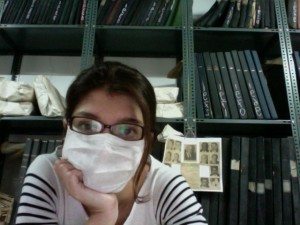
Suciyan working in the archives of the Sourp Prgich Armenian Hospital in Istanbul.
V.K.: How did the first post-genocide generation of intellectuals reflect on the image of the Armenian community of Istanbul in the 1930’s and 1940’s?
T.S.: It is difficult to talk about one image. However, there was one very important characteristic about the “Nor Or” generation: They were the first generation of intellectuals who were born right after 1915 and were mostly active in leftist politics in Turkey. Why did they feel the need to publish an Armenian language newspaper? I think this is an important question to ask. It is quite clear that they had no other place to bring up the issues that were related to the community. They were urging for a more democratic community administration, with more participation and, on the other hand, they were very expressive about the anti-Armenian state policies and anti-Armenian campaigns reproduced by the public opinion-makers. Avedis Aliksanyan, Aram Pehlivanyan, Zaven Biberyan, Vartan and Jak Ihmalyan brothers, and others were pointing out the changing conjuncture after World War II and the need for equality for non-Muslims, in particular for Armenians in Turkey. “Nor Or” was one of the most outspoken and courageous newspapers in the republican history of Turkey. For instance, Zaven Biberyan advocated the right to immigrate to Soviet Armenia for Armenians in Turkey, which was quite dangerous; or he drew parallels between Jews and Armenians while responding to the anti-Armenian campaigns in the Turkish press. Most likely, these were the reasons behind the prohibition of “Nor Or” in December 1946, by Martial Law. Although there were other newspapers that were banned for a certain period, “Nor Or” was the only Armenian newspaper that was prohibited for good. The editors were imprisoned, and later left the country. Zaven Biberyan returned in the mid-1950’s, but all the others lost their contact with the society they were born and raised in.
V.K.: In your dissertation, you write that “Another international crisis parallel to the issue of Patriarchal election crisis was the territorial claim of the Armenian political organizations at the San Francisco Conference. This claim was pushed further by the USSR government.” How did Turkey deal with the territorial claims presented by the Armenian political organizations?
T.S.: This was one of the most challenging issues for the Armenian community in Turkey. Turkey had sent a group of editors to San Francisco, and they remained there for quite long, around three months. Their task was to lobby for Turkey. The territorial claims presented by the Armenian organizations in the San Francisco Conference had a shocking impact on the Turkish delegation, especially when this claim was coupled with the call for immigration to Soviet Armenia by Stalin. With the call for immigration to Soviet Armenia, it was quite easy to blame all Armenians for being communists, especially the ones in Turkey, since they were queued in front of the USSR Embassy in Istanbul to register for immigration. At the end, Armenians from Turkey only waved to the ships passing through the Bosporus, and none of them were able to go to Soviet Armenia in 1946. The reason is not yet clear to me, there was always a question mark in the minds of Soviet officials regarding the Armenians in Turkey. After World War II, hatred against communism in Turkey was heightened to a great extent as a result of the territorial claims and immigration call for Armenians.
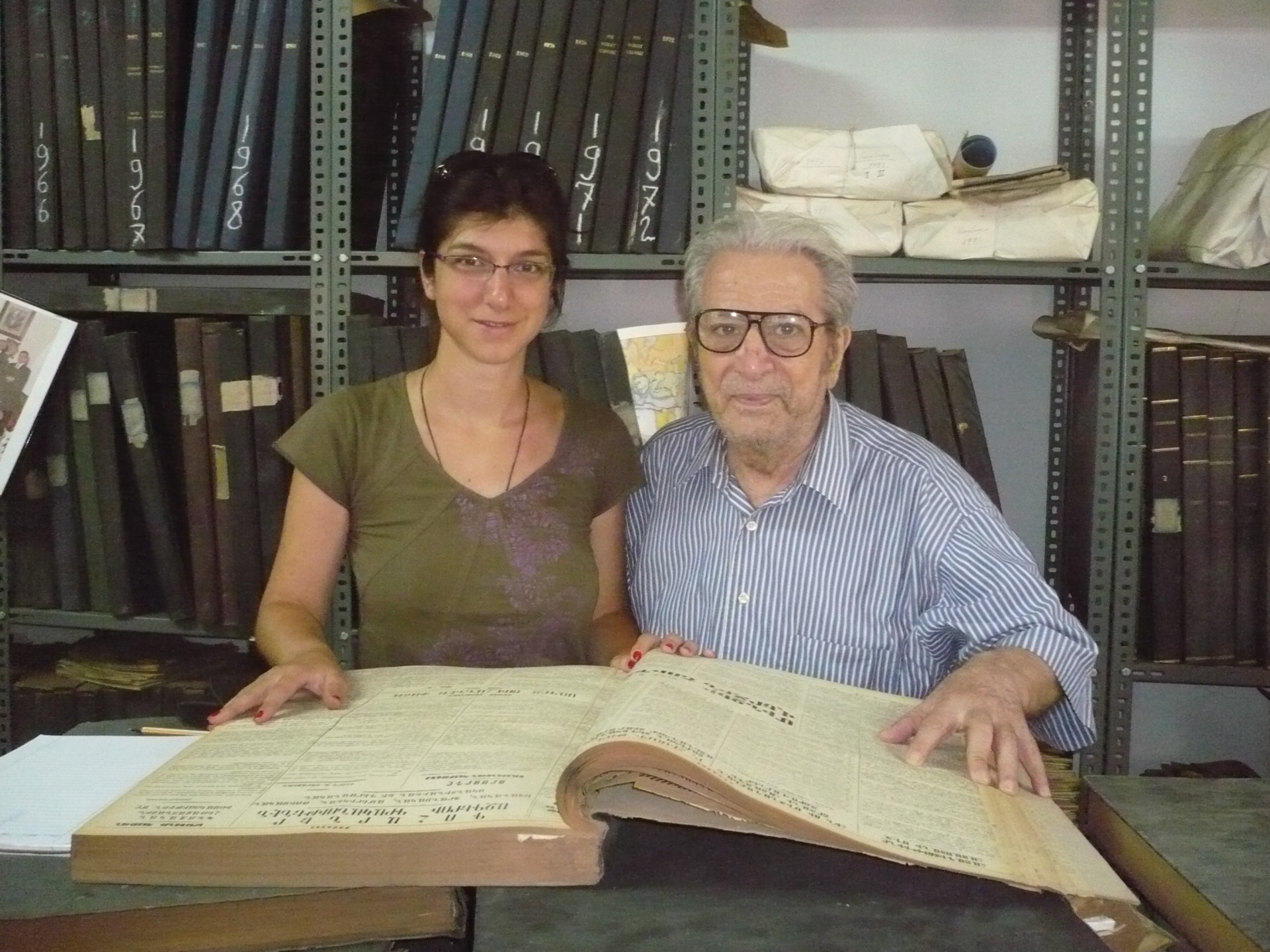
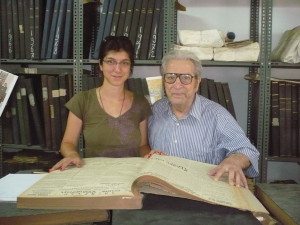
Suciyan with Varujan Köseyan.
V.K.: How did the Patriarchal Election Crisis of 1944-1950 discuss the changing power relations on the post-World War II international scene?
T.S.: With the sudden death of Patriarch Mesrob Naroyan in 1944, Kevork Arch. Arslanyan was appointed as locum tenens. First, this was the period when a conflict turned into a court case between Arch. Arslanyan and the Armenian Hospital Sourp Prgich over the inheritance of Patriarch Naroyan. Second, the Turkish government was hindering the gatherings of the General (Armenian) National Assembly (GNA) and this was paralyzing the whole community administration, for the patriarchal elections could only take place with the GNA meeting. This had already been a problem starting in the 1930’s, when the whole community administration, (i.e., Nizamname of Armenian millet) had started to be undermined systematically. Kemalist secularism of the new Turkish state had targeted the administrations of non-Muslim communities, since they had the right to administer their communities based on Nizamnames, and the republican state had nothing to offer instead of these communal rights. In the last analysis, this policy was enabling the state to create de facto regulations according to its own will and interest. Coming back to the topic of patriarchal elections, not being able to organize the elections resulted in a split in the community: those who were for and those who were against Arch. Arslanyan. Almost every week, attacks and quarrels between the two groups took place in various churches.
Thirdly, the Catholicosate of Etchmiadzin, which was becoming active in the diaspora with Stalin’s immigration call, was also involved in this crisis, as well as the Catholicosate of Cilicia in Antelias, Lebanon, and other communities in the diaspora. This was the first communal crisis that turned into an international one during the republican years, leaving the Armenian community in Turkey in a very fragile position, since there were no mechanisms of representation and no real mechanisms of solving the problem. In other words, this crisis was a result of the eradication of the community’s legal basis, which had continued after 1915 and taken a systematic character with the republican policies. If the Ottoman state until 1915 had some kind of responsibility towards its non-Muslim millets, citizens or subjects, there was a complete evaporation of this responsibility during the republican period. Communities were told to no longer be communities, but equal citizens of the republic, like any other citizen of Turkey, which in reality did not apply and, more importantly, meant that Armenians no longer had the rights stemming from Nizamname. Thus, the legal basis of the communities, gained during the 19th century, was first problematized by the republican governments and then systematically eradicated, leaving the communities alone with the problems created as a result of this eradication.
Armenian newspapers, public opinion-makers, and the reports prepared by the GNA, eventually gathered by December 1950, are very rich sources to understand this very problematic period. The following comment was made in the report prepared by the investigative committee:
“This is not a history of a period, since it does not include all the incidents with their reasons and results. This is not a biographical account of someone. This is only 1 page of the overall crisis that our community has been going through for the last 30 years.” [15]
Last but not least, it is important to emphasize that this is not only the history of the Armenian community, but the history of Turkey during the first decades of the republican period. Single-party years and also decades that followed should be re-read in light of these sources, which would eventually radically change the historiography.
V.K.: Why did you dedicate your dissertation to the memory of Varujan Köseyan?
T.S.: Most of the Armenian newspapers that I referenced in my dissertation (“Nor Lur,” “Aysor,” “Tebi Luys,” “Marmara,” “Ngar,” “Panper,” and others) were located in the archives of the Sourp Prgich Armenian Hospital in Istanbul. This archive was put together by the late Varujan Köseyan (1920-2011), who rescued hundreds of volumes of Armenian newspapers from recycling. I spent quite a bit of time with him during the last two years of his life conducting interviews, and I was honored to enjoy his friendship. The room that I was working in, was like a storage room. Thanks to the efforts of the hospital administration, especially of Arsen Yarman and Zakarya Mildanoğlu, the archive room has been recently renovated and is now waiting for its researchers. Unfortunately, Köseyan could not see it. Yet, without his efforts, this research could not have been done by using such a wide range of sources, nor could the archive have been established. We owe our history to Köseyan.
Sunday, November 10, 2013
2003 Nobel Prize for MRI Denied to Raymond Vahan Damadian
By George B. Kauffman
According to the late Ulf Lagerkvist, a member of the Swedish Academy of Sciences who participated in judging nominations for the Chemistry Prize, “It is in the nature of the Nobel Prize that there will always be a number of candidates who obviously deserve to be rewarded but never get the accolade.” Usually, a losing candidate merely accepts the injustice. But in the case of the 2003 Nobel Prize in Physiology or Medicine of $1.3 million, awarded 10 years ago to University of Illinois Chemist Paul C. Lauterbur (1929-2007) and University of Nottingham (UK) Physicist Sir Peter Mansfield (b. 1933) “for their discoveries concerning magnetic resonance imaging,” the undoubtedly deserving candidate, Raymond Vahan Damadian, M.D. (b. 1936), an American of Armenian descent, did not take this injustice lying down.
 A group called “The Friends of Raymond Damadian” protested the denial
with full-page advertisements, “The Shameful Wrong That Must Be
Righted” in the New York Times, Washington Post, the Los Angeles Times,
and Stockholm’s Dagens Nyheter. His exclusion scandalized the scientific
community, in general, and the Armenian community, in particular.
Damadian correctly claimed that he had invented the MRI and that
Lauterbur and Mansfield had merely refined the technology. On Sept. 2,
1971, Lauterbur had acknowledged that he had been inspired by Damadian’s
earlier work.
Because Damadian was not included in the award, even though the Nobel statutes permit the award to be made to as many as three living individuals, his omission was clearly deliberate. The possible purported reasons for his rejection have included the fact that he was a physician not an academic scientist; his intensive lobbying for the prize; his supposedly abrasive personality; and his active support of creationism. None of these constitute valid grounds for the denial.
The careful wording of the prize citation reflects the fact that the Nobel laureates did not come up with the idea of applying nuclear magnetic resonance (NMR) (the term was later changed to avoid the public’s fear of the word “nuclear,” even though nuclear energy is not involved in the procedure) to medical imaging. Today magnetic resonance imaging (MRI) is universally used to image every part of the body and is particularly useful in diagnosing cancer, strokes, brain tumors, multiple sclerosis, torn ligaments, and tendonitis, to name just a few conditions. An MRI scan is the best way to see inside the human body without cutting it open.
 The original idea of applying NMR to medical imaging (MRI) was first
proposed by Damadian, a physician, scientist, and an assistant professor
of medicine and biophysics at the Downstate Medical Center State
University of New York in Brooklyn. Growing up in Forest Hills, N.Y., he
attended the Julliard School and became a proficient violinist. When he
was still a boy, he lost his grandmother to a slow death by cancer. He
vowed to find a way to detect this dreaded disease in its early, still
treatable stages.
MRI scanners make use of the fact that body tissue contains lots of water (H2O), and hence protons (1H nuclei), which will be aligned in a large magnetic field. Each water molecule contains two protons. When a person is inside the scanner’s powerful magnetic field, the average magnetic moment of many protons becomes aligned with the direction of the field. A radio frequency current is briefly turned on, producing a varying electromagnetic field. This electromagnetic field has just the right frequency, known as the resonance frequency, to be absorbed and flip the spin of the protons in the magnetic field. After the electromagnetic field is turned off, the spins of the protons return to thermodynamic equilibrium and the bulk magnetization becomes realigned with the static magnetic field. During this relaxation, a radio frequency signal (electromagnetic radiation in the RF range) is generated, which can be measured with receiver coils.
Information about the origin of the signal in three-dimensional space can be obtained by applying additional magnetic fields during the scan. These additional magnetic fields can be used to generate detectable signals only from specific locations in the body (spatial excitation) and/or to make magnetization at different spatial locations precess at different frequencies, which enables http://en.wikipedia.org/wiki/K-space_(MRI) encoding of spatial information. The 3D images obtained in MRI can be rotated along arbitrary orientations and manipulated by the doctor to be better able to detect tiny changes of structures within the body. These fields, generated by passing electric currents through gradient coils, make the magnetic field strength vary depending on the position within the magnet. Protons in different tissues return to their equilibrium state at different relaxation rates.
 Using a primitive NMR machine, Damadian found that there was a lag in T1 and T2
relaxation times between the electrons of normal and malignant tissues,
allowing him to distinguish between normal and cancerous tissue in rats
implanted with tumors. In 1971, he published the seminal article for
NMR use in organ imaging in the journal Science (“Tumor Detection by
Nuclear Magnetic Resonance,” March 19, 1971, vol. 171, pp. 1151-1153).
Nevertheless, many individuals in the scientific and NMR community
considered his ideas far-fetched, and he had few supporters at this
time.
However, Damadian received a grant from the National Institutes of Health (NIH) in 1971 to continue his work. He proposed to use whole body scanning by NMR for medical diagnosis in a patent application, “Apparatus and Method for Detecting Cancer in Tissue,” filed on March 17, 1972 (U.S. Patent No. 3789832, issued Feb. 5, 1974). By February 1976, he was able to scan the interior of a live mouse using his FONAR (field focused nuclear magnetic resonance) method.
In 1977, using his machine christened “Indomitable,” now preserved in the Smithsonian Institution in Washington, D.C., Damadian tried to scan himself, but the test failed because of his excessive weight. On July 3, 1977, he obtained the first human NMR image—a cross-section of his slender postgraduate assistant Larry Minkoff’s chest, which revealed heart, lungs, vertebræ, and musculature. Minkoff had to be moved over 60 positions with 20-30 signals taken from each position. Congratulatory telegrams poured in from all over the world, including one from Mansfield.
In early 1978, Damadian established the FONAR Corporation in Melville, N.Y., to produce MRI scanners. Later that year he completed his design of the first practical permanent magnet for an MRI scanner, christened “Jonah.” By 1980 his QED 80, the first commercial MRI scanner, was completed.
The MRI imaging industry expanded rapidly with more than a dozen different manufacturers. On Oct. 6, 1997, the Rehnquist U.S. Supreme Court awarded him $128,705,766 from the General Electric Company for infringement of his patent.
Damadian is universally recognized as the originator of the MRI (by President Ronald Reagan, among others) and has received numerous prestigious awards such as the National Medal of Technology in 1988, the same year he was inducted into the National Inventors Hall of Fame. He was named Knights of Vartan 2003 “Man of the Year,” and on March 18, 2004, he received the Bower Award from the Franklin Institute of Philadelphia for his development of the MRI.
George B. Kauffman is Professor Emeritus of Chemistry at California State University, Fresno, Calif.
According to the late Ulf Lagerkvist, a member of the Swedish Academy of Sciences who participated in judging nominations for the Chemistry Prize, “It is in the nature of the Nobel Prize that there will always be a number of candidates who obviously deserve to be rewarded but never get the accolade.” Usually, a losing candidate merely accepts the injustice. But in the case of the 2003 Nobel Prize in Physiology or Medicine of $1.3 million, awarded 10 years ago to University of Illinois Chemist Paul C. Lauterbur (1929-2007) and University of Nottingham (UK) Physicist Sir Peter Mansfield (b. 1933) “for their discoveries concerning magnetic resonance imaging,” the undoubtedly deserving candidate, Raymond Vahan Damadian, M.D. (b. 1936), an American of Armenian descent, did not take this injustice lying down.
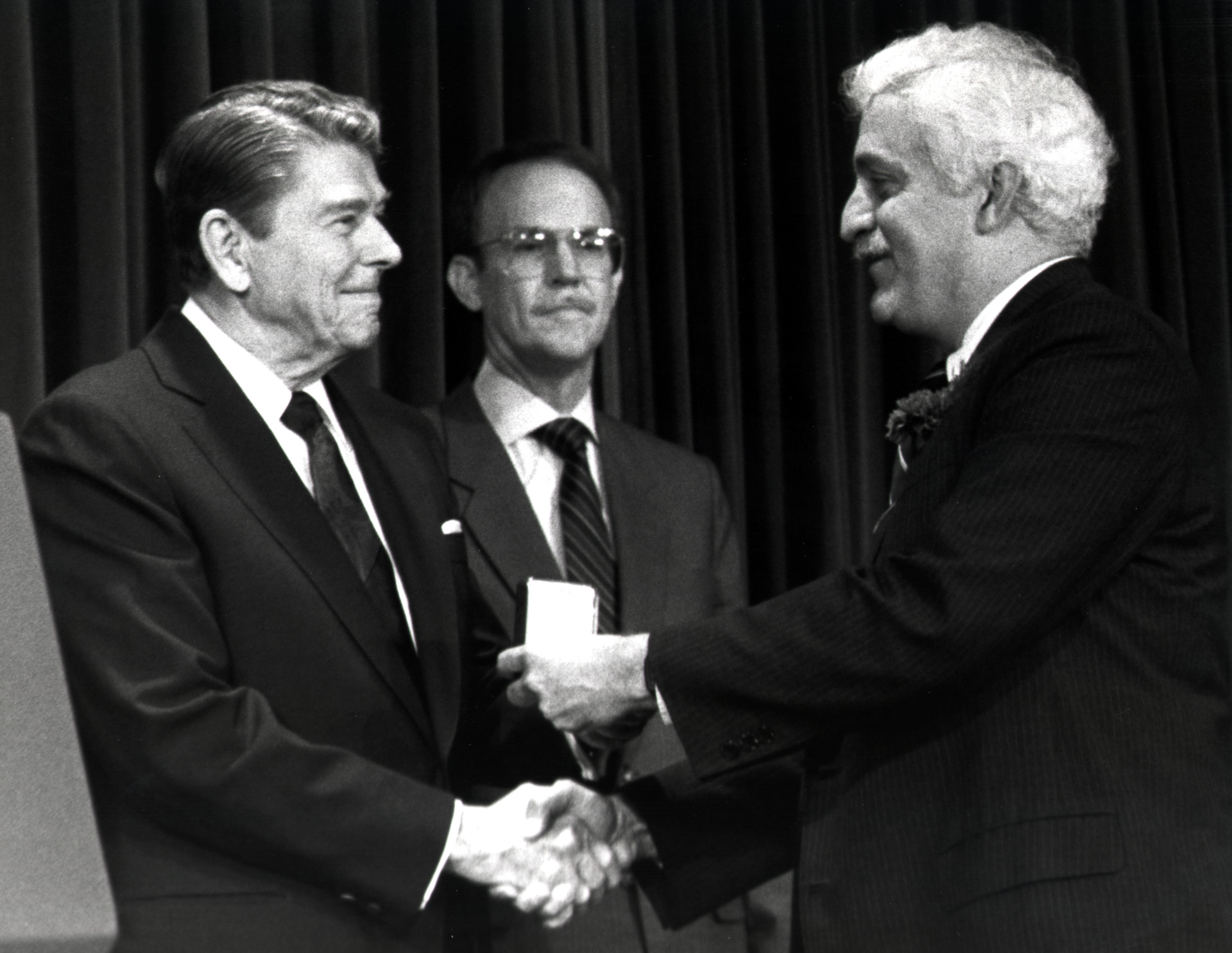
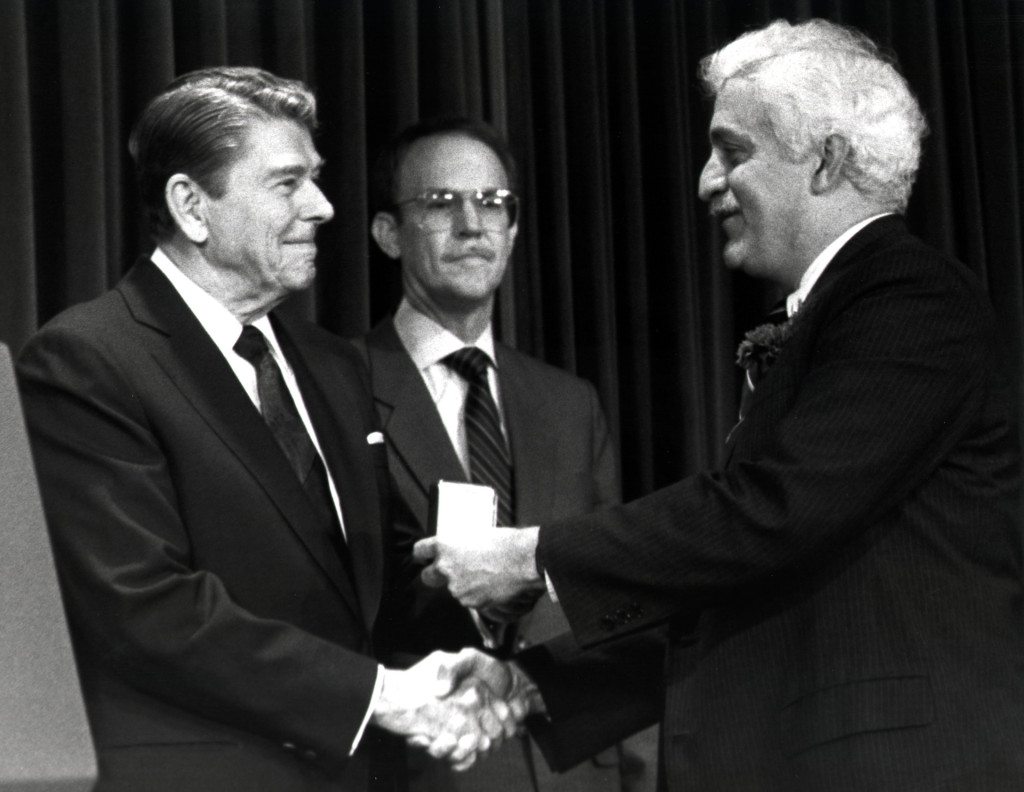
President Ronald Reagan presents the National Medal of Technology to Damadian, 1988.
Because Damadian was not included in the award, even though the Nobel statutes permit the award to be made to as many as three living individuals, his omission was clearly deliberate. The possible purported reasons for his rejection have included the fact that he was a physician not an academic scientist; his intensive lobbying for the prize; his supposedly abrasive personality; and his active support of creationism. None of these constitute valid grounds for the denial.
The careful wording of the prize citation reflects the fact that the Nobel laureates did not come up with the idea of applying nuclear magnetic resonance (NMR) (the term was later changed to avoid the public’s fear of the word “nuclear,” even though nuclear energy is not involved in the procedure) to medical imaging. Today magnetic resonance imaging (MRI) is universally used to image every part of the body and is particularly useful in diagnosing cancer, strokes, brain tumors, multiple sclerosis, torn ligaments, and tendonitis, to name just a few conditions. An MRI scan is the best way to see inside the human body without cutting it open.
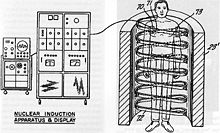
‘Apparatus and Method for Detecting Cancer in Tissue,’ U.S. Patent No. 3789832, Feb. 5, 1974.
MRI scanners make use of the fact that body tissue contains lots of water (H2O), and hence protons (1H nuclei), which will be aligned in a large magnetic field. Each water molecule contains two protons. When a person is inside the scanner’s powerful magnetic field, the average magnetic moment of many protons becomes aligned with the direction of the field. A radio frequency current is briefly turned on, producing a varying electromagnetic field. This electromagnetic field has just the right frequency, known as the resonance frequency, to be absorbed and flip the spin of the protons in the magnetic field. After the electromagnetic field is turned off, the spins of the protons return to thermodynamic equilibrium and the bulk magnetization becomes realigned with the static magnetic field. During this relaxation, a radio frequency signal (electromagnetic radiation in the RF range) is generated, which can be measured with receiver coils.
Information about the origin of the signal in three-dimensional space can be obtained by applying additional magnetic fields during the scan. These additional magnetic fields can be used to generate detectable signals only from specific locations in the body (spatial excitation) and/or to make magnetization at different spatial locations precess at different frequencies, which enables http://en.wikipedia.org/wiki/K-space_(MRI) encoding of spatial information. The 3D images obtained in MRI can be rotated along arbitrary orientations and manipulated by the doctor to be better able to detect tiny changes of structures within the body. These fields, generated by passing electric currents through gradient coils, make the magnetic field strength vary depending on the position within the magnet. Protons in different tissues return to their equilibrium state at different relaxation rates.
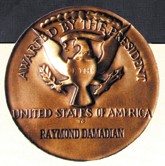
Damadian’s National Medal of Technology, 1988.
However, Damadian received a grant from the National Institutes of Health (NIH) in 1971 to continue his work. He proposed to use whole body scanning by NMR for medical diagnosis in a patent application, “Apparatus and Method for Detecting Cancer in Tissue,” filed on March 17, 1972 (U.S. Patent No. 3789832, issued Feb. 5, 1974). By February 1976, he was able to scan the interior of a live mouse using his FONAR (field focused nuclear magnetic resonance) method.
In 1977, using his machine christened “Indomitable,” now preserved in the Smithsonian Institution in Washington, D.C., Damadian tried to scan himself, but the test failed because of his excessive weight. On July 3, 1977, he obtained the first human NMR image—a cross-section of his slender postgraduate assistant Larry Minkoff’s chest, which revealed heart, lungs, vertebræ, and musculature. Minkoff had to be moved over 60 positions with 20-30 signals taken from each position. Congratulatory telegrams poured in from all over the world, including one from Mansfield.
In early 1978, Damadian established the FONAR Corporation in Melville, N.Y., to produce MRI scanners. Later that year he completed his design of the first practical permanent magnet for an MRI scanner, christened “Jonah.” By 1980 his QED 80, the first commercial MRI scanner, was completed.
The MRI imaging industry expanded rapidly with more than a dozen different manufacturers. On Oct. 6, 1997, the Rehnquist U.S. Supreme Court awarded him $128,705,766 from the General Electric Company for infringement of his patent.
Damadian is universally recognized as the originator of the MRI (by President Ronald Reagan, among others) and has received numerous prestigious awards such as the National Medal of Technology in 1988, the same year he was inducted into the National Inventors Hall of Fame. He was named Knights of Vartan 2003 “Man of the Year,” and on March 18, 2004, he received the Bower Award from the Franklin Institute of Philadelphia for his development of the MRI.
George B. Kauffman is Professor Emeritus of Chemistry at California State University, Fresno, Calif.
Monday, October 28, 2013
Dual Survival: Man and Church in the Lake Van Region of Historic Armenia
Story and photos by Mathhew Karanian
(Special to the Armenian Weekly)
If you’ve ever watched a reality survival show on television—one of those shows were a couple of adventurers get dropped off in a desert with instructions to survive long enough to make it back home—then you might be able to conjure up an image of me hiking in Historic Armenia.
I was on the shore of Lake Van, researching and photographing the Armenian churches of the region.
My goal for this day was modest: hike to the ancient Armenian monastery of St. Thomas, a monastery that looks older than the treeless mountain that it’s perched upon. Survival was the last thing on my mind.
But my priority for the day changed when I was about mid-way through the 90-minute trek to the top.
 This was roughly about the same time that my supply of water ran out. Remember, survival had been the last thing on my mind. So, of course I hadn’t carried any water.
The mid-day temperature was pushing closer to 100 degrees, and I had begun to reminisce about better times—like the time, earlier that day, when the mercury hadn’t yet risen above 90.
 I still wanted to see the church.
But now that the risks of dehydration and heat stroke had been added to my itinerary, my priority was to make it back down the mountain. I wanted it all! I wanted to see the church, and I also wanted to survive.
I was hiking with Khatchig Mouradian, the Editor of the Armenian Weekly. He and I had the same goals. Better yet, he also had some water. He offered me half of what remained in his bottle. We were brothers in arms, and would share our water supply, 50-50. I reached for the bottle. It contained about two ounces of warm water.
I was incredulous. “Really, Khatchig, I can only have one ounce?”
Yes, he replied. “We will need the rest to survive.”
I took a drink, and we continued our ascent.
There were no trees to shelter us from the sun as we scrambled up the mountain, but every two or three hundred feet there was some dwarf scrub that cast just enough shade to offer a bit of relief from the heat. We dashed from brush to brush, like soldiers in battle, until we had reached the monastic walls of St. Thomas.
 We discovered that the survival of the church was also at risk.
A Remote Treasure
The buildings of St. Thomas were constructed in the tenth and eleventh centuries, and are stoically sited on a mountaintop overlooking the southeast shore of Lake Van. The main surviving building, the cathedral, is about one thousand years old.
The current peril to the structure is caused, at least in part, by local people who are acting upon a long-discredited myth. Some of the Kurds who now live in Historic Armenia believe, incorrectly, that there is buried treasure at Armenian churches.
And so some of these treasure seekers dig for gold and jewels wherever they see the ruins of an Armenian site. Judging from what I observed at St Thomas last month, some people appear to have believed that there was treasure hidden in the ground beneath this church, too.
We saw holes dug in the earth near the foundation, at the entrance, and in the church yard. These excavations have undermined the foundation of St. Thomas, and similar burrowing undermines other churches, such as the nearby Karmravank, where treasure hunters have also sought supposedly long lost gold.
 According to the discredited myth, Armenians buried gold and other
valuables beneath the altars and near the points of entry to their
churches. Ask a Kurdish villager if the Armenians supposedly did this
while fleeing during the Genocide, or whether they buried their gold as a
matter of routine in the years before the Genocide, and they are apt to
just shrug their shoulders.
The odds of buying a winning lottery ticket are better than the odds of finding buried treasure at an Armenian church, because the odds of finding the buried treasure are zero. There’s no treasure. But people still buy lotto and they still dig for treasure.
Even if the legend was true, which it isn’t, any treasure would surely have been dug up many years ago. Still, logic and truth have not deterred treasure hunters, even now, a century after the Armenians were expelled from this area.
As a result, the only treasures that really exist in places such as St. Thomas and at nearby Karmravank—the sacred structures themselves—are at risk of being destroyed.
We made it safely back down the mountainside, and found plenty of shade and water. We lived to share the story of yet another ancient Armenian site that may not survive.
Matthew Karanian is an author and attorney, and he practices law in Pasadena, Calif. He has spent several years working in Armenia as both law professor and Associate Dean at the American University of Armenia. His latest book is ‘Armenia and Karabakh: The Stone Garden Travel Guide. He is currently working on a new book about Historic Armenia that will be published in 2015. Book details at www.ArmeniaTravelGuide.com and at www.Amazon.com
(Special to the Armenian Weekly)
If you’ve ever watched a reality survival show on television—one of those shows were a couple of adventurers get dropped off in a desert with instructions to survive long enough to make it back home—then you might be able to conjure up an image of me hiking in Historic Armenia.
I was on the shore of Lake Van, researching and photographing the Armenian churches of the region.
My goal for this day was modest: hike to the ancient Armenian monastery of St. Thomas, a monastery that looks older than the treeless mountain that it’s perched upon. Survival was the last thing on my mind.
But my priority for the day changed when I was about mid-way through the 90-minute trek to the top.
The 10th to 11th century Armenian Monastery
of St. Thomas rests on a hilltop above the southeast shore of Lake Van.
(Photo by Matthew Karanian)
The mid-day temperature was pushing closer to 100 degrees, and I had begun to reminisce about better times—like the time, earlier that day, when the mercury hadn’t yet risen above 90.

The mid-day temperature was pushing closer to
100 degrees, and I had begun to reminisce about better times—like the
time, earlier that day, when the mercury hadn’t yet risen above 90.
(Photo by Matthew Karanian)
But now that the risks of dehydration and heat stroke had been added to my itinerary, my priority was to make it back down the mountain. I wanted it all! I wanted to see the church, and I also wanted to survive.
I was hiking with Khatchig Mouradian, the Editor of the Armenian Weekly. He and I had the same goals. Better yet, he also had some water. He offered me half of what remained in his bottle. We were brothers in arms, and would share our water supply, 50-50. I reached for the bottle. It contained about two ounces of warm water.
I was incredulous. “Really, Khatchig, I can only have one ounce?”
Yes, he replied. “We will need the rest to survive.”
I took a drink, and we continued our ascent.
There were no trees to shelter us from the sun as we scrambled up the mountain, but every two or three hundred feet there was some dwarf scrub that cast just enough shade to offer a bit of relief from the heat. We dashed from brush to brush, like soldiers in battle, until we had reached the monastic walls of St. Thomas.
We dashed from brush to brush, like soldiers
in battle, until we had reached the monastic walls of St. Thomas. (Photo
by Matthew Karanian)
A Remote Treasure
The buildings of St. Thomas were constructed in the tenth and eleventh centuries, and are stoically sited on a mountaintop overlooking the southeast shore of Lake Van. The main surviving building, the cathedral, is about one thousand years old.
The current peril to the structure is caused, at least in part, by local people who are acting upon a long-discredited myth. Some of the Kurds who now live in Historic Armenia believe, incorrectly, that there is buried treasure at Armenian churches.
And so some of these treasure seekers dig for gold and jewels wherever they see the ruins of an Armenian site. Judging from what I observed at St Thomas last month, some people appear to have believed that there was treasure hidden in the ground beneath this church, too.
We saw holes dug in the earth near the foundation, at the entrance, and in the church yard. These excavations have undermined the foundation of St. Thomas, and similar burrowing undermines other churches, such as the nearby Karmravank, where treasure hunters have also sought supposedly long lost gold.
The ruins of Karmravank, on the southeast
shore of Lake Van, a short distance from the Monastery of St. Thomas.
(Photo by Matthew Karanian)
The odds of buying a winning lottery ticket are better than the odds of finding buried treasure at an Armenian church, because the odds of finding the buried treasure are zero. There’s no treasure. But people still buy lotto and they still dig for treasure.
Even if the legend was true, which it isn’t, any treasure would surely have been dug up many years ago. Still, logic and truth have not deterred treasure hunters, even now, a century after the Armenians were expelled from this area.
As a result, the only treasures that really exist in places such as St. Thomas and at nearby Karmravank—the sacred structures themselves—are at risk of being destroyed.
We made it safely back down the mountainside, and found plenty of shade and water. We lived to share the story of yet another ancient Armenian site that may not survive.
Matthew Karanian is an author and attorney, and he practices law in Pasadena, Calif. He has spent several years working in Armenia as both law professor and Associate Dean at the American University of Armenia. His latest book is ‘Armenia and Karabakh: The Stone Garden Travel Guide. He is currently working on a new book about Historic Armenia that will be published in 2015. Book details at www.ArmeniaTravelGuide.com and at www.Amazon.com
Thursday, October 24, 2013
‘Something Broke Inside Me’: Armenians Who Fled Azerbaijan Speak
The Armenian Weekly August 2013 Magazine
The woman sitting across from me stopped speaking. Tilting her chin downward she closed her eyes and shook her head slightly.
No.
Oh, I said, startled as I looked up from my notebook. I saw there were tears running down her face. Oh, it’s OK. You don’t have to go on. I turned to my interpreter. Please tell her she doesn’t have to continue if she doesn’t feel comfortable. I wanted to reach across the table and place my hand on her arm, to offer a reassuring touch. A sign of consolation. A pause. She nodded through the tears. A stiff smile crossed her face for a second, revealing a trace of relief. Her hands in her lap, she remained motionless.
I’m so sorry, I said. Please tell her I didn’t mean to make her uncomfortable.
The woman had stopped herself midsentence, choking up while recounting the story of her neighbor in Baku. They had lived in the same apartment building for years. It was where, in the courtyard, the resident families would hold cookouts during warm summer evenings, where their children would play together, and where they would share meals during the holidays. It was the same building where she and her husband spent years remodeling the floors, the bathroom, and the kitchen to make it truly comfortable. And it was where one night a group of angry Azerbaijanis broke down her neighbor’s door, grabbed her by the arms, and threw her from the window, four stories to her death on the concrete below. Then, in some twisted final act, the Azerbaijani men combined their might to hurl her large wooden bureau out of the window so that it landed on top of her.
I took a breath. Where to go from here? I thought.
This woman was one of the many displaced Armenians from Baku who I interviewed for my master’s thesis. The quest to complete the thesis was bumpy, to say the least; I switched topics at least three times over the course of several months before settling on one that continues to fascinate me—the human face of violence and war. I did so by focusing on the Nagorno Karabagh conflict, specifically the pogroms of Baku, and the Armenians who fled Azerbaijan because of them. Setting out on an equally trying road of finding people to interview, I spent weeks searching, traveling up and down the East Coast to interview those who were forced from a place that their families had called home for generations. Through my interviews I tried to figure out how conflict-induced displacement had impacted the cultural identity of some of Baku’s Armenians, now members of the Armenian Diaspora. I set out to explore the way people relate to others within their own ethnic group and their sense of belonging to that group. And while I focused on how this group of people expressed their identities through symbolic ethnicity—like language and the Armenian Church, for example—what moved me the most was much of the material I didn’t include in the final product: the stories of abrupt and horrific violence, the heart-wrenching and shocking tales of neighbors turning against neighbors, incredible loss, struggle, survival, and subsequent rebirth.
After some silence the woman suddenly surprised me by continuing. After that, I hid, all night long in a closet and then again for the entire next day. As soon as I could, I left on the ferry to Turkmenistan.
The long-simmering dispute between Armenia and Azerbaijan over Nagorno-Karabagh finally erupted into violent clashes in 1988 when pogroms were waged against Armenians by Azerbaijanis, first in the small industrial city of Sumgait, located about 20 miles outside of Baku. While tensions had culminated in several episodes of violence around Armenia and Azerbaijan up until that point, they were nothing compared to the gruesome violence of Sumgait. When about 50 people assembled in Sumgait’s Lenin Square for a rally protesting Karabagh’s unification with Armenia and demanded that Armenians leave Azerbaijan, violence exploded on a seemingly unimaginable scale, engulfing the city as gangs tore through, vandalizing property, looting and destroying homes, and smashing and burning cars. People were hacked to death with axes. Metal pipes were used as crude weapons. Homes were destroyed. Women were gang raped in public. Some people were dismembered, some were set on fire. Thirty-two people died in the Sumgait pogroms—26 Armenians and six Azerbaijanis.
Many Bakvetsis were incredulous; the violence that struck Sumgait was atrocious, so horrifying, that most never believed it would be able to permeate a multicultural, downright cosmopolitan city like Baku—where Russians, Jews, Ukrainians, Azerbaijanis, and Armenians not only intermingled but were friends. While discrimination was embedded in the social strata, the differences between these ethnic groups were mostly overlooked in daily life.
In no other capital in the Soviet Union were people as proud as they were of being from Baku. After the genocide took place, these were the people who accepted us. Azeris were the people who accepted us, one man told me.
There were streets named after Armenians in Baku, there were Armenian schools and churches, and a specific neighborhood in the center of the city called Armenikend, or “Armenian Village.” Armenians for the most part considered themselves integral to the history and the strength of the city.
Life in Baku, it was beautiful, many of them told me. Parties. Concerts. Barbeques. Family gatherings. Some had salvaged photos, which they spread out across coffee tables and in their dining rooms, showing me life as they had once known it. Birthday cakes. Singing around pianos. Vacations to the Black Sea in the summer, sunlight dripping off the palm trees. Sure, Armenians were second-class citizens, but everyone was friends with everyone else for the most part, they told me. Life was rich.
After Sumgait happened, Baku was relatively quiet until a certain tension and fear gripped the streets, permeating the fabric of the city. It’s not going to happen in Baku. It’s never going to happen in Baku, was what many of the people I interviewed said they thought after Sumgait. It could never happen here.
Then it all changed.
Things continued to shift, Armenians were targeted more and more. They feared for their safety when they were outside. Some were followed by Azerbaijanis and forced to make a quick escape by hiding in nearby buildings. Mobs of Azerbaijanis, sometimes as big as 30 or 40 people, would comb the city, pulling people off of buses and out of crowds in an attempt to “catch” Armenians. If they couldn’t identify Armenians based on physical characteristics, the Azerbaijanis would also run “tests” of shibboleths, like the pronunciation of the Azeri word for “hazelnut,” (fundukh), which Armenians tended to say with a “p” instead of an “f” sound.
Eventually, a curfew was imposed. Threats increased. Many Armenians began to trade their apartments and sell their belongings in preparation for a way out of Azerbaijan.
In January 1990, rallies eventually broke out in the north of the country and in Baku following the decision of the Armenian Parliament to include Karabagh in its budget. When a list of Armenians’ addresses was posted on the front door of the Azerbaijani Popular Front headquarters in public view, violence erupted in Baku. Ninety people died in the pogroms, known as “Black January,” in violence just as horrific as Sumgait.
For one week, it was a bloodbath with no one to stop it, one man told me.
Azerbaijanis would break into homes, searching for Armenians, vandalizing everything. Once again, people were assaulted, killed, raped, and mutilated.
For many Armenians fearing for their lives, the acquaintances and the neighbors they had known for years turned their backs on them. There were those who helped, too, of course, like the Azerbaijani neighbor who harbored one woman and her daughter in his apartment for days until they could finally be evacuated by a relative in the KGB, who escorted them out with the Russian families being evacuated from Baku. And there was the young group of Azerbaijanis who saved one of their friends from an inquisitive mob, insisting he was just one of them—a Tartar who couldn’t speak Azeri. Or the kind neighbor who hid her Armenian friends in her closets and under her bed while Azerbaijanis raided her apartment building.
We are left with broken hearts, one woman told me. My students asked me, ‘Why did you leave?’ I tell them that it’s not like they knocked on my door nicely and said, ‘Go.’ They killed and they raped. Something broke inside me.
The violence in Baku essentially drove the rest of the Armenian population out of Azerbaijan. Most—about 200,000—had left by the end of 1989 and had resettled in Armenia, Russia, and other former Soviet republics. Over the course of several days during and after the pogroms, the Armenians of Baku fled for their lives, gathering up their families and whatever few possessions they could to leave by plane or by train or by truck or ferry. They left everything behind, and their stomachs were weighed down with the horrible feeling that they were probably never going to come back. The 18 Armenians that I interviewed went to Armenia, and Moscow or southern Russia, primarily because they had some kind of personal connection to someone living in the country at the time, some family or friends who could provide support. Eventually, these 18 people came to the United States, primarily as refugees, where they started over a second time.
For some, seeking refuge in their historic homeland, Armenia, after the pogroms seemed logical. Even though they spoke Russian at home instead of Armenian, and even if they had no family members to host them, they thought they would have the space and the support to rebuild their lives in Armenia, and the shock of displacement would be lessened. For some it was a source of pride. This was our land, our soil. We’re going to have our roots there, they said.
Sometimes it was viewed as the only option. We left Azerbaijan to go to Armenia because we had no other choice, one told me. There was nowhere else we could go. But it wasn’t always the easiest experience.
For some, life in Armenia meant struggle, and they were treated as outsiders. Some were criticized for having lived so far from the motherland or for not being able to speak Armenian. Others told me of being yelled at or even spit on, being called “Turks” or shortvatz (flipped) Armenians who had been happy living with the enemy.
Having come from a cosmopolitan city like Baku, many were in shock when they suddenly found themselves living in refugee housing in rural areas, where they were forced to grow their own food or wash their laundry by hand. Our house became a refugee camp, said one person whose three-room apartment in Abovyan was typically filled with 17 displaced relatives at any given time.
Others had similar experiences living in Russia, where they were called “black,” a derogatory name for people from the Caucasus, or where they were physically assaulted simply because they were perceived as being different. This discrimination grew more persistent after the fall of the Soviet Union, concurrent with the rise of Russian nationalism.
During the 1990s, the United States allowed those fleeing persecution in the Soviet Union to come to the U.S. as refugees. Many Armenians—up to 100,000—came to the United States between 1989 and 1996, and many received priority refugee status in the early 1990s. Most of the people I interviewed arrived on U.S. soil with next to nothing—broken suitcases and no more than $300 in their pockets. As adults who had established themselves as engineers, teachers, musicians, and scientists back in Baku, they had to reinvent themselves.
Some took jobs in factories or cafeterias while they tried to learn English. Others pursued their educations and tried to get ahead. Struggles continued for some, and lasted longer than expected. And often, a question arose: Did we make the right
decision to come here?
For most I spoke with, the answer is yes. Armenians are no strangers to collective trauma and violence. It’s no surprise these 18 people displayed the resiliency and the strength needed to not only rebuild their lives, but to succeed after being affected both directly and indirectly by violence that is so often the consequence of geopolitics.
I’ve lived in Azerbaijan. I’ve lived in Armenia, Russia, and now I live in America. Obviously I can adapt, one participant said. You have to lose part of you to become part of something else.
Over the course of more than two decades they have turned themselves back into engineers and teachers. Some have become activists and writers in places like New Jersey and Boston and Washington. Some have become mothers and fathers and grandparents. Some have connected more to their Armenian roots. Others say they are indifferent.
Those I interviewed had many ways of describing how they thought of Baku now: a shut door, a closed page, a home erased, just as evidence of the Armenian presence in Baku has been washed away with the defacement and destruction of monuments and cemeteries.
For many, Baku is now just a piece of their history, the memories of which remain in the recesses of their minds. Perhaps that’s what happens when there is really no way of going back home. Very few said they would ever go back, even if they were allowed to.
There is no such place, one woman told me. That’s all. It’s gone.
While researching this topic, I found that while the violence of the pogroms was recorded, the long-term impact they had on the Armenians from Baku had scarcely been touched. More than once I was asked why I was interested in this topic. No one really cares about this anymore anyway, some said. Still, I was fascinated. And perhaps at the very least, I hoped to make some contribution to documenting stories that haven’t really been told.
Toward the end of my interviews, one woman made a remark about how Baku Armenians are a dying people. My generation, that’s it. Our kids–they won’t remember, they won’t know. I will try to pass the memories, though. We still remember my dad’s aunt. She was a Genocide survivor. She was 8 or 10 years old and they escaped the Genocide. We still remember her telling us about it. So we will probably do the same with our kids.
Sunday, October 20, 2013
Armenian Life Returns to Diyarbakir
Armenian Life Returns to Diyarbakir |
 |
St. Giragos Church, located within the historic walls of the
city of Diyarbakir, has been renovated. (photo by armradio.am)
|
 |

It was on a hot Sunday in the summer when I visited St. Giragos Church,
located within the historic walls of the city of Diyarbakir. A small
crowd gathered inside the building, which had recently been renovated.
That morning, I not only got the chance to meet new people, but was also
acquainted with new ways of self-identifying.
I met Ramzi Demir, a construction-equipment vendor and Kurdish Muslim who is well aware of his Armenian roots.
I also met Chetin Yilmaz, an ethnic Turk from the city of Gallipoli.
Yilmaz was sent to the southeast of the country to teach Turkish “to
help Kurds be good Turkish citizens. However, they opted for the
Christian religion instead,” as he put it.
A group of young people visiting the church included Nisreen and Habon, who decided to come after they discovered their Armenian origins. I also met Armin Demerjian, the deacon of the Church of St. Giragos. He was once called Abdur Rahim Zorusselan, before he returned to his original religion. Armin welcomed me with a joyful grin and told me in Armenian, “Welcome, my little brother!”
Demerjian is in his mid 50s. He was born in the town of Liga, north of Diyarbakir, from where his ancestors hail. His family was exterminated during the massacres of 1915, but a five-year-old child named Hocep survived, saved by influential Turkish tribal leader in the region, Haji Zubair.
When Hocep grew up, his name was changed to Abdullah. He converted to Islam and married the daughter of Haji Zubair. He became a famous baker in the town of Liga. Everyone saw him as a good Armenian man.
I walked with Armin around the church. The building, which was meticulously built seven centuries ago, has been renovated, adding a touch of beauty to the impoverished neighborhood. We went to a hall where the walls were decorated with photographs of the Armenian way of life in Diyarbakir before the great massacre. There hung a photo of two Armenian schools, one for boys and one for girls, and a photo of the newspaper Independent Tigris with pictures of craftsmen, coppersmiths, jewelry makers, weavers and a brass band. There was also an old postcard in French portraying the Armenian neighborhood and the high church bell towers. The black-and-white photographs created a sad memorial, not only because they brought back memories of the past, but because they remind us that an entire way of life has been wiped away.
There was once a large Armenian community in Diyarbakir. Most of its members were craftsmen and traders. In 1915, when the Committee of Union and Progress, the powerful party that pushed the Ottoman Empire to fight in the First World War, decided to get rid of the Armenians living in the empire. Approximately 120,000 Armenians in the province were sent outside the city walls and massacred. The survivors, mostly women and orphans, went to camps in the Syrian desert. In the 1920s and 1930s, the Armenians living in villages and towns in the province moved to Diyarbakir to form a new, small community. More left the villages after the war broke out in the southeast of the country between the Kurdistan Workers Party and the Turkish army. Today, a descendant of the survivors is forming a new Armenian community in this historic city.
When I started to take pictures, Armin grabbed an Armenian-language instruction book and held it to his chest in front of the camera.
Armin's son, Hassan Zor Aslan, recently finished his university education and wants to become a teacher. He is fluent in English and Turkish, and his mother tongue is Kurdish. When coffee was served, Hassan did not take a cup. It was Ramadan, and Hassan was fasting. While his father was forced to rediscover his Armenian past and deep Christian roots, Hassan, 21, found his path through Islam.
“We are Muslims, but we know that we are Armenians,” he told me. In 2006, when the students of Diyarbakir revolted against the Turkish police and the army there, Hassan was sent to his uncle's house in the town of Bursa in western Turkey to continue his education away from the trouble.
Hassan continued, “I faced an identity crisis there. There, I decided to be a Muslim.” It was there that he also decided to become a professor. When asked how he sees his father, who returned to the Armenian Apostolic Church, he said, “I am happy to see my father getting back in touch with his Armenian identity. However, I am afraid not only of the state but also of militant groups.”
Gafur Torqay is the one who pushed for the renovation of the church. His story is no different from those of the others. His father is called Ba Ohanian, and he hails from the mountainous area of Sason, northeast of Diyarbakir. During the genocide, everyone there was killed, and only three children survived: a girl and two boys. The girl became a refugee in Syria and emigrated from there to Armenia, while the boys remained in Turkey and converted to Islam.
He proudly stated, “Thanks to the two boys, the number of our family members reached 500. These boys spoke Kurdish at home, but when they were sent to school they were prohibited from speaking the Kurdish and Armenian languages and forced to communicate in Turkish.” Gafur criticized Turkish naturalization policies, saying, “After being forced to become a Kurd, we were taught how to become Turks.”
Furthermore, with the emergence of the Kurdish national identity in the past decade, Armenian descendants who had changed their religion claimed their right to the Armenian identity regardless of religious affiliation.
Gafur recalls the first time he visited St. Giragos Church in the 1980s. Back then, there were 30 families living in the vicinity of the Armenian church in the Sur District of Diyarbakir, known as the Infidels District. This is also the title of a novel written by Mgrdich Margossian, who wrote about the life of the Armenian community.
In this city, Gafur met his wife and his family. He believes that the renovation of the church — which was destroyed after the departure of the last Armenian family — is the most important step yet. The church has been renovated thanks to the efforts of a small group of people who exerted tremendous efforts to collect the necessary funds. The municipality of Diyarbakir, controlled by the Kurdish Peace and Democracy Party, paid a third of the renovation costs. The church was reopened in October 2011, with thousands of Armenians coming from all over the world to participate in the event.
Today, the Diyarbakir municipality has begun organizing classes to teach the Armenian language. In 2012, 35 students were registered in language classes and in the following year this number rose to 65. Gafur pointed out that 80% of the students are Muslim Armenians, while there is a Christian or Kurdish Armenian minority.
Gafur recalled how his neighbors found out he was of Armenian descent and how they thought that he and his family had converted to another religion. Families with Armenian roots try to arrange marriages among themselves, he added, stressing, “We are the third generation after the genocide. The second generation knew nothing about Armenian heritage. They were afraid. If we do not act to revive the Armenian identity here, we will lose it.” He hopes that the young people of Armenian descent rediscover their original identity and Armenian culture without questioning their Islamic religious identity.
From there, Gafur took me to St. Sarkis Church. At the entrance, we could see that a Kurdish family had taken residence in the few rooms that remained undestroyed. The architectural style is reminiscent of St. Giragos with its beautiful domes, though wrecked. Projects are in the works for the renovation of this church, too.
At the altar, Gafur pointed to a hole and angrily said, “They are trying to find gold. I was here two weeks ago; this hole was not there.” Similar holes can be found in Armenian churches across eastern Turkey as residents still search for old Armenian gold after 98 years.
Then we headed to the Armenian cemetery. Years ago, the famous musician Aram Dikran wanted to be buried there after his death, but the Turkish state did not allow it. Today, two stones are placed as a sign for the chosen cemetery of Aram Dikran.
About This Article
Summary :
Diyarbakir, a predominantly Kurdish city in southeastern Turkey, is rediscovering its Armenian roots.
Publisher:
Al-Hayat (Pan Arab) Original Title: Armenian Life Suddenly Returns to the City of Diyarbakir Author: Vicken Cheterian First Published: October 11, 2013 Posted on: October 16 2013 Translated by: Sami-Joe Abboud and Pascale El-Khoury
Categories
:
 Turkey |
A group of young people visiting the church included Nisreen and Habon, who decided to come after they discovered their Armenian origins. I also met Armin Demerjian, the deacon of the Church of St. Giragos. He was once called Abdur Rahim Zorusselan, before he returned to his original religion. Armin welcomed me with a joyful grin and told me in Armenian, “Welcome, my little brother!”
Demerjian is in his mid 50s. He was born in the town of Liga, north of Diyarbakir, from where his ancestors hail. His family was exterminated during the massacres of 1915, but a five-year-old child named Hocep survived, saved by influential Turkish tribal leader in the region, Haji Zubair.
When Hocep grew up, his name was changed to Abdullah. He converted to Islam and married the daughter of Haji Zubair. He became a famous baker in the town of Liga. Everyone saw him as a good Armenian man.
I walked with Armin around the church. The building, which was meticulously built seven centuries ago, has been renovated, adding a touch of beauty to the impoverished neighborhood. We went to a hall where the walls were decorated with photographs of the Armenian way of life in Diyarbakir before the great massacre. There hung a photo of two Armenian schools, one for boys and one for girls, and a photo of the newspaper Independent Tigris with pictures of craftsmen, coppersmiths, jewelry makers, weavers and a brass band. There was also an old postcard in French portraying the Armenian neighborhood and the high church bell towers. The black-and-white photographs created a sad memorial, not only because they brought back memories of the past, but because they remind us that an entire way of life has been wiped away.
There was once a large Armenian community in Diyarbakir. Most of its members were craftsmen and traders. In 1915, when the Committee of Union and Progress, the powerful party that pushed the Ottoman Empire to fight in the First World War, decided to get rid of the Armenians living in the empire. Approximately 120,000 Armenians in the province were sent outside the city walls and massacred. The survivors, mostly women and orphans, went to camps in the Syrian desert. In the 1920s and 1930s, the Armenians living in villages and towns in the province moved to Diyarbakir to form a new, small community. More left the villages after the war broke out in the southeast of the country between the Kurdistan Workers Party and the Turkish army. Today, a descendant of the survivors is forming a new Armenian community in this historic city.
When I started to take pictures, Armin grabbed an Armenian-language instruction book and held it to his chest in front of the camera.
Armin's son, Hassan Zor Aslan, recently finished his university education and wants to become a teacher. He is fluent in English and Turkish, and his mother tongue is Kurdish. When coffee was served, Hassan did not take a cup. It was Ramadan, and Hassan was fasting. While his father was forced to rediscover his Armenian past and deep Christian roots, Hassan, 21, found his path through Islam.
“We are Muslims, but we know that we are Armenians,” he told me. In 2006, when the students of Diyarbakir revolted against the Turkish police and the army there, Hassan was sent to his uncle's house in the town of Bursa in western Turkey to continue his education away from the trouble.
Hassan continued, “I faced an identity crisis there. There, I decided to be a Muslim.” It was there that he also decided to become a professor. When asked how he sees his father, who returned to the Armenian Apostolic Church, he said, “I am happy to see my father getting back in touch with his Armenian identity. However, I am afraid not only of the state but also of militant groups.”
Gafur Torqay is the one who pushed for the renovation of the church. His story is no different from those of the others. His father is called Ba Ohanian, and he hails from the mountainous area of Sason, northeast of Diyarbakir. During the genocide, everyone there was killed, and only three children survived: a girl and two boys. The girl became a refugee in Syria and emigrated from there to Armenia, while the boys remained in Turkey and converted to Islam.
He proudly stated, “Thanks to the two boys, the number of our family members reached 500. These boys spoke Kurdish at home, but when they were sent to school they were prohibited from speaking the Kurdish and Armenian languages and forced to communicate in Turkish.” Gafur criticized Turkish naturalization policies, saying, “After being forced to become a Kurd, we were taught how to become Turks.”
Furthermore, with the emergence of the Kurdish national identity in the past decade, Armenian descendants who had changed their religion claimed their right to the Armenian identity regardless of religious affiliation.
Gafur recalls the first time he visited St. Giragos Church in the 1980s. Back then, there were 30 families living in the vicinity of the Armenian church in the Sur District of Diyarbakir, known as the Infidels District. This is also the title of a novel written by Mgrdich Margossian, who wrote about the life of the Armenian community.
In this city, Gafur met his wife and his family. He believes that the renovation of the church — which was destroyed after the departure of the last Armenian family — is the most important step yet. The church has been renovated thanks to the efforts of a small group of people who exerted tremendous efforts to collect the necessary funds. The municipality of Diyarbakir, controlled by the Kurdish Peace and Democracy Party, paid a third of the renovation costs. The church was reopened in October 2011, with thousands of Armenians coming from all over the world to participate in the event.
Today, the Diyarbakir municipality has begun organizing classes to teach the Armenian language. In 2012, 35 students were registered in language classes and in the following year this number rose to 65. Gafur pointed out that 80% of the students are Muslim Armenians, while there is a Christian or Kurdish Armenian minority.
Gafur recalled how his neighbors found out he was of Armenian descent and how they thought that he and his family had converted to another religion. Families with Armenian roots try to arrange marriages among themselves, he added, stressing, “We are the third generation after the genocide. The second generation knew nothing about Armenian heritage. They were afraid. If we do not act to revive the Armenian identity here, we will lose it.” He hopes that the young people of Armenian descent rediscover their original identity and Armenian culture without questioning their Islamic religious identity.
From there, Gafur took me to St. Sarkis Church. At the entrance, we could see that a Kurdish family had taken residence in the few rooms that remained undestroyed. The architectural style is reminiscent of St. Giragos with its beautiful domes, though wrecked. Projects are in the works for the renovation of this church, too.
At the altar, Gafur pointed to a hole and angrily said, “They are trying to find gold. I was here two weeks ago; this hole was not there.” Similar holes can be found in Armenian churches across eastern Turkey as residents still search for old Armenian gold after 98 years.
Then we headed to the Armenian cemetery. Years ago, the famous musician Aram Dikran wanted to be buried there after his death, but the Turkish state did not allow it. Today, two stones are placed as a sign for the chosen cemetery of Aram Dikran.
Subscribe to:
Posts (Atom)