| A
masterful account of the conspiracy of assassins that hunted down the
perpetrators of a genocide In 1921, a small group of self-appointed patriots set out to avenge the deaths of almost one million victims of the Armenian Genocide. They named their operation Nemesis after the Greek goddess of retribution. Over several years, the men tracked down and assassinated former Turkish leaders. The story of this secret operation has never been fully told until now. Eric Bogosian goes beyond simply telling the story of this cadre of Armenian assassins to set the killings in context by providing a summation of the Ottoman and Armenian history as well as the history of the genocide itself. Casting fresh light on one of the great crimes of the twentieth century and one of history's most remarkable acts of political retribution, and drawing upon years of new research across multiple continents, NEMESIS is both a riveting read and a profound examination of evil, revenge, and the costs of violence. The book will be made available on April 21st, 2015. The book can be pre-ordered on Amazon by clicking here. Review "Hitler asked, 'Who remembers the Armenians?' Eric Bogosian, that's who. Read his potent, action-packed account of how a little known assassination plot harkens back to a world-historical genocide and so will you. So take that, Hitler."—Sarah Vowell, author of The Wordy Shipmates and Assassination Vacation "A dark and compelling tale of blood vengeance. In Operation Nemesis, Eric Bogosian tells the remarkable story of how a small group of powerless, post-war assassins sought revenge against the all-powerful masterminds of the Armenian genocide."—Annie Jacobsen, author of Operation Paperclip "Absorbing and accessible, Bogosian presents this complex and multi-layered history with a master dramatist's flair. Operation Nemesis is an engaged and provocative account of an unforgettable tragedy and a cathartic attempt at finding justice."—Atom Egoyan, Academy Award-nominated writer and director of The Sweet Hereafter and Ararat "Eric Bogosian, actor, playwright and novelist, can now add historian to his resume with this carefully researched tale of organized revenge on the perpetrators of one of the most heinous state-engineered genocides in modern history--the murderous expulsion of the Armenian people from Ataturk's newly reconstituted Turkey."—Richard Price, author of The Whites "If you think you know all the great thriller stories of the last century, you don't. And this one is true. Operation Nemesis reads like a high-stakes suspense novel, but it tells us something essential about the world we're living in right now."—Peter Blauner, author of Slipping Into Darkness and Slow Motion Riot "Operation Nemesis is a spell-binding book. It is written both with urgency and patience. Bogosian's chapter summarizing the "variety of peoples who crossed and recrossed" Anatolia is as good as any of the half-dozen established accounts I've read. His play-by-play story of the Armenian assassins avenging the Armenian genocide (1915-20) is as gripping as a Graham Greene novel. The whole book is a significant contribution to the history of Asia Minor and its effect on our present world."—John Casey, author of National Book Award winner Spartina "In this resurrection of a lost story, Eric Bogosian vividly tells the story of the assassins who avenged the Ottoman mass killings of Armenians in 1915. Unfolding like a thriller, Bogosian's history brings to life long-forgotten events and the courageous people who set out in their own way to bring a kind of justice and peace to their shared past."—Ronald Grigor Suny, Professor of History and Political Science, University of Michigan, and author of They Can Live in the Desert But Nowhere Else: A History of the Armenian Genocide About the Author Eric Bogosian is an actor, playwright, and novelist of Armenian descent. He was a Pulitzer Prize finalist for his play Talk Radio, and is the recipient of the Berlin Film Festival's Silver Bear Award, as well as three Obie Awards and the Drama Desk. In addition to his celebrated work in the theater and onscreen, he has authored three novels. He lives in New York City with the director Jo Bonney. |
Thursday, March 19, 2015
Eric Bogosian's New Book - Operation Nemesis: The Assassination Plot that Avenged the Armenian Genocide

Wednesday, March 18, 2015
Over 40 House Members Introduce ‘Truth and Justice’ Resolution, Call for Genocide Recognition
WASHINGTON—Today, Reps. Robert Dold (R-Ill.), Adam Schiff (D-Calif.), David Valadao (R-Calif.), and Frank Pallone (D-N.J.), along with 40 other members of the House of Representatives, introduced the Armenian Genocide Truth and Justice Resolution. This bipartisan resolution calls upon President Barack Obama to work toward equitable, constructive, and durable Armenian-Turkish relations based on the Republic of Turkey’s full acknowledgement of the facts and ongoing consequences of the Armenian Genocide. The resolution will also establish a fair, just, and comprehensive international record of this crime against humanity.
“We welcome today’s introduction of the Armenian Genocide Truth and Justice Resolution, and strongly support this new bipartisan approach to promoting regional peace, protecting Armenia, and preventing future atrocities,” said Armenian National Committee of America (ANCA) Executive Director Aram Hamparian.
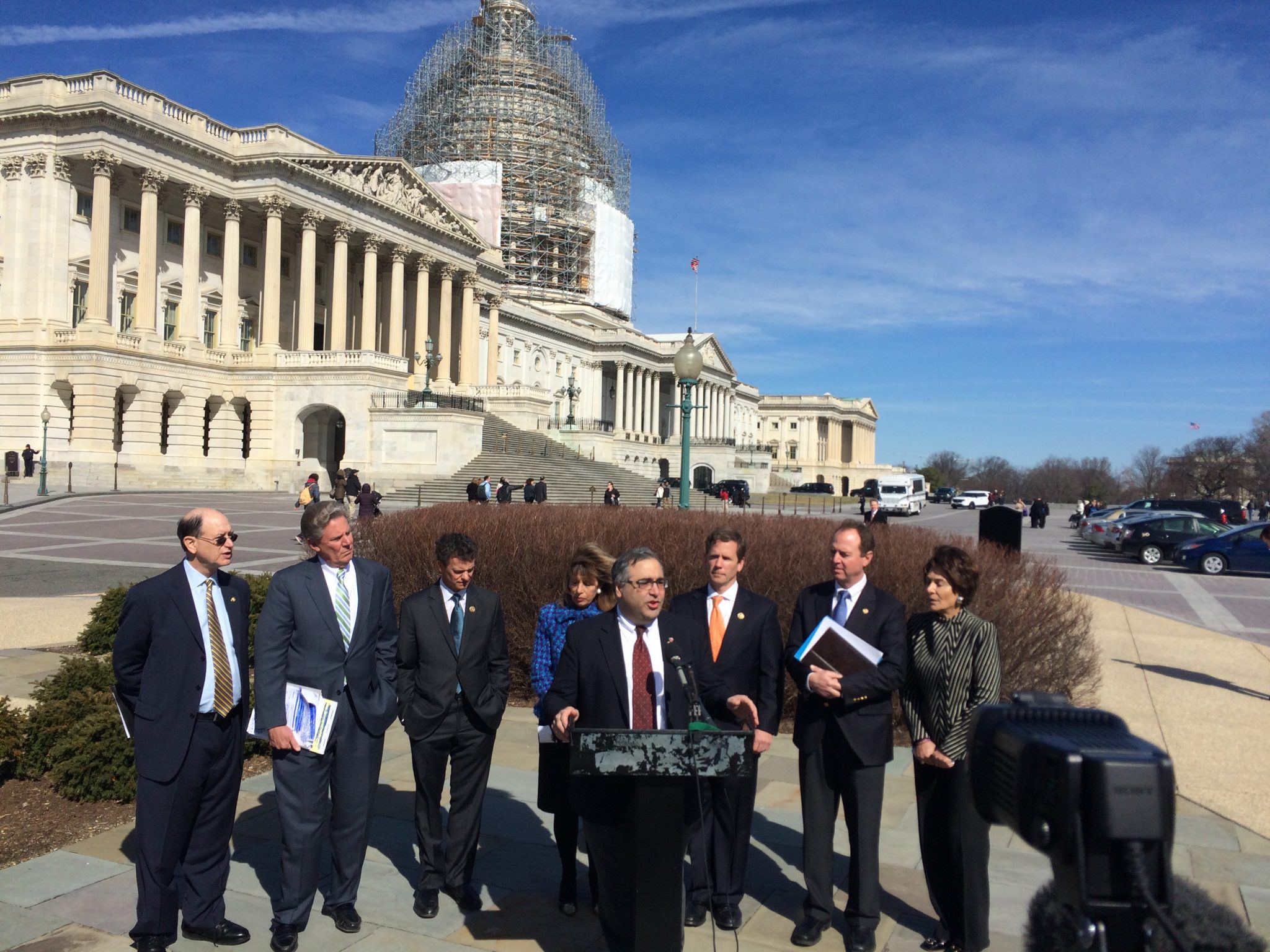
Aram Hamparian speaking today at press conference
This year, 2015, marks the 100th anniversary of the Armenian Genocide—a systematic and deliberate annihilation campaign launched in 1915 by the government of the Ottoman Empire against its Armenian population, leaving 1.5 million Armenians dead and millions more displaced. While the Armenian Genocide has been recognized by more than 20 nations, including Canada, Italy, Sweden, France, Argentina, and Russia, as well as the European Parliament, it has not been formally recognized by the U.S. Congress in decades and has not been recognized by Obama.
“Denial of the Armenian Genocide undermines foundations for durable peace and security, making future atrocities more likely,” said Dold. “As the greatest force for human dignity in the world, the United States has an obligation to send an unequivocal message that we will never forget those that were lost, nor shall we tolerate any country that hides behind bully tactics to shroud violations of human rights.”
“One hundred years ago, one and a half million Armenian men, women, and children were deliberately murdered in the first genocide of the 20th century—these facts are indisputable,” said Schiff. “And on this important anniversary and while there are still survivors among us, we in Congress and the president have an opportunity and an obligation to send a strong message that we will never forget those who were lost, and we will call this crime against humanity what it was, genocide. We feel a powerful sense of urgency and the profound call of moral duty to recognize the Armenian Genocide unequivocally and without delay.”
“One hundred years after the genocide, the sense of loss and pain is still strong as many in our community have a direct connection to someone who was unable to escape,” said Valadao. “While those impacted by the genocide are always in our hearts, let us take an extra moment to remember the 2 million Armenians whose lives were lost.”
“As we recognize the 100th anniversary of the Armenian Genocide, we remember the one and a half million Armenians who were slaughtered by Ottoman Turks,” said Pallone. “Now is the time for the United States government to do the moral thing and recognize these atrocities for what they are—genocide. While we mark 100 years since this horrible act of violence, we also recommit ourselves to the work of speaking out against oppression and senseless violence. Today, I join my colleagues in remembering the victims and paying homage to the Armenian people who, for thousands of years, have shown their perseverance and strength in the face of great challenges,” said Pallone.
***
The full text of the resolution, introduced today during a press conference on Capitol Hill, follows.
Calling on the president to work toward equitable, constructive, stable, and durable Armenian-Turkish relations based upon the Republic of Turkey’s full acknowledgment of the facts and ongoing consequences of the Armenian Genocide, and a fair, just, and comprehensive international resolution of this crime against humanity.
Whereas the Obama Administration has, since early 2009, sought to improve Armenian-Turkish relations through diplomatic efforts to lift the Republic of Turkey’s blockade of Armenia and facilitate an end to Ankara’s refusal to establish diplomatic relations with Yerevan;
Whereas at the start of this process, President Barack Obama had, on April 6, 2009, voiced the United States Government’s expectation that Armenia-Turkey dialogue would “bear fruit very quickly,” but that since then, the Obama Administration has commended Armenia’s participation in this dialogue while holding Turkey largely responsible for the lack of results from this process, with the Secretary of State noting, on June 4, 2012, that, on this matter, “the ball remains in Turkey’s court”;
Whereas on April 24, 2013, President Barack Obama stated, “A full, frank, and just acknowledgment of the facts is in all of our interests. Nations grow stronger by acknowledging and reckoning with painful elements of the past, thereby building a foundation for a more just and tolerant future”;
Whereas the Republic of Turkey, rather than acknowledging and reckoning with painful elements of the past, has escalated its international campaign of Armenian Genocide denial, maintained its blockade of Armenia, and increased its pressure on the small but growing Turkish civil society movement acknowledging the Armenian Genocide and seeking justice for this systematic campaign of destruction of millions of Armenians, Greeks, Assyrians, Pontians, Syriacs, and other Christians upon their biblical-era homelands;
Whereas the United States is on record as having officially recognized the Armenian Genocide, in the United States Government’s May 28, 1951, written statement to the International Court of Justice regarding the Convention on the Prevention and Punishment of the Crime of Genocide, through President Ronald Reagan’s April 22, 1981, Proclamation No. 4838, and by Congressional legislation, including House Joint Resolution 148 adopted on April 8, 1975, and House Joint Resolution 247 adopted on Sept. 10, 1984;
Whereas even prior to the Convention on the Prevention and Punishment of the Crime of Genocide, the United States has a record of having sought to justly and constructively address the consequences of the Ottoman Empire’s intentional destruction of the Armenian people, including through Senate Concurrent Resolution 12 adopted on Feb. 9, 1916, Senate Resolution 359 adopted on May 11, 1920, and President Woodrow Wilson’s Decision of the President of the United States of America Respecting the Frontier between Turkey and Armenia, Access for Armenia to the Sea, and the Demilitarization of Turkish Territory Adjacent to the Armenian Frontier, dated Nov. 22, 1920;
Whereas President Barack Obama entered office having stated his “firmly held conviction that the Armenian Genocide is not an allegation, a personal opinion, or a point of view, but rather a widely documented fact supported by an overwhelming body of historical evidence,” affirmed his record of “calling for Turkey’s acknowledgment of the Armenian Genocide,” and pledged that “as President I will recognize the Armenian Genocide”; and
Whereas the United States national interests in the establishment of equitable, constructive, stable, and durable relations between Armenians and Turks cannot be meaningfully advanced by circumventing or otherwise seeking to avoid materially addressing the central political, legal, security, and moral issue between these two nations, Turkey’s denial of truth and justice for the Armenian Genocide: Now, therefore, be it
Resolved, that the House of Representatives calls on the President to work toward equitable, constructive, stable, and durable Armenian-Turkish relations based upon the Republic of Turkey’s full acknowledgment of the facts and ongoing consequences of the Armenian Genocide, and a fair, just, and comprehensive international resolution of this crime against humanity.
Panel at Harvard on ‘Armenia 1915-Auschwitz 1945’
BELMONT, Mass.—A special program commemorating the Centennial of the
Armenian Genocide and the 70th anniversary of the liberation of
Auschwitz, entitled “Armenia 1915-Auschwitz 1945: Small Nations and
Great Powers,” will take place on March 25 at 7 p.m., at Harvard
University’s Kennedy School of Government, Starr Auditorium (Belfer
B-200, 79 John F. Kennedy St., Cambridge). The event is co-sponsored by
the Harvard Kennedy School European Club, the Harvard College Armenian
Students Association, the Mashtots Chair in Armenian Studies at Harvard,
and the National Association for Armenian Studies and Research (NAASR).
It is free and open to the public.
Participating in the program will be Dr. Simon Payaslian, Charles K. and Elisabeth M. Kenosian Professor of Modern Armenian History and Literature, Department of History, Boston University; Marc A. Mamigonian, director of Academic Affairs, NAASR; and Dr. James R. Russell, Mashtots Professor of Armenian Studies, Department of Near Eastern Languages and Civilizations, Harvard University. Hovhannes Ghazaryan, a graduate student in the Mid-Career Master in Public Administration at Harvard’s Kennedy School of Government, will serve as the moderator. Fr. Arsen Barsamian of St. James Armenian Church of Watertown will offer an opening prayer in Armenian, and Russell will give a concluding prayer in Hebrew.
The panelists will explore interrelationships between the Armenian Genocide and the Holocaust, with particular attention paid to the direct ties between the two genocides, some of the similarities and differences in the genocidal processes as well as the denial of both genocides, the role of self-defense on the part of Armenians and Jews against the Ottomans and Nazis, respectively, and the role of the Great Powers in the genocides and their aftermath. Following the panelists’ presentations, there will be a discussion period followed by a reception.
For more information about this event, contact NAASR at (617) 489-1610 or hq@naasr.org.
Participating in the program will be Dr. Simon Payaslian, Charles K. and Elisabeth M. Kenosian Professor of Modern Armenian History and Literature, Department of History, Boston University; Marc A. Mamigonian, director of Academic Affairs, NAASR; and Dr. James R. Russell, Mashtots Professor of Armenian Studies, Department of Near Eastern Languages and Civilizations, Harvard University. Hovhannes Ghazaryan, a graduate student in the Mid-Career Master in Public Administration at Harvard’s Kennedy School of Government, will serve as the moderator. Fr. Arsen Barsamian of St. James Armenian Church of Watertown will offer an opening prayer in Armenian, and Russell will give a concluding prayer in Hebrew.
The panelists will explore interrelationships between the Armenian Genocide and the Holocaust, with particular attention paid to the direct ties between the two genocides, some of the similarities and differences in the genocidal processes as well as the denial of both genocides, the role of self-defense on the part of Armenians and Jews against the Ottomans and Nazis, respectively, and the role of the Great Powers in the genocides and their aftermath. Following the panelists’ presentations, there will be a discussion period followed by a reception.
For more information about this event, contact NAASR at (617) 489-1610 or hq@naasr.org.
Thursday, March 12, 2015
Armenia Releases Eurovision 2015 Entry ‘Don’t Deny’ (Video)
VIENNA, Austria (A.W.) – Armenia’s Eurovision 2015 song entry, “Don’t Deny,” was released earlier today. Diasporan artists from five continents and one artist from Yerevan will represent Armenia in the 2015 Eurovision Song Contest that will take place in Vienna this May. The song has enraged some in neighboring Azerbaijan, which claims the lyrics contain a political message.
Along with the release of the song and its music video, Inga Arshakian of Armenia was unveiled as the final performer of the group Genealogy. Arshakian joins Stephanie Topalian, Essaï Altounian, Vahe Tilbian, Mary-Jean O’Doherty Vasmatzian, and Tamar Kaprelian, who hail from Europe, Asia, America, Africa, and Australia—and are all of Armenian origin. According to the official website of the Eurovision Song Contest (Eurovision.tv), this is the first time a country participates with performers from different parts of the world.
The music for “Don’t Deny,” was written by award-winning Armenian musician and composer Armen Martirosyan, who also composed Armenia’s entry into the 2010 Eurovision Song Contest, “Apricot Stone.” The lyrics to the song were penned by Inna Mkrtchyan; and the music video was directed by renowned Armenian director, Aren Bayadyan.
Since the name of the song—“Don’t Deny”—was made public, there has been speculation that the title might refer to denial of the Armenian Genocide, the Centennial of which is being commemorated this year.
France’s entry has also been accused of referring to the Armenian Genocide. The song is entitled, “N’oubliez Pas” (“Don’t Forget”). According to Eurovision.tv, it was first performed at a concert in November 2014, at a World War I commemoration event, and “the singer emphasizes that the song refers not only to this very special event in history, but to any kind of conflict.”
Although there has been no explicit mention of the Armenian Genocide from the organizers, Azeri media outlets have accused both Armenia and France of politicizing the music event.
The Eurovision Song Contest 2015 will take place in Vienna from May 19-23.
Putin to Commemorate Armenian Genocide Centennial in Yerevan
click for more
MOSCOW (A.W.)—The Kremlin has announced that Russian President Vladimir Putin will be attending the Armenian Genocide Centennial commemorations in Yerevan in April.
 “Yes, he will fly to Yerevan,” Putin’s spokesman Dmitry Peskov told
France’s Agence France-Presse (AFP). Peskov added that Putin discussed
his plans to visit Yerevan with his Armenian counterpart Serge Sarkisian
by telephone on March 12.
“Yes, he will fly to Yerevan,” Putin’s spokesman Dmitry Peskov told
France’s Agence France-Presse (AFP). Peskov added that Putin discussed
his plans to visit Yerevan with his Armenian counterpart Serge Sarkisian
by telephone on March 12.
According to Sarkisian’s press service, the two discussed the key aspects of the strategic partnership between Armenia and Russia and exchanged views on further integration processes followed by the entry into force of the Treaty on Armenia’s Accession to the Eurasian Economic Union on Jan. 2.
The two reflected especially upon the peaceful use of nuclear energy and oil and gas sectors, during their discussion about bilateral relations.
Sarkisian and Putin also coordinated the schedule of their upcoming meetings to ensure joint participation in the events marking both the 100th anniversary of the Armenian Genocide and the 70th anniversary of the Red Army’s victory over the Nazi forces.
The State Duma, the lower house of the Federal Assembly of the Russian Federation, recognized the Armenian Genocide on April 14, 1995, and accepted April 24 as a day of remembrance for the victims of the genocide.
MOSCOW (A.W.)—The Kremlin has announced that Russian President Vladimir Putin will be attending the Armenian Genocide Centennial commemorations in Yerevan in April.
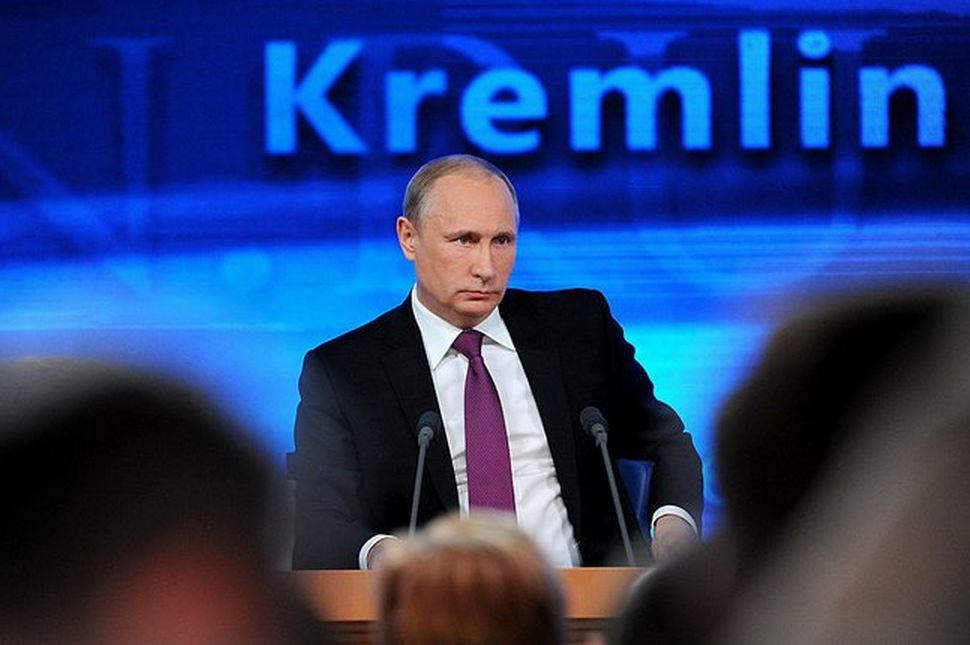
Russian President Vladimir Putin (Photo: official website of the Kremlin)
According to Sarkisian’s press service, the two discussed the key aspects of the strategic partnership between Armenia and Russia and exchanged views on further integration processes followed by the entry into force of the Treaty on Armenia’s Accession to the Eurasian Economic Union on Jan. 2.
The two reflected especially upon the peaceful use of nuclear energy and oil and gas sectors, during their discussion about bilateral relations.
Sarkisian and Putin also coordinated the schedule of their upcoming meetings to ensure joint participation in the events marking both the 100th anniversary of the Armenian Genocide and the 70th anniversary of the Red Army’s victory over the Nazi forces.
The State Duma, the lower house of the Federal Assembly of the Russian Federation, recognized the Armenian Genocide on April 14, 1995, and accepted April 24 as a day of remembrance for the victims of the genocide.
100 LIVES Initiative Launched in New York
NEW YORK (A.W.) – The launch of an initiative entitled 100 LIVES was announced on March 10 in New York. The project will celebrate those who saved Armenians during the genocide, and support individuals and organizations that keep the legacy of gratitude alive.
The initiative is led by a group of Diasporan Armenians including the President of Carnegie Corporation Vartan Gregorian, and entrepreneurs Ruben Vardanyan and Noubar Afeyan
The project aims to uncover and recount stories about survivors and their saviors, which will be collected through academic research, personal accounts, and story submissions by the public to the 100lives.com website.
“The humanity, generosity, strength and sacrifice shown by those who saved so many Armenians compel us to tell these stories,” said Ruben Vardanyan, co-founder of 100 LIVES. “Now is the time to shine a light on those most extraordinary lives, to build on the lessons they teach us, and to express our gratitude for what they did.”
Academy Award winner and activist George Clooney joined Vardanyan on stage in a panel moderated by managing editor of Washington Week and co-anchor and co-managing editor of PBS NewsHour, Gwen Ifill. When asked why it was important for him to be involved in such a project, Clooney explained that it is these types of initiatives that help shed light on ongoing atrocities. “We don’t want to triage in the end, I think that’s silly and too late. Our thought was let’s explore anyway we can to expose these things and make it more difficult to happen in the broad daylight, because we know it happens in the dark,” said Clooney.
“We really want people to get involved with 100 LIVES, to celebrate those that overcome adversity and give back to others, just as the Armenian community is doing in this centenary year,” said Clooney.
The Aurora Prize is named after Aurora Mardiganian who, as a child, survived the Armenian Genocide and
went on to devote her life to providing humanitarian relief and raising awareness about the plight of the Armenians. Mardiganian is best known for starring in “Ravished Armenia,” also known as “Auction of Souls,” a 1919 American film based on the Armenian Genocide.
One of Mardiganian’s relatives, Ani Karabashian, addressed the crowd on behalf the family and stressed the importance of the initiative.
The 100 LIVES initiative will also digitize the written record of the Armenian Genocide—something that the founders believe can help preserve the memory of the genocide.
“There are a small number of survivors of the Armenian Genocide left with us. It is crucial that we ensure that, as we approach the centennial, we take this opportunity to leave a lasting imprint of what happened a century ago onto the world’s collective conscience,” said Vartan Gregorian.
“Resilience, strength, survival and gratitude are characteristics exhibited by Armenians, though not by us exclusively. They are found in all people,” said 100 LIVES co-founder Noubar Afeyan, adding, “We developed the concept of #BeArmenian #BeAlive to encapsulate the strength of the human spirit – not just for Armenians, but for everyone.”
Wednesday, March 11, 2015
Describing the Indescribable: 1915
How does one “think about the unthinkable?” How does one “describe
the indescribable?” These are among the analytical and moral challenges
in trying to understand genocide. As Raphael Lemkin, the originator of
the concept of genocide, noted: genocide occurred in history before the
word “genocide” was created. The history of humans is marked by episodes
of great cruelty and mass killings where groups that were different
were targeted for persecution and slaughter.
The mass deportations and killings of the Armenians in the Ottoman Empire peaked during World War I, but occurred before the term “genocide” emerged in 1944. In fact, the Young Turk regime’s slaughter of the Armenians would be a catalyst for Lemkin to develop such a legal concept, in a preliminary way in the 1930’s and in final phrasing in the 1940’s.
When trying to understand the events of 1915 onwards, it is useful to ask: What words and phrases were used by the Armenian survivors, domestic and foreign witnesses, and newspaper writers to describe what happened? The challenge was how to describe the indescribable, or what Churchill would in 1941 call “the crime without a name.”
The New York Times reported extensively on the massacres of the Armenians under the Young Turk dictatorship. A content analysis overview of the New York Times for the year 1915 (the peak year of the deportations and killings) reveals that a variety of words and phrases were used to try to describe the horrific scenes and deeds. Reviewing the range of the words employed can assist in conveying the magnitude of the man-made catastrophe that befell the Armenians.
Among the terms and phrases offered in the articles in the New York Times in 1915 were the following: “pillage,” “great exodus,” “great deportation,” “completely depopulated,” “wholesale deportations,” “systematically uprooted,” “wholesale uprooting of the native population,” “young women and girls appropriated by the Turks, thrown into harems, attacked or else sold to the highest bidder,” “children are being kidnapped by the wholesale,” “kidnapping of attractive young girls,” “rape,” “unparalleled savagery,” “acts of horror,” “murder, rape, and other savageries,” “endure terrible tortures,” “revolting tortures,” “their breasts cut off, their nails pulled out, their feet cut off, or they hammer nails into them just as they do to horses,” “burned to death,” “helpless women and children were roasted to death,” “massacres,” “slaughter,” “atrocities,” “unbelievable atrocities,” “systematically murdered men and turned women and children out into the desert, where thousands perished of starvation,” “million Armenians killed or in exile,” “1,500,000 Armenians starve,” “dying in prison camps,” “wholesale massacres,” “slaughtered wholesale,” “fiendish massacres,” “massacre was planned,” “most thoroughly organized and effective massacres this country has ever known,” “extirpating the million and a half Armenians in the Ottoman Empire,” “policy of extermination,” “plan for extirpating Christianity by killing off Christians of the Armenian race,” “plan to exterminate the whole Armenian people,” “deliberately exterminated,” “virtually the whole nation had been wiped out,” “annihilation of a whole people,” “organized system of pillage, deportations, wholesale executions, and massacres,” “pillage, rape, murder, wholesale expulsion and deportation, and massacre,” “systematic, authorized and desperate effort on the part of the rulers of Turkey to wipe out the Armenians,” “deliberate murder of a nation,” “war of extermination,” “race extermination,” “intention was to exterminate the Armenian race,” “Armenia without Armenians,” “extinction menaces Armenia,” “death of Armenia,” “deportation order and the resulting war of extinction,” “aim at the complete elimination of all non-Moslem races from Asiatic Turkey,” and “crimes against civilization and morality.”
There are at least 10 examples (5 in the decades before 1915 and 5 in the years after) where the biblical word “holocaust” in the generic sense was used to describe either the mass burning of Armenians alive, massacres of Christians, or attempts at annihilating the Armenian people. The New York Times’ references in the 1915-22 era to the Armenians’ fate included the phrasing “holocaust,” “war’s holocaust of horror,” “great holocaust,” and “final holocaust.”
Clearly, authors strained for the words that could explain the magnitude of such horrific scenes and deeds. Witnesses were often overwhelmed, particularly at the time of the deadly deeds, but also in retelling the painful accounts. For many who witnessed such atrocities, it was a life-altering experience.
Within a month of the Ottoman Empire’s April 24, 1915 arrest, deportation, and later killing of key Armenian leaders in Constantinople and increasing reports of mass deportations and massacres, the allied Entente countries of Britain, France, and Russia used the ominous phrase “crimes against civilization and humanity.” This description, officially issued on May 24, 1915 (and printed in the New York Times on the same day), was part of a semi-judicial warning to the Young Turk regime about its crimes and would become a key term in international law. It was an important step in the development of the legal concept of genocide.
However, no single word or combination of words or phrases could adequately convey the magnitude of suffering and horror of what had transpired. Even today, we search for ways to “describe the indescribable.”
The mass deportations and killings of the Armenians in the Ottoman Empire peaked during World War I, but occurred before the term “genocide” emerged in 1944. In fact, the Young Turk regime’s slaughter of the Armenians would be a catalyst for Lemkin to develop such a legal concept, in a preliminary way in the 1930’s and in final phrasing in the 1940’s.
When trying to understand the events of 1915 onwards, it is useful to ask: What words and phrases were used by the Armenian survivors, domestic and foreign witnesses, and newspaper writers to describe what happened? The challenge was how to describe the indescribable, or what Churchill would in 1941 call “the crime without a name.”
The New York Times reported extensively on the massacres of the Armenians under the Young Turk dictatorship. A content analysis overview of the New York Times for the year 1915 (the peak year of the deportations and killings) reveals that a variety of words and phrases were used to try to describe the horrific scenes and deeds. Reviewing the range of the words employed can assist in conveying the magnitude of the man-made catastrophe that befell the Armenians.
Among the terms and phrases offered in the articles in the New York Times in 1915 were the following: “pillage,” “great exodus,” “great deportation,” “completely depopulated,” “wholesale deportations,” “systematically uprooted,” “wholesale uprooting of the native population,” “young women and girls appropriated by the Turks, thrown into harems, attacked or else sold to the highest bidder,” “children are being kidnapped by the wholesale,” “kidnapping of attractive young girls,” “rape,” “unparalleled savagery,” “acts of horror,” “murder, rape, and other savageries,” “endure terrible tortures,” “revolting tortures,” “their breasts cut off, their nails pulled out, their feet cut off, or they hammer nails into them just as they do to horses,” “burned to death,” “helpless women and children were roasted to death,” “massacres,” “slaughter,” “atrocities,” “unbelievable atrocities,” “systematically murdered men and turned women and children out into the desert, where thousands perished of starvation,” “million Armenians killed or in exile,” “1,500,000 Armenians starve,” “dying in prison camps,” “wholesale massacres,” “slaughtered wholesale,” “fiendish massacres,” “massacre was planned,” “most thoroughly organized and effective massacres this country has ever known,” “extirpating the million and a half Armenians in the Ottoman Empire,” “policy of extermination,” “plan for extirpating Christianity by killing off Christians of the Armenian race,” “plan to exterminate the whole Armenian people,” “deliberately exterminated,” “virtually the whole nation had been wiped out,” “annihilation of a whole people,” “organized system of pillage, deportations, wholesale executions, and massacres,” “pillage, rape, murder, wholesale expulsion and deportation, and massacre,” “systematic, authorized and desperate effort on the part of the rulers of Turkey to wipe out the Armenians,” “deliberate murder of a nation,” “war of extermination,” “race extermination,” “intention was to exterminate the Armenian race,” “Armenia without Armenians,” “extinction menaces Armenia,” “death of Armenia,” “deportation order and the resulting war of extinction,” “aim at the complete elimination of all non-Moslem races from Asiatic Turkey,” and “crimes against civilization and morality.”
There are at least 10 examples (5 in the decades before 1915 and 5 in the years after) where the biblical word “holocaust” in the generic sense was used to describe either the mass burning of Armenians alive, massacres of Christians, or attempts at annihilating the Armenian people. The New York Times’ references in the 1915-22 era to the Armenians’ fate included the phrasing “holocaust,” “war’s holocaust of horror,” “great holocaust,” and “final holocaust.”
Clearly, authors strained for the words that could explain the magnitude of such horrific scenes and deeds. Witnesses were often overwhelmed, particularly at the time of the deadly deeds, but also in retelling the painful accounts. For many who witnessed such atrocities, it was a life-altering experience.
Within a month of the Ottoman Empire’s April 24, 1915 arrest, deportation, and later killing of key Armenian leaders in Constantinople and increasing reports of mass deportations and massacres, the allied Entente countries of Britain, France, and Russia used the ominous phrase “crimes against civilization and humanity.” This description, officially issued on May 24, 1915 (and printed in the New York Times on the same day), was part of a semi-judicial warning to the Young Turk regime about its crimes and would become a key term in international law. It was an important step in the development of the legal concept of genocide.
However, no single word or combination of words or phrases could adequately convey the magnitude of suffering and horror of what had transpired. Even today, we search for ways to “describe the indescribable.”
Subscribe to:
Posts (Atom)